Scenario 1: The perfect-attendance grinder (100% claims)
This is the lone case where Monthly's headline value survives contact with reality, and it's the case every rival comparison silently treats as universal.
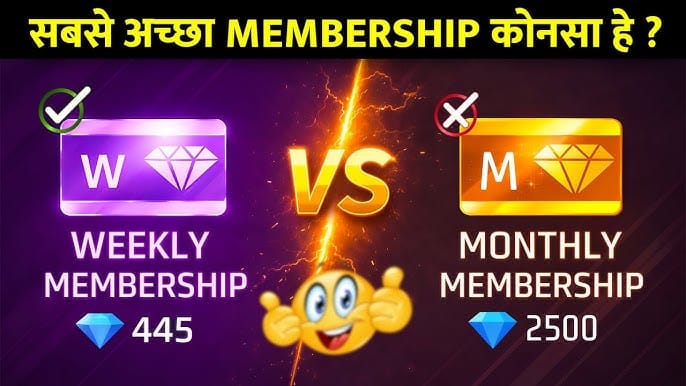
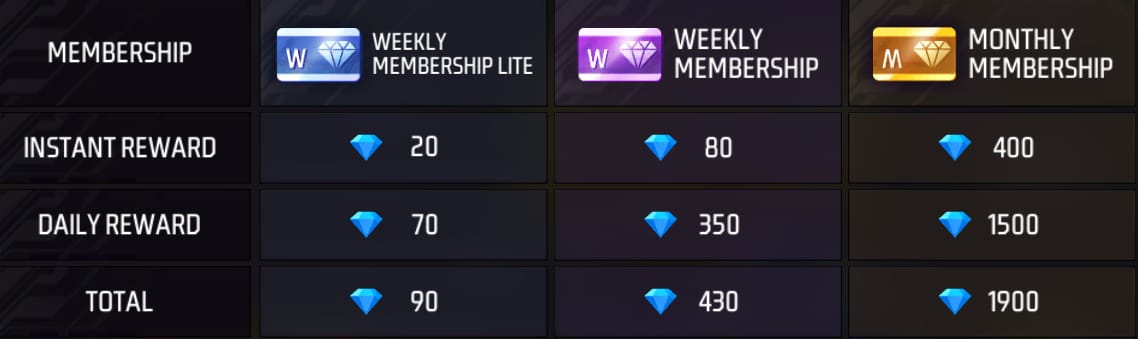
Raw yields first, per Garena Free Fire PK Support: the Weekly pays 80 instant diamonds plus 50 daily across 7 days, landing at 430 total. The Monthly hands you 400 instant plus 50 daily over 30 days, for 1,900 total. There's a Lite Weekly too, 20 instant + 10 daily for a 90-diamond sum, which mostly exists to nudge you toward the real Weekly.
| Type |
Instant |
Daily |
Days |
Total |
| Lite Weekly |
20 |
10 |
7 |
90 |
| Weekly |
80 |
50 |
7 |
430 |
| Monthly |
400 |
50 |
30 |
1,900 |
Source: Garena Free Fire PK Support (2026)
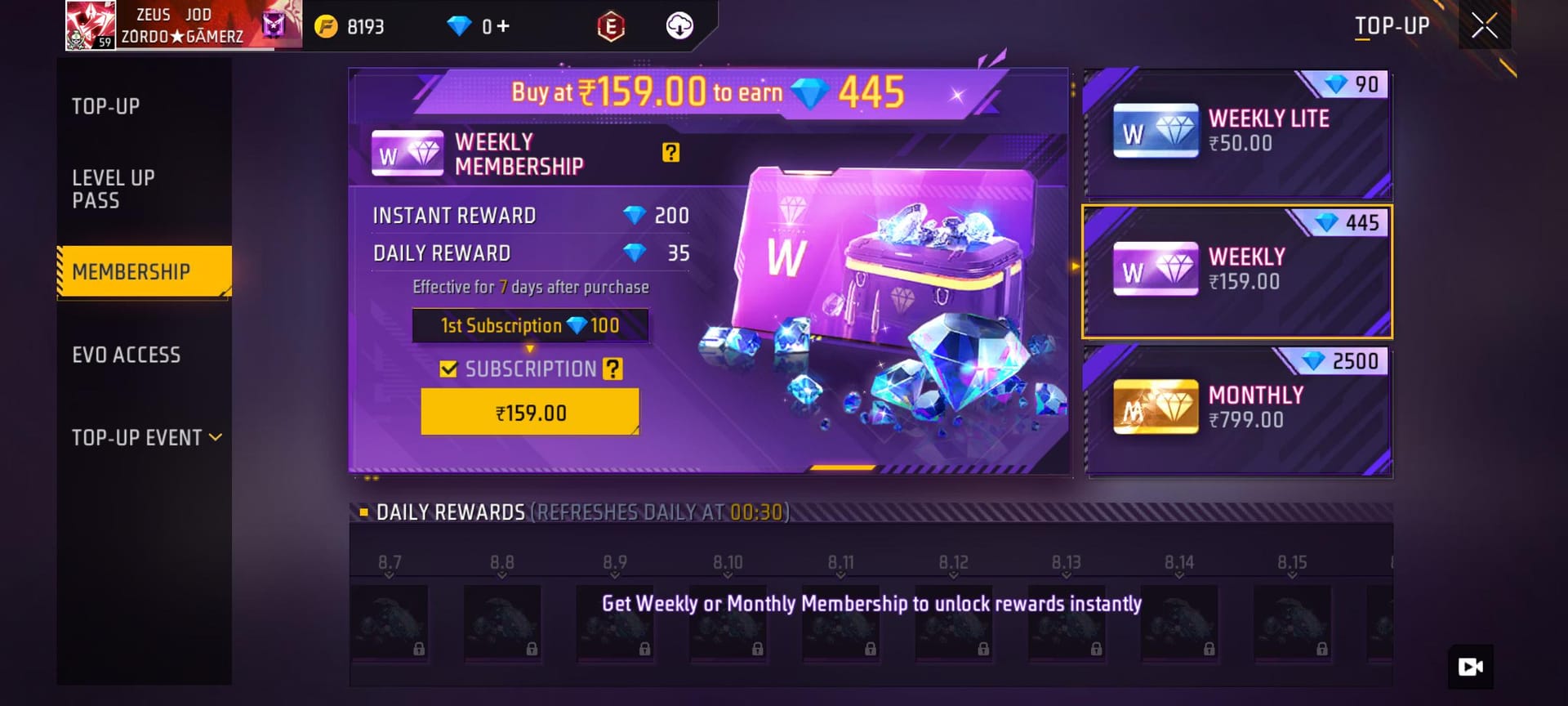
Prices next. In India the Weekly sits around Rs 159 and the Monthly around Rs 799, per Raj Gaming Zone. A separate Scribd price list from 2025 pegs the Weekly higher at Rs 190–200 and the Monthly nearer Rs 950–1000, so regional variants are a moving target, not a fixed sticker.
Working off the cleaner numbers, here's where it shakes out:
| Pack |
Price (Rs) |
Total D |
≈Rs/diamond |
| Weekly |
159 |
430 |
0.37 |
| Monthly |
799 |
1,900 |
0.42 |
| 5× Weekly |
795 |
2,150 |
0.37 |
Source: YouTube Raj Gaming Zone (2025)
And here's the part that turns the usual verdict on its head: Monthly is not the cheapest per diamond. Weekly is. Roughly Rs 0.37 against Rs 0.42 a diamond, the Weekly's the leaner unit. The creator line that "Monthly beats five weekly for similar price" (Raj Gaming Zone, 2025) holds only on total volume. Five separate Weeklies at about Rs 795 net you 2,150 diamonds, while one Monthly at about Rs 799 gives 1,900. So the headline kind of falls apart, doesn't it.
Look closer, though. Five Weeklies out-diamond a single Monthly by 250 in the table above. The cost hiding under that gap: five Weekly cycles mean five separate purchases, five renewal windows, and five chances to forget to rebuy. Monthly's genuine appeal was never a sharper per-diamond rate. It's the 400-diamond instant lump and the ease of one transaction. That's the detail competitors skate over when they crown Monthly the value king.
Scenario 2: The 80% player who misses about six days
Push that same Monthly buy through a login pattern that resembles a working adult's week and the value bends in a hurry. This is the moment the claim rule stops being trivia and starts eating your wallet.
Daily diamonds don't drop into your account on their own. You claim them by hand, the window resets at 3:00 each day, and miss it and that day's haul is gone for keeps. Garena's support wording leaves no room: the membership "will reset at 3:00 every day." A widely discussed r/freefire thread is stuffed with players who bought Monthly, treated it as a one-time pack, then watched a fat slice of paid diamonds simply vanish.
Model it out. Monthly's 1,500 daily diamonds (50 × 30) all sit behind that claim gate; only the 400 instant are locked in. Claim 80% of the time and you scoop maybe 1,200 of the 1,500, plus the 400 instant, so call it ~1,600 banked against the Rs 799 you handed over. Effective cost climbs to around Rs 0.50 a diamond. The Weekly, carrying only six claimable days and a heftier instant share (80 of 430), barely notices the same 80% rate. It's built more forgiving, because less of its worth is trapped in the daily drip.
And this is what surprised me most: it's the instant lump, not the daily trickle, that saves you when life intrudes. Monthly front-loads only 400 of its 1,900, about 21%, as guaranteed currency. The remaining four-fifths is an attendance wager.
Scenario 3: The casual who logs in half the month
For anyone genuinely showing up 2–4 days a week, Monthly is a trap and the Weekly (or even a single top-up) is the sane call. The "Monthly's always the better deal" crowd never bothers modeling this player.
Drop the claim rate to 50% and Monthly's daily share caves to ~750 diamonds. Tack on the 400 instant and you've banked ~1,150 for Rs 799, an effective ~Rs 0.69 a diamond. Nearly double the Weekly's clean rate. Reddit lands in the same spot on the stacking thread: casual players (2–4 logins a week) are safer with the Weekly precisely because its shorter cycle squanders fewer unclaimed days.
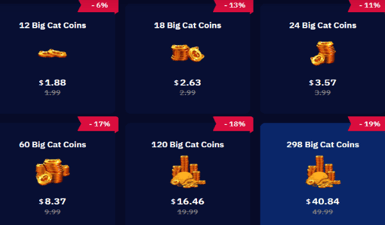
There's a cleaner route still. For purely occasional spenders, a one-time diamond pack can edge out both memberships. No claim grind, no wasted days. A 520-diamond pack ran about $4.72 in LATAM in 2026, a 2,180-diamond pack about $17.41 with bonuses, per a Bittopup value guide. The diamonds land instantly and they stay yours, no strings.
Don't over-correct, mind you. A Lootbar blog from 2026 reckons memberships often run 3–4× better value per diamond than top-ups for regular buyers, so the pack only wins when your spending is honestly sporadic. The logic isn't complicated: if you'll reliably claim, the membership's drip undercuts the pack; if you won't, the pack's certainty undercuts the membership.

Scenario 4: The mid-spender who stacks both
The single best-value move for a committed daily player isn't choosing one membership. It's holding both at once, a wrinkle the "weekly vs monthly" framing buries completely.
You can own the Weekly and the Monthly side by side, and their daily claims stack on the same screen. Per r/freefire, running the pair adds +15 extra diamonds per day on top of each pack's normal rewards. A small bonus layer that only materializes if you double up. Stretch that across a month and it's roughly 450 surplus diamonds beyond everything else, which both YouTube and Reddit breakdowns flag as the optimal grind for event currency.
The honest caveat: stacking only pays off if you were already the perfect-attendance type from Scenario 1. Two packs means two daily claim obligations and twice the exposure to the missed-day bite. For a mid-spender chasing some limited event reward who's logging in every single day regardless, it's the richest diamonds-per-day setup going. For everyone else, it's two memberships hemorrhaging value in parallel.
The recommendation matrix
Match the pack to how you actually show up, not to the fattest number on the store card.
| Player profile |
Realistic logins |
Buy this |
Why |
| F2P / first-time spender |
One small purchase |
One-time 520D pack |
Instant, no claim grind, no renewal risk |
| Casual (2–4 days/week) |
~50% of days |
Weekly |
Short cycle wastes fewer unclaimed days |
| Daily active player |
Every day |
Monthly |
Lowest effective cost when claims are near-perfect |
| Mid-spender, daily, event-focused |
Every day |
Stack both |
+15 bonus diamonds/day; max daily volume |
My read after all four runs: the Weekly is badly underrated, the smarter low-commitment entry point rather than the lesser pack. It carries the best clean per-diamond rate (~Rs 0.37), it front-loads more of its worth as guaranteed instant diamonds, and it forgives the missed-day reality that wrecks Monthly for anyone not logging in like clockwork. Monthly only earns its keep at the very top of the consistency curve.
Once you've picked a pack and just want the purchase handled, VGTopup (which publishes this guide) is one channel for Free Fire top up. Check its diamond pricing against your in-game store rate before committing, since regional stickers drift, as the figures above showed.
Frequently Asked Questions
Do membership diamonds need to be claimed daily, or do they auto-credit?
You claim them by hand every day, they don't auto-deposit. The window resets at 3:00 daily per Garena's support page, and a missed day's diamonds are gone for good. Only the instant lump (80 for Weekly, 400 for Monthly) lands automatically at purchase; the rest is gated behind that daily screen.
Is the weekly membership worth it for F2P players?
For a true free-to-play player making one rare purchase, a one-time diamond pack often beats either membership, no grind, no renewal. But if you're a near-F2P low spender who shows up most days, the Weekly's ~Rs 0.37/diamond rate (per Raj Gaming Zone) makes it the best low-commitment entry, since you're only risking six claimable days instead of thirty.
Can you buy both weekly and monthly membership at the same time?
Yes, and for daily players it's the optimal setup. Holding both stacks their claims on one screen and tacks on +15 extra diamonds per day beyond each pack's normal rewards, per r/freefire. The cost is doubled exposure to the missed-claim penalty, so it's only worth it if you genuinely log in every day.
How many total diamonds does the monthly membership give?
1,900 total, 400 instant plus 50 daily across 30 days, according to Garena PK support. That figure assumes a perfect 30-day streak. At an 80% login rate you'd bank closer to 1,600, and around 1,150 at 50%, because roughly 1,500 of those diamonds are locked behind the daily claim.
Does the membership renew automatically, and what happens if prices differ in my region?
Pricing varies a lot by market. India's Weekly sits around Rs 159 while Singapore's runs about S$2.31, with the Monthly near S$10.79 per SEAGM's 2026 listing. Indian store variants have also been logged as high as Rs 950–1000 for Monthly. Always check your live store rate against the figures here before buying, since the per-diamond cost shifts with local pricing.








Comments