

Dream and Lethe Record: The Complete Guide to NetEase's Turn-Based Mythological RPG
Introduction & Quick Facts
Dream and Lethe Record is a turn-based strategic RPG developed by NetEase Games and published in Southeast Asia by VNGGames. Built around the mythological river of Lethe — the boundary between memory and forgetting — the game casts you as the Envoy of Lethe, a spiritual guide tasked with leading historical and legendary souls through their unresolved wishes. The result is a story-rich, hand-drawn, lyrical RPG that fuses East Asian poetry and history with familiar gacha and team-building mechanics.
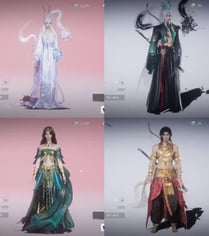
Unlike most loud, hyper-stylized turn-based gachas on mobile, Dream and Lethe Record leans into atmosphere. Its visual identity is rooted in Chinese manhua and ink-wash aesthetics, its soundtrack — the in-house "Soultrack" — pulls from classical and orchestral arrangements, and its cast reimagines real historical figures (such as the Song-dynasty poet Li Qingzhao) as SSR-tier playable heroes. This makes it both a competent team-builder for collectors and a narrative experience for players who care about lore, dialogue, and tone.
The title is a Southeast Asia release on Android and iOS, distributed and operated by VNGGames, the Vietnam-based publishing arm responsible for several major regional mobile launches. Players log in via Google, Facebook, or Apple ID, and the in-game economy uses gacha pulls fueled by both earned and purchased currency.
| Field | Detail |
|---|---|
| Title | Dream and Lethe Record |
| Developer | NetEase Games |
| Publisher | VNGGames |
| Platform | Android / iOS |
| Region | Southeast Asia |
| Genre | Turn-Based Strategy RPG / Gacha |
| Language | English (with additional language support) |
| Monetization | Free-to-play with gacha and in-app purchases |
| Official Website | vnggames.com |
What is Dream and Lethe Record?
Dream and Lethe Record is, at its core, a turn-based collector RPG in the same broad family as titles like Epic Seven, AFK Arena, or Honkai: Star Rail — but with a distinct cultural and tonal identity. You assemble a five-hero squad, position them in a front/back layout, and trade actions across a turn order influenced by Speed, skills, and elemental or class interactions. The twist is the framing: every hero you recruit is a soul that crossed the river of Lethe, and your job is not merely to fight but to "resolve" their stories.
The narrative is structured into chapters tied to dynasties, eras, and folk legends. Souls arrive in your sanctuary unable to move on because of regrets, unfinished promises, or curses, and the gameplay loop alternates between story instances (dialogue, choices, exploration vignettes) and combat encounters (turn-based fights against demons, phantoms, and rival envoys). Decisions you make in dialogue can shape side outcomes, character bonds, and certain unlockables — so it functions as a light-narrative RPG, not a pure auto-battler.
The audience is fairly clear:
- Lore-driven RPG fans who enjoy mythologically literate writing, named historical figures, and slower-paced storytelling.
- Gacha collectors who like roster-building, tier hunting, and team composition puzzles.
- PvE-focused players who prefer scripted bosses, dungeons, and progression layers over twitch reflexes.
- PvP enthusiasts willing to learn matchup nuance in an asynchronous arena where Speed manipulation, control immunity, and shield/heal economy matter.
Players who dislike gacha pull rates, who want fast real-time action combat, or who need fully global cross-region matchmaking should probably look elsewhere — this is a Southeast Asia server with regional pacing and content scheduling.
Core Gameplay & Features
The game is broader than a typical "summon-and-clear" gacha. Below are the pillars that define a typical player's week:
- Turn-based 5v5 combat with positioning (front/back rows), action gauges, and elemental/role synergies.
- Five hero roles — Attacker, Controller, Healer, Support, Tanker — designed so that no single class can solo content above mid-tier.
- SSR / SR / R rarity tiers with awakening, ascension, and limit-break progression layered on top of base levels.
- Bond and synergy skills between specific hero pairs or factions, unlocking passive bonuses or shared ultimates.
- Artifact / relic sets acquired in the Ruins game mode, offering 2-piece and 4-piece bonuses similar to other modern gachas.
- Hero cats — collectible feline companions with their own levels, skills, and nurturing mechanics that buff your main roster.
- Peach Cottage — a customizable personal home/base used for furniture collection, idle resource generation, and visual flexing.
- Mirage, Ruins, Chess Game, Edge of Time — distinct PvE modes that drop different progression materials.
- PvP Arena with asynchronous defense teams, weekly rank rewards, and shop currency for exclusive pulls.
- Guild systems with co-op bosses, member buffs, and a buddy/mentor system for new players.
- Daily and weekly quest cycles that gate the bulk of mid-game progression resources.
- Soundtrack-driven cutscenes with voice acting, used during character introductions and story climaxes.
Combat depth
Combat in Dream and Lethe Record is action-economy driven. Each character has a basic skill (no cost), an active skill (energy or cooldown), and an ultimate. Speed determines turn order, but several heroes can manipulate the gauge directly — pushing allies forward, pulling enemies back, or stealing turns outright. This makes Speed tuning (via gear substats and team composition) one of the most important advanced topics. A correctly tuned team often wins by acting twice before the opponent acts once, especially in arena.
Damage interactions are governed by attack/defense, crit rate/damage, elemental affinity, and role-specific multipliers. Controllers in particular shine via debuff durations (stun, silence, freeze, taunt break), so resistance and effect-hit-rate substats become decisive at higher tiers. Healers split between sustained ticking heals and burst single-target rescues — both archetypes are viable, but the meta tends to reward burst healing when paired with shields from Supports or Tankers.
Gear and artifacts
Equipment comes in slot-based sets with main stats and substats. The Ruins game mode is your dedicated farming loop for these sets, and like most modern gachas, gear quality (not gear quantity) is the dominant power gate after the early game. Two-piece bonuses tend to grant offensive identity (crit, attack, speed), while four-piece bonuses provide build-defining effects (extra turns on kill, life steal, damage-over-time amplification, immunity to control). Most successful endgame teams mix two different 2-piece sets to combine offense and utility.
Hero cats and side systems
The hero cats are more than a cosmetic gimmick. Each cat has a skill that can be slotted onto a hero, granting buffs ranging from extra crit damage to extra energy generation. Cats also level up via dedicated currency, and high-rarity cats become a measurable power lever in late game. The Peach Cottage, meanwhile, generates a slow trickle of resources tied to its furniture rating — meaning even cosmetic decisions feed back into progression in small ways.
Pro Tips & Strategy
Beginner (Days 1–7)
- Spend your starter pulls on a balanced core, not raw firepower. A team of five Attackers will stall by chapter 4. Aim for at least one Healer, one Tanker, and one Controller before doubling up on damage dealers.
- Reroll only if your first multi gives you no SSR with utility. A defensive or control SSR is often more valuable for clearing early content than another DPS — burst damage is easy to build, sustain is not.
- Finish the main story chapters before grinding side modes. Story progression unlocks the Mirage, Ruins, Chess Game, and Edge of Time modes — without those unlocks you're locked out of gear and material drops.
- Claim every daily login and event login. SEA-region gachas frontload generous newbie rewards in the first 7–14 days; missing those days is the single biggest avoidable loss of pull currency.
- Set up your buddy/mentor relationship early. It grants mutual stamina and progression bonuses and costs nothing.
Intermediate (Days 7–30)
- Pick one DPS to fully invest in. Spreading XP and ascension materials across three damage dealers is the classic intermediate trap. Funnel everything into one main carry and one sub-carry.
- Farm Ruins for substats, not main stats. Main stats can be brute-forced through repeated runs; substat quality is what gates your arena climb. Reroll or replace any piece with three useless substats.
- Tune team Speed deliberately. Decide whether your team wants to move first (set everyone fast) or counter (set your control unit fast and let everyone else move slowly with high defense). Mixed-speed teams usually lose to clean speed-tuned teams.
- Use awakening on supports, not just DPS. A fully awakened Healer or Controller often shifts more matches than the same materials spent on an already-good Attacker.
- Don't skip the Chess Game token rewards. The free hero tokens from Chess Game runs are a stealth source of dupes for awakening and limit-breaks — easy to ignore, easy to regret missing.
- Cap your weekly guild contributions. Guild shop currency buys awakening materials and pull tokens that are difficult to get elsewhere.
Advanced (Day 30+)
- Build two arena teams, not one. A first-pick offense team and a defense team with different cores prevents predictable counters. Defense teams that emphasize control immunity and counter-attacks tend to age better than pure burst comps.
- Master debuff math. Debuff landing chance is roughly Effect Hit Rate minus enemy Effect Resistance. If your Controller is missing critical stuns, the fix is almost always EHR substats, not raw damage.
- Edge of Time dynasty challenges reward specialization. Each dynasty-locked challenge favors certain factions or roles — read the modifier and bring the suggested archetype rather than your strongest generic squad.
- Cycle your gear once your core team is geared. Old gear on benched units can be salvaged or transferred to fresh units more efficiently than re-farming. Don't hoard sets you no longer use.
- Pull on rate-up banners, not standard. Rate-up SSRs almost always shift the meta on release; the standard pool dilutes your odds against a fixed roster.
- Track your pity counter manually. Even if the game shows pity, knowing where you are across multiple banners helps you decide when to push and when to save.
- Save gems before anniversary and major story patches. SEA-region NetEase titles typically run their largest banners around quarterly story drops and launch anniversaries — those are the highest-value pull windows.
Characters & Roles
The roster is structured around five functional roles. Most teams pull one of each, though double-Attacker or double-Support comps are viable at the top of the ladder.
| Role | Function | Typical Stats to Prioritize | Position |
|---|---|---|---|
| Attacker | Primary damage dealer; bursts single targets or AoE | Attack, Crit Rate, Crit Damage, Speed | Back row |
| Controller | Applies stuns, silences, debuffs, manipulates turn order | Effect Hit Rate, Speed, Attack | Back / Mid |
| Healer | Restores HP, cleanses debuffs, sometimes shields | HP, Defense, Speed, Effect Resistance | Back row |
| Support | Buffs allies, generates energy, amplifies damage | Speed, HP, Effect Resistance | Back / Mid |
| Tanker | Soaks damage, taunts, protects backline | HP, Defense, Effect Resistance | Front row |
A few archetype combinations recur in the meta. Speed-burst teams stack Speed on every unit and aim to kill the enemy carry before they act. Control-lock teams use two Controllers with overlapping debuffs to keep the enemy team chain-stunned. Sustain teams pair a Tanker with a strong Healer and slow-scaling damage, designed to outlast bursty opponents. Counter teams stack reflect and counter-attack effects on a Tanker so that the enemy team damages itself.
Historical and mythological reimaginings define the SSR identity. Without spoiling specific kits — which patch frequently — expect figures drawn from Tang and Song dynasty poetry, Three Kingdoms-era generals, Buddhist and Taoist legend, and folk tales like the Legend of the White Snake. Their kits typically mirror their historical or legendary traits: a poet might apply lyrical debuffs that scale with allies' moves, while a general might gain stacks of momentum for each ally killed.
Game Modes Deep Dive
The PvE economy is split across four signature modes, each tied to a different material loop.
| Mode | Primary Reward | Recommended Team Style | Cadence |
|---|---|---|---|
| Mirage | Soul essences (hero ascension) | Sustain or balanced | Daily runs |
| Ruins | Artifact / relic sets | DPS-focused with one Healer | Daily, set-targeted |
| Chess Game | Random hero tokens (dupes) | Flexible, mode-modified | Weekly |
| Edge of Time | Dynasty-themed challenges, rare materials | Role-specialized | Rotating events |
Mirage is the most consistent grind: short, repeatable, and the main source of the ascension currency that pushes heroes past their level cap. Ruins is gated by stamina and difficulty tier — at higher tiers you trade longer runs for better substats. Chess Game introduces randomized board effects (buffed enemies, restricted roles, bonus turns), making it a soft puzzle mode where flexibility beats raw power. Edge of Time is the rotating endgame: each dynasty-specific instance imposes thematic restrictions (e.g., only Tang-era heroes deal full damage) and rewards faction-specific cosmetics and currency.
The Arena is asynchronous PvP. You set a defense team that other players attack, and you separately attack other players' defense teams. Rewards include weekly rank chests, daily token income, and exclusive cosmetic and pull currency from the arena shop. Higher tiers feature small but meaningful bonuses to attack count and reward quality.
Guild content layers on top: weekly bosses that require coordinated DPS windows, guild buffs that activate during certain windows, and a guild shop that often carries the cheapest awakening materials of any currency in the game. Active guild participation is, by a wide margin, the most rewarding "low-effort" daily activity.
Endgame & Progression
Once you've cleared the main story chapters and stabilized a core five-hero squad, the progression curve shifts from breadth (collecting roles) to depth (perfecting a few units). The major endgame levers are:
- Awakening: consumes duplicate copies plus rare materials, unlocking new passive nodes and small stat bumps.
- Ascension: consumes soul essences from Mirage, raising the level cap in tiers.
- Skill levels: consumes skill books, increasing damage multipliers, healing values, or debuff durations.
- Gear optimization: rerolling Ruins drops to find the rare 4-substat pieces with three relevant rolls.
- Cat investment: leveling specific cat skills to slot onto your main carry.
- Bond unlocks: clearing specific story milestones with paired heroes to unlock joint passives.
A reasonable endgame benchmark for a free-to-play player is one fully ascended, awakened, geared DPS by month two, supported by a half-built second carry and three role-locked support units. Spenders accelerate this by hitting awakening thresholds earlier and skipping the lowest tiers of gear farming via stamina refreshes.
The narrative endgame is just as important as the mechanical one. Late chapters unlock the most emotionally weighted character stories — typically those of historical figures whose real-life tragedies map directly onto their in-game arcs. Players who care about the writing will find the late game more rewarding than the early game; players who care only about combat will find it more demanding.
Top-Up & Recharge
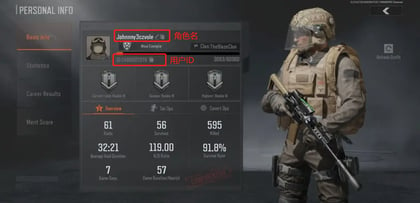
In Dream and Lethe Record, in-app purchases primarily convert real currency into the premium pull and progression resources used for banner pulls, monthly cards, and event passes. Standard top-ups in Southeast Asia are processed through the official VNGGames shop and storefront, where you log in with the same account method you use in-game — Google, Facebook, or Apple ID — and confirm with your Role ID and server. Some players also use the in-app store directly through Google Play or the App Store, though regional shop offers and bonus first-charge rewards typically appear on the publisher's official top-up portal at vnggames.com. Our site offers fast, reliable top-up and recharge for Dream and Lethe Record using your Role ID. Always double-check your Role ID, server, and region before completing any transaction, since cross-region recharges generally cannot be reversed.
FAQ
Q: Is Dream and Lethe Record free to play? A: Yes. The game is free to download and play. In-app purchases accelerate progression and provide additional pull currency, but core content is accessible without spending.
Q: What regions can play Dream and Lethe Record? A: It is officially published by VNGGames for Southeast Asia, with the storefront and servers oriented around that region. Players outside SEA may face connection or account-creation issues depending on their location and store region.
Q: Is the game available in English? A: Yes, English is supported, alongside additional language options that vary by build and region.
Q: Does it have PvP? A: Yes, through an asynchronous Arena mode where you set a defense team and attack other players' teams. Rewards include weekly rank chests and arena shop currency.
Q: Is it auto-playable? A: Most early and mid-game PvE content can be auto-battled once you've completed it manually, but late-game bosses, Edge of Time challenges, and competitive arena climbs reward manual play heavily.
Q: How important are duplicates? A: Duplicates feed into the awakening system, which unlocks passive nodes and stat increases. They're not strictly required to clear PvE, but they're a major power lever for arena and the highest difficulty tiers.
Q: What's the best starter team? A: A balanced lineup with one Attacker, one Controller, one Healer, one Support, and one Tanker. Specific names rotate with patches and banners, so prioritize role coverage over chasing a single named SSR.
Q: How do hero cats work? A: They're collectible companions you level independently. Each cat carries a skill that you can slot onto a hero, granting passive bonuses such as crit, energy, or healing buffs.
Q: Is there a story worth following? A: Yes — story is one of the game's main selling points. The framing of guiding souls through Lethe, paired with reimagined historical figures, gives the writing real emotional weight in the later chapters.
Q: Can I transfer my account between regions? A: Generally no. The SEA build runs on regional servers, and accounts are tied to that region. Use the same login method (Google, Facebook, or Apple) consistently to avoid losing access.
Q: How often do new heroes release? A: Like most modern gachas, the title runs rotating banners with new or rate-up heroes on a regular cadence, typically aligned with story patches and seasonal events.
Q: Is it pay-to-win? A: It's pay-to-progress-faster, in line with the genre. Whales reach endgame benchmarks faster and dominate the top arena tiers, but free-to-play players can comfortably clear all PvE content with patient investment.
Verdict
Dream and Lethe Record is a strong recommendation for players who want a turn-based gacha with genuine cultural identity. Its blend of Chinese manhua art, classical music, historical reimagining, and modern team-building mechanics is unusual in a genre often dominated by anime-styled or Western-fantasy templates. Mechanically, it covers the expected pillars — five roles, gear sets, awakening, arena, guilds — and adds enough novelty through hero cats, the Peach Cottage, and the dynasty-themed Edge of Time mode to feel distinct rather than derivative.
It's an obvious fit for lore-driven RPG fans, collectors who enjoy roster optimization, and players who prefer thoughtful turn-based combat over real-time action. It's a less obvious fit for players who want fast PvP, twitch reflex gameplay, or fully global servers. As a Southeast Asia release operated by VNGGames, it benefits from regional pricing and event localization, but players outside that region should expect some friction.
If you enjoy assembling a squad, optimizing turn order, and slowly uncovering the regrets of legendary souls who never quite let go of the world they left behind, Dream and Lethe Record delivers exactly that experience — with the polish, generosity, and depth that have come to define NetEase's recent mobile output.