Why chasing the biggest discount keeps draining wallets
The percentage crowd isn't dim. They're reacting exactly to what the storefronts condition them toward. A "37% off" flag on a mega pack reads like the strongest line on the page, and now and then it really is. During an April 2026 flash sale, BitTopup listed the 625,000-diamond pack at $110.35, a slice of 21–37% off the claimed official band of $139.99–$179, per BitTopup's 2026 deals guide. Genuine pack, genuine cut.
But the trap snaps shut here. The discount is benchmarked against a claimed official price you can't independently confirm. Chamet's own Google Play listing, updated April 16 2026, lists no specific diamond pack prices in its store copy at all. So when a reseller's "37% off" anchors to $179, nobody outside that platform can verify $179 was ever the live in-app rate. The percentage does emotional work, not arithmetic.
And it conceals the one figure that decides anything: what you actually pay per diamond. A 14%-off small pack can run dearer per diamond than a full-price large one. That contradiction is exactly what the sticker is built to bury.
Diamonds, Coins, and what your cash is actually buying
Quick grounding, since the dual currency snags newcomers. Diamonds are the premium currency you buy with real money to send gifts to hosts and streamers. Coins are the secondary, earnable kind. When you "top up," you're nearly always buying Diamonds, and every comparison here is in Diamonds, because that's where the money goes.
The 30-second cost-per-diamond check that exposes every fake deal

Price divided by diamond count. Done. That's your cost-per-diamond, the only metric that survives contact with marketing. Lower wins.
Run it against June 2026 pricing and the bulk edge stops being a slogan. Per Joytify's June 2026 pricelist:
| Pack (Diamonds) |
Price (USD) |
Cost per 1,000 diamonds |
| 18,750 |
$3.47 |
~$0.185 |
| 62,500 |
$11.57 |
~$0.185 |
| 187,500 |
$34.50 |
~$0.184 |
| 625,000 |
$115.20 |
~$0.184 |
| 1,875,000 |
$343.45 |
~$0.183 |
| 3,750,000 |
$680.01 |
~$0.181 |
| 6,250,000 |
$1,136.27 |
~$0.182 |
Source: Joytify Chamet Recharge (2026) [tier5]
The per-diamond figure barely budges down the whole list, and that's intel worth having: on a steady pricelist, "go big to save" earns you a sliver and nothing more. The genuine bulk uplift surfaces during flash events, never on the standing menu. That April sale dropped the 625,000 pack to $110.35, and the same guide pegs that tier at 22–24% better cost-per-diamond than entry packs once a sale's live. So bulk only lands a real win when an event discount stacks on top of it. On a flat day, a mid pack costs nearly what the mega does per diamond.
Where bulk earns its keep, and where it's pure vanity
Two conditions, both required, before bulk pays. There's an active flash sale, and you'll actually burn the diamonds. Here's what the mega-pack marketing tucks away: dropping $1,136 on 6.25 million diamonds is "value" only if you gift at a clip that drains them. For most non-spenders that's frozen capital wearing a discount badge. A mega pack you'll trickle through across two years isn't a saving. It's prepayment at a rate barely ahead of the mid tier.
The honest optimum for most users is the mid band, somewhere from 62,500 to 187,500. Same effective per-diamond cost as the giants on a normal day, a fraction of the upfront hit, and nothing rotting unused in your account.
Your first top-up bonus is the one move you can't take back
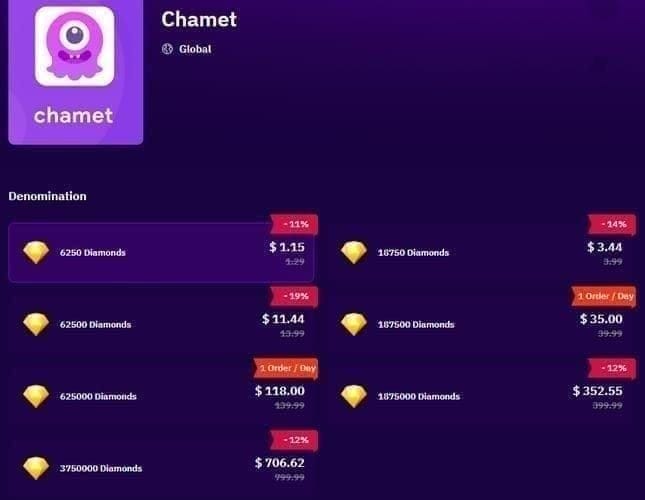
This is where players bleed the most lasting value blind. First-recharge offers are typically the single largest bonus a Chamet account will ever see, and the consensus across 2026 guides (BitTopup, Enjoygm again) is to spend that one-shot offer on a mid-tier pack like 62,500 to wring out maximum bonus diamonds.
The error I watch people make constantly: a cautious newcomer dips a toe with the smallest pack, "just testing," and torches the first-recharge bonus on 6,250 diamonds. The bonus evaporates. No reset. Highest-value moment spent on the lowest-value purchase.
The mechanic worth committing to memory: first-top-up bonuses frequently apply per pack tier, which quietly means your opening pick can lock in your best-ever rate at that tier. Choose the tier you'll realistically keep returning to, and the bonus does repeat duty there rather than sitting on a one-off micro-pack you'll never buy again.
Stacking bonuses inside one window
Second hidden lever: event bonus diamonds can layer on top of pack bonuses when you slot the purchase into the same window. That separates a good top-up from a great one. A first-recharge bonus, during a festival event, on a mid-tier pack, through a verified platform running a flash discount. Four savings layers compounding at once. Miss the window and you're paying for exactly one.
Where the genuinely good deals sit right now
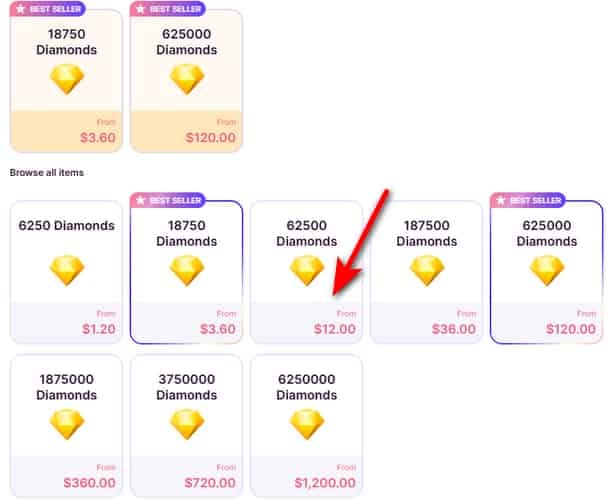
Two channels, two jobs.
The in-app store holds bonus eligibility. First-recharge offers, festival event bonuses, VIP rewards. These hang off your account inside the app and generally can't be cloned by buying diamonds elsewhere. If a stackable bonus window's live, that's where you claim it.
Verified recharge platforms hold raw price. Through 2025 and into 2026 those sites have stayed consistently 10–30% under in-app, with instant delivery and no login friction, per the community top-up guides tracking the market (TOPUPlive, Joytify). Concretely: TOPUPlive's November 2025 guide listed 62,500 Diamonds at $10.71 against a claimed $13.99 official, and 6,250 Diamonds at $1.19 versus a claimed $1.29.
The smart play isn't loyalty to one channel. It's matching the channel to the moment. Claim bonus-eligible buys in-app during events. Route plain restocks through a verified platform for the lower per-diamond cost.
Disclosure: this piece is published by VGTopup, itself a recharge platform. So weigh the channel advice accordingly, then do the one thing that cuts past any bias: compute the per-diamond cost yourself. If you've decided to pull the trigger, Chamet Diamonds top up is one transparent option worth pricing against the in-app rate for the exact pack you're after. Pick whichever genuinely costs less. The numbers make the call, not the logo.
How to spot a real discount versus a dressed-up one

The verification camp and the trusting camp split hardest here, and the verification camp has it right, because the cost of guessing wrong is your whole balance, not loose change.
A handful of honest red flags, pulled from what the 2026 safety guides keep flagging:
- A discount with no per-diamond price visible. If a "50% off" tag won't let you derive cost-per-diamond, it's marketing dressed as a deal. Do the division before you trust the sticker.
- Urgency on an offer that recurs. Enjoygm's 2026 timing guide notes weekend flash sales land 2–3 times monthly. A "last chance!" banner on a sale that loops back in a fortnight is manufactured pressure. The offer rotates in again, so urgency buying rarely pays.
- A platform with no checkable reputation. Unverified sites risk account trouble, per LootBar and several 2026 guides; the advice is sticking to established platforms with public Trustpilot ratings (LootBar sits at 4.9/5).
Before you pay: confirm the platform wants your Chamet ID rather than your account password (legitimate ID-based top-ups never need a login), check for a real third-party review footprint, and price the pack per-diamond against in-app. If it's wildly cheaper than everything else and the platform's anonymous, that's not a bargain. That's the setup for watching your balance vanish.
Regional pricing: real, but don't oversell it to yourself
Pack prices do shift by billing region, and the "same" pack can land cheaper depending on the storefront's market. A genuine lever. But the published, verifiable deltas are thin. Most circulating pricelists, the Joytify and TOPUPlive figures above, are US-focused. For markets like India, regional resellers such as Transact Bridge are noted as official partners, per Transact Bridge's 2025 India guide, though exact India-versus-US gaps aren't publicly tabulated in any form I'd stake a recommendation on.
So treat regional savings as a check, not a plan. If you're in India, Indonesia, the Philippines, or Brazil, it's worth weighing a local verified reseller's per-diamond cost against the US-denominated platforms. Sometimes the local rail or currency tilts your way. Just don't bank on a fixed percentage nobody's actually published.
Timing beats every standing discount
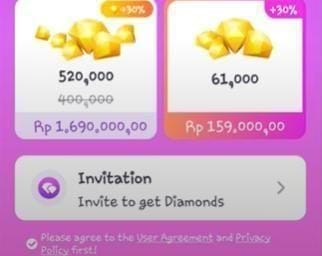
If one habit survives from this whole article, make it this: time your top-up to an event window. Standing discounts run small and steady. Event stacking is where the savings genuinely compress.
Per Enjoygm's guide, expect those weekend flash sales 2–3 times a month, with major holiday and festival events being the prime windows. Since they recur on a roughly predictable cadence, there's almost never cause to panic-buy at full sticker. Wait it out. When a festival bonus, a flash discount, and (if you're new) the first-recharge offer all align on a mid-tier pack, you're banking more value in a single purchase than any "limited time" full-price banner could ever hand over.
The sharpest 2026 top-up, by player type
Three profiles, three clean calls.
-
Casual sender gifting now and then. Buy small packs (6,250 or 18,750) on a verified platform during a weekend flash sale, per the casual-user guidance across BitTopup and Enjoygm. Don't pre-stock. Don't chase bulk you won't drain.
-
Regular gifter with monthly mid-to-high spend. Target the 625,000 pack on a verified platform inside a flash window for the best per-diamond rate, and stack whatever VIP bonuses you qualify for. This is the one profile where bulk truly earns its keep.
-
First-time buyer holding the first-recharge offer. Spend it on a mid-tier pack like 62,500 to max the bonus, claimed in-app where the offer lives. Whatever happens, don't squander it on the smallest pack.
The thread binding all three: cost-per-diamond is the verdict, bonus timing is the multiplier, verification is the insurance. Lock those three and no banner overcharges you again.
Frequently Asked Questions
Is it actually safe to top up Chamet Diamonds outside the app?
Yes, when the platform's verified and uses your Chamet ID rather than your account password. Legitimate ID-based recharges never ask for a login. The risk sits entirely with anonymous, no-reputation sites, which can cost you your whole balance, per LootBar and other 2026 safety guides. Stick to platforms carrying public review histories.
What's the worst mistake a new Chamet buyer can make?
Spending the first-recharge bonus on the smallest pack. That offer is usually the largest bonus your account will ever get, it doesn't reset, and the common 2026 guidance points to a mid-tier pack like 62,500 instead. Blow it on 6,250 diamonds and you've handed your best moment to your worst buy.
Do limited-time Chamet deals really expire, or do they come back?
Most loop back. Enjoygm's timing guide notes weekend flash sales running 2–3 times monthly on a roughly predictable cadence. So "last chance" urgency on a recurring sale is manufactured. Miss one window and another shows up within weeks. Panic-buying at full price almost never works out.
Is the mega pack actually the best value?
Only with an active flash sale and the appetite to genuinely spend the diamonds. On Joytify's flat June 2026 pricelist, the 6.25-million-diamond pack runs roughly the same per diamond as the mid tiers, around $0.182 per 1,000. Drop over a thousand dollars on diamonds you'll trickle through across years and that's frozen capital, not savings.
How do I quickly compare two Chamet offers?
Divide price by diamond count for cost-per-diamond, then compare that number and ignore the discount percentage outright. A 14%-off small pack can still cost more per diamond than a full-price large one. The division takes ten seconds, and it's the only check that survives the marketing.





Comments