What a single Diamond actually gets you
Diamonds are the premium currency, the thing you hand real money over for. You turn them into Coins, and Coins are what get spent on gifts to hosts, VIP perks, and private calls (those run around 70 Coins a minute in 2026, per Buffget). Cash becomes Diamonds, Diamonds become Coins, Coins become a virtual rose somebody waves at you on stream.
Why bother with this before comparing deals? Because every cent you overpay at the Diamond stage compounds the whole way down. For a regular gifter feeding Coins in weekly, a 20% markup isn't a one-off irritation. It's a quiet levy on every gift you'll ever send. Keep that in mind for what follows.
How the 2026 fee reshuffle widened the in-app gap

The chasm between web and in-app pricing isn't accidental, and it widened in a way you wouldn't expect. For most of 2026 and 2025, the app stores took a flat ~30% slice of in-app purchases, quietly stitched into the price you saw on screen. Then 2026 dealt new cards.
Google shifted to a tiered model, 15–20% for many developers, down from the old 30%, per the Google Android Developers Blog. Their exact phrasing: "15% fee on transactions from new app installs" (Android Developers Blog, Mar 2026). Apple's small-business programme holds at 15% commission for anyone under $1M annual revenue, per RevenueCat.
And here's the part that ought to annoy you. Cheaper platform fees did not, in any visible way, become cheaper Diamonds. The 62,500 pack still sits at $13.99 in-app in the US while the same lot runs $10.45–$11.99 on third-party portals, a 17–25% gap that sailed straight through the fee cut untouched. TOPUPlive's 2026 numbers land in the same neighbourhood. The reduction mostly fattened margins instead of reaching buyers, and the web-versus-app spread stayed exactly as wide as before. That gap is the backbone of everything I'm about to recommend.
The cost-per-Diamond ranking for April 2026
Loads of pages list Chamet prices. Almost none do the one division that matters, price over Diamond count, which is the only number that tells you which tier is actually worth buying. So here's April 2026 with that sum already done.
| Pack Size |
Third-Party Price (USD) |
In-App Price (USD) |
$/Diamond (Third-Party) |
$/Diamond (In-App) |
| 6,250 |
$1.07–$1.19 |
~$1.49 |
$0.171–$0.190 |
$0.238 |
| 62,500 |
$10.51–$11.99 |
$13.99 |
$0.168–$0.192 |
$0.224 |
| 625,000 |
$110.35 (flash) |
$139.99–$179 |
$0.176 |
$0.224–$0.286 |
| 3,750,000 |
$657.83–$706.62 |
$799.99 |
$0.175–$0.188 |
$0.213 |
Source: BitTopup & TOPUPlive 2026 Comparisons (2026).
Two things jump out once that per-Diamond column exists. The in-app 6,250 starter at $0.238 is the single worst value on the board, and it's the exact tier a first-timer reaches for on instinct. That smallest starter delivers the feeblest rate, with bulk tiers running 22–26% better, per the same price guide. Put those columns side by side and the starter gap is what cures you of tapping "buy" inside the app without thinking.

Second, and this is the slightly contrarian bit, the monstrous 3,750,000 pack posts the best raw rate at around $0.165–$0.176, roughly 26% below the small packs, per BitTopup's value guide. But look how flat the third-party column goes from 62,500 upward: $0.168 to $0.176, barely a sliver. You don't need to punt $658 to land near-optimal value. The 62,500 web pack already carries you 90% of the way. That distinction matters more than it looks for the spend-level advice next.
The right pack hinges entirely on how much you gift
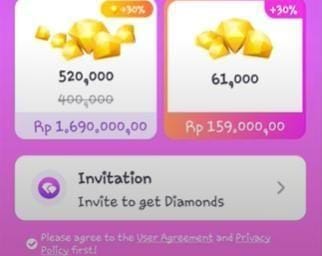
Generic guides hand everyone the same answer. The honest one forks three ways by spend level, and the figures support a clean split at each.
- Casual viewer, occasional gifter. Grab a small pack on your first top-up to bag the 20–100% bonus, and buy it on the web to dodge the platform markup, per the persona breakdown in the price guide. Don't chase mega packs you'll never empty. Here, the bonus is the entire game.
- Regular gifter, monthly top-up. The 62,500 or 187,500 pack via a third-party channel nets 15–25% savings, per TOPUPlive (2026), and stacks neatly with monthly events. The 187,500 specifically runs $35.00 third-party against ~$39.99–$46 in-app, a 12–24% saving on the same numbers. This is where most active users should park themselves.
- Heavy gifter, high-spender. The 625,000+ mega pack in a flash window, paired with VIP Superior's 10% recharge bonus, can hit up to 54% effective savings over plain in-app buying. At that volume, the per-Diamond gulf is too big to wave off.
My honest read: most people file themselves one tier too high. They buy the mega pack picturing the marathon gift sessions they'll throw, then sit on a Diamond hoard for months. If you can't swear you'll spend it within a quarter, drop a tier. The per-Diamond penalty for 62,500 over 3,750,000 is a few tenths of a cent, which beats your money fossilised in an app wallet. Which brings us to the bonus everyone overrates.
First top-up bonus: a real win that's also bait
The first-recharge bonus is genuine value, and it's also engineered to start a habit. Both are true at once. It runs 20–100% extra depending on package size, once per account, per BitTopup's bonus guide. A 100% bonus on the 62,500 pack effectively halves your cost-per-Diamond against the standard mega pack, per Buffget (2026). That's not fluff. It's the single best rate any account will ever see.

But the mechanic that decides whether you actually pocket it is simple. Since the bonus typically fires once per account, the pack you pick for that first buy is the highest-leverage choice in the whole exercise. Spend it on the 6,250 starter and you've squandered the best deal Chamet will ever wave at you on its weakest tier. Spend it on a mid-or-large pack and the thing does proper work. I'd save the first-recharge bonus for the largest pack I'm genuinely sure I'll burn through, not the largest one my card can survive.
The stacking trick most casual buyers walk past: VIP Superior's 10% recharge bonus layers with the first top-up bonus and with flash-sale pricing, which is how that 54% figure above actually gets built. Three discounts on one purchase. Line all three up on a single mid-or-large web pack and you've found the practical floor on Chamet Diamond cost. Now, the trap baked into all of it.
Why your mate abroad pays less, and why copying him is a mistake

Regional pricing is real, sizeable, and mostly not worth the bother. In-app premiums in several markets sit well above the global third-party USD rate, and the cause is currency and exchange effects, not some secret discount waiting to be prised open.
| Market |
Local In-App (USD equiv) |
Third-Party USD |
Delta % |
| United States |
$13.99 |
$10.45–$11.99 |
17–25% |
| India |
$15–$22 |
$10.45–$11.99 |
30–45% |
| Indonesia |
Higher local |
$10.45–$11.99 |
25–35% |
| Brazil |
Higher local |
$10.45–$11.99 |
25–40% |
| Saudi Arabia |
Higher local |
$10.45–$11.99 |
20–30% |
Source: BitTopup Chamet Diamond Price Guide 2026 (2026).
India is the bluntest case: the 62,500 pack runs ₹1,260–1,801 (~$15–$22) in-app, 30–45% over the third-party USD rate. Indonesia, Brazil and Saudi Arabia all carry 25–45% local in-app premiums against that same global figure. The US third-party market stays the cheapest stable option, and the reason web pricing flattens all this is dull but solid: it's quoted in global USD, so the local exchange premium simply evaporates.
So what's the move? Buy third-party in USD wherever you happen to live, which captures the saving without poking at your account region. The "VPN into a cheaper region" route gets plenty of airtime, but I'd give it a hard miss. Account safety beats a thin slice of currency arbitrage, and region-spoofing is precisely the sort of behaviour that invites a frozen account. The delta in that table is legitimately yours just for picking the right channel.
The biggest money mistake isn't picking the wrong pack. It's letting promos drive the bus. Chasing limited promos without buying in bulk leads to overspending; disciplined large-pack purchases pay off over the long run, per BitTopup (Apr 2026). The "bonus rate" headline conveniently hides total outlay. A 40% bonus that lures you into buying twice what you planned isn't a saving, it's the app spending your money on your behalf. The figure to run is cost-per-Diamond on what you'll actually use, never the bonus percentage glowing on the screen.
On safety, the evidence is clear and I'll stand behind it: verified third-party top-ups are safe and good value when handled properly. Community consensus across Reddit and Discord through 2026 holds that they're fine if you use a verified Chamet ID on reputable sites and steer clear of unverified sellers, per the price guide. The risk was never "third-party" as a category. It's unverified channels, which can mean account locks or simple non-delivery. Reputable portals hand over Diamonds instantly via your Chamet ID with no app login at all, per Codashop.
The process itself is short:
- Find your Chamet ID in the app profile.
- Pick your pack on a verified portal.
- Enter your exact Chamet ID, then check it again.
- Pay with a supported method.
- Diamonds land within minutes.
If you're price-checking tiers before you commit, you can compare live per-Diamond value on platforms like Chamet Diamonds top up. VGTopup publishes that comparison, so weigh it accordingly and cross-reference the per-Diamond column above against whatever you're quoted. The neutral point holds regardless: confirm the channel is verified, confirm the ID, and the savings in these tables are real.
A sober word on refunds. Digital currency is notoriously hard to claw back once it's hit an account. That's not some third-party quirk; it's just as true of in-app buys. The defence is identical either way: get the ID right the first time, because there's rarely a tidy undo. Which is the entire case for buying deliberately rather than panic-tapping on a flash-sale countdown.
What moves next, and the buy I'd make today
The 2026 fee restructuring is still bedding in, and it's possible some of that 15–20% platform saving eventually leans on in-app prices. Nothing in the current numbers suggests Chamet has passed any of it on yet, though; the web-versus-app gap held firm clean across the cut. Until that shifts, the web channel's advantage isn't going anywhere.
The flash-sale rhythm is the near-term thing to watch. BitTopup logged April windows on Apr 4–6, 11–13, and 25–27 with 21–37% discounts on the 625,000 pack. Heavy gifter? Timing a mega buy to one of those slots and stacking VIP is the highest-value move on the calendar. For everyone else, the boring answer wins again: park your first top-up bonus on a mid-or-large web pack, ignore the starter tier, and don't let a ticking timer sweet-talk you into Diamonds you'll never spend.
Frequently Asked Questions
Will the 2026 app-store fee cut make in-app Chamet Diamonds cheaper soon?
Not yet, and there's no real signal it's about to. Even after Google dropped to 15–20% fees (per the Android Developers Blog), the in-app 62,500 pack stayed at $13.99 while third-party held at $10.45–$11.99. The saving padded margins instead of reaching buyers, so the web gap persists. Keep half an eye out for a price drop, but don't buy in-app betting one's coming.
Is the first top-up bonus better on a flash-sale day or a normal day?
Aim for a flash-sale day if you can manage it. The bonus stacks with flash pricing and with VIP Superior's 10% recharge bonus, and that triple-stack is how the 54% savings ceiling gets built. The snag: the first top-up bonus is one-time per account, so don't waste it on a tiny pack just because a promo happens to be live. Match it to a mid-or-large pack you'll genuinely use.
Does buying Chamet Diamonds in USD work if I'm in India or Brazil?
Yes. Third-party portals quote in global USD, which is exactly why they cancel out the 25–45% local in-app premium across India, Indonesia, Brazil and Saudi Arabia (per the BitTopup regional data). You get the cheaper rate without touching your account region. Skip the VPN region-spoof; the legitimate USD channel already grabs the gap, minus the account risk.
What's the worst Chamet pack to buy in April 2026?
The in-app 6,250 starter, at roughly $0.238 per Diamond, the weakest value anywhere on the board. Bulk tiers run 22–26% better per Diamond. And if it's your first purchase, the starter is doubly wasteful, because it blows your one-time bonus on the lowest-value tier going.
Can I get a refund if I top up the wrong Chamet ID?
Realistically, no. Diamond purchases are hard to reverse once they land, whether bought in-app or on the web. There's rarely a clean undo, so the only dependable safeguard is entering your exact Chamet ID carefully before paying and sticking to a verified channel. Unverified sellers just pile a non-delivery risk on top of the no-refund reality.





Comments