Ten Hardest Cars to Drive in Ace Racer — A Skill-Floor Ranking
Ace Racer hands out cars like candy, but a depot full of legendary metal does not automatically translate to clean lap times. NetEase's racer rewards players who actually know their car's drift beh...
Ten Hardest Cars to Drive in Ace Racer — A Skill-Floor Ranking
Ace Racer hands out cars like candy, but a depot full of legendary metal does not automatically translate to clean lap times. NetEase's racer rewards players who actually know their car's drift behaviour, weight transfer, and ultimate timing — and a handful of vehicles in this game punish bad inputs harder than anything else in the garage. The countdown below is built around driving difficulty, not raw tier strength. Some of these cars are excellent in expert hands; others are simply punishment boxes that expose every flaw in your steering. Either way, if you saw any of them on a teammate's profile and assumed an easy lobby, think again.
The Speedster, Supporter, and Interceptor classes each have their own quirks, but difficulty here is mostly about chassis behaviour: how a car drifts, how heavy it feels mid-corner, how much grip it loses when you boost into a hairpin. With that in mind, here is a working list of the ten cars in Ace Racer that demand the most from a driver.
Sitting at the tenth spot is the Dodge Charger SRT Hellcat, an American V8 brute that the creator dryly labels "eco-friendly" because of how aggressively it burns through everything in its path. Its skill ceiling is exactly the kind of trait that makes a car polarising: in average hands the Hellcat feels heavy, twitchy, and prone to running wide, but pushed correctly it gets stronger the harder the lobby is. Two strengths and one weakness sums it up — power is not actually the headline, but the car rewards aggressive lines and direct contact, which lines up with how the Hellcat is positioned in the wider Ace Racer roster as a Supporter unlocked through ranked rewards. It is not a car for someone still learning when to lift off the throttle.
Ninth place is where things start to feel slippery in a literal sense. The Ferrari SF90 has a simple problem: every other car in Ace Racer gets more stable as it accelerates, and the SF90 does the opposite. The faster you go, the more the rear steps out, and every drift turns into a flirtation with a complete spin. One bad input and the car will literally pirouette in place mid-corner. That is why the creator labels it a veteran-only ride. There is no magic setup that makes this go away — you either learn to feather the brake into corners and respect weight transfer, or you eat walls every lap. The car has an enormous skill ceiling because the upside, when you actually nail the rotation, is sharper turn-in than almost anything else in the lineup, but the downside is brutal.
Both of these cars share a theme that runs through the rest of the list: punishing handling combined with genuine top-end potential. They are not bad cars; they are cars that demand muscle memory. Players coming from beginner-friendly Speedsters like the Porsche 911 GT2 RS — which the game hands you for free after seven days of the Rookie Program — will find the jump in difficulty genuinely jarring. The Porsche has Cyclone Charge, slipstream nitro, and a 30 km/h head-start cushion baked into its kit; the Hellcat and SF90 have none of that hand-holding. You have to earn every place.
If you are still working through Career Mode and have not gotten comfortable with controlled drifts and red-drift correction, neither of these belongs in your daily driver slot. Park them, learn the fundamentals on something with a more forgiving chassis, and circle back when you can hold a slide without panicking off the throttle.
Eighth and Seventh — The Straight-Line Trap and the Taycan
The eighth slot belongs to a car the creator nicknames the "straight-line king, corner grave." The pitch is brutal: invincible on straights, completely shut down in corners. Two extremes, no middle ground. Controlled correctly, it behaves like a dragon; controlled badly, it is a worm. The deciding moment comes when the car gets pushed wide — once it slips outward off the racing line, there is no recovery, no nitro trick, and no ultimate that pulls you back from the wall. This is the kind of car you only run on tracks that are mostly long straights and gentle bends, because anything resembling a tight chicane will end the lap.
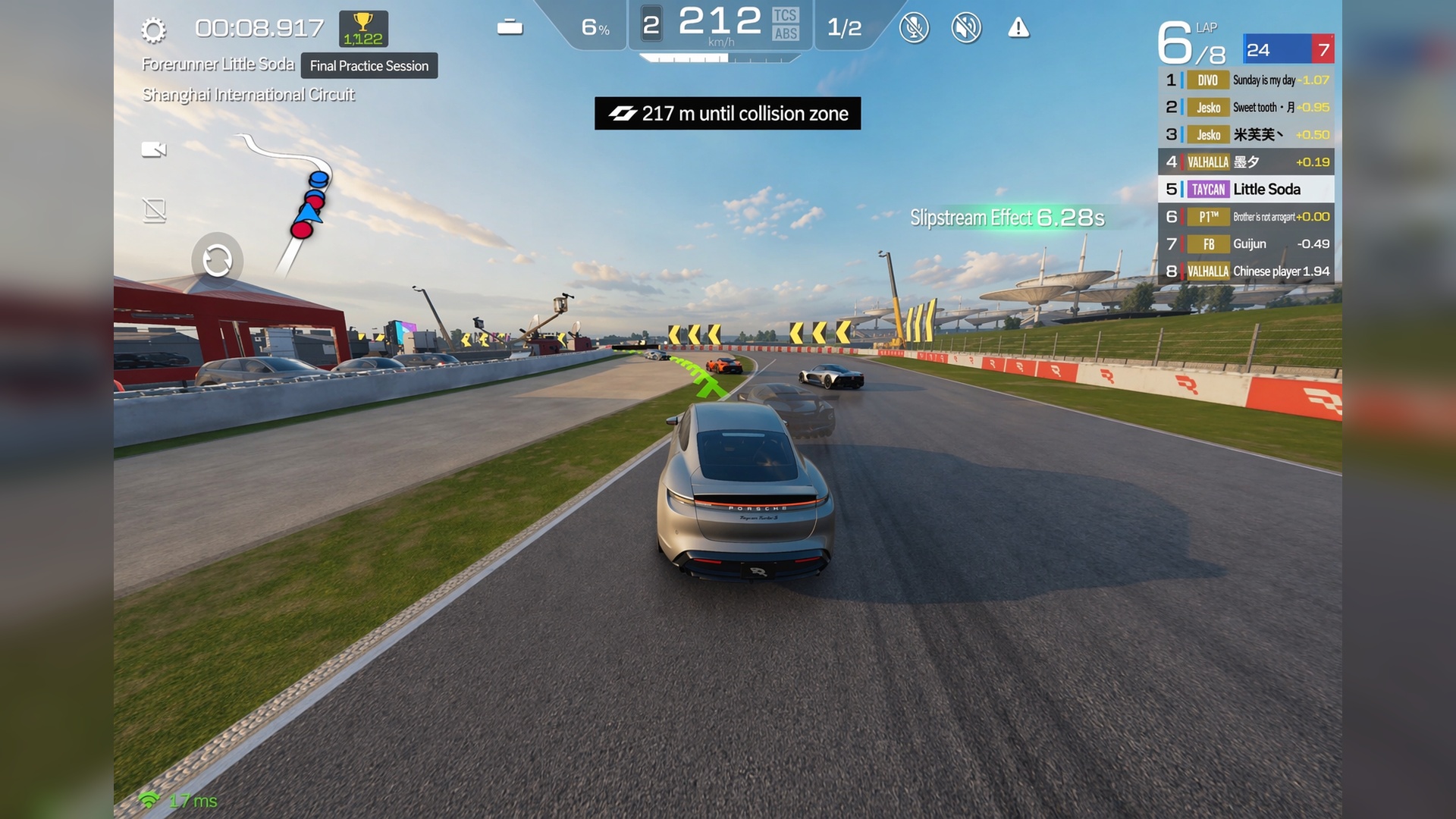
Seventh is the Porsche Taycan, and it is a wonderful object lesson in why power figures lie in this game. The creator notes it has output comparable to a Bugatti Centodieci, which sounds terrifying on paper. In practice, the brute force is wasted. Acceleration is not actually fast, top speed is not actually high, and the whole car feels like a workout to drive. The 1976 kg curb weight tells most of the story — the Taycan is heavy, and weight in Ace Racer translates directly to a sluggish drift response and a long, long brake distance. A bad red drift in this thing does not just slow you down, it cuts power outright, which the creator describes as "ripping the keys out of the You sit there, stalled, watching the pack disappear.
What makes the Taycan especially tricky is that it tempts new players. The Porsche badge, the EV gimmick, the headline power number — all of it suggests a top-tier car. The actual experience is a heavy, slippery brick that requires precise drift management. If you cannot reliably hold a controlled slide through a sweeping corner without overshooting, this car will not respect you.
Both eighth and seventh share the same problem in different flavours: the chassis cannot keep up with the engine. In a game where the meta is dominated by S-tier picks like Shining, Faraday, Singularity, and Disruptor — cars whose ultimates and attributes specifically reward clean inputs and good positioning — running a vehicle that fights you in every corner is a serious handicap. You can absolutely win lobbies on these, but only if your fundamentals are already solid and you are choosing the cars deliberately, not because the visuals looked nice in the garage.
The honest take: most players should treat both of these as "weekend project" cars. Bring them out on tracks you have memorised, run practice laps until you understand their break points, and only then consider taking them into ranked. Otherwise they are just expensive ways to finish in the back half of the lobby.
Sixth and Fifth — ZEEKR 001 and the Passat
The sixth slot is the ZEEKR 001, billed as Ace Racer's first pure-electric "gold-grade" car, and also the heaviest sports car in the game. The pitch is bipolar in a very specific way: the launch acceleration is described as terrifying, genuinely top-tier off the line, but everything past the early phase falls apart. Mid-corner and late-stage acceleration are a mess, and the weight transfer is glacially slow. If you commit to a horizontal drift in this car, the ZEEKR will happily stand still and serve a "penalty" while the rest of the field disappears around the next bend.
The blunt advice from the creator: if you do not understand controlled-power drifts, do not even pick this car. It is the textbook example of a vehicle whose stat sheet looks competitive but whose actual lap times depend almost entirely on whether the driver can manage weight shift through a corner sequence. New players see "first pure-electric gold car" in marketing copy and assume that means meta. It does not.
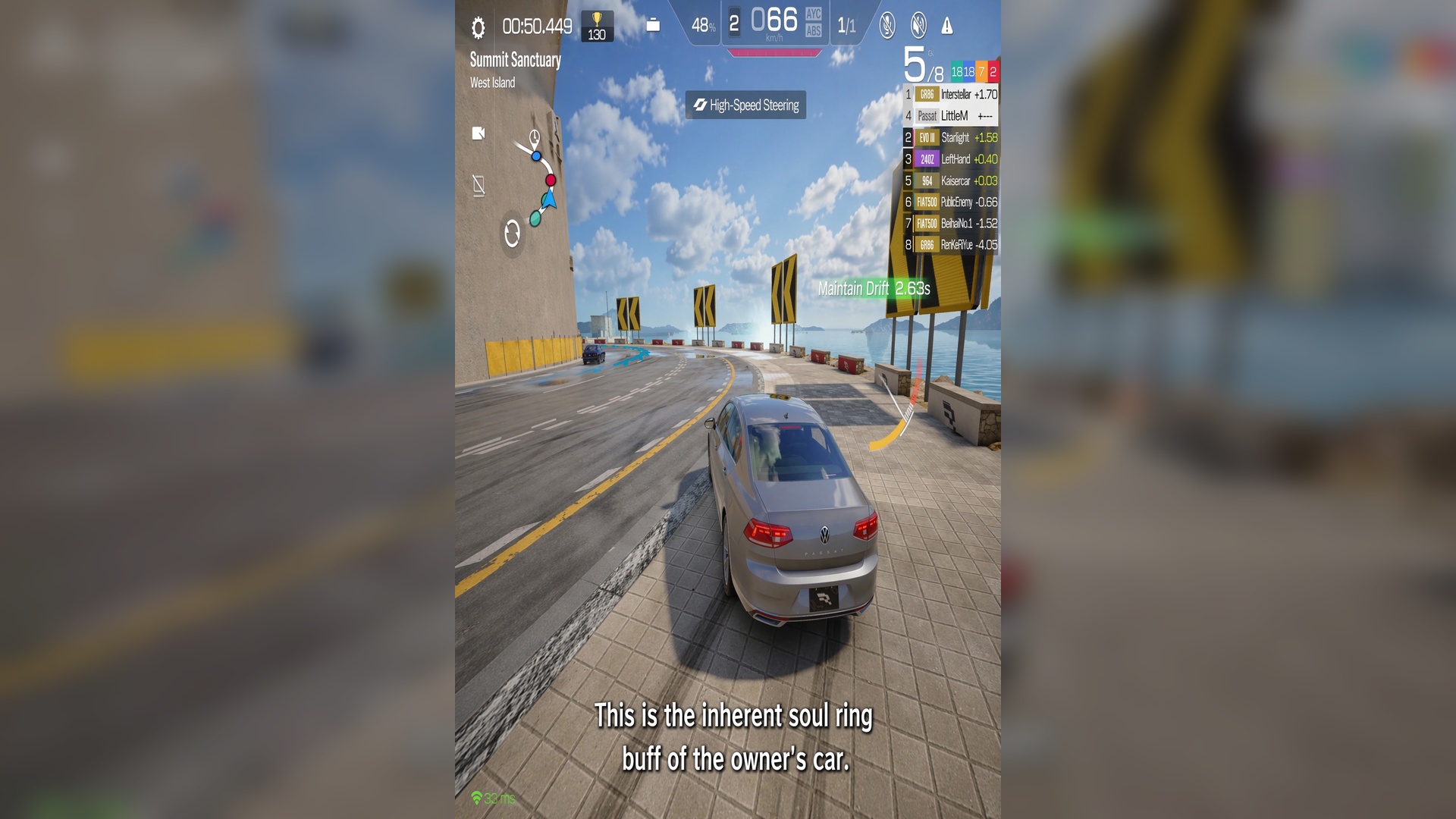
Fifth is the Volkswagen Passat, and the joke from the creator is that before you can drive the Passat, you have to negotiate with it. The car behaves as if it remembers its previous owner and is actively trying to fight you the entire lap. Even with the panel showing a relatively modest 1530 kg, front-wheel drive, 2020 model year — numbers that suggest a tame everyday car — the in-game handling is anything but. The creator goes as far as saying that even a properly modified Laferrari would not out-drift this Passat once the chassis decides to behave badly. It just sits there in silent contempt, no matter what input you give it.
That comparison is hyperbolic, but the underlying reality is consistent: the Passat is an exceptionally counterintuitive car. Inputs that would work on any other front-wheel-drive vehicle in Ace Racer produce unexpected results here. The tail steps out at the wrong moment, recovery feels delayed, and conservative tuning does not solve the problem. The dossier even flags the Passat as something with no documented stats or competitive appearance in Ace Racer's mainstream tier, which lines up with the creator's view — this car is more meme than meta.
Compared with the Supporter cars that actually dominate the meta — the Aston Martin Vanquish with its 600 m teammate-charge ultimate, the Volkswagen I.D.R with its Vanquish-style kit and extended turbo duration, or the Catalyst with its Hyper Mapping acceleration portal — running the Passat as a Supporter slot is essentially throwing the race. There is no scenario in which this is the right pick if you are trying to win. The only reason to take it is the challenge itself.
If you genuinely want to climb ranked and you have any S-tier or A-tier alternative in your garage, neither of these belongs in the rotation. They are fascinating to study, but they are not winning tools.
Fourth and Third — S2000 and Audi RS7
Fourth on the difficulty list is the Honda S2000, which the creator labels Ace Racer's most steering-sensitive car. The phrase used is that the S2000 makes "spinning in place" feel like a routine occurrence. Even a light tap on the steering input can produce an uncontrolled slide. Conservative tuning — the usual workaround for twitchy cars — does not help here. The chassis is just that reactive, and the high-revving naturally aspirated engine does nothing to settle it down.
The S2000 is the kind of car where every turn is a negotiation between you, the throttle, and the steering input. There is no magic setup. You either develop the touch for it or you write off the lap. It is also one of the cars where the creator's tone shifts from "punishing" to "actively hostile" — the implication being that even compared to the SF90, the S2000 is a step up in steering difficulty. That is saying something.
Third place lands on the Audi RS7, described as the biggest "brick" in the game. Either the car parks itself in a red drift or it slingshots into a wall — there is rarely a third option. The red drift might not be the slowest in the lineup, but it is unquestionably the stiffest, with almost no recovery margin once the car commits to that motion. Beyond a modest acceleration profile, the creator finds nothing redeeming about the package. The phrasing is sharp: famous on paper, defeated in practice.
Position
Car
Primary failure mode
4th
Honda S2000
Hyper-sensitive steering, spins on light input
3rd
Audi RS7
Stiff red drift, walls on outward slide
The RS7 stings because the Audi RS7 Sportback is one of the cars unlockable through the Luxury Car Rental system, meaning a lot of players will end up driving it without choosing to. They sit down expecting a premium experience and find a vehicle that the wider community has largely written off. The 2065 kg weight figure visible on its stat panel is part of the problem — that much mass in a Speedster slot, where nimble cornering is supposed to be the defining trait, is a structural mismatch.
Both of these cars highlight a recurring theme in Ace Racer: bigger and heavier is almost never better. The cars that consistently appear at the top of community tier lists — Shining, Faraday, Singularity, Zen, Infiniti Prototype, Mini JCW — share a common trait of being responsive and predictable. They reward inputs cleanly. The S2000 and RS7 reward inputs unpredictably, which is the difficulty trap.
If you have an Excalibur, a Rocketfox, or a Porsche 911 GT2 RS sitting in your garage, those are the comparison points. The 911 GT2 RS in particular is a useful benchmark because it is given out free, has a 30 km/h headstart attribute, and uses Cyclone Charge to sidestep tricky corners entirely. Going from that to an S2000 or RS7 is a deliberate choice to make racing harder. Some players enjoy that. Most do not.
Second and First — Jaguar XJ220 and Ford Mustang GT
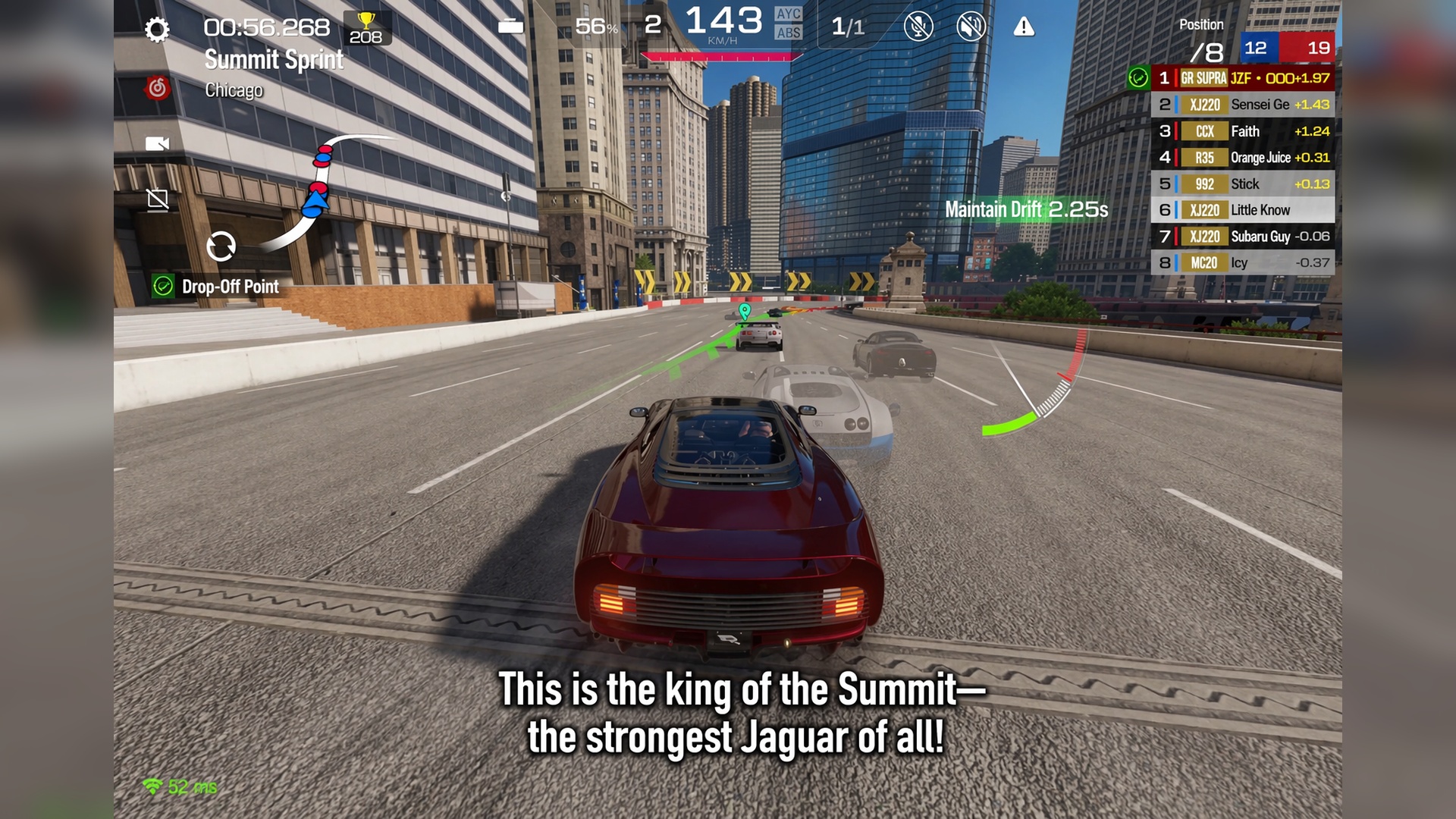
Second place goes to the Jaguar XJ220, the "strongest jaguar king" of Ace Racer, and the creator is brutally honest about why it is so hard. The car drives as if the front and rear were designed by two different teams who never spoke to each other. The 1470 kg mid-rear-drive layout sounds reasonable on paper, but in practice the steering response of the front end never matches what the rear is doing. Add to that a chassis the creator describes as having butter on the tyres — exceptionally slippery, exceptionally prone to wall contact — and you get a car where the skill demand is genuinely elite. Only top-tier players post strong scores in it.
The XJ220 is also a perfect example of why difficulty does not equal weakness. In the right hands the upside is real. The mid-rear layout, when you can actually balance it, gives a sharp rotation profile that lets a skilled driver carve corners faster than most Speedsters can manage. The catch is that "the right hands" here means hours of practice, not casual play.
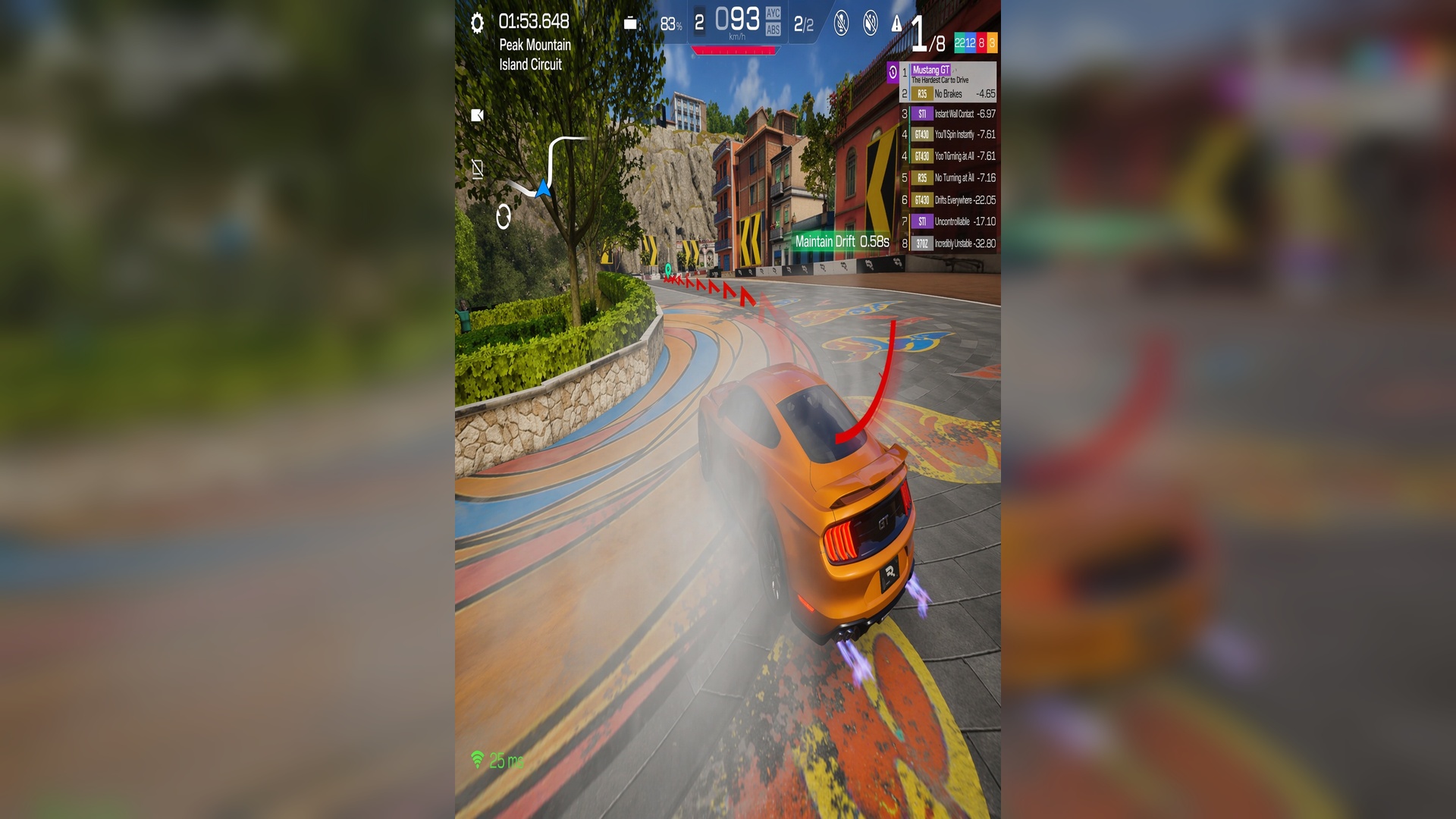
First place is the unanimous pick: the Ford Mustang GT. The creator's description is essentially a horror story. The car has no brakes — not in the literal sense, but in the practical sense that nothing you do will slow it down in time for a corner. Enter a turn, hit the wall. Ten oxen could not pull it back onto line. The red drift, the universal recovery tool every other Ace Racer driver depends on, does not slow the Mustang GT down — it accelerates the car instead. Turning the chassis sideways does nothing. Even a Pagani-style super drift would have to admit defeat against this thing.
The capper is the creator's claim that even the most respected Bugatti specialist in the community brakes ten or more car-lengths early when driving the Mustang GT. That is not a casual note — that is a serious admission that the highest-level players in the game still respect this car's stopping problem. It earns the top spot not because it is bad, but because the difficulty curve is unlike anything else in the lineup.
Position
Car
Defining flaw
2nd
Jaguar XJ220
Front and rear behave as two cars; slick chassis
1st
Ford Mustang GT
Red drift accelerates instead of slowing; no usable brake into corners
It is worth noting that the Ford Mustang line in Ace Racer has multiple variants — the 2015 Ares trim, the 2015 Night Viper, the 2017 model, and the 2020 Graffiti Tribe edition. The video specifies the GT trim as the difficulty winner, which separates it from the more user-friendly Mustang variants used in tier-list discussions of the Ares-style Interceptor build. Different chassis tunes, different driving experience.
Where These Cars Sit in the Wider Tier Picture
Difficulty and tier ranking are not the same axis, and that is worth driving home before anyone files a Mustang GT under "trash." The community tier list places cars by competitive viability with a skilled pilot, while this countdown ranks by skill floor. A car can sit in S tier and still be brutally hard — and a hard car is not automatically meta.
Here is how the difficulty ten map onto the tier landscape, where the dossier provides confirmation:
Strong meta picks largely absent from this list: Nissan GT-R Nismo, Aston Martin Vanquish, Disruptor, Singularity, Zepyhrus, Faraday, Zen, Infiniti Prototype, Shining, Motoracer, Mini JCW, Helios, Catalyst. These are the cars top players actually run because their ultimates carry hard and their handling is forgiving enough to not throw away laps.
Cars from this difficulty list that appear in the lower tiers of the consolidated list: Aston Martin DB11 (B tier Speedster), BMW M8 GTE (B tier Speedster), Ford Focus RS (B tier Supporter), Volkswagen Beetle (B tier Supporter). None of these are difficulty-ten picks, but they share a theme of being unimpressive at the top end.
Cars in this difficulty list with no clear meta home: Honda S2000, Jaguar XJ220, ZEEKR 001, Volkswagen Passat, Porsche Taycan. Most show up as flavour picks, gacha pulls, or roleplay cars rather than ranked staples.
The takeaway for new players: an S-tier sticker on a tier list does not promise an easy ride. The Helios Interceptor, for instance, is dominant when held at the front of the pack — its tire-flame ultimate strips enemy ECU and slipstream — but you have to actually hold the lead until it charges, and that requires clean driving. Conversely, a Rare like the Ares is perfectly easy to drive and perfectly viable as a starter Interceptor, while the Mustang GT, sharing the same Ford Mustang nameplate, sits at the bottom of this difficulty pile.
Practical Approach for Drivers Tackling These Cars
If after all that you still want to take any of these on, the order of operations matters. The Ford Mustang GT, the Jaguar XJ220, and the Honda S2000 are not cars you take into ranked cold. They want lab time on tracks you already know.
A reasonable ramp:
Spend serious time in something predictable first. The 911 GT2 RS, with Cyclone Charge handling sharp corners for you and a 30 km/h headstart cushion at launch, is the obvious teaching tool. The Volkswagen I.D.R as a starter Supporter teaches you how slipstreaming and turbo duration work without punishing mistakes hard.
Move to the medium-difficulty Interceptors next. Ares is starter-available and shares its ultimate with the Mustang's Interceptor cousin, giving you a feel for collision-based playstyles. BMW i8 teaches you how partial-charge starts and electric-barrier control shape the front of the pack.
Only then approach the difficulty list — and approach it in reverse. Start with the tenth-place Hellcat, where the danger is mostly aggression management, and work upward. Skipping straight to the Mustang GT or XJ220 because they look interesting almost guarantees a frustrated quit.
A short pros-cons block for the players still tempted:
Pros of running difficulty-tier cars:
Real skill development; once you tame an S2000 or SF90, normal cars feel trivial
Genuine top-end ceiling on Mustang GT and XJ220 in expert hands
Distinctive handling identity makes lobbies more memorable
Cons:
Lap consistency is awful until you put in serious practice
Most have no competitive justification over tier-list S picks
Red-drift mechanics behave abnormally on Mustang GT and ZEEKR 001 specifically, breaking habits learned elsewhere
ECU and durability advantages from cars like Helios and Vanquish are completely wasted if your chassis is fighting you
The blunter version: if you are climbing ranked, drive the Vanquish, the Singularity, the Disruptor, the Shining. If you are bored of winning the same way and want a project, start at the bottom of this list and earn your way up. Both choices are valid, but they are not the same choice, and pretending otherwise is how you waste a season's worth of resources upgrading a Passat that was never going to carry you.
Polina Kane lives in Toronto and writes in English and French. She did a year of part-time streaming on a couple of platforms before she realised her real interest was in how everyone else's gift economy worked — who tips, who's tipped, what a $5 versus a $50 sticker actually moves on screen. Her VGTopup beat is broad on purpose: live-streaming and creator apps, mobile and PC games, esports prize chatter, and the recharge mechanics that quietly tie all of them together.








Comments