Honor of Kings: World One Month In — Is It Already Cold?
Public launch hit on April 10, and a month later the question every Tencent watcher is asking is whether this thing has any legs. The PC client opened first, with iOS and Android following on April...
Honor of Kings: World One Month In — Is It Already Cold?
Public launch hit on April 10, and a month later the question every Tencent watcher is asking is whether this thing has any legs. The PC client opened first, with iOS and Android following on April 17, and the noise around it has dropped off a cliff. Yet the game itself is more interesting than the silence suggests. Below is a one-month status read built around what the game actually shipped, what's working in the field, and the three structural problems that will decide whether the S1 season on May 22 turns this into a comeback story or the slow fade everyone keeps quietly predicting.
A Crude Daily-Active Read From The Skin Re-Run Vote
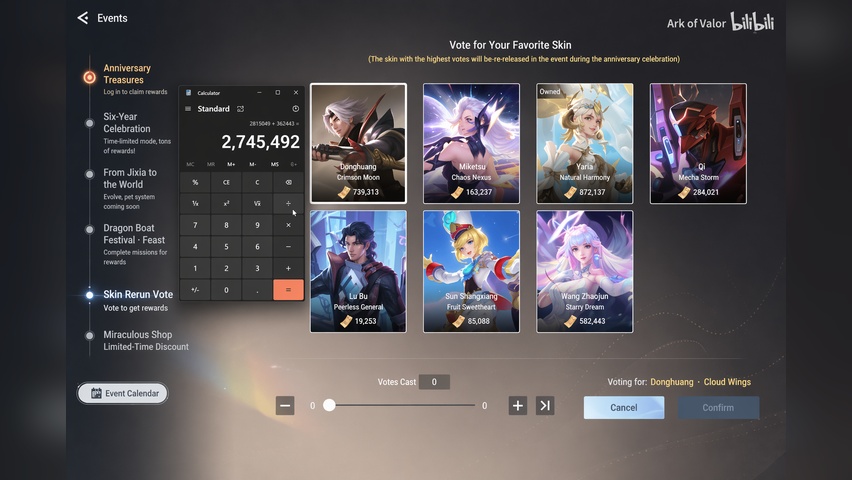
The cleanest signal we have right now is the skin re-run vote that went live on the 8th. Each account gets three ballots a day, and as of the 9th around 6 PM the running total sat at 2,745,492 votes across two days. Divide by two and you get 1,372,746 votes per day; divide by three for the per-account ballot cap and you land at roughly 457,582 unique voters. The 9th wasn't even over when the snapshot was taken, and a chunk of the active base only logs in at night, so a back-of-the-napkin daily-active estimate of about 500,000 is a fair fit.
That number isn't bulletproof — there's likely some official padding in the totals, and not every active player bothers to vote — but it's directionally honest. For context, the Niko Index pegged the title at 36.6 million total viewers across Huya, Douyu, and in April, ranking it 15th overall and 4th among RPGs. Strong launch-month attention, decent retention pool, but absolutely not the runaway king-IP detonation Tencent was clearly hoping for. The TapTap rating sits at 9.0 across 696 reviews, which is the curious shape of this game in miniature: people who actually log in mostly like it; the broader audience never showed up.
Metric
One-month figure
Estimated daily actives
~500,000
April viewership across CN streaming
36.6 million
Niko Index overall rank (April)
#15
Niko Index RPG rank
#4
TapTap score
9.0 / 696 reviews
Why The Combat Loop Still Carries The Whole Game
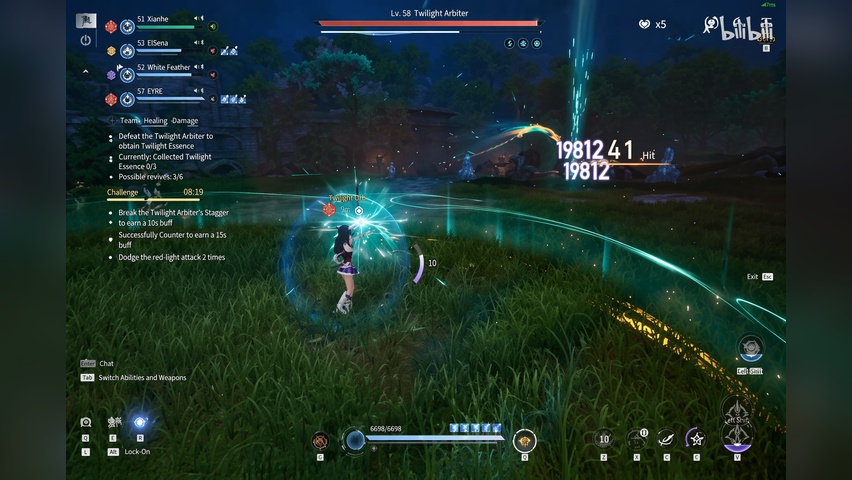
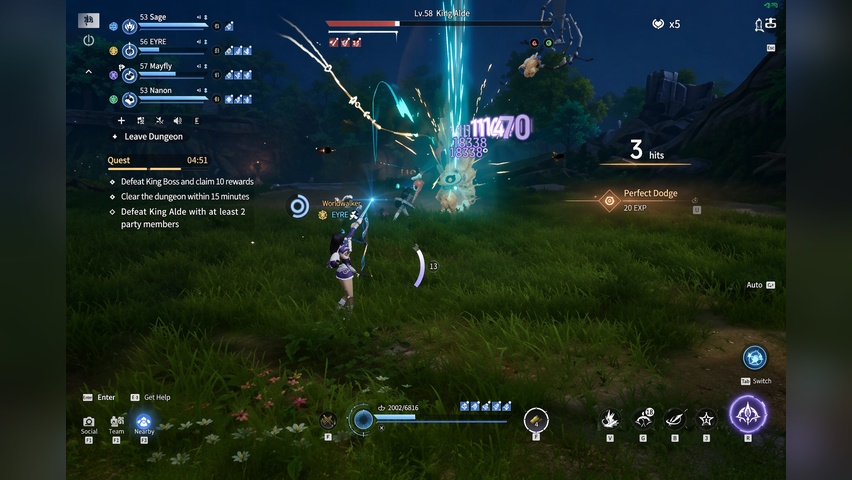
Whatever else the game gets wrong, the moment-to-moment combat is genuinely good, and it's the reason a chunk of us are still logging in. Each playable hero has real operational depth: you have to keep your own damage rotation alive while reading the boss's tells in different ways, and group dungeons layer team mechanics on top. Strong-attack heroes feel violent and direct; confrontation heroes get a satisfying parry-and-counter rhythm; you actually feel the hit feedback.
Difficulty is the other side of the coin. Compared to a pure action MMO, Honor of Kings: World gives you ranged carry options like Jia Luo, Meng Ya, and Wang Zhaojun that don't demand high reaction skill. When you don't have to dodge close-range swings every five seconds and someone else is holding aggro, the difficulty curve flattens hard. Compared to a serious raid MMORPG, the boss mechanics are deliberately simple — usually one minute of reading the prompt UI is enough to clear, and three-carry-one or one-carry-three runs work fine. It's nowhere near the punishment level of dedicated raid games.
The Hero Resonance system is the structural reason this works. You're not piloting one character with a fixed kit; you're the Origin Flow Child swapping between two different fighting styles mid-encounter, with each style faithfully translating an Honor of Kings hero's identity into a 3D action set — Kai's parry-counter pressure, Dongfang Yao's Star Marker recall, Hua Mulan's light-and-heavy stance swap. That's the real piece of design work in this game. Strip it out and you'd have a much more generic ARPG.
The Identity Crisis Sitting Underneath Everything
The launch design tries to be everything for everyone, and the seams are showing. You came for open-world exploration? It pushes you toward social systems. You came for an MMORPG loop? Daily content is thin and you're shoved back into world map grinds. You came for casual collection? The action-combat skill floor is non-trivial. A lot of us like Honor of Kings: World, but very few people actually like the whole of Honor of Kings: World — most are tolerating one half to enjoy the other half, and players who can't tolerate their disliked half just leave.
That spread shows in how the systems list out. Hero progression runs through Flow Vein, Condensed Arms, Equipment, and Inscriptions — clean, fixed-stat, no gacha pressure. The world layer is Jixia Academy and its surroundings: Star-Gazing Mountains, the Qimen Secret Realm with Zhuge Liang's Qimen Waterside Pavilion, the Forbidden Secret Land, the Fengyun Wilds, the Dream-Weaving Plain, all stitched together by a regional Cloud Silk Cloud Flow ecology. Plus homestead, farming, summoning, photography, fishing, mini-games, and a 4v4 PvP arena that nobody is queuing for. It's a lot of pillars. None of them is deep enough on its own to hold a player who only cares about that pillar.
The deeper problem is the IP itself. Honor of Kings as a brand sells competitive 5v5 fantasy; the eastern-fantasy lore was always background flavoring for skin descriptions and short animations. Tencent now wants that flavor to anchor a 100-hour open world, and the mass-market audience just isn't as attached to the Jixia Academy mythology as the team hoped. You can patch combat, you can patch UI, you can patch content cadence — you cannot patch what the broader public finds interesting.
Content Runs Out Faster Than An MMO Should Allow
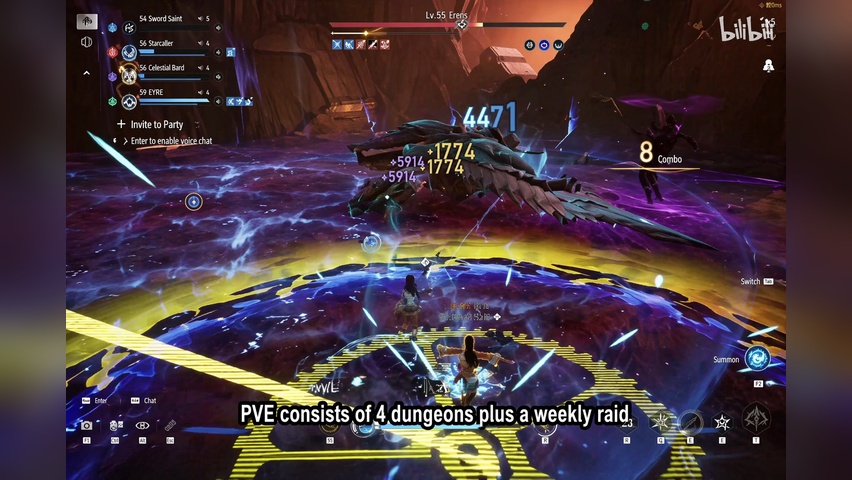
A month in, this is the loudest complaint, and it's earned. The PvE rotation is four small dungeons plus one weekly boss. PvP is 1v1 Fair Mode, 4v4 Fair Mode, and Martial Duel Mode — and almost nobody is queueing the arenas. After the version update you grind two days hard on the new map, then settle into thirty-to-forty minutes a night clearing CDs and harvesting your farm plot. Combined with another open-world game in the daily routine, the realistic time investment is under an hour.
The upside is honest: the game does not demand grinding. The downside is that for a title self-branded as MMORPG, there is genuinely not much to do. Social content is essentially zero outside of NPC-like phantoms wandering past and tanking your framerate during fights. Bluntly, even if you whaled out for a top-tier skin, there's nowhere meaningful to show it off — no central social hub with critical mass, no ranked ladder anyone treats as prestigious, no guild content driving repeated co-op.
The core tension is that Tencent itself doesn't seem to have settled the question of what Honor of Kings: World is supposed to be. Open-world exploration title, with seasonal map drops every few months and life-system flavor between regions? That math works. MMORPG with deep dailies, raid tiers, and PvP ladders? That math also works. Half-and-half, which is what shipped? You get an open-world rhythm wearing MMO marketing, and content runs dry in just over a week.
What S1 On May 22 Actually Has To Deliver
Everyone is staring at the S1 season drop. If it's a comeback, it needs to hit on all three of these. If it punts, the slow-fade thesis wins.
Marketing push to widen the funnel. The current player pool is mostly Honor of Kings MOBA loyalists. If S1 lands without an aggressive ad blitz, creator program scaling, and visible cross-promotion with the original MOBA beyond the Crimson Beast jungle-boss linkage already in place, that's Tencent quietly conceding the title isn't a flagship. The published May plan does include creator incentives, monthly cards, battle passes, and shop updates — execution is the question, not intent.
Repeatable PvE, PvP, and PvX content. Players with time, players who want to roleplay an actual MMO main, players who want a ranked queue worth caring about — none of them have a sustainable loop right now. Adding a serious raid tier, a competitive arena season with rewards, and some PvX flavor (open-world events with stakes, faction nights, world bosses on a global timer) is the bare minimum to make the MMO label honest.
Hold the monetization line. The current model is the only thing that's earned unanimous praise from players, and it would be very stupid to break it.
Monetization Is Generous To A Fault
The cosmetic-only model is real. Every hero is free-to-earn through main story, version events, and in-game currency exchange. There is no character gacha. There is no weapon banner. There are no constellations. The only paid character tie-in is a battle-pass-locked Jia Luo, and the 68-yuan basic pass unlocks her outright; the 168-yuan upgrade adds an exclusive skin, instant pass-tier rank, and matching effects, none of which touch combat numbers.
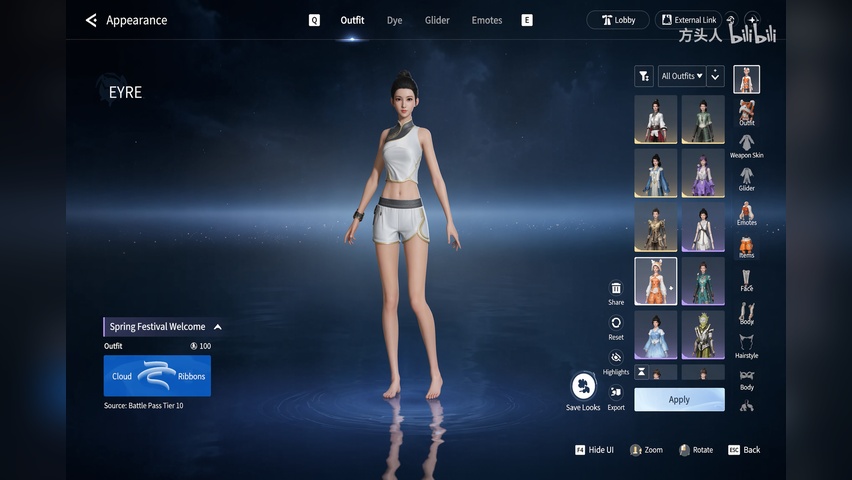
Per-season diamond yield is enough that a strength-focused player can unlock the entire roster, and a cosmetics-focused player can free-claim every direct-sale outfit. That sounds great until you realize the game has no monetization hook at all. Skins exist but the visual fidelity on them is mediocre. The battle pass holds progression materials and the seasonal hero — if you don't care about strength, you don't need to buy. There's no dye system, no cosmetic gacha currency, no premium fashion line worth the spend.
The fix is obvious without breaking the fairness promise: add cosmetic lottery tickets and dye items to the battle pass and shop. Skin enthusiasts get something to chase, casuals get rotation cosmetics, and the no-pay-to-win covenant stays intact. Right now Tencent is leaving cosmetic-buyer money on the table while still failing to convert the IP into mass appeal — the worst of both worlds.
Tencent's Position And The Realistic Outlook
Reading between the lines, Tencent's stance on Honor of Kings: World seems to be: not optimistic, but not willing to let it die either. This is a load-bearing piece of the wider Honor of Kings universe expansion — the IP-authentic narrative engine that comics, animations, music, and skin lore were supposed to graduate into. Tencent has plenty of hit games, but very few IPs that are genuinely theirs in the way Honor of Kings is, so the early bet was huge. The gap between that bet and the reality of the launch is what's quietly painful right now.
The Jixia region you can play today is roughly one-tenth of the planned King's Continent map. The 11-year hero roster of 120-plus characters gives the team a near-bottomless content pipeline if they want to use it, and the dual-hero combat framework can absorb every one of those heroes as a Resonance set. The architecture is there. Whether the will and the marketing budget are there is what May 22 will reveal.
A realistic forecast: S1 will probably show up with a meaningful map expansion beyond Jixia, a few new Resonance heroes, and at least one new repeatable mode. If marketing scales and a real raid tier or PvX loop ships alongside, the daily active number could climb back toward launch peaks. If S1 is just two more dungeons, a battle pass refresh, and the Crimson Beast cross-event extension, the slow fade is locked in and we'll be talking about a managed-decline live service by autumn. Half a month from now, this question stops being open.
Holden Lowe runs the daily news rotation at VGTopup from Los Angeles. After a few years freelancing the indie circuit on the East Coast he moved west and now files the kind of 'is this actually worth your weekend?' breakdown that gets argued about in Discord servers — early-access launches, mobile soft-launches, console drops, the occasional surprise patch on a streaming app, whatever moves on the day. His instinct is that the right take is rarely the loudest one in the first six hours.
Los Angeles, United States English #News Coverage #First Impressions #New Releases #Console and PC #Mobile and Web #Industry Reactions





Comments