"Resellers are always cheaper than Midasbuy" (only half right)
On the sticker, yeah, no argument there. Line for line, third-party platforms sit under the official store on nearly every tier. Community price tracking from TOPUPlive pegs the typical reseller discount at 11–20% across packs, and the chunky bulk listings stretch further than that. A budget-focused writeup over on Geekvibesnation clocked an 8,100 UC pack at $69.99 against the official $99.99, a clean 30% chop on one big buy.
Here's the comparison the "cheapest UC" pages tend to skip, because it shrinks their headline gap:
| Pack |
Official price |
Official $/UC |
Typical reseller price |
Reseller $/UC |
Headline gap |
| 60 UC |
$0.99 |
$0.0165 |
$0.81–$0.88 |
~$0.014 |
11–18% |
| 660 UC |
$9.99 |
$0.0151 |
$8.01–$8.49 |
~$0.012 |
15–20% |
| 1,800 UC |
$24.99 |
$0.0139 |
$19.99 |
$0.0111 |
20% |
| 6,000 UC |
$99.99 |
$0.0167 |
$79.99 |
$0.0133 |
20% |
| 8,100 UC |
$99.99 |
$0.0123 |
$69.99 |
$0.0086 |
30% |
Source: TOPUPlive, LDShop, Geekvibesnation and Midasbuy listings (Apr–May 2026).
Now the bit that flips the whole thing over. Every reseller $/UC figure in that table counts base UC and nothing else. It ignores the bonus UC the official store layers on top, and that bonus is precisely where the gap shrinks toward nothing.
Midasbuy's US store runs a 10% base discount plus up to 7% extra UC for linked VIP accounts, and packs from roughly 300 UC up carry those over-10%-off limited deals. The heavier lever, though, is the one-time first-recharge bonus, which dumps extra UC on top of whatever you grab. Bolt that onto a 1,800 UC purchase and the official effective rate slides well under its $0.0139 sticker, often far enough to match or beat the reseller's $0.0111 on that single transaction. The 12,000 UC pack at $199.99 with a 35% bonus is the cleanest example of the lot: with that much extra UC folded in, the official effective rate ducks under most reseller lists outright.
So when does a reseller honestly win? Geekvibesnation's breakdown puts the break-even near 15–20%. A third-party discount has to clear that bar to beat a one-time official bonus on repeat buying. Anything below it and you're swapping the bonus for pocket lint.
Half-true, then. Resellers win on volume, the repeat big packs past that break-even line. On a first purchase or a bonus-loaded pack, official wins more often than not. "Always cheaper" is a list-price illusion that conveniently forgets the bonus UC exists.
"Update 4.4 shook up UC prices" (flatly false)
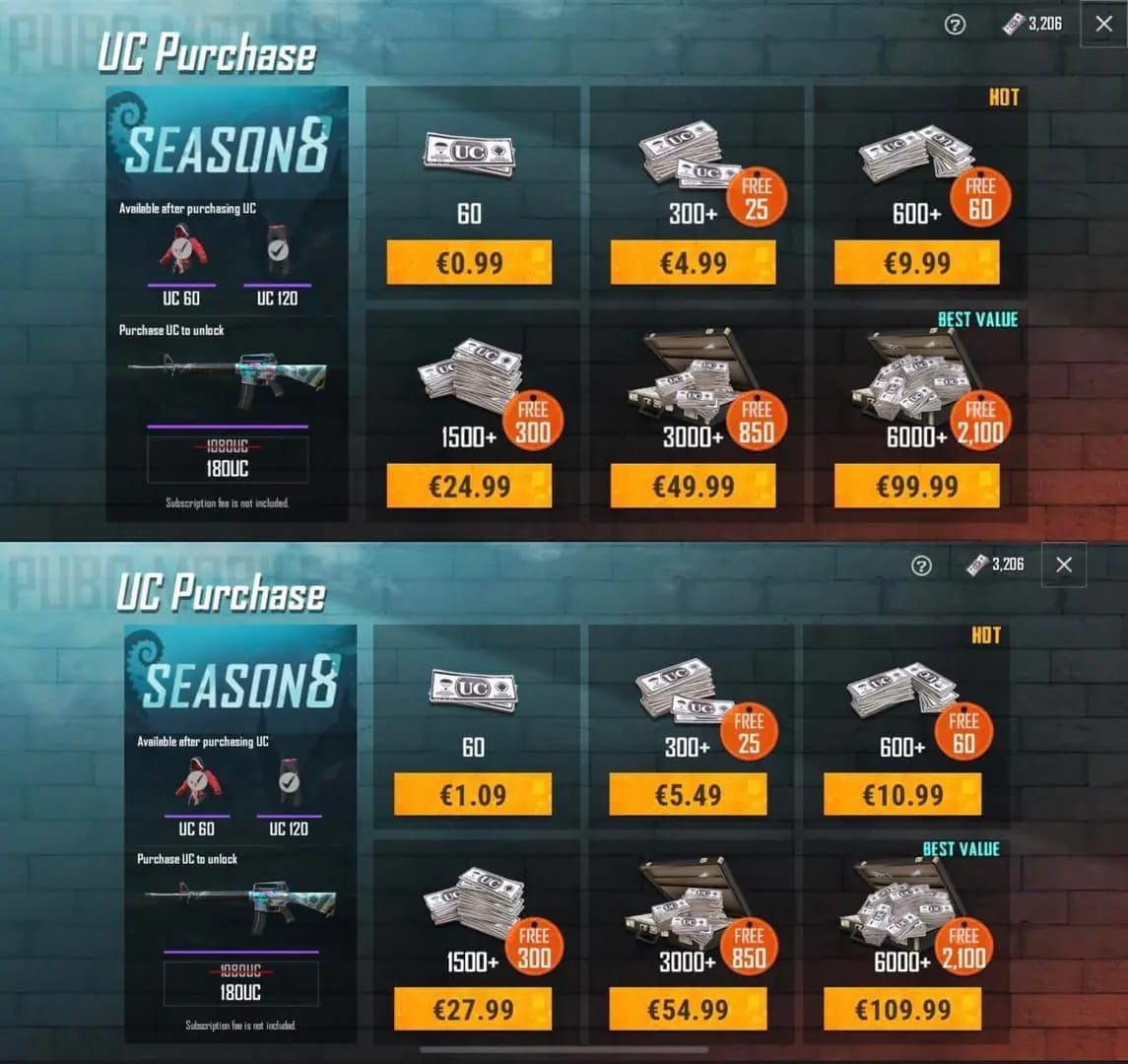
If you held off on a top-up waiting for 4.4 to reshuffle pricing, well, you waited for nothing. The update went live May 11, 2026, and per PUBG Mobile the changes were gameplay-only, the headliner being the Hero's Crown mode. UC pricing doesn't earn a single mention anywhere in that announcement.
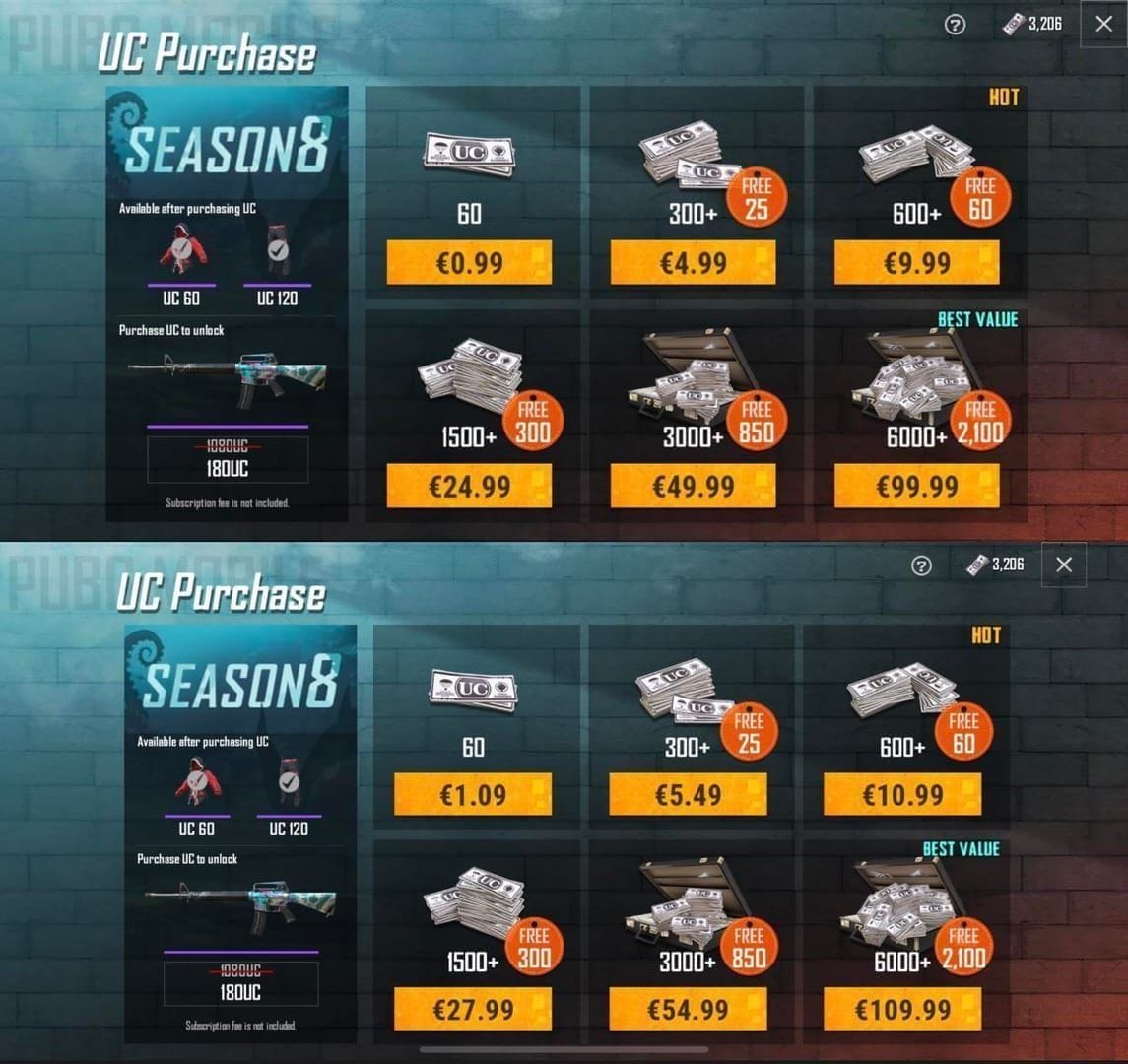
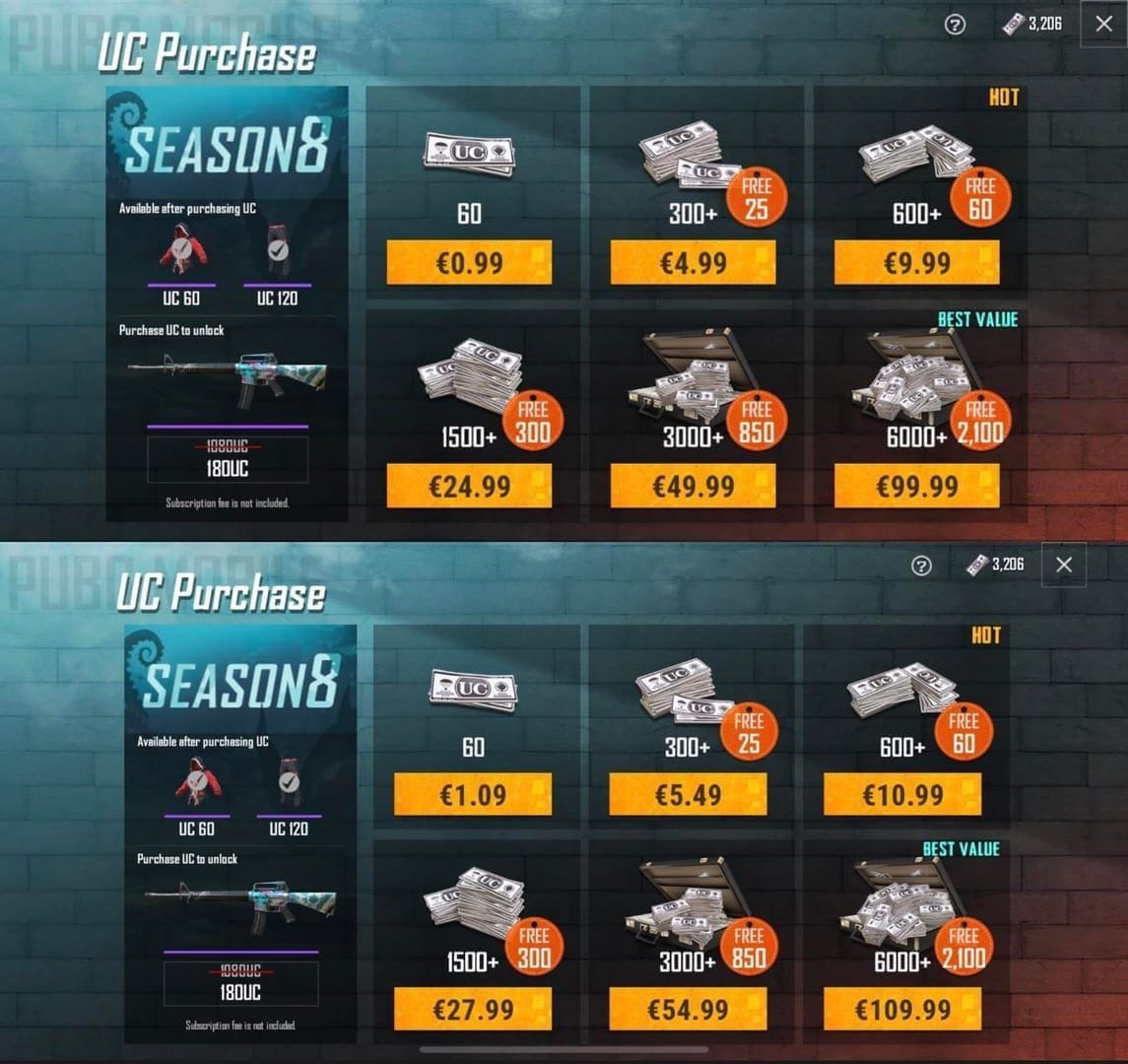
Pack tiers stayed flat. Pricing's been steady since prior seasons, going by BitTopup's March 2026 tracking, and players comparing reseller prices before and after the patch land on the same thing: unchanged. I've got a bad habit of treating every patch like it'll secretly reprice the store, probably a holdover from the old days when seasonal resets actually did shuffle the deals around. Not this time. The discount structure sitting in front of you today is the same one that was there before the patch dropped.
This matters for one practical reason: there's no pricing event baked into 4.4 to "time" your buy around. The things that actually move your real cost are the official bonus tier and the channel you buy through, not the patch number. Anyone pushing "buy now before 4.4 jacks the prices" urgency was selling you a story.
4.4 is a gameplay patch. It changed nothing about what UC costs or how the discounts stack.
"Region-hopping is the cheat code for cheap UC" (mostly a mirage)
There's a genuine spread here, so credit where it's due before I start poking holes. Per Buffget's 2026 regional tracking, an 8,100 UC pack runs about $91 in Turkey versus roughly $109 globally, an 8–19% saving depending on pack size, with Turkey wearing the crown as cheapest stable market. Argentina, Brazil and India list lower in local-currency terms too. BitTopup reports Brazil and India deltas of 15–25% through authorized platforms, and other regional trackers note another 10–25% via local channels.
It earns the "mirage" label because the route most players take to capture that spread is the costly one. Spoofing your region with a VPN to reach the cheaper storefronts risks a terms-of-service flag, and that same tracker lists VPN-based regional arbitrage as a ban-risk pitfall. Pile on the payment friction too: foreign storefronts usually expect local payment methods, and a card that doesn't match the region means a failed transaction, or worse, a chargeback trail following you.
The two camps split clean, and both are right about their own half. Buffget treats Turkey and SEA savings as stable and safe when you buy through authorized channels. The ban-risk side is warning about something different, manipulating your region with a VPN, which is what invites account trouble. The savings are legit. The DIY spoof route is where the risk and the bounced payments stack up.
Regional pricing genuinely is cheaper, and the discount is real. But the second you reach for a VPN and a foreign card to grab it, you've quietly priced in flag risk and declined transactions that tend to eat the saving whole. The only version worth doing is an authorized channel that legitimately serves that region.
"Buying reseller UC gets your account banned" (it hinges on one mechanic)
This is the claim that spooks budget-minded players away from real savings, and it's painted way too broad. The dividing line has nothing to do with official versus third party. What matters is whether a top-up ever touches your login.
UID-only top-ups, where you hand over nothing but your Player ID and the UC just lands on your account, carry minimal ban risk on reputable platforms, a point echoed across the 2026 safety guides. Authorized resellers deliver exactly this way, Player ID only, with completion usually landing somewhere in the 1–15 minute range. No password shared, no OTP typed, nothing logged out of.
The danger zone is the mirror image. Lootbar's safety write-up is blunt that sharing your password for a top-up breaks the terms of service and bumps ban risk, and it flags any site asking for a password or an OTP as a red flag. Alina Smith (Lootbar blog author, Apr 2026): "Third-party sites can offer 10-20% off safely with UID-only if reputable." The safe discount and the dangerous one look identical sitting in a listing. The whole difference is the delivery mechanic.
There's a second, quieter exposure: chargebacks. The same write-up notes chargeback risk runs higher on unofficial channels when stolen cards are in the mix upstream, which is how legitimately-bought UC sometimes gets clawed back weeks later. That's the grain of truth buried inside the "reseller equals ban" panic. The actual culprit is a poisoned payment trail upstream, not the storefront's logo.
On the official side, no public developer statement singles out third-party top-ups. Enforcement shows up in community reports as bans tied to ToS violations and payment disputes, not as a blanket sweep against authorized resellers. Refunds and disputes are also genuinely smoother on official, since Midasbuy handles cards, PayPal and local methods with cleaner recourse, while reseller refunds depend entirely on the platform. That's a real mark in official's favor, and it's got nothing to do with bans.
The thing worth burning into your buying instinct: it's UID-only versus credential-based that draws the safety line, not the brand on the storefront. A reputable ID-only third party can be cheaper and low-risk at the same time. A "cheap" site that wants you to log in is the genuine hazard.
As a blanket scare, it's busted. UID-only on a reputable platform is low-risk. Password sharing, OTP handovers, and dodgy payment sourcing are what get accounts actioned.
"Just grab the biggest pack and you're set" (depends who's holding the wallet)
The best buy isn't a pack at all. It's a profile. The same dollar behaves completely differently depending on how you actually play, so here's how it breaks down by player type.
F2P and occasional buyers should stay official and small. The discount on a 60 UC pack, 11–18%, is a few cents, and chasing it across some unfamiliar channel isn't worth the verification hassle. For this tier the advice is dead simple: official small packs or in-game events cover it. The single highest-value move available to you is that one-time first-recharge bonus, so don't blow it on a tiny pack to scrape pennies somewhere else.
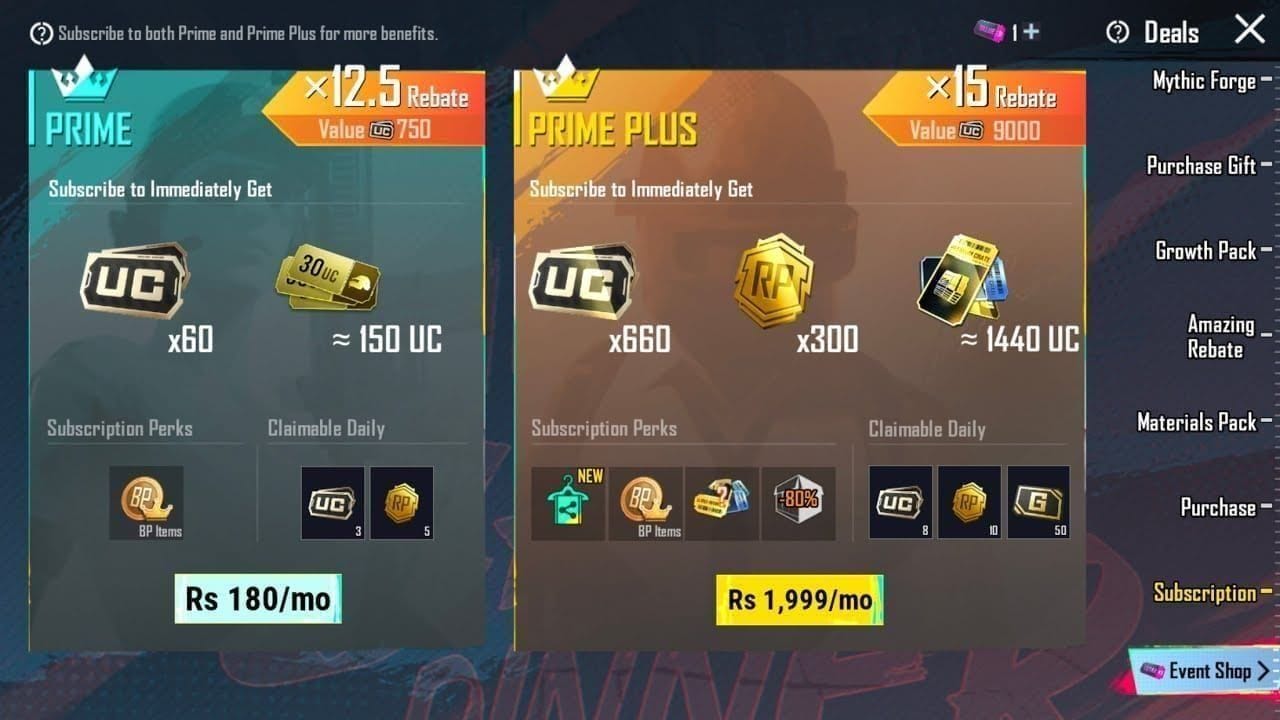
Low-spenders and Royale Pass players pull the strongest return from official mid-packs plus the pass. The Royale Pass Elite runs 720 UC, and the Prime Plus first month delivers an effective 900 UC for $4.99, per BitTopup, which works out to about $0.0055 per UC, the cheapest effective rate anywhere in this whole comparison. No reseller discount comes close. Grab the pass value first, top up the gap with a Midasbuy mid-pack, and pocket the first-recharge bonus on your opening buy.
Frequent and large-volume buyers are the only crowd where the reseller gap genuinely pays off. Once you're clearing that break-even on the big packs, the savings start compounding. Geekvibesnation documented roughly $120 saved over six months by shifting four 8,100 UC packs to a discount platform. This is also the tier where buying through a transparent, ID-only channel matters most, since the sums involved get big enough that delivery method and dispute recourse stop being trivia.
Full disclosure while we're here: this guide's published by VGTopup, which is itself an ID-only top-up option. If you're in that frequent-buyer bracket and want to weigh a PUBG Mobile UC cheap recharge against the official numbers above, run the same $/UC and break-even check on it that you'd run on any channel before you commit.
Three pitfalls hit this group hardest, all logged in 2026 player reports: buying a small pack for a sliver of discount while skipping the much fatter first-recharge bonus; handing over login details instead of demanding UID-only delivery; and chasing region arbitrage that either flags the account or dies at the payment step.
F2P and low-spenders win on official. Only high-volume buyers clear the break-even where the reseller gap turns into actual money.
How to actually spend on UC after 4.4
Strip off the folklore and the call gets simple. The reseller-versus-official argument was never really about the channel. It comes down to your official bonus tier and the delivery mechanic, and those two decide everything else.
If you walk away with one checklist, make it this. Before you pay anywhere:
- Make your first official recharge first. The one-time first-recharge bonus is the mathematically right opening move for almost everyone, and once it's gone, it's gone.
- Confirm UID-only. A trustworthy channel needs your Player ID and nothing more, no password, no OTP, no login. That one rule, drawn from the 2026 safety consensus, is the biggest risk filter going.
- Run the break-even. A reseller has to clear roughly 15–20% to beat the official bonus on repeat buys. Under that line, stay official.
- Verify before volume. Check reviews, delivery speed, the no-login requirement, then scale up only after a small test order lands clean.
The headline gap is real but narrow, and it's narrowest exactly where most people actually spend, on small and mid packs with the bonus attached. 4.4 didn't touch any of it. Buy the pass value, bank the first-recharge bonus, keep your login to yourself, and only go chasing the reseller discount once you're moving enough volume for 20% to mean something real.







Comments