Tuesday night: chasing a changelog that was never written
First stop was an official patch-notes page. It doesn't exist in any form I could confirm. What floats around online as the "Likee Diamonds 2026 update" is a stitched-together set of pricing snapshots and earning write-ups from top-up and monetization sites. Useful enough on their own, sure, but not a feature drop the platform ever signed off on. Treat that absence as your first saving. When a post hypes "new diamond features" and links to nothing official, it's just reading tea leaves.
What does hold steady, and gets documented the same way again and again, is the economics. A single Diamond runs a viewer somewhere around $0.01 to $0.02 to send, according to BitTopup's 2026 monetization guides, and that band has stuck across versions instead of lurching in some surprise overhaul. The conversion plumbing hasn't budged either. So the honest answer to "what changed in Likee Diamonds 2026" is that the mechanics didn't. Two quieter variables did the real work: the recharge-bonus cadence and the regional price spread reset your true cost per Diamond far more than any headline could.
The conversion rules and payout thresholds line up across multiple 2026 guides; the so-called new features line up with nothing. Spend your trust where the documentation actually is. Anyone who came hoping for a glossy list of 2026 additions will get more out of the cost structure under the currency they're already buying.
The gift that taught me the one-way rule
When I sent that first gift, the cost barely registered. The direction it all flowed, though, stuck with me. Diamonds convert 1:1 into Beans the instant they land on a creator as a gift, per BitTopup's 2026 breakdown, and they never make the trip back. Once spent, they're a gift and nothing else.
This is the part that catches nearly every new gifter, so I'll say it flat: a viewer can't turn Diamonds, or any gifts they've received, back into spendable Diamonds or cash. Received gifts convert only into Beans, never back into Diamonds, according to a free-earning guide on LootBar. That's the whole Diamonds-versus-Beans split in one breath. Diamonds drain out of a viewer's wallet, Beans pile up inside a creator's account, and traffic between them only ever runs one way.
The rate is fixed and easy to hold in your head. 210 Beans come to $1 gross before the platform takes its slice. So one Diamond that cost me somewhere near $0.018 lands as a single Bean on the creator's side, worth roughly $0.0048 before fees. That gap between what a gifter pays and what a creator banks isn't a scam. It's just how the platform keeps the lights on, and once you get it, a lot of unrealistic hopes on both ends quietly deflate.
Actually sending the gift is the easy bit. Open a live stream, tap the gift tray, pick an animated gift priced in Diamonds, confirm. The catalog stretches from cheap little taps to flashy animations that run hundreds of Diamonds apiece. That tray is the whole spend sink. Nowhere else does your balance quietly leak away.
After lining up the 100, 500 and 1000 packs side by side
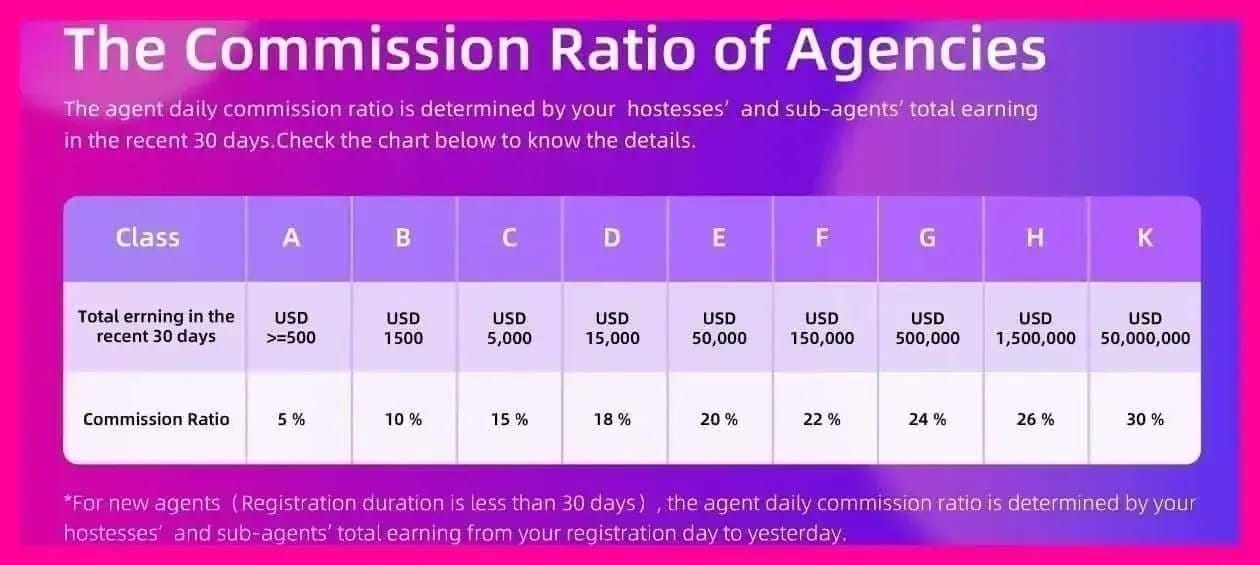
Here's the table I built before committing my $20, using third-party pack prices captured in May 2026:
| Pack size |
Price (USD) |
Effective $/Diamond |
| 100 Diamonds |
$1.78–$1.95 |
$0.0178–$0.0195 |
| 500 Diamonds |
$8.88–$9.75 |
$0.0178–$0.0195 |
| 1,000 Diamonds |
$18.16–$19.48 |
$0.0182–$0.0195 |
Source: LootBar / GamerMarkt / U7Buy snapshots, 2026.
Run your eye down the right-hand column and the "buy bigger to save" instinct quietly expires. The per-Diamond rate barely shifts between the 100-pack and the 1,000-pack. You're paying within a sliver of a cent either way. Across these tiers, pack size on its own isn't what saves you money. The jumbo pack buys you no discount worth chasing. Mostly it just parks more cash in a wallet you might burn through faster than you meant to.
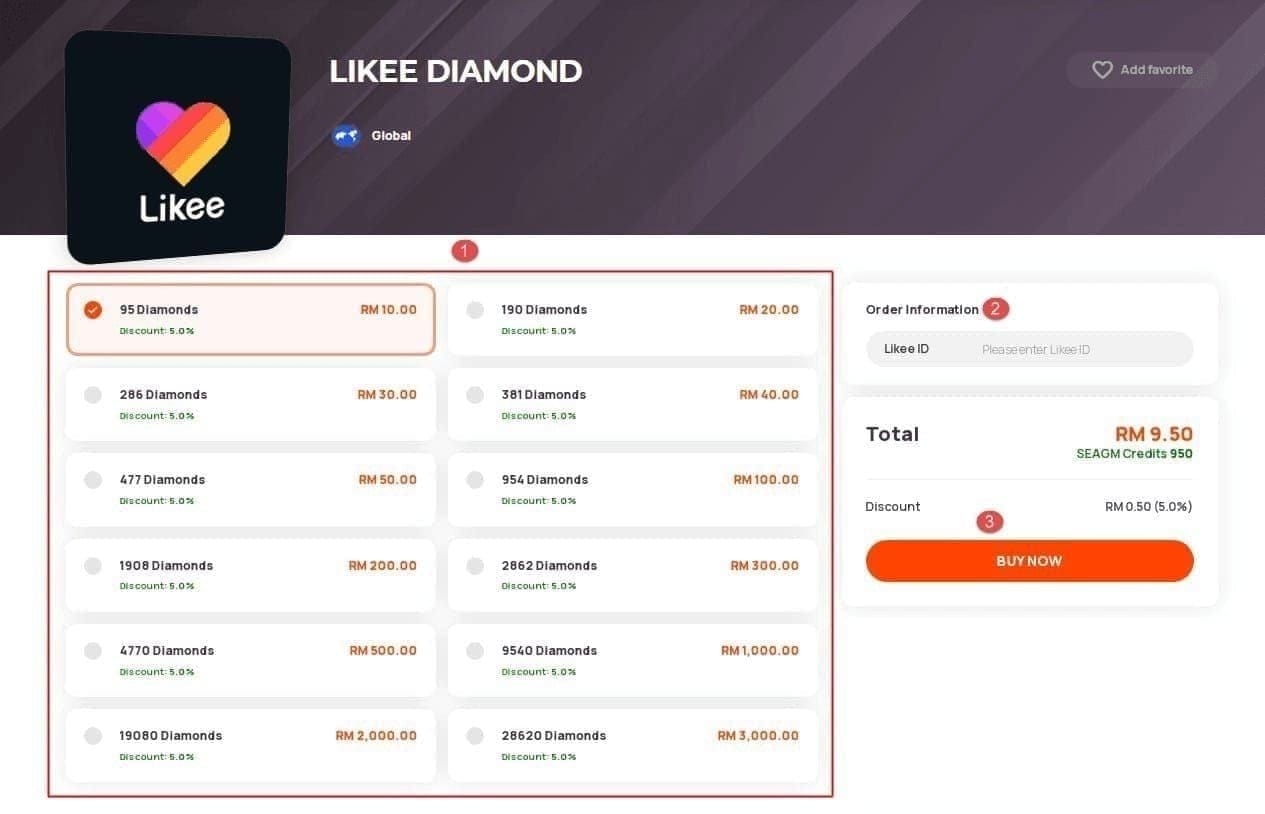
What actually swings the cost-per-Diamond is a recharge-bonus event. When the platform stacks a bonus onto a top-up, the effective price can fall further than any pack-size jump manages on a flat day. So the real "best Likee Diamond pack for value 2026" answer isn't a pack at all. It's a window. Buy the size you'll genuinely use, and buy it while there's a bonus riding on top.
Now the flip side, and it's the pitfall I watch eat the most money over the long haul: micro-top-ups. The app keeps nudging you toward small impulse gifts mid-stream, and a $1.95 hundred-pack here and there feels painless right up until you total a month of them. Same per-Diamond rate, zero bonus captured, and a lot more impulse spend than one planned purchase would've cost. For a casual viewer, the smarter rhythm is a single budgeted pack a month, ideally during a bonus window, with free Diamonds covering everything else.
And free Diamonds do exist, in modest amounts, just never from "generators." Daily tasks hand out roughly 200 to 600 Diamonds, and referrals pay around 400 Diamonds per friend, according to EnjoyGM's 2026 top-up notes. Active event participation can push that past 3,000 Diamonds in a good week, per the same source. None of it replaces buying, but for a tight-budget gifter it can carry a small gift habit on its own. The casual move comes down to exactly this: drain the daily tasks and events dry before you ever open the wallet.
For a regular monthly supporter, my read shifts. That money's going out regardless, so the discipline is all about when you buy. Going cold turkey isn't the goal when you're spending anyway. One mid-to-large pack on a bonus day, and a firm refusal to top up off-cycle just because a stream got loud. Without an active bonus, a mid-tier pack matches the value of the biggest one anyway, while keeping a lid on how much idle currency you're sitting on.
The recharge I nearly botched: sorting the real seller from the trap
When it came time to actually pay, three routes sat in front of me: the in-app store, a trusted external recharge site, and a wall of sketchy "free diamond" results I'd been scrolling past all evening. The first two are legitimate. The third is where people lose accounts.
The in-app wallet is the zero-risk default. You pay through your app store, the Diamonds land instantly, there's nothing to verify. The price is the catch, since in-app rates tend to run steeper than external packs and your regional store sets the figure. That's the slot a reputable third-party recharge channel fills, because prices vary by region and payment method and external packs often come in cheaper than in-app, per a U7Buy 2026 overview. If you've decided to top up and want to weigh that gap, you can buy likee diamonds online through a third-party option and line its per-Diamond rate up against your in-app price before you commit. Disclosure: that's an external channel, so the rule is check the rate first, don't assume cheaper.
The red flags are where I'd slow you right down. Two traps account for very nearly every horror story out there:
- "Free diamond generator" sites. They don't work, and worse, they court account bans or flat-out data theft, according to LootBar's free-earning guide. No exploit mints Diamonds. The "generator" is the product, and your login or card is the price of admission.
- Unverified resellers. Buying from some random seller with no track record invites chargebacks and account locks. When a payment gets reversed upstream, your account can freeze over currency you've already spent. Multiple 2026 guides flag this as the costlier blunder, since a lock can wipe out far more than the few cents you saved.
Safe recharging comes down to one thread. A legitimate channel never asks for your password, charges a transparent price you can compare, and delivers to your account by username or ID. Not through a "verification survey," not by remote login. When a deal only makes sense because it's suspiciously cheap, the discount is the bait.
What the streamer on the other end actually pockets
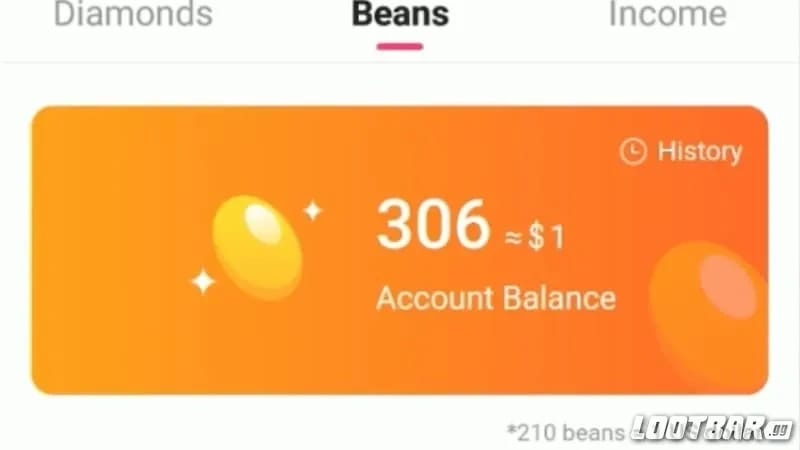
The thing that reframed my whole top-up was working out what the creator I was backing actually keeps, because it's nowhere near the dollar I spent. Creators receive roughly 50% to 70% of their Beans' value after the platform skims a 20% to 30% cut, per BitTopup's 2026 monetization articles. So the 210-Beans-to-a-dollar rate is the gross figure; take-home sits below it once fees land.
Then there's the floor you've got to clear before any of it starts. Cashing out demands a minimum of 4,200 Beans, equal to $20, before a creator can withdraw at all. Qualifying for monetization in the first place means hitting real thresholds: Level 35 or above, plus 30-plus streaming hours spread across 20-plus days, with an effective target around 10,000 Beans a month to stay in the payout lane. That reads as a part-time commitment with a quota bolted on, well past casual side-gig territory.
For anyone streaming, the number that decides your earnings is the Diamond-to-Bean rate and the fee tier sitting above it, well below the Diamond price your viewers see on the gift tray. Two creators pulling identical gift volume can take home wildly different amounts purely from where they fall in the fee band. So the honest chain on how creators cash out their earnings is the one already on this page: gifts land as Beans, Beans stack up until they clear that 4,200 floor, the fee tier skims its share off the top, and the rest finally cashes out, with the platform thresholds gating the door before any of it begins.
What I'd change before my next top-up
Knowing what I know now, I'd quit treating "the 2026 update" as some event to wait around for and start treating the bonus calendar as the only schedule worth tracking. I'd skip the jumbo pack on a flat day, since that per-Diamond saving isn't real, and instead bank free Diamonds off daily tasks and events between purchases, then drop a single planned pack inside a bonus window. And I'd never again let a good stream coax me into a fourth full-rate micro-top-up. The mechanics of this currency are dead simple. The discipline is the whole game.
Frequently Asked Questions
Do Likee Diamonds expire after the 2026 update?
No documented expiry rule for purchased Diamonds turns up anywhere in the current 2026 guidance, so treat an unused balance as parked in your wallet rather than counting down. The timing pressure sits on the creator side instead. Beans still have to reach that 4,200 minimum before withdrawal, so earnings are the thing that benefits from being cashed out instead of left sitting.
Why are Likee Diamond prices different in my country?
Because both your region and your payment method feed the price, according to U7Buy's 2026 overview. Not just the currency conversion, but the store and processing fees attached to wherever your account is registered. It's also why an external recharge channel can undercut your in-app rate in one market and barely move the needle in another, so the "cheapest way to buy Likee Diamonds" genuinely hinges on your account region.
Can you withdraw real money from Likee Diamonds directly?
Viewers can't. Diamonds only travel outward as gifts, and once received they convert solely into Beans for the creator, never back into cash or Diamonds for the person who sent them. Only creators withdraw, and only through Beans, working against the same gross rate and withdrawal minimum laid out above.
How do I get free Likee Diamonds without risking my account?
Stick to the in-app sources I broke down earlier: daily tasks, referral bonuses, and event participation that can climb past a few thousand Diamonds in an active week, per EnjoyGM's 2026 notes. Skip every "generator," because they don't mint currency and they do court bans or data theft. The free routes are a modest supplement to a real habit, not a substitute for buying.
Is a third-party top-up actually cheaper than buying in the app?
Often, yes. External packs frequently price below in-app rates, and the per-Diamond figure stays close across pack sizes, hovering around that same fraction of a cent in 2026 third-party snapshots. But "cheaper" only counts when it comes from a legitimate, transparent channel. An unverified seller's discount can spring chargeback-related account locks that cost far more than the saving. Compare the rate, verify the channel, then decide.






Comments