Winning Convergence matches in Marvel Rivals requires securing the initial Mission Area through segmented capture thresholds (33%, 66%, and 100%) and escorting the released vehicle past two checkpoints before the match timer expires. Attackers advance the payload at a base speed of 1.00 m/s with one player, reaching an upper cap of 2.26 m/s with additional teammates, while receiving an uncontested healing aura of 10 HP per second. Consistent success hinges on dynamic positioning: assigning a single hero to escort the cart while teammates push forward to seize defensive chokepoints and prevent staggered team collapses.
Phase 1: Capturing the Initial Mission Area
Convergence functions as a hybrid game mode. The opening phase uses capture-point rules before transitioning into a payload escort. At the start of a match, defenders spawn early to take up positions around initial chokepoints, while attackers remain held in their spawn room for roughly 30 to 40 seconds, according to Boosting Ground's Convergence Guide.
[Defenders Spawn & Set Chokes]
             │
   (30-40s Delay for Attackers)
             ▼
[Attackers Push Initial Chokepoint]
             │
   ┌─────────┴─────────┐
   ▼                   ▼
Frontal Route     Destructible Wall / High Flank
(Narrow Choke)    (Breaks Bottleneck)
   └─────────┬─────────┘
             ▼
[Capture Mission Area: 33% ➔ 66% ➔ 100%]
             │
             ▼
[Phase 2: Vehicle Released Past 2 Checkpoints]
The capture zone fills across three distinct segments: 33%, 66%, and 100%. Once attackers push past a threshold, defenders cannot revert it. Partial captures retain their value even after a full team wipe.
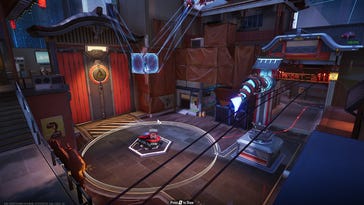
Direct frontal pushes into the primary capture point frequently stall against coordinated defensive fire. On maps such as Tokyo 2099: Shin-Shibuya, the central path funnels attackers directly beneath a suspended roof where defenders hold elevated crossfires. As detailed by Marvel Rivals GG, attackers can destroy the environmental wall inside the ninja shop to open an alternate entry corridor. Teams can also deploy high-mobility aerial heroes such as Iron Man or grapplers such as Spider-Man to bypass ground barriers and force defensive anchors off high ground.
Defenders should retreat the moment the first zone is lost. Contesting when progress sits at 90% or higher only produces staggered, isolated deaths. Conceding those final ticks allows defenders to set up along the payload route instead of fighting an impossible hold, as noted by Gamenguide.
Phase 2: Payload Escort Mechanics and Movement Speeds
Reaching 100% capture unlocks the objective vehicle—such as Spider-Zero on Shin-Shibuya—which attackers must push across two checkpoints to win. The payload advances forward automatically whenever attackers remain within its perimeter uncontested.
| Payload Escort State | Speed | Strategic Implication | Source |
|---|
| Base Speed (1 Attacker) | 1.00 m/s | Standard push rate; frees up four to five teammates to control forward space. | Boosting Ground |
| Escort Speed (2 Attackers) | 1.67 m/s | Largest single speed jump (+0.67 m/s); ideal during mid-fight transitions. | Boostroom Objective Guide |
| Escort Speed (3 Attackers) | 1.93 m/s | Adds a minor speed bump (+0.26 m/s); useful for fast checkpoint crossing post-wipe. | Boostroom Objective Guide |
| Maximum Speed (Upper Cap) | 2.26 m/s | Fastest vehicle travel rate under maximum player stacking. | Boosting Ground |
| Uncontested Cart Aura | 10 HP/s | Passive health regeneration applied to all attackers in payload range. | Boostroom Objective Guide |
Discrepancies exist across community documentation regarding the player count needed to reach maximum velocity. Boosting Ground lists four attackers (+3 bonus heroes) as the requirement to reach 2.26 m/s, whereas Boostroom states that stacking three total attackers hits the top speed threshold. In practical play, stacking more than two heroes yields diminishing returns compared to securing forward terrain.
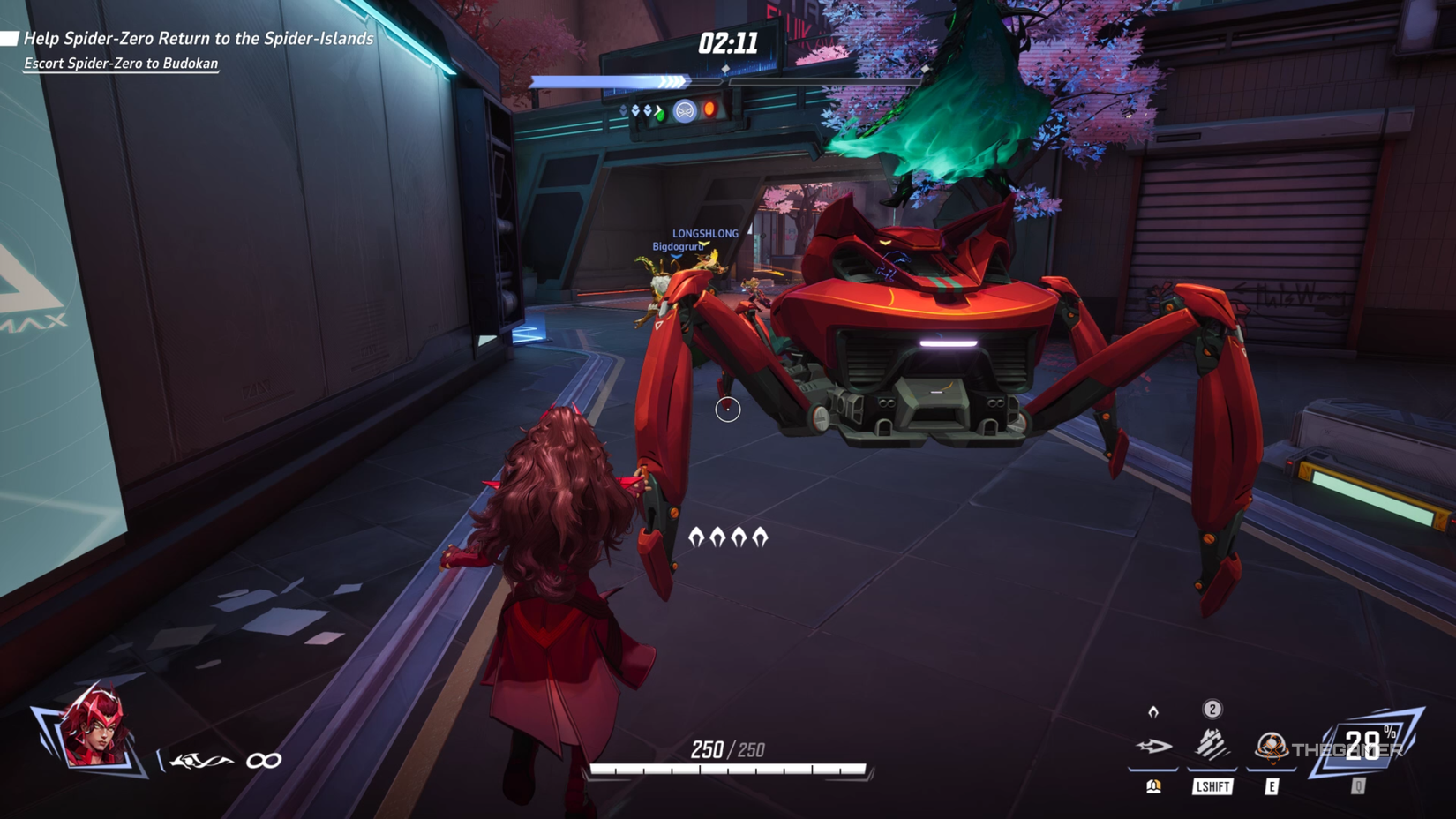
Uncontested payloads provide a built-in sustain aura of 10 HP per second to all nearby attackers. Defenders stop both the vehicle's movement and this passive healing simply by entering contest range.
Wiping the attacking team allows defenders to push the vehicle backward at a fixed rollback speed that does not increase with extra players. The cart can never roll back past an already-cleared checkpoint, locking in attacker progress permanently.
Map Control, Staggers, and Ultimate Economy
Matches are rarely won by keeping an entire team huddled on the cart. Grouping five or six players around the payload leaves the team vulnerable to area-of-effect abilities and surrenders map control.
The 1-on-Cart Macro Strategy
Optimal escort pacing uses an active split:
- Assign one durable hero or long-range support to sit on cart duty to maintain the 1.00 m/s base speed.
- Push the remaining teammates forward to claim corners, high-ground walkways, and choke intersections.
- Stack two or three players on the vehicle only after a clean team wipe, during overtime, or when racing to break through an imminent checkpoint threshold.
- Pull forward fighters back toward the payload if defenders break through the frontline engagement.
Holding forward territory forces defenders to contest far ahead of the vehicle, allowing the cart to advance safely behind the front line.
Avoiding Stagger Loops
Staggered deaths cause most failed Convergence pushes. When a fight turns, players frequently try to stall the cart in 2v4 or 3v5 skirmishes, desynchronizing spawn timers and handing defenders continuous numerical advantages.
When an engagement collapses, survivors should immediately disengage or reset. Regrouping as six outside defensive sightlines ensures the next push hits at full combat strength.
Managing Ultimate Charge Between Rounds
Ultimate ability charge resets completely between competitive Convergence and Convoy rounds, as documented by Boostroom. Because charge does not carry over, saving ultimates through final pushes wastes them. Spend them to secure checkpoints or close out capture phases.
Outside match strategy, players unlocking battle pass cosmetics and store bundles can purchase Marvel Rivals Lattices as in-game currency.
Mastering Convergence Overtime Rules
Overtime rules change depending on which phase the match is in when the regulation clock expires.
- Phase 1 Overtime: If attackers are actively capturing the Mission Area when the timer hits zero, Domination-style overtime initiates. A Golden Bar appears at the top of the interface. This bar depletes rapidly whenever attackers step off the point, and respawn timers lengthen for both teams during prolonged stalls (Boosting Ground's Overtime Guide).
- Phase 2 Overtime: If the vehicle phase is active and attackers contest or control the cart at zero seconds, Convoy-style overtime begins. Attackers must maintain constant contact with the cart's perimeter to prevent the overtime bar from burning down.
- The Touch Grace Period: Patch 20250218.3 implemented a 0.5-second grace period for objective touches. This brief buffer prevents instant defeats if a defending knockback ability shoves an attacker off the cart for a fraction of a second.
The Golden Bar burns down faster the longer an overtime contest drags out. Defenders should use displacement abilities to shove attackers beyond the contest radius, while attackers must cycle touches to keep the meter alive.
Frequently Asked Questions
Can a ranked Convergence match end in a draw in Marvel Rivals?
Yes. Ranked Convergence matches end in a draw if neither team manages to secure the opening Mission Area, or if both teams push the vehicle past all checkpoints and finish deadlocked after time-bank overtime rounds, as detailed by Boosting Ground.
How does Overtime differ between Phase 1 and Phase 2 of Convergence?
Phase 1 Overtime activates if attackers are on the capture zone when the clock runs out, running on a depleting Golden Bar that extends respawn timers. Phase 2 Overtime triggers if attackers contest or hold the payload at zero seconds, requiring heroes to remain within cart range to keep the timer from expiring (Boosting Ground).







Comments