The sweeping August 2026 balance update reworked 54 cards directly, impacting over 60 individual units across the board. If you rely on strategies from earlier seasons, your deck will struggle in competitive Grand Challenge brackets.
+---------------------------------------------------------------------------------------+
|                                 AUGUST 2026 META SHIFTS                               |
+----------------------------+----------------------------------------------------------+
| All Four Spirits           | HP nerfed from 230 to 215 (-6%); zero solo tower connects|
| 15 Heroes & Champions      | Abilities changed from cooldown to single-use per match  |
| Void Spell                 | Cost up to 5 elixir; +105% single-target damage (696)    |
| Tower Troops               | Cannoneer damage -17% (320); Dagger Duchess speed 0.5s   |
| Evolved Witch              | Healing limited to first wave; max HP buffed to 1,451    |
+----------------------------+----------------------------------------------------------+
The Demise of Mindless Spirit Cycling
Prior to the August balance update, Fire Spirit, Ice Spirit, Heal Spirit, and Electro Spirit dominated competitive decks, logging a 53% combined use rate in the Top 200 and 31% across Ranked play in 2026. Supercell cut their hitpoints from 230 to 215 (-6%).
(Note: Early balance proposals initially tested a 217 HP threshold, but the finalized live patch locked them at 215).
At 215 hitpoints, none of the four Spirits can reach an untouched Crown Tower alone. Archers, Bomber, Musketeer, Tesla, and Archer Queen now one-shot them on sight. Tossing a Spirit at the bridge to cycle no longer produces free chip damage.
Single-Use Hero and Champion Abilities
In long tournament matches, players used to cycle Champion abilities three or four times. Supercell reworked this mechanic across 15 Hero and Champion cards (excluding Boss Bandit), converting their abilities from cooldown-based timers to single-use activations per match. Activating an ability too early strips your card of its primary utility for the remainder of the game.
Void shifted from a cheap 3-elixir utility spell into a heavy 5-elixir removal tool. Its hit rate slowed from 1.0s to 1.2s, while single-target damage spiked by 105% (from 340 to 696). It now cleanly answers isolated mid-health units like Bowler and Executioner, reshaping support placement.
The following table outlines the core balance adjustments that define current Grand Challenge interactions.
| Card / Mechanic |
Previous Value |
2026 Live Value |
Strategic Impact in Grand Challenge |
| All 4 Spirits (HP) |
230 HP |
215 HP (-6%) |
Cannot connect to Crown Towers alone; one-shot by Musketeer and Archers. |
| Hero / Champion Skills |
Cooldown Timers |
Single-Use per Match |
Multi-ability cycling removed across 15 cards; activation timing is final. |
| Void Spell |
3 Elixir / 340 Dmg |
5 Elixir / 696 Dmg |
Heavy 5-elixir removal; obliterates isolated mid-health ranged units. |
| Cannoneer Damage |
386 Damage |
320 Damage (-17%) |
Weakened single-shot burst against medium beatdown support troops. |
| Dagger Duchess Speed |
Fast Dagger Recharge |
0.5s Hit Speed (11% nerf) |
Sustained swarms break through depleted daggers significantly faster. |
| Evolved Witch |
All-Wave Skeletons Heal |
1st Wave Only (1,451 HP) |
Front-loaded healing with 153 HP per Skeleton; cannot sustain endless swarms. |
Every stat listed above directly dictates card trades in the current tournament meta; ignoring these numbers leads to negative elixir trades.
Best Decks for Grand Challenge 2026
With cheap Spirit cycling nerfed and Tower Troop defensive output softened, the competitive meta shifted toward aggressive bridge pressure and resilient beatdown combinations.

The table below presents empirical Grand Challenge match tracking data, reflecting top-performing tournament archetypes.
| Deck Archetype |
Win Rate |
Battles Logged |
Average Elixir |
Primary Win Condition & Role |
| Battle Ram E-Barbs Vines |
60.7% |
1,659 |
4.3 |
Dual-threat bridge punish with overwhelming counter-push power. |
| Battle Ram Royal Ghost Vines |
60.2% |
2,614 |
3.9 |
Flexible mid-cost split-lane pressure with stealth splash control. |
| Goblin Barrel Valk Wall Breakers |
58.6% |
1,330 |
2.8 |
Fast spell-bait cycle punishing small spell rotations and overcommitments. |
| Skeleton Barrel Mortar Berserker |
57.5% |
2,314 |
3.5 |
Hybrid siege control with deceptive secondary air-bait win conditions. |
| Golem E-Dragon Pump |
55.2% |
1,333 |
4.5 |
Heavy double-elixir beatdown build forcing early spell extraction. |
These five archetypes represent the highest statistical win rates in Grand Challenge play following the August balance overhaul.
1. Battle Ram Elite Barbarians (60.7% Win Rate)
This 4.3 elixir deck leads the meta. It punishes anyone who drops a heavy tank without sufficient defense. Elite Barbarians melt ground units, while Battle Ram absorbs fire and threatens tower connections.
2. Battle Ram Royal Ghost (60.2% Win Rate)
At 3.9 average elixir, this variation trades raw punch for fluid split-lane pressure. Royal Ghost forces reactive placements, letting you slip Battle Ram into the opposite lane during low-elixir defense windows.
3. Goblin Barrel Valkyrie Wall Breakers (58.6% Win Rate)
For cycle players, this 2.8 build remains the premier bait option. Because Spirit cycling no longer grants passive tower chip, this deck relies on Wall Breakers to draw defensive spells before punishing with Goblin Barrel placements.
The 4-Step Battle Framework for 12 Wins
Winning 12 consecutive matches requires a repeatable tactical routine. Apply these four steps in every challenge match.
+---------------------------------------------------------------------------------------+
|                               4-STEP GC MATCH FRAMEWORK                               |
+---------------------------------------------------------------------------------------+
| 1. Cycle Scouting        | Play safe cards at back; identify opponent deck & spells   |
| 2. 4-Elixir Buffer       | Never drop below 4 elixir during an offensive push         |
| 3. Punish Low Windows    | Strike when opponent commits heavily and sits at 0-3 elixir|
| 4. End-Game Execution    | Trigger single-use Champion abilities for the final push   |
+---------------------------------------------------------------------------------------+
Step 1: Cycle Scouting and Safe Openings
Never throw your primary win condition at the bridge on second one. Open with a back-row split behind the King Tower or a passive placement to read the opponent's deck archetype. Identify their small spell (The Log, Zap, Arrows, or Barbarian Barrel) and main defensive structure before investing heavily.
Step 2: The 4-Elixir Defensive Reserve
When constructing an attack in single elixir, never drain your elixir bar completely. Always keep a minimum 4-elixir reserve unspent. This buffer ensures you can deploy defensive counters if the opponent drops an aggressive bridge punish down the opposite lane.
Step 3: Striking the 0-3 Elixir Vulnerability Window
Track opponent spending. If an opponent drops a 7-elixir PEKKA or a 5-elixir heavy spell, their resource bank plummets to 0–3 elixir. This brief 4-second window is your cue to strike the opposite lane. At sub-3 elixir, they cannot afford standard defensive counters, forcing tower damage or awkward negative trades.
Step 4: Double and Triple Elixir Transitions
When the match hits double elixir, the pacing shifts from careful spacing to heavy support waves. Conserve your single-use Hero or Champion ability until this decisive breakthrough push. Activating a Champion skill in single elixir for minor defense wastes the ability for the rest of the game.
How to Manage Elixir in Clash Royale Grand Challenge
Elixir management separates 7-win players from 12-win badge owners. Counting elixir requires tracking relative resource pools and eliminating unforced waste.
Avoid the 10-Elixir Leak
Sitting at 10 elixir wastes approximately 7 elixir every 20 seconds. If an opponent plays from 9.5 elixir while you sit capped at 10, you forfeit free tempo. Make low-cost neutral plays behind your King Tower to keep the bar moving.
Spacing to Prevent Splash Clipping
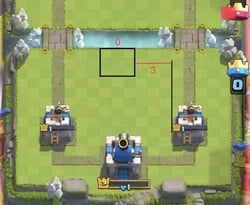
Defensive troop placement directly impacts elixir efficiency. Drop your defensive units 3 to 4 tiles away from your Crown Towers. Dropping defenders right beside your tower gives opponents free spell value, letting them clip your defense while chipping tower health simultaneously.
The table below details critical resource benchmarks and common mechanical blunders to eliminate from your Grand Challenge runs.
| Mechanical Scenario |
Elixir Cost / Trade |
In-Game Consequence |
Optimal Grand Challenge Play |
| Sitting Capped at 10 Elixir |
-7 Elixir per 20 sec |
Gives up passive tempo; grants opponent built-in advantage. |
Play a back-row neutral cycle card at 9.5 elixir. |
| Attacking at Zero Elixir |
0 Elixir Buffer |
Leaves lane defenseless against fast bridge punish cards. |
Retain a strict 4-elixir reserve when attacking. |
| Defending Adjacent to Tower |
+2 to +4 Spell Value |
Allows enemy spells/splash troops to damage tower and troop. |
Space defenders 3 to 4 tiles away from tower perimeter. |
| Early Champion Ability Use |
1-Use Skill Wasted |
Strips Champion utility for the remainder of the 5-minute match. |
Save ability for high-leverage double/triple elixir push. |
| Opponent Commits Heavy Card |
Opponent at 0-3 Elixir |
Opponent cannot field primary defensive counters. |
Instantly pressure opposite lane with high-speed punish units. |
Maintaining positive trades across these scenarios ensures you enter double elixir with a dominant board state.
Eliminating these blunders prevents mid-bracket collapses. Many competitors who buy Clash Royale gems for Grand Challenge runs blame bad matchups when unforced elixir leaks were the actual cause of defeat.
Win-Bracket Adaptations: Adjusting Tactics from 0 to 12 Wins
Your strategy must adjust as your win count climbs. Tactics that work at 2 wins will cost you the match at 10 wins.
Wins 0 to 4: Punishing Sloppy Aggression
Early-bracket opponents often push the bridge without tracking card cycles. Stay defensive. Let them exhaust elixir on your side of the river, defend efficiently, and ride the resulting counter-push to a straightforward win.
Wins 5 to 8: Bait Discipline and Spell Conservation
In the mid-bracket, opponents run refined Log Bait, Mortar, and cycle archetypes. Do not waste small spells on minor chip units. When facing Goblin Barrel, hold The Log strictly for the barrel. Use secondary troops to absorb auxiliary threats like Wall Breakers or Princess.
Wins 9 to 12: Micro-Interactions and Exact Elixir Tracking
In the final stretch, you face semi-pro and top-ranked ladder players. Matches frequently push deep into overtime where every tile placement matters. Drag heavy melee units to the center so both Princess Towers engage them. Track enemy defensive rotations and strike the exact moment their primary counter is out of hand.
Weekly Replay Diagnostic: Fixing Your Execution Flaws
Progression updates replaced the legacy King's Journey and XP mechanics with Collection Levels (calculated from total card levels plus 5 levels per Evolution and Hero owned, up to Level 125). Even so, Grand Challenges remain locked at Level 11 tournament standard.
Because card levels are completely equalized, every loss comes down to execution. Establish a weekly review routine:
- Open your battle log after every failed run (especially losses between 6 and 9 wins).
- Watch the replay with the elixir overlay visible.
- Identify the exact turn the deficit started: Did you leak at 10? Did you drop below 4 elixir and get punished? Did you drop a defender inside splash range of your tower?
- Write down the mistake and consciously avoid that placement in your next run.
Practicing with clear focus and securing a steady Clash Royale top up gives you the runway to build muscle memory across consecutive runs without running out of entries.
FAQ
What is the primary cause of choking between 6 and 9 wins in Grand Challenges?
Players predominantly fail due to leaking elixir at the 10-cap and overcommitting on offense without maintaining a defensive reserve. Counting enemy elixir pools prevents reckless offensive pushes that lead to counter-push blowouts.
How did the August 2026 balance update impact Grand Challenge cycle decks?
All four Spirits received a 6% hitpoint nerf down to 215 HP and can no longer connect to towers alone, removing free chip damage. In addition, single-use Hero and Champion abilities make activation timing critical rather than something you can spam on cooldown.
What is the 4-elixir reserve rule in Clash Royale competitive play?
The rule dictates keeping at least 4 elixir unspent whenever attacking to defend against sudden counter-pushes in the opposite lane. This discipline prevents catastrophic three-crown counterattacks when an opponent defends your push efficiently.
Which deck archetypes hold the highest win rates in Grand Challenges in 2026?
Battle Ram beatdown and bridge spam variations lead the meta with win rates exceeding 60%, followed closely by 2.8 Goblin Barrel Wall Breakers at 58.6%. Heavier builds capitalize on superior elixir efficiency during double and triple elixir phases.
Why is defensive troop spacing critical against splash units in competitive matches?
Placing defenders 3 to 4 tiles away from Crown Towers stops splash damage and spells from clipping the tower while killing your troops. Center placement also pulls enemy attackers into range of both Princess Towers for maximum defensive DPS.
How should Grand Challenge contenders practice to overcome late-bracket panic?
Maintain a strict routine playing a single primary deck across focused sessions and review replays of every critical loss. Tracking elixir deficits and placement mistakes in replays builds automatic late-game reflexes under pressure.
The 12-Win Mindset
Winning a Grand Challenge in 2026 comes down to emotional control and clean resource math. The August balance update removed mindless Spirit chip cycling and Champion cooldown spam, shifting the advantage back to fundamental mechanics.
Pick one top-performing archetype—such as the 60.7% win-rate Battle Ram E-Barbs deck or the 2.8 Wall Breakers bait cycle—and master its micro-placements. Stop leaking elixir at the 10-cap, honor the 4-elixir defensive reserve, and space your troops away from Crown Towers. When you treat every match as a disciplined game of resource management, that 12-win Grand Challenge badge will follow.








Comments