
T3 Arena: The Complete Guide to XD Entertainment's Pocket-Sized Hero Shooter
Introduction & Quick Facts
T3 Arena is a free-to-play mobile hero shooter developed and published by XD Entertainment for iOS and Android. Built from the ground up for touch screens, it compresses the formula popularized by Overwatch and Valorant into 3-to-5 minute matches with auto-fire aiming, third-person cameras on most heroes, and a roster of distinct characters who split cleanly into damage, tank, and support archetypes. The result is a shooter you can run during a coffee break that still rewards positioning, ult timing, and team composition.
Since its global rollout in 2022, T3 Arena has become one of the most recognizable hero shooters in the mobile space, supported by frequent seasonal patches, a rotating battle pass, and a roster that has grown well past two dozen heroes. It serves a player base that wants quick, competitive shooter action without the heavy install size, controller dependency, or hour-long sessions of console and PC equivalents. The game is published in English, Japanese, Korean, Simplified and Traditional Chinese, Thai, Arabic, Spanish and several other languages, with cross-region matchmaking that keeps queues fast at almost any hour.
This guide breaks down every system that actually matters: the modes, the heroes, the economy, ranked progression, and concrete strategy that elevates new players out of the bronze and silver mud. We also explain how T-Gem top-ups work, what they buy you, and how to spend efficiently if you choose to support the game.
| Field | Detail |
|---|---|
| Title | T3 Arena |
| Publisher | XD Entertainment |
| Developer | XD Entertainment |
| Platform | iOS, Android |
| Region | Global |
| Genre | Hero Shooter / Team-Based Multiplayer |
| Modes | 3v3, 5v5, Solo Arcade |
| Match Length | ~3–5 minutes |
| Premium Currency | T-Gems |
| Official Website | xd.com |
What is T3 Arena?
T3 Arena is a team-based hero shooter purpose-built for mobile. Where most of its competitors port a desktop-shaped game onto phones and hope the controls survive, T3 Arena was designed around an auto-fire core: your weapon discharges automatically once a target is in the crosshair, leaving thumbs free for movement, dodging, ability casting, and target switching. This single decision is what allows the game to run satisfying 3v3 fights on a phone screen without forcing players into clumsy dual-stick gymnastics.
The matches are intentionally short. A standard Team Deathmatch round resolves in roughly three minutes. Control Point and Payload modes run a little longer, but rarely exceed five. That cadence is deliberate — it matches mobile session psychology, encourages a "one more game" loop, and keeps queue times tight because nobody is locked into a 30-minute commitment. For commuters, students, and people who play in five-minute windows between tasks, this rhythm is the entire pitch.
The game's audience splits into three groups. First, casual mobile shooter fans coming from Call of Duty Mobile or PUBG Mobile who want something with hero abilities and faster fights. Second, ex-Overwatch and Valorant players who want a familiar comp-style experience on the go. Third, the growing mobile-first competitive crowd that treats T3 Arena as a low-friction ladder game with real skill expression in ability timing and team coordination. T3 Arena's accessibility is genuine — anyone can pick it up in ten minutes — but its skill ceiling, especially in ranked 3v3, is high enough that the same handful of hero combinations and player names dominate top brackets season after season.
Visually, the game uses a clean, slightly stylized look — readable hero silhouettes, color-coded ability effects, bright maps with clear sightlines. Performance is good across mid-range Android devices, and high refresh rate support on capable hardware makes a tangible difference in tracking and dodging.
Core Gameplay & Features
- Auto-fire combat — Aim the reticle at an enemy and your weapon fires automatically; you focus on movement, abilities, and target priority.
- 3v3 and 5v5 formats — Two distinct team sizes with their own map pools, mode rotations, and meta heroes.
- 25+ heroes across damage, tank (vanguard), and support (healer) roles, each with a passive, a primary ability, an ultimate, and a unique weapon.
- Multiple core modes — Team Deathmatch, Control, Payload Escort, Crystal Assault, Free-for-All, and rotating arcade events.
- Ranked ladder with seasonal soft resets, MMR-based matchmaking, and tiered rewards from Bronze up through Diamond and beyond.
- Practice arena lets you trial every hero, including locked ones, before committing currency.
- Seasonal battle pass with a free track and premium track, refreshed roughly every two months.
- Voice chat and party system for organized 3-stack and 5-stack queues.
- Cosmetic-only paid content — Skins, emotes, sprays, and weapon finishes do not affect stats.
- Cross-region global matchmaking keeps queue times low and exposes you to varied playstyles.
- Frequent balance patches with explicit hero buff/nerf notes published each season.
- Replay and POTG (Play of the Game) highlight your best moments after every match.
Auto-Fire and Why It Works
The auto-fire system is the load-bearing pillar of the whole game. On a phone, traditional shooter aim is approximate at best — you cannot match the precision of a mouse or even a console controller's analog stick. Rather than forcing players to manually pull a trigger button while also strafing and casting, T3 Arena removes the trigger entirely. Your only aiming job is to keep the enemy under your crosshair. Hits are calculated against the actual aim point, so flicking accurately, leading moving targets, and tracking through dodges all still matter. What changes is that your thumbs are freed to do everything else.
The downstream consequences are interesting. Mechanical aim skill is compressed — bad players still hit some shots, great players don't get the same wide gap they would in Counter-Strike — but decision skill is amplified. When to peek, when to retreat, when to ult, when to swap targets, when to commit a cooldown — these become the dominant skill axes. T3 Arena's competitive identity sits on this trade-off.
Map Design
Maps are tight, deliberately small, with two or three primary engagement zones and several flanking lanes. 3v3 maps are roughly the size of a single Overwatch control point, while 5v5 maps add a second objective and longer rotations. Verticality is moderate — most maps have an elevated catwalk or sniper perch, but not so much vertical complexity that it punishes new players. Sightlines are short to medium range, which keeps the average gun fight under five seconds and rewards burst-damage heroes and ambushers.
Hero Design Philosophy
Every hero in T3 Arena has four meaningful inputs: a passive (always on), a movement or utility ability, a primary cooldown ability, and an ultimate that charges from damage dealt and damage taken. Unlike many shooters where ultimates are flashy executes, T3 Arena ults often double as defensive tools — a healer can drop a global heal, a tank can shield the entire team, a sniper can wallhack for a few seconds. This forces the question of whether to use an ult offensively to push a fight or defensively to survive one, which is one of the more interesting recurring decisions in any given match.
Game Modes Deep Dive
| Mode | Team Size | Win Condition | Avg Length | Best For |
|---|---|---|---|---|
| Team Deathmatch | 3v3 / 5v5 | First team to score limit (usually 30 kills) | 3–4 min | Practicing aim, hero fundamentals |
| Control | 5v5 | Capture and hold a central point | 4–5 min | Team coordination, comp drafting |
| Payload Escort | 5v5 | Push or defend a moving cart through checkpoints | 4–6 min | Tank/support synergy, area denial |
| Crystal Assault | 3v3 | Destroy enemy crystal / defend yours | 3–4 min | Objective focus, lane priority |
| Free-for-All | 1v1v1v1v1v1 (6) | Highest individual score | 3 min | Solo mechanics, no team reliance |
| Arcade Rotations | Varies | Mode-specific | Varies | Weeklies, casual fun, BP XP |
Team Deathmatch is the default entry point. There is no objective beyond eliminations, which makes it the fastest way to learn a hero's gun feel and ability rhythm. It also rewards farming — chase down weak picks, avoid 1v3s, control healing kits on the map.
Control is a single-point capture mode where both teams fight over a fixed objective. The point ticks toward whichever team has more bodies inside it. This is the format where team composition matters most: you want a tank to anchor the point, a healer to keep them alive, and damage to clear flankers. Solo-queuing into Control without a healer on your team is a near-guaranteed loss above silver rank.
Payload Escort swaps the static point for a moving objective. The attacking team escorts a cart through three checkpoints; the defending team tries to stall. It's the mode that punishes bad positioning the hardest because the geometry of the cart's route creates predictable choke points, and a good defensive team can hold attackers at the first checkpoint for the entire timer.
Crystal Assault is 3v3 and centers on destroying the enemy's crystal — essentially a small base structure. It plays a bit like a fighting game in shooter form: short matches, intense focus on who can stack ult charge fastest, and a very strong incentive to coordinate ultimates.
Free-for-All removes teams entirely and turns the map into a six-person scramble. It's where players test new heroes against unpredictable opposition and where aim training feels most direct.
Characters & Roles
T3 Arena's roster is divided into three roles. A well-formed 3v3 team usually runs one tank, one healer, and one damage; a well-formed 5v5 team commonly runs one tank, two damage, one healer, and a flex.
| Hero | Role | Key Strength | Difficulty |
|---|---|---|---|
| Jabali | Vanguard (Tank) | Shield drop + frontline pressure | Low |
| Fade | Vanguard (Tank) | Mobile bruiser with self-sustain | Medium |
| Aurora | Vanguard (Tank) | Ice CC and area control | Medium |
| Neon | Support (Healer) | Beam heal + speed buff | Low |
| Chemist | Support (Healer) | AoE heal grenades, anti-heal | Medium |
| Patches | Support (Healer) | Drone heal + repositioning ult | Medium |
| Iceblade | Damage (Hitscan) | Long-range precision | High |
| Pyro | Damage (Burst) | Close-range shotgun blasts | Low |
| Wukong | Damage (Mobility) | Dash-based assassin | High |
| Howl | Damage (Sniper) | One-shot headshot potential | High |
| Foxtrot | Damage (Versatile) | Mid-range rifle, stable DPS | Low |
| Lawine | Damage (Flanker) | Stealth + backline pick | High |
Vanguards (Tanks)
Vanguards exist to absorb damage and create space. They have the highest HP pools, the largest hitboxes, and abilities focused on either shielding (Jabali), displacing (Aurora), or diving (Fade). A common new-player mistake is to play a vanguard like a damage hero and try to farm kills — the role is about making it safe for your damage and healer to do their jobs. Stand at the front, hold cover, peek when your healer has line of sight to you, and use cooldowns to peel for low-HP teammates.
Healers (Supports)
Healers are the most influential role in any rank above gold. Neon is the easiest entry — point her beam at an ally and it heals continuously, with a speed boost layered in. Chemist plays more like Ana from Overwatch: skill-shot grenades that heal in an AoE, plus an anti-heal area-denial ult that swings teamfights hard. Patches uses a hovering drone that auto-targets injured teammates, freeing them to position more independently, with an ult that picks up a fallen ally and relocates them.
A team without a healer wins maybe 30% of its matches at intermediate ranks. A team with a competent healer can carry an otherwise mediocre roster.
Damage
Damage heroes are where the roster gets the widest. Pyro is the lowest-floor pick — shotgun, easy ult, brawler stat line, forgiving to new players. Iceblade is hitscan precision at range, more forgiving than a true sniper but rewarding for players who can track. Howl is the dedicated sniper, with one-shot kill potential on body shots against squishies; he is the highest-skill expression DPS in the cast and the hero most likely to swing a match single-handedly when piloted by an expert.
Wukong and Lawine are the flanker archetypes — mobility-first heroes who circle behind enemy lines, pick off the healer or sniper, and reset. They are punishing to learn and high-impact when mastered. Beginners should avoid them until they have at least 50 matches on simpler damage heroes.
Pro Tips & Strategy
Beginner (Rank: Bronze to Silver)
- Lock in one hero per role and stop swapping. New players who jump between five heroes per match never build the muscle memory for any of them. Pick one tank, one healer, one damage — three total — and run only those for your first 100 matches.
- Play with the auto-fire, not against it. Do not tap-shoot or try to control your fire rate manually. Trust the system; focus on keeping your reticle on target while strafing.
- Always strafe in fights. Standing still in T3 Arena is a death sentence. Move side-to-side constantly during gunfights; even small motion ruins enemy tracking.
- Healers are priority targets. When you see the enemy healer, focus them down first. A healer-less enemy team collapses in the next teamfight.
- Use cover, not range. Most maps reward fighting from corners and short angles. Holding cover beats holding distance for almost every non-sniper hero.
- Complete daily and weekly quests before queuing ranked. Free T-Gems, hero shards, and battle pass XP are all gated behind dailies. Twenty minutes of arcade modes pays off in resources.
Intermediate (Rank: Gold to Platinum)
- Ult tracking. Mentally count enemy ultimates. If their healer used their ult to save a teammate, the next 60 seconds is the safest window to commit your own ult and push.
- Stagger respawns. If a teammate dies, do not rush to engage solo — wait the 8-to-10 seconds for them to respawn and regroup. A staggered fight loses 3v2s in seconds.
- Learn the map healing pack timers. Health kits respawn on fixed cycles. Knowing when the next one is up lets you make aggressive plays your enemy cannot match.
- Communicate three things only over voice. Enemy positions, low-HP callouts, and ult readiness. Skip the chatter; clean comms beat constant comms.
- Counter-pick on the loading screen. You can see enemy hero locks before the match starts. Swap your damage if they have a strong sniper, or your tank into Aurora if they're running dive comp.
- Watch your own replays. The replay system shows your deaths from any angle. Five minutes reviewing one match teaches more than five matches played blind.
Advanced (Diamond and Above)
- Hold ults for combos, not solo plays. A coordinated ult chain — tank shield into damage ult into healer anti-heal — wins fights that any single ult would not.
- Force the enemy healer into 1v1s. If you can isolate the support, you usually win. Flanker heroes exist to do this consistently.
- Map-specific hero pools. Howl is great on long-sightline maps and useless on close-quarters arenas. Build a sub-pool of two heroes per map archetype.
- Track your win rate per hero, not per session. A 53% hero is better than a 48% hero. Be honest about which heroes actually carry you and which ones just feel fun.
- Use the practice arena before climbing ranked sessions. Five minutes of warm-up against bots reliably improves first-match win rate. Cold-queuing into ranked is throwing free LP away.
- Avoid tilt-queuing. Two losses in a row in T3 Arena's tight match length means your MMR will drop fast if you keep queuing on autopilot. Step away, hit practice, come back.
Progression, Battle Pass & Economy
T3 Arena's progression is built around three intertwined systems: account level, hero mastery, and the seasonal battle pass.
Account level is the slowest track — it ticks up from every match and gates a few cosmetic milestones. It is mostly a bragging-rights number and not worth grinding directly.
Hero mastery is per-hero XP. Playing a hero levels that hero specifically, unlocking voice lines, sprays, and at higher tiers, exclusive emotes or accent pieces. Mastery also indirectly signals to teammates that you actually know the hero — high-mastery players draw less flak and more cooperation.
The battle pass is the engine of seasonal progression. Each season (roughly two months) introduces a fresh pass with 50 to 60 tiers. The free track offers hero shards, T-Gem trickles, gameplay-affecting items like loot box keys, and a handful of cosmetics. The premium track, purchased with T-Gems, layers on legendary skins, emotes, weapon finishes, and accelerated currency rewards.
Currency Types
| Currency | How to Earn | Primary Use |
|---|---|---|
| T-Gems | Top-up purchase, small battle pass drips | Battle pass, premium skins, loot boxes |
| Coins | Match rewards, dailies | Hero unlocks, common cosmetics |
| Hero Shards | Quests, battle pass, events | Unlock specific heroes faster |
| Glory Points | Ranked play | Ranked-exclusive cosmetic rewards |
| Loot Box Keys | Daily login, events | Open cosmetic loot boxes |
The economy is generous compared to many mobile games. Every hero in the roster is unlockable with free Coins given enough play time, and the cosmetics on the free battle pass track are visually competitive with the paid ones. T-Gems accelerate the timeline and unlock exclusive paid-track skins, but they do not buy power. There are no stat-boosting items, no pay-to-win consumables, no characters locked behind cash-only walls. This is genuinely a cosmetic-only economy.
Ranked Play & Competitive Scene
Ranked unlocks after you reach a certain account level (around level 10) and have logged a baseline number of casual matches. The ranked ladder runs through Bronze, Silver, Gold, Platinum, Diamond, and into top-tier brackets that vary by season. Each rank has three or four sub-divisions, and promotion requires winning a best-of-three or best-of-five promo series at the top of each division.
Matchmaking uses a hidden MMR alongside visible rank. This means smurfs and returning players climb fast through the lower tiers while new players are matched against similar-MMR opponents even if their visible rank is technically higher. The system is imperfect — premade stacks of three often steamroll solo queues at intermediate ranks — but at Diamond and above, the match quality is consistently strong.
Seasons last about two months and end with a soft reset: everyone drops one full rank, and the placement matches re-sort the population. Top performers receive exclusive seasonal cosmetics (a unique skin, a profile portrait, a name color) that are never re-issued, which gives ranked play actual prestige value.
The competitive scene around T3 Arena is regional rather than truly global. There are organized tournaments in Southeast Asia and East Asia in particular, with prize pools that have grown each year since launch. There is not yet a unified world championship at the scale of Mobile Legends or PUBG Mobile, but the infrastructure — replay system, spectator mode, anti-cheat — is in place if XD Entertainment chooses to expand it.
Top-Up & Recharge
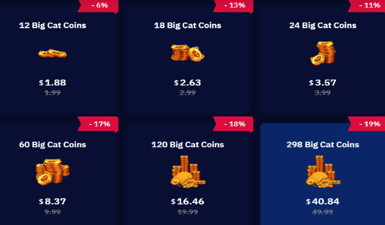
Players top up T3 Arena by purchasing T-Gems, the in-game premium currency. The standard route is via in-app purchase through the Apple App Store or Google Play Store, where T-Gems are sold in tiered packages ranging from small starter bundles up to large value packs. T-Gems are used to buy the premium battle pass track, legendary and mythic skins, loot box keys, and occasional limited-time event bundles. First-time purchase of any pack typically doubles the gems received, which is the single best value moment in the entire economy — if you plan to spend at all, time your first purchase to coincide with a season-launch battle pass.
Our site offers direct T-Gem top-up and recharge for T3 Arena as an alternative to in-app purchases.
FAQ
Q: Is T3 Arena free to play? Yes. The game is free on iOS and Android, and every hero can be unlocked through normal play. Only cosmetics and the premium battle pass track require spending.
Q: Is T3 Arena pay-to-win? No. There are no stat boosts, no power-creep characters locked behind paywalls, and no items that affect combat outcomes. Everything purchasable is cosmetic or a progression accelerator.
Q: What's the difference between 3v3 and 5v5 modes? 3v3 emphasizes individual skill, hero mastery, and tight team coordination — every player matters every second. 5v5 adds more strategic depth with role flexing and longer rotations, but individual mistakes hurt less. Most players gravitate to one or the other based on temperament.
Q: Can I play with friends across iOS and Android? Yes. T3 Arena supports cross-platform play between iOS and Android, and the party system makes it easy to invite friends regardless of their device.
Q: How often does T3 Arena release new heroes? Roughly one new hero per season, with occasional special drops between seasons. Heroes are usually free-to-unlock through play but available immediately with T-Gems or Coins.
Q: What's the best beginner hero? For damage, Pyro or Foxtrot. For tank, Jabali. For healer, Neon. All four have low mechanical demands and forgiving kits that teach core game concepts.
Q: How long does a typical match take? Three to five minutes for most modes. Free-for-All can resolve in under three. Payload Escort sometimes runs to six minutes with overtime.
Q: Is voice chat required? No, but it is a major advantage in ranked above Gold. Solo-queue players can ping callouts via the wheel command instead.
Q: Does T3 Arena work on low-end phones? Yes. The game offers graphics presets down to a low-spec mode that runs on devices several generations old. Frame rate is the priority over visual fidelity at lower settings.
Q: Are there bots in matches? Casual matches occasionally use bots to fill slots at off-peak hours, and the tutorial and practice modes are entirely against bots. Ranked matches are human-only.
Q: Can I refund T-Gem purchases? Refunds go through the platform (App Store or Google Play) policy. Once T-Gems are spent on items, they cannot be reversed in-game.
Q: What languages does T3 Arena support? English, Japanese, Korean, Simplified Chinese, Traditional Chinese, Thai, Arabic, Spanish, and several others. The client auto-detects but can be switched in settings.
Verdict
T3 Arena is the most polished and approachable hero shooter on mobile, and it has earned that position by genuinely understanding the platform it lives on. The auto-fire system removes the single biggest barrier to mobile shooter satisfaction — bad touch aiming — without sacrificing the decision-making that makes hero shooters interesting. Match length, hero variety, and the cosmetic-only economy combine to make it one of the rare free-to-play competitive games where time invested actually pays off in skill and unlocks rather than just funnel pressure toward your wallet. You can find more about the publisher and its other titles at xd.com.
You should play T3 Arena if you enjoy hero shooters and want a version you can fit into the cracks of a busy day, if you came from Overwatch or Valorant and want something similar without the time commitment, or if you are mobile-first and tired of battle royale being the only well-supported competitive option. You should skip it if you require mouse-and-keyboard precision aim, if you want a deep solo PvE campaign, or if 3-minute matches feel too short to scratch the strategic itch. For everyone else — especially players who already spend an hour a day in mobile games and want one of those hours to be sharper and more competitive — T3 Arena is among the easiest recommendations in its genre, and it has only deepened since launch.