

Mobile Legends: Adventure: The Complete Guide to Heroes, Idle Progression, and M-Cash Top-Up
Introduction & Quick Facts
Mobile Legends: Adventure is Moonton's idle role-playing spin-off built on the lore, art style, and hero roster of the original Mobile Legends: Bang Bang. Instead of five-versus-five real-time MOBA combat, it strips the franchise down to its character-collection core: assemble squads of five heroes, position them across a fixed grid, and let automated battles resolve while you handle other things. The result is a game designed for short, deliberate play sessions rather than marathon matches — perfect for mobile audiences who want progression without time pressure.
The game launched globally in 2019 and has been continuously updated with new heroes, factions, story chapters, and seasonal events. Its appeal sits at the intersection of three audiences: longtime Mobile Legends fans who want to see their favourite heroes like Layla, Miya, Saber, and Granger in a new format; idle-RPG veterans coming from AFK Arena, Idle Heroes, or Hero Wars; and casual players hunting a clean, low-stress collector loop that still rewards strategic thought. M-Cash is the premium currency that powers most acceleration paths — summoning, energy refills, skin purchases, and value bundles — and topping it up is the most common way committed players sustain a competitive pace.
This guide compiles practical knowledge across the systems that matter: hero factions, formation strategy, equipment progression, every major game mode, summon math, beginner-through-endgame planning, and how the M-Cash recharge process works in practice. Whether you are a Day 1 newcomer or a guild leader optimising leaderboard pushes, the sections below cover what actually moves the needle.
| Field | Detail |
|---|---|
| Title | Mobile Legends: Adventure |
| Publisher | Moonton |
| Developer | Moonton |
| Platform | iOS, Android |
| Region | Global |
| Genre | Idle RPG, Hero Collector, Auto-Battler |
| Official Website | moonton.com |
What is Mobile Legends: Adventure?
Mobile Legends: Adventure (often abbreviated MLA) is an idle, gacha-driven hero-collector role-playing game. The fundamental loop is: pull heroes from summon pools, build a five-hero formation, send that formation into auto-resolved combat, collect rewards (gold, hero EXP potions, equipment, hero shards, currencies), then use those rewards to level, ascend, and gear your roster so you can clear progressively harder content. Combat itself is hands-off — your heroes auto-attack, auto-cast basic abilities, and you only tap to manually trigger ultimates when timing matters.
What separates MLA from a generic idle RPG is its source material. Every playable character is lifted from the Mobile Legends: Bang Bang MOBA universe, retaining the same name, silhouette, voice direction, skill identity, and lore. Tanky frontliner Tigreal is still a hammer-swinging knight; Layla is still a long-range marksman with falloff-style scaling; Eudora still throws lightning. For tens of millions of Mobile Legends players in Southeast Asia, South America, and beyond, this familiarity is the hook — MLA lets them collect and progress heroes outside the high-pressure ranked MOBA environment.
The "who it's for" answer breaks into three groups. Mobile Legends fans get a low-skill-floor way to engage with the IP while away from a stable connection. Idle-RPG enthusiasts get a polished entry in the genre with strong art direction, a coherent faction system, deep equipment progression, and active long-term support. Time-constrained adults get a game that respects offline progression: log in twice a day for ten minutes, claim accumulated rewards, run a few campaign battles, push a tower, and log out. The game does not punish you for missing a day, and it actively rewards consistency over playtime length.
The economy is dual-layered. Free-to-play players can clear the bulk of campaign content, complete all PvE modes, and remain competitive in mid-tier guild content purely through dailies and patience. Paying players accelerate hero acquisition — particularly limited-banner heroes — and can leapfrog gear tiers, which matters most in the seasonal arena rankings and competitive guild bosses where small power gaps decide leaderboard positions. M-Cash is the bridge between those two layers.
Core Gameplay / Features
- Five-hero auto-combat formations with positional logic — front row tanks soak damage, back row carries deal it
- Six core factions (Light, Abyss, Cadia Riverlands, Castellan, Tech, Dragon Altar) with intra-faction synergy bonuses
- Idle reward generation that continues up to a capped duration while you're offline
- Multiple summon pools including standard hero portal, friendship portal, and rotating limited banners
- Campaign chapters that gate roster power requirements and unlock new modes as you progress
- Tower of Babel — a permanent floor-by-floor climb that resets nothing and provides long-term goals
- Magic Tower modes — class-restricted towers (Tank, Marksman, Assassin, Mage, Support, Fighter) for targeted resources
- Labyrinth roguelite mode with random buffs, weekly resets, and substantial hero-EXP rewards
- Contest of Champions — synchronous PvP arena tied to seasonal leaderboards and exclusive skins
- Guild War & Guild Boss cooperative content with weekly schedules and ranking-based rewards
- Equipment crafting system with rarity tiers, set bonuses, sub-stats, and re-rolling mechanics
- Hero ascension via duplicate shards unlocking exclusive equipment slots and increased stat ceilings
Formation and Positional Combat
Every fight is determined before it starts by three variables: hero identity, hero level/gear/stars, and positioning. The grid is 2x3 — two columns of three slots. Front-column heroes are targeted first by most basic attacks and physical-damage abilities; back-column heroes are protected until the front collapses, but they are vulnerable to assassins and abilities that target the back row specifically (Saber's leap, Karina's pickoff, Selena's stun). Smart placement multiplies effective stats. A tank in the back row wastes most of its kit; a glass-cannon marksman in front evaporates in two seconds.
Faction System
The faction wheel is the single most important strategic concept in MLA. The six factions are:
- Light — paladins, holy mages, ordered knights
- Abyss — corrupted, demonic, undead
- Cadia Riverlands — nature-aligned hunters and rangers
- Castellan — castle-state warriors and political faction heroes
- Tech — futuristic, mechanical, energy-based units
- Dragon Altar — eastern mystic and dragon-bloodline heroes
Light and Abyss counter each other (each deals +25% damage and takes –25%). Cadia Riverlands and Castellan share the same mutual counter relationship, as do Tech and Dragon Altar. Running a monofaction team (all five heroes from one faction) grants a substantial team-wide stat bonus (typically +15% attack and HP), which is why most competitive PvP teams stack faction. The five "Magic Towers" — Tank, Marksman, Mage, etc. — additionally require single-role teams, forcing roster width rather than just depth.
Idle Generation
Heroes farm gold and hero EXP potions automatically based on your highest completed campaign stage. Resources accumulate up to a cap (typically 12 hours; extendable via VIP and certain badges). The Fast Reward feature lets you instantly claim several hours of generation per day for free, with additional uses purchasable. Optimising your campaign stage clear is therefore a wealth multiplier — every chapter you push raises your hourly idle income permanently.
Summons and Pulls
Pulls cost either Hero Crystals (premium currency convertible from M-Cash and obtainable from many sources) for the standard portal, or Friendship Coins (earned by sending and receiving heart gifts with friends and guildmates) for the friendship portal. Limited banners feature rate-up SSR heroes with pity systems — pulling enough times without hitting the featured hero guarantees them on a milestone pull. Daily free pulls exist on both standard and friendship portals, making login consistency materially valuable.
Equipment
Gear has rarity tiers (Common through Mythic), set bonuses (two-piece, four-piece, six-piece effects), and randomly rolled sub-stats that can be re-rolled with consumables. Late-game progression is dominated by equipment quality, not hero level. Crafting fuses lower-rarity pieces into higher ones, so old gear is never truly wasted.
Pro Tips & Strategy
Beginner (Days 1–14)
- Rush the campaign hard in your first week. Every chapter you clear raises your idle income and unlocks new modes. Aim to reach the Tower of Babel and Labyrinth unlocks within the first three days.
- Pick one faction to focus. Most accounts default to Light or Abyss because their starter SSRs are strong and broadly available. Commit, build a monofaction core, and farm the matching faction tower.
- Always claim daily quests, Bounty Board, and the seven-day login. Seven-day rewards almost always include a guaranteed SSR hero — that one pull is more valuable than any other early decision.
- Spend your Hero Crystals only on 10-pulls, never singles. Ten-pull bonuses (guaranteed Elite hero, faction crystal, summon scrolls) are mathematically superior.
- Join an active guild immediately. Guild check-ins, guild shop currency, and guild boss damage rewards stack daily. A guild seat is worth more than any single hero.
- Don't waste hero EXP potions on heroes you won't keep. Star them up using shards first, then level only your committed five-hero core and a second team for class-locked content.
Intermediate (Weeks 2–8)
- Build a second team for the magic towers. You can't clear Mage Tower with a Marksman team. Keep at least one strong hero of each major class in reserve.
- Prioritise SSR hero shards over duplicates of lower rarities. Ascending SSRs to higher star tiers (3-star, 5-star, 7-star) provides much larger power jumps than collecting a wider weak roster.
- Always run the Labyrinth weekly. It is the largest single source of hero EXP potions in the game. Pick the buff path that suits your team — defensive stacking for tanks, crit/attack for marksman cores.
- Hoard Hero Crystals before announced limited banners. Saving 200–300 pulls before a guaranteed-pity limited hero release is almost always better than mid-season pulls on standard rates.
- Re-roll equipment sub-stats only on Epic or higher gear. Re-rolling rares is a waste of refining stones; you'll replace that gear within days.
- Learn ultimate timing. Even though combat is auto, manually triggering ultimates at the right moment (right after an enemy cast, on a clustered enemy line, or to interrupt a key channel) wins close fights. Watch for tells in animations.
Advanced (Month 2+)
- Build counter-comps for Contest of Champions. Scout the top of your bracket, identify dominant compositions, and prepare a Light counter for an Abyss-heavy ladder (or vice versa). Faction counters often beat raw CP advantages.
- Time your ascensions to balance Power Boost activations. Some heroes only become tier-S after specific star thresholds (e.g., several heroes unlock formation-wide auras at 5-star).
- Run "burst comps" for Guild Boss damage events. Maximum first-30-second damage matters far more than survivability. Stack attack buffs, ignore healing, accept the inevitable wipe.
- Convert excess resources before they cap. Idle gold, refining stones, and certain currencies hit hard caps. Always spend down to ~70% capacity before logging off, or you lose offline gains.
- Use VIP-gated convenience features intentionally. Auto-deploy, extended idle cap, and additional Fast Reward charges scale account efficiency. Many committed players top up just enough to clear a VIP tier rather than spending into individual banners.
- Track new hero release patterns. Moonton typically releases new SSRs on a roughly monthly cadence with reruns. Plan crystal reserves around the release calendar, not around current banner FOMO.
Characters & Roles
The roster spans well over a hundred heroes, all drawn from the parent MOBA. Below is a representative selection of frequently-discussed picks across roles and factions to help newcomers calibrate priorities.
| Hero | Role | Faction | Why They Matter |
|---|---|---|---|
| Tigreal | Tank | Light | Reliable frontline stun and AoE knock-up; staple of Light comps |
| Alpha | Fighter | Tech | Sustained DPS frontline with self-healing; strong all-rounder |
| Layla | Marksman | Tech | Backline scaling damage; benefits enormously from positioning |
| Granger | Marksman | Castellan | High burst damage; key DPS in Castellan monofaction |
| Eudora | Mage | Light | Single-target lightning burst; Light synergy and PvP threat |
| Aurora | Mage | Light | Crowd-control freezes; core to Light AoE comps |
| Saber | Assassin | Tech | Backline pickoff specialist; counters squishy marksman teams |
| Karina | Assassin | Abyss | Reset-on-kill snowballing; terrifying in arena |
| Selena | Mage/Assassin | Abyss | Long-range stun arrow; PvP opener |
| Estes | Support | Cadia Riverlands | Premier healer; extends fights for sustain comps |
| Rafaela | Support | Light | Heal and speed buff; entry-level Light support |
| Argus | Fighter | Abyss | Immortality-window damage dealer; Abyss DPS core |
| Akai | Tank | Dragon Altar | AoE displacement knock-back; great vs clustered backlines |
| Nana | Mage | Cadia Riverlands | Polymorph crowd control; disrupts boss mechanics |
Builders typically anchor their account around 2–3 monofaction cores and a handful of "universal" heroes — supports like Estes and powerful crowd-controllers that fit any team — to cover every mode the game offers.
Game Modes Deep Dive
Mobile Legends: Adventure is structured around a hub of permanent modes plus rotating limited events. Understanding which modes reward which resources is the heart of efficient play.
| Mode | Type | Primary Reward | Reset Frequency |
|---|---|---|---|
| Campaign | PvE story stages | Idle income rate, story progression | One-time |
| Tower of Babel | Endless floor climb | Hero shards, crystals | None (permanent) |
| Magic Towers (×6) | Class-locked towers | Class-specific exclusive gear | None (permanent) |
| Labyrinth | Roguelite | Hero EXP potions, gear | Weekly |
| Contest of Champions | Async PvP | Champion coins, skins, crystals | Seasonal |
| Lonely Souls / Bounty | Daily missions | Gold, EXP, friendship coins | Daily |
| Guild Boss | Co-op damage race | Guild coins, mythic gear shards | Weekly |
| Guild War | Guild vs guild | Honor, ranking rewards | Seasonal |
| Limited Events | Rotating | Event-exclusive heroes, skins | Varies |
Campaign
The narrative spine. Stages get progressively harder, and the "highest stage cleared" stat directly controls your idle income tier. Treat campaign as the foundational progression track for at least the first 60 days — every stage cleared is permanent income.
Tower of Babel
A single endless tower with no reset. You climb at your own pace, and each milestone floor (every 10–20 floors) drops chunks of crystals and rare shards. Excellent for stockpiling pull currency over time. Most accounts return here after each major power spike.
Magic Towers
Six separate towers, one per class. Each requires a five-hero team of that class only. This is why roster width matters — a tank-only team needs five viable tanks, an assassin team needs five assassins, and so on. Magic Towers are the primary source of class-exclusive epic equipment.
Labyrinth
The Labyrinth is a weekly roguelite. You enter with a chosen team, fight through randomly generated nodes, pick buffs at branches, fight a boss at the end, and earn a final reward chest scaling with your highest floor cleared. Buffs are temporary (reset on weekly close), but rewards are persistent. Labyrinth is the single biggest weekly EXP source.
Contest of Champions
The flagship PvP arena. You build a defensive team and attack other players' defences for rank. Seasons are typically several weeks long and culminate in exclusive cosmetics and high-tier crystals. Top-of-leaderboard rewards include unique hero avatars and limited skins.
Guild Content
Guild Boss is a weekly cooperative damage race against a rotating boss. Damage you deal converts directly into guild coins, which buy hero shards in the guild shop. Guild War pits two guilds against each other in a multi-phase capture-style mode where strategic deployment of multiple teams across battlegrounds determines the winner. Both modes require active guild membership; solo players are at a structural disadvantage.
Endgame & Long-Term Progression
After the first 60–90 days, the progression curve shifts. Hero levels cap relative to your campaign progress, and additional power increases come almost exclusively from three sources: ascension stars, equipment refinement, and badges (a passive progression system unlocked deep into the campaign).
Ascension requires duplicate hero shards. SSR heroes have generous shard income from soul shop conversions, limited-event farming, and weekly guild shop rotations. Pushing a single SSR from 3-star to 5-star is usually a multi-month project for free-to-play accounts and a couple weeks for spenders.
Equipment refinement has multiple sub-systems: re-rolling sub-stats with refining stones, enhancing pieces with EXP material, and forging high-rarity pieces from lower-rarity inputs. Mythic gear (the top tier) is gated behind end-game towers and seasonal events.
Badges function as a parallel progression bar that applies to your entire account. Badge ranks affect idle cap duration, fast-reward count, and small but globally-applied stat bonuses. Badge progression is slow but compounds across years.
The endgame meta also features Magic Tower exclusives — specific gear pieces that only drop from class towers and have outsized impact on their respective classes. Marksman-tower exclusives, for instance, can transform mid-tier marksmen into competitive PvP picks.
Top-Up & Recharge
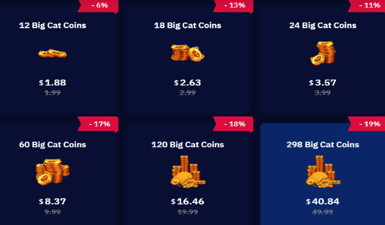
Players top up Mobile Legends: Adventure by purchasing M-Cash, the game's premium currency. M-Cash converts into Hero Crystals (for summoning), energy refills, skins, value bundles, and event passes. The standard top-up flow involves opening the in-game shop, selecting an M-Cash package, and paying via your platform's billing (Google Play balance or Apple ID balance), or by using a third-party top-up service that credits M-Cash directly to your account using your in-game User ID and Server.
Direct top-up services typically require only your numeric User ID (visible in your profile page) and sometimes a server identifier. Once entered, M-Cash is delivered to the account within minutes without requiring login credentials, which is why region-agnostic top-up sites are popular among players in markets where Google Play and App Store gift cards are inconvenient. Common package tiers range from small starter values up to large monthly-budget packs, and Moonton frequently runs first-purchase bonuses that double the M-Cash on each tier's initial buy — making it efficient to top up across multiple tiers once each rather than repeatedly hitting the same tier.
VGTopUp offers top-up / recharge for Mobile Legends: Adventure using your account User ID.
For the official publisher and product information, visit Moonton's site at moonton.com.
FAQ
Q: Is Mobile Legends: Adventure the same game as Mobile Legends: Bang Bang? A: No. They share the same hero IP, art style, and developer (Moonton), but Bang Bang is a real-time 5v5 MOBA while Adventure is an idle hero-collector RPG with auto-resolved combat and gacha summoning. Account progress does not transfer between them.
Q: Is the game free-to-play friendly? A: Yes, broadly. All PvE content is clearable without spending, and free-to-play players can stay competitive in mid-tier guild and arena ranks. The main gap is access to limited-banner heroes and the convenience features that VIP levels provide.
Q: What is M-Cash used for? A: M-Cash converts to Hero Crystals for summons, refills energy, unlocks skins and avatar frames, purchases event passes, and buys value bundles that include shards, EXP potions, and gear. Hero Crystals are the most common conversion target.
Q: How do I find my User ID for top-up? A: Open the game, tap your avatar in the top-left corner, and your numeric User ID is shown on the profile page. The server is also indicated there. Both are required for direct top-up.
Q: Are there real-money pity systems on limited banners? A: Yes. Limited rate-up banners include guarantee mechanics where a fixed number of pulls without the rate-up hero ensures one at the milestone, plus accumulated pulls often grant additional rewards via event-specific scoreboards.
Q: Can I play on PC? A: There is no official PC client. Most PC players use Android emulators such as BlueStacks or LDPlayer, which run the standard Android build. Cross-progression works because the account is tied to your login, not the device.
Q: How often are new heroes added? A: Roughly monthly on average, with seasonal slowdowns and acceleration around major anniversaries. New heroes typically debut on limited rate-up banners and enter the standard pool after a delay.
Q: Is a guild really necessary? A: Yes, in practical terms. Guilds provide weekly Guild Boss rewards, guild shop access (where many SSR shards are obtainable), check-in bonuses, and Guild War participation. Without a guild you miss a significant chunk of weekly progression.
Q: What's the best starter faction to focus on? A: Light and Abyss are the most beginner-friendly because both factions have strong, easily-obtainable SSRs and benefit from straightforward synergy bonuses. Pick whichever your early summons favour rather than rigidly chasing a tier list.
Q: Does the game have PvP outside of arena? A: Yes — Contest of Champions is the seasonal ranked PvP arena, and Guild War is asynchronous large-scale guild-vs-guild PvP. There is no real-time PvP; all combat remains auto-resolved.
Q: How long are typical play sessions? A: Most players spend 15–30 minutes per day across two short sessions (morning and evening) to claim idle rewards, run dailies, and push one mode. Event-heavy weeks can stretch sessions to an hour. Length-wise, MLA respects players' time more than most idle RPGs.
Q: Will my offline rewards cap if I'm away for days? A: Yes. Idle generation caps at roughly 12 hours by default (extendable with VIP and badges). Anything beyond the cap is lost, so logging in at least once per day is strongly recommended to claim and reset the timer.
Verdict
Mobile Legends: Adventure is one of the most polished idle RPGs on mobile and a clear obligation play for anyone already invested in the Mobile Legends IP. Its strengths are the faction system, hero variety, and respect for short play sessions; its weaknesses are the standard idle-RPG gacha pressures and a slow late-game power curve that rewards patience or spending. If you enjoyed AFK Arena, Idle Heroes, or Hero Wars and want a similar loop with a deeper hero roster and a more recognisable cast, MLA is an easy recommendation. If you actively dislike auto-combat, gacha summoning, or daily-quest-driven games, this is not the title that will change your mind — the original Mobile Legends: Bang Bang MOBA is probably a better fit instead.
For committed players who want to accelerate roster depth, secure limited heroes during banner windows, or unlock the convenience tiers that meaningfully change daily efficiency, M-Cash top-ups remain the most direct lever. Plan top-ups around announced banners and first-purchase doubling bonuses rather than impulse spending mid-pull, and the game can deliver years of progression on a sustainable budget.