
Marvel Rivals: The Complete Guide to NetEase's Marvel Multiverse Hero Shooter
Introduction & Quick Facts
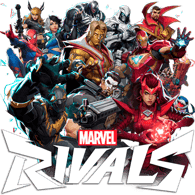
Marvel Rivals is the free-to-play 6v6 hero shooter that turned NetEase Games into a serious contender in a genre long dominated by Blizzard and Valve. Built on Unreal Engine 5, fully cross-platform across PC, PlayStation 5 and Xbox Series X|S, and powered by a roster of more than thirty Marvel icons spanning the mainstream 616 universe and far stranger corners of the multiverse, the game arrived in December 2024 and almost immediately put up Steam concurrency numbers that rivaled the most established live-service shooters on the market. It is fast, destructive, deeply rooted in Marvel lore, and unusually generous with its free cosmetic earn rates compared to genre peers.
For new players, the appeal is obvious: pilot Iron Man, swing as Spider-Man, throw cars as Hulk, or anchor a backline as Luna Snow, all in matches that rarely exceed fifteen minutes. For competitive shooter veterans, the appeal is subtler — Team-Up abilities that reward thoughtful hero pairings, fully destructible environments that reshape sightlines mid-fight, and a balance philosophy that aggressively rotates the meta every half-season. This guide breaks down everything a player needs to understand the game, climb the ranks, and manage the in-game Lattice and Units economy efficiently.
| Field | Detail |
|---|---|
| Title | Marvel Rivals |
| Publisher | NetEase Games (in collaboration with Marvel Games) |
| Developer | NetEase Games — Guangzhou-based hero shooter team |
| Platform | PC (Steam, Epic Games Store), PlayStation 5, Xbox Series X|S |
| Region | Global, cross-platform play and progression |
| Genre | Free-to-play 6v6 hero shooter, third-person |
| Primary Language | English (with Japanese, Korean, Simplified Chinese, Traditional Chinese, Arabic, and more) |
| Monetization | Cosmetics-only; Lattice (premium) + Units (standard) + Chrono Tokens (battle pass) |
| Official Website | marvelrivals.com |
What is Marvel Rivals?
Marvel Rivals is a team-based third-person hero shooter where two squads of six players each pick from a growing roster of Marvel heroes and villains, then fight over objectives across maps built from the Marvel Multiverse. The narrative framing is that Doctor Doom of the 616 universe and a future variant, Doom 2099, have collided timelines, causing realities to merge and giving rise to the "Timestream Entanglement" — a tidy in-fiction excuse for why Hela can stand next to Squirrel Girl on Yggsgard, or why Tokyo 2099 exists alongside the Hydra-occupied Hellfire Gala. Story aside, the gameplay loop is pure competitive shooter: choose a hero, lock a role, push or defend an objective, and try to wipe the enemy team before they wipe yours.
The game is structurally similar to Overwatch — three role categories, ultimate abilities, point capture and payload modes — but it deviates in three meaningful ways. First, it is third-person rather than first-person, which dramatically changes how aim, cover, and character animation feel. Second, environments are destructible: walls collapse, rooftops crumble, and entire bridges can be sheared off, which means defenders can rarely rely on a single chokepoint surviving an entire match. Third, the Team-Up system rewards specific hero combinations with bonus abilities — pair Rocket Raccoon with The Punisher and Rocket can deploy an ammo-boosting beacon; field Hulk alongside Iron Man and Doctor Strange and the squad unlocks gamma-empowered effects.
Who is it for? Anyone who enjoys hero shooters, MOBAs, or Marvel comics. The third-person camera, generous aim assist on console, and Strategist-class supports give players who do not consider themselves "FPS players" a real way to contribute. At the same time, characters like Hela, Hawkeye, The Punisher, Black Widow, and Psylocke have skill ceilings high enough to satisfy players who want to grind mechanical mastery. The free-to-play model with cosmetic-only monetization — no paywalled heroes, no power-affecting purchases — lowers the barrier to entry to essentially zero.
Core Gameplay & Features
- 6v6 team-based combat built around three roles: Vanguard (tanks), Duelist (damage), and Strategist (healers/support).
- Third-person camera with over-the-shoulder aiming, allowing peeks and movement reads that first-person shooters cannot provide.
- Destructible environments powered by Unreal Engine 5; nearly every non-load-bearing wall, statue, and balcony can be demolished by the right ability or ultimate.
- Team-Up abilities that grant bonus powers when specific hero combinations are present on the same team, creating draft-phase strategy.
- Dynamic Hero mode in lower competitive tiers locks heroes once chosen per match, while higher ranks allow mid-match swaps for counterpicks.
- Cross-platform play and progression so PC, PS5, and Xbox accounts share friends, ranks, and cosmetic libraries.
- Seasonal content cadence with new heroes, maps, and balance overhauls roughly every season, plus a mid-season hero drop.
- Battle Pass progression that does not expire — past seasons' premium passes remain claimable, which is rare in the live-service space.
- Multiple objective modes including Convoy (payload escort), Domination (point control), and Convergence (hybrid escort/capture).
- Practice Range, Conquest, and Tournament modes for warmup, custom rules, and competitive scrims.
- Cosmetic-only monetization — skins, emotes, sprays, MVP poses, nameplates, and busts; nothing affects gameplay balance.
- Spectator and Replay tools for content creators, coaches, and esports broadcasters.
Roles in Depth
The three-role structure is the backbone of every match. Vanguards absorb damage and create space; they typically have the largest health pools, defensive cooldowns like shields or temporary invulnerability, and tools to reposition both themselves and the enemy team. Magneto's metal bulwark, Doctor Strange's shield of the Seraphim, Captain America's vibranium shield bash, and Groot's wall placements are all examples of how a Vanguard converts positioning into team-wide value. A team without at least one Vanguard typically gets shredded at chokepoints because there is no one to soak the first salvo of damage.
Duelists are the damage core. They include hitscan precision heroes like Hawkeye, The Punisher, and Black Widow; flanking assassins like Spider-Man, Psylocke, and Black Panther; long-range siege threats like Hela and Moon Knight; and brawler-style burst dealers like Iron Fist, Wolverine, and Magik. Most Duelists have mobility tools that let them disengage if a fight goes poorly. Picking too many Duelists is the classic ranked-loss trap — without a frontline or healing, even the highest-damage lineup folds within seconds of engagement.
Strategists are healers and utility supports. Luna Snow, Mantis, Loki, Adam Warlock, Rocket Raccoon, Jeff the Land Shark, Invisible Woman, and Cloak & Dagger all fall in this category. Strategists typically have an ultimate that can either fully restore the team, resurrect fallen allies, or amplify damage — Luna Snow's Fate of Both Worlds, Mantis's Soul Resurgence, Adam Warlock's Soul Bond + Karmic Revival combo, and Loki's clone illusions all qualify. A team without two Strategists at competitive ranks is almost always losing the sustain war.
Team-Up Abilities
Team-Ups are the strategic signature of Marvel Rivals. They are not optional flair; in many seasons they have completely dictated the meta. A few notable examples that have appeared since launch:
- Gamma Charge — Hulk empowers Iron Man and Doctor Strange with bonus damage and gamma energy modifiers.
- Chilling Charisma — Luna Snow grants Namor and Jeff the Land Shark frost-empowered projectiles.
- Lunar Force — Moon Knight gains effects when paired with Cloak & Dagger.
- Voltaic Union — Storm empowers Thor and Captain America with electrical bonuses.
- Symbiote Bond — Venom can grant a shielded mount to Spider-Man and Peni Parker.
- Ragnarok Rebirth — Hela paired with Thor and Loki grants resurrection on her takedowns.
Team-Ups are rotated, buffed, and nerfed each season; the meta-defining synergy of one patch can be reworked or retired in the next. Smart drafters check the patch notes before queueing competitive.
Map Design and Destruction
Maps are themed around Marvel locations: Yggsgard (Asgard and Yggdrasill Path), Tokyo 2099, Hellfire Gala, Birnin T'Challa (Wakanda), Empire of Eternal Night, Hydra Charteris Base, Klyntar (Venom's homeworld), and others added seasonally. Each location is built around objective layouts — point captures with multiple ring sections for Domination, branching payload routes for Convoy, or hybrid layouts for Convergence.
What makes the maps distinct is destructibility. A Strategist hiding behind a stone column can lose that column to a Hulk leap or a Storm tornado in seconds. Snipers cannot rely on a single sightline lasting an entire match because the terrain itself changes. Defenders need to learn alternate angles ahead of time, and attackers should consciously break cover that the enemy is leaning on. Almost every wall outside the spawn rooms can be reduced to debris.
Match Length and Flow
A standard competitive match runs roughly twelve to twenty minutes depending on mode and how decisive the rounds are. Convoy and Convergence are two-sided — both teams attack and defend in alternating rounds — while Domination is best-of-three rounds on a single shared point. Quick Play uses the same rotation of maps and modes with looser matchmaking. Arcade and limited-time modes appear during seasonal events and have included variants like Doom Match (free-for-all), Conquest (kill-based scoring), and various holiday-themed brawls.
Pro Tips & Strategy
Beginner
- Learn one hero per role before climbing. Mastering Captain America (Vanguard), The Punisher (Duelist), and Mantis (Strategist) gives you a flexible pocket that lets you adapt to any team comp during draft. Skill on three heroes will outperform mediocrity on twenty.
- Always lock in 2-2-2 if your team will allow it. Two Vanguards, two Duelists, two Strategists is the most consistent composition at every rank from Bronze to Diamond. Variations like 1-3-2 or 2-3-1 can work, but only with intentional Team-Ups.
- Use the Practice Range before every session. Spend three minutes warming up aim on moving bots and refreshing the muscle memory of your main's ability sequencing. The first match of the day is usually the worst — burn it on warmup, not ranked.
- Watch the kill feed, not just the enemies in front of you. Knowing that the enemy Strategist just died tells you the next ten seconds are the window to push the objective.
- Hold ultimates for trades, not solo flexes. A Hela Goddess of Death used to wipe a grouped enemy team after their tanks blew defensive cooldowns is worth ten times one used to chase a single low-health Duelist.
- Mute toxic teammates immediately and keep playing. Tilt loses more games than poor mechanics. Marvel Rivals has a fast match-cycle — your next game is two minutes away.
Intermediate
- Learn the destructibility of each map's chokes. On Tokyo 2099's first point, the elevated walkways can be collapsed to deny enemy snipers an angle entirely. On Yggsgard, the bridge segments around the second point shape both attack lanes — destroying them as defenders funnels enemies into your sightlines.
- Counter-swap with intention. If the enemy is running double flank with Spider-Man and Black Panther, swap to Peni Parker, Namor, or Squirrel Girl — heroes whose area-of-effect tools punish dive comps. Do not blind counter-swap into a hero you cannot play.
- Coordinate ultimates with your team's healers. Strategist ultimates like Luna Snow's Fate of Both Worlds or Mantis's Soul Resurgence pair with damage ultimates like Iron Man's Gamma Overdrive or Hela's Goddess of the Underworld for round-winning fights. Always callout your ultimate before pushing.
- Track enemy ultimates by economy, not guess. Ultimates charge from damage and healing done; if the enemy had two ults at last fight and you killed both their Strategists, those ults are gone with them.
- Position for line-of-sight to your healers, not in front of them. Standing directly between your Mantis and the enemy means you eat shots meant for her, but only if she can actually see you. Hugging a corner that breaks her LOS turns you into a free pick.
- Use voice chat or quick pings on engagement timing. Even a single "going in" callout dramatically improves the win rate of dive plays. If you refuse to talk, at least ping objectives, enemies, and "I need healing."
Advanced
- Force Team-Up advantages in the draft phase. If you lock Hulk first, your team gets the option of Gamma Charge with Iron Man and Doctor Strange — three heroes whose synergy alone is worth several percentage points of win rate in many patches. Drafting around your Team-Ups is the largest pre-match edge available.
- Track ultimate timers in your head. Most ultimates charge in 60–90 seconds of active fighting. If you used yours at fight start, expect it back roughly one minute after the next engage begins. Plan your timings around the cycle.
- Abuse third-person peek angles. Because of the over-the-shoulder camera, hugging the right-hand side of a corner gives you vision of the enemy before they can see your model. Snipers in particular should practice "left corner" peeks where the camera lets them aim before exposing their body.
- Bait cooldowns, then commit. Most engagements are decided by which side wastes their defensive ability first. Magneto's bubble shield, Loki's clone, Doctor Strange's portal, and Adam Warlock's Soul Bond all have long cooldowns — bait them with a feint, then commit hard during the window.
- Stagger your respawns on losing fights. After a wipe, do not run back one at a time. Wait at the spawn door, regroup, and walk together. A 4-on-6 push will lose; a 6-on-6 push has a chance.
- Watch top-rank VODs for your main, not for general gameplay. Specific positioning and timing rotations are hero-specific. Twenty minutes of high-rank Hela footage will teach you more about Hela than two hours of general competitive content.
Characters & Roles
The roster has expanded steadily since launch. The table below highlights some of the most-played heroes across the three roles and their defining strength. It is not exhaustive — new heroes arrive each season — but it covers the picks new players will see most often in competitive queues.
| Hero | Role | Defining Strength |
|---|---|---|
| Doctor Strange | Vanguard | Shield-based frontline with portal mobility and one of the strongest team ultimates |
| Magneto | Vanguard | Self-sustain bubble, projectile blocking, and metal-themed Team-Ups |
| Hulk | Vanguard | Gamma synergies, massive HP, ally-throwing mobility |
| Venom | Vanguard | Dive-capable tank with symbiote regen and aggressive engage |
| Captain America | Vanguard | Mobile bruiser tank, shield throw, sustained pressure |
| Groot | Vanguard | Wall placement to shape fights and protect backline |
| Peni Parker | Vanguard | Anti-dive specialist via mines, web nests, and zone control |
| Thor | Vanguard | Hybrid bruiser with hammer combos and lightning ultimate |
| The Punisher | Duelist | Hitscan AR, turret deploy, accessible high DPS |
| Hela | Duelist | Long-range projectile sniper with ressurection ultimate |
| Hawkeye | Duelist | Charge-shot one-shot threat at any range |
| Spider-Man | Duelist | High-skill dive picker with web-shot uppercut combos |
| Iron Man | Duelist | Flying skirmisher with gamma and Team-Up empowerment |
| Black Panther | Duelist | Dash-reset assassin who snowballs on picks |
| Psylocke | Duelist | Stealthed flanker with high single-target burst |
| Iron Fist | Duelist | Brawler with parry and chi-empowered melee |
| Storm | Duelist | Flying AoE damage with team-buff Team-Ups |
| Magik | Duelist | Sword-based mid-range bruiser with portal teleport |
| Wolverine | Duelist | Anti-tank Duelist who shreds high-HP targets |
| Moon Knight | Duelist | Bouncing-shuriken AoE damage with ankh placement |
| Scarlet Witch | Duelist | Lock-on primary fire and area-denial ultimate |
| Star-Lord | Duelist | Dual-blaster skirmisher with hover dash |
| Squirrel Girl | Duelist | Bouncing acorn lobs ideal for choke spam |
| Namor | Duelist | Turret-style Duelist with octopus summons and anti-dive |
| Black Widow | Duelist | Sniper Duelist with mobility and silence options |
| Luna Snow | Strategist | Off-healer with damage boost ultimate |
| Mantis | Strategist | Heal + damage-boost orbs and team-wide sleep ult |
| Rocket Raccoon | Strategist | Mobile healer with ammo-boost beacon and revive |
| Adam Warlock | Strategist | Karmic Revival group resurrection, Soul Bond shared HP |
| Loki | Strategist | Clone-based deception, rune healing, ult-copy ultimate |
| Cloak & Dagger | Strategist | Dual-form healing and damage swap |
| Invisible Woman | Strategist | Push/pull crowd control and stealth healing |
| Jeff the Land Shark | Strategist | Hide-and-heal Strategist with ultimate swallow |
The headline takeaway is that even within a single role, picks differ dramatically. Doctor Strange and Venom are both Vanguards but cannot be played interchangeably — Strange anchors a poke comp from the backline of the frontline, while Venom dives into the enemy backline. Reading the draft and understanding what your team needs (anti-dive? frontline pressure? main healer? off-healer?) is as important as mechanical skill on any individual character.
Game Modes Deep Dive
| Mode | Format | How It Works |
|---|---|---|
| Convoy | Payload escort, two-sided | Attackers push a payload through checkpoints; defenders stall the timer. Sides swap. |
| Domination | Point control, best-of-three rounds | Both teams fight over a single capture point; first to majority percentage wins the round. |
| Convergence | Hybrid capture + payload | Attackers first capture a point, then escort a payload from it. Sides swap. |
| Quick Play | Casual queue | Rotation of the three standard modes with relaxed matchmaking. |
| Competitive | Ranked ladder | Same modes, tighter matchmaking, seasonal rank reset with placement matches. |
| Practice Range | Solo training | Aim, ability, and ultimate practice with movable bot targets. |
| Conquest | Kill-score brawl (limited-time) | Highest kill total wins; ultimates often charge faster. |
| Doom Match | Free-for-all (limited-time) | 8-player FFA in compact arenas. |
| Tournament / Custom | Private lobby | Full custom rule set, used for scrims and esports. |
Competitive is where the depth lives. Ranks proceed Bronze → Silver → Gold → Platinum → Diamond → Grandmaster → Celestial → Eternity → One Above All, with each tier subdivided into three. Wins grant Rank Score (RS), losses subtract; the gain/loss numbers shift based on personal performance, current rank, and seasonal placement. Reaching Gold in a competitive season has historically unlocked a free seasonal skin, which is one of the better cosmetic incentives in the genre.
Top-Up & Recharge
Marvel Rivals is monetized through Lattice (the premium currency), Units (the standard currency), and Chrono Tokens (battle pass currency). Lattice is purchased directly with real money through the in-game store on PC (via Steam, Epic, or the NetEase desktop client), via PlayStation Store on PS5, or via Microsoft Store on Xbox Series X|S; once acquired, Lattice converts 1:1 into Units, which are spent on skins, emotes, MVP poses, sprays, nameplates, and battle pass tiers. Chrono Tokens come from playing matches and completing missions and are spent on the seasonal battle pass track — they cannot be bought directly with cash. Bundles, weekly featured skins, and rotating Lattice top-up promotions appear in the in-game shop, often with first-purchase bonus Lattice for new accounts. For players who prefer not to handle multiple regional storefronts and want a faster route to Lattice for a limited-time skin or seasonal bundle, our site offers convenient Marvel Rivals top-up so you can recharge directly to your account.
Editions, Battle Pass & Progression
Marvel Rivals has no paid base game — every player downloads the full client free of charge. The closest things to "editions" are seasonal Battle Pass and Lattice bundles. A new Battle Pass arrives every season (and sometimes a sub-pass mid-season), and unlike most competitor shooters, the premium pass does not expire — you can finish Season 0's pass during Season 4 if you want to. That changes the math significantly: there is no urgency to grind out every tier within a strict window, and lapsed players returning later still have access to past cosmetics they paid for.
The standard premium Battle Pass costs roughly the equivalent of a small Lattice bundle and includes premium skins for two to four heroes, emotes, sprays, nameplates, MVP poses, and a Lattice rebate that typically covers a meaningful portion of the next pass purchase. There is usually a "Luxury Battle Pass" upgrade with extra cosmetics and instant tier skips.
Account progression also includes hero proficiency levels (per-character XP unlocking lord titles and special nameplates), achievement-based "Honor of Galaxy" rewards, and rank-based seasonal rewards. None of these affect power — the entire reward structure is cosmetic and prestige-based.
Tier Lists & Meta Notes
Tier lists in Marvel Rivals shift season-to-season. Some heroes have been near-permanent staples since launch (Doctor Strange and Magneto on Vanguard, Luna Snow and Mantis on Strategist), while others rotate in and out of dominance with patches. Reading patch notes is genuinely worth ten minutes — most ranked players who get stuck at a particular rank are running a comp that was meta two patches ago and has since been gutted.
The general rule that holds across most metas: pick heroes with strong solo carry potential at low ranks (The Punisher, Hela, Luna Snow, Magneto), pick heroes with strong coordination scaling at high ranks (Adam Warlock, Invisible Woman, Spider-Man, Iron Fist, Storm), and always default to 2-2-2 unless your team is voice-communicating and has actively decided otherwise.
Cosmetic Economy
Cosmetics in Marvel Rivals are organized into rarities, with Epic-tier skins being the most common premium offerings and rare Lord-tier skins offered for specific events or as proficiency unlocks. Skins typically include unique model work, ability VFX changes, voice line variations, and matching MVP poses. The cost of a single premium skin in the in-game shop is usually equivalent to a mid-size Lattice bundle, with bundles offering multiple cosmetic pieces at a slight discount.
The free earn track is unusually generous compared to genre competitors — playing matches and completing missions reliably grants enough Chrono Tokens to clear the free Battle Pass track and a healthy portion of the premium track over a season. Players who never spend a cent can still accumulate a meaningful cosmetic library, particularly across seasonal events that hand out free emotes, sprays, and occasional skins for hitting Gold rank.
| Currency | Source | Spent On |
|---|---|---|
| Lattice | Direct purchase / top-up / battle pass rebate | Premium skins, bundles, battle pass purchase, converted to Units |
| Units | Lattice conversion (1:1) and limited free sources | Costumes, emotes, sprays, nameplates, MVP poses, busts |
| Chrono Tokens | Playing matches, daily/weekly missions, events | Battle Pass tier unlocks |
Cross-Platform & Technical Notes
Marvel Rivals supports full cross-play and cross-progression across PC, PS5, and Xbox Series X|S. PC players can use mouse and keyboard or controller; console players can opt into mouse/keyboard support depending on platform features. Competitive queues are typically separated by input device to keep aim-assist balance fair — console controller players generally queue against other controller users by default, while mouse-and-keyboard players queue together regardless of platform.
The PC version runs on Unreal Engine 5 with DLSS, FSR, XeSS, and frame generation support. Recommended specs for 1080p60 are modest — a GTX 1660 Super or RX 5600 XT class GPU and 16 GB of RAM will hit reasonable framerates on medium settings. For 1440p high-refresh play, an RTX 3070 or 4060 Ti class GPU with 32 GB of RAM is comfortable. The console versions target 60 FPS with adaptive resolution and a 120 FPS performance mode on capable displays.
Account binding works through the NetEase account system; linking a Marvel Rivals account to Steam, Epic, PSN, and Xbox Live keeps progression synced. If you switch primary platforms, your Lattice, Units, skins, ranks, and battle pass progress all carry across.
FAQ
Is Marvel Rivals free to play? Yes. The full base game, all heroes (current and future), all maps, and all modes are free. The only monetization is cosmetics and the seasonal Battle Pass.
Do I need to pay to unlock heroes? No. Every hero is free for every player from the moment they are added to the game. There are no power-affecting purchases.
Is the game cross-platform? Yes — full cross-play and cross-progression between PC (Steam, Epic), PS5, and Xbox Series X|S. Friends across platforms can queue together; competitive matchmaking may separate by input device.
How long does a typical match last? Most matches run 12–20 minutes depending on mode and how decisive the rounds are. Quick Play and Competitive use the same modes; Arcade modes vary.
What is the difference between Lattice and Units? Lattice is the premium currency you buy with real money or top-up; Units are the standard currency. Lattice converts 1:1 into Units when spending. Some shop items list prices in Units while bundles often list Lattice directly.
Does the Battle Pass expire? The premium Battle Pass cosmetics do not expire — you can finish a past season's pass during a future season. This is unusual in the live-service space and a meaningful player-friendly choice.
Are there ranked rewards? Yes. Reaching Gold rank historically unlocks a free seasonal skin, and higher ranks unlock additional cosmetics, nameplates, and crests at season's end.
Is there aim assist on console? Yes, controller players have aim assist tuned for the third-person perspective. PC players using mouse and keyboard do not get aim assist; queueing with controller-input party members can affect matchmaking.
How often do new heroes release? New heroes typically arrive at the start of each season and often at mid-season, putting the cadence at roughly one hero every six weeks during active seasons. This may shift season to season.
Can I refund Lattice purchases? Refund policies follow the storefront you purchased through (Steam, Epic, PlayStation Store, Microsoft Store, or NetEase's payment provider). The in-game store does not have a built-in refund tool for spent Units.
Is voice chat required? No, but it helps significantly above the Gold rank threshold. Quick pings cover most basic coordination if you prefer to stay muted.
Where can I find the official site and patch notes? Patch notes, dev blogs, hero release announcements, and the official Battle Pass roadmap are posted on marvelrivals.com and the game's official social channels.
Verdict
Marvel Rivals is the most successful Marvel-branded multiplayer game ever released and the most credible competitor the hero shooter genre has produced in years. It earns that position not by reinventing the wheel — the core loop is recognizably descended from Overwatch — but by executing the fundamentals at a high level: large and constantly expanding roster, generous free-to-play model, cosmetic-only monetization, full cross-platform support, fast match cycle, destructible maps that change fight-to-fight, and a Team-Up system that gives drafting real strategic weight.
It is the right game for: Marvel fans who want to actually play their favorite heroes rather than watch them; lapsed Overwatch and Paladins players looking for a fresh take with deeper IP roots; controller players who want a third-person shooter with strong aim assist; and competitive grinders who enjoy a game where the meta shifts often enough that adaptability matters. It is also a strong option for cosmetic collectors, since the free earn track rewards consistent play and past Battle Passes do not expire.
It is the wrong game for: players who want a strict first-person feel (it is third-person and that does change everything); players who refuse to deal with hero-shooter draft dynamics and counter-swapping; and players who want a single, static, never-changing meta — Marvel Rivals patches frequently and aggressively, and yesterday's S-tier pick may be tomorrow's rework target.
For everyone else, the install is free, the heroes are free, and the only real cost is time. Pick a main per role, learn three maps deeply before trying to learn ten, queue Competitive once you hit account level 10, and pay attention to Team-Ups during the draft phase. If you decide to invest in a seasonal Battle Pass or a limited-time bundle, our site offers fast Marvel Rivals top-up for Lattice so you can convert recharge into in-game cosmetics without juggling regional storefronts. See you on Yggsgard.