
Ludo Club: The Complete Guide to Moonfrog's Global Dice-Rolling Phenomenon
Introduction & Quick Facts
Ludo Club is the flagship online multiplayer Ludo title from Moonfrog Labs, a Bengaluru-based mobile game studio that helped redefine how the classic Indian board game Pachisi — known globally as Ludo — is consumed on smartphones. Released for Android and iOS, it has grown into one of the most downloaded casual board games on mobile, with hundreds of millions of installs across South Asia, the Middle East, Southeast Asia, and increasingly Europe and the Americas. The premise is timeless: roll a six-sided die, move four pawns around a cross-shaped track, knock out opponents, and race all four tokens home. What Moonfrog layered on top is the part that matters — global matchmaking, low-data networking tuned for 2G and 3G, a dual-currency economy, themed seasonal events, and a deep social loop built around quick-fire 2-player and 4-player matches that finish in five to ten minutes.
For players outside India and Pakistan, Ludo Club functions as a fast, low-commitment social game — a digital coffee-table fixture you can dip into between meetings or share with family across continents. For players inside the subcontinent and the Gulf, it is something larger: a household name that competes head-to-head with Ludo King for cultural mindshare, with a noticeably more aggressive event calendar, richer cosmetic dice, and a more developed Coins-and-Cash economy. Whether you treat it as nostalgia in your pocket or as a competitive arena where ranked tournaments and Piggy Bank multipliers reward consistent play, the appeal lies in the same place: a five-thousand-year-old game wrapped in modern matchmaking.
This guide breaks down everything that matters — gameplay mechanics, currency design, event structures, beginner-to-advanced strategy, and how the top-up ecosystem connects to your Player ID for instant Coins and Cash replenishment.
| Field | Detail |
|---|---|
| Title | Ludo Club |
| Publisher | Moonfrog |
| Developer | Moonfrog Labs |
| Platform | Android / iOS |
| Region | Global |
| Genre | Casual Board Game / Multiplayer Dice |
| Languages | English, Arabic, Japanese, Korean, Chinese, plus regional Indian languages |
| Monetization | Free-to-play with optional Coins & Cash purchases |
| Official Website | moonfrog.com |
What is Ludo Club?
Ludo Club is a digital reimagining of Ludo — itself a Western commercial adaptation of the ancient Indian game Pachisi, which was reportedly played by Mughal emperors on courtyard-sized boards with human pieces. The mobile version compresses that heritage into a 5–10 minute match format optimized for vertical smartphone screens. Each player selects one of four colors (red, green, yellow, blue), rolls dice in turn order, and races to move all four of their tokens from their starting yard, around the perimeter of the cross-shaped board, up the colored home column, and into the central finish square. A roll of six grants a bonus turn and, crucially, is the only way to release a token from the starting yard onto the board.
The target audience is genuinely broad. Casual players treat Ludo Club as a social companion app — something to play with a spouse on the couch, with a sibling overseas via Facebook invite, or with strangers in quick public matches. Mid-core players engage with the event calendar, chasing Piggy Bank multipliers, themed cosmetic dice, and leaderboard placement during festival seasons. A smaller hardcore segment plays Cash-tier tournaments where the dice still control the floor, but seat selection, capture timing, and risk management around safe squares create genuine skill differentiation over many matches.
People care about Ludo Club for three overlapping reasons. First, cultural familiarity: in India, Pakistan, Bangladesh, Sri Lanka, and across the Gulf, Ludo is a generational game, and Moonfrog nailed the look and rhythm. Second, social glue: the WhatsApp and Facebook invite hooks make it trivially easy to start a private 4-player match with relatives across time zones. Third, depth-on-demand: while a single match is decided heavily by dice luck, performance across hundreds of matches is shaped by decisions — when to split your pawns, when to capture, when to play safe, when to push for a six. That mixture of accessibility and long-tail skill expression is what keeps the player base sticky long after the novelty wears off.
Core Gameplay & Features
At its heart, Ludo Club preserves the rules your grandparents played by, but adds a layer of digital infrastructure that turns a static board into a live global service. The following are the features that define the day-to-day experience.
- Classic 2-player and 4-player Ludo matches with online matchmaking, private rooms, and offline computer-vs-player modes for travel or low-connectivity scenarios.
- Quick Mode — a faster variant where each player starts with one or two tokens already on the board, dramatically cutting match length and reducing early-game six-fishing.
- Classic Mode — the traditional rule set requiring a six to release each pawn from the yard, all four tokens to reach home, and full board traversal.
- Master Mode / Tournament rooms — higher-stakes Cash-entry rooms with larger prize pools, often with stricter timeout rules to deter stalling.
- Private Rooms — invite-code based rooms shareable via WhatsApp, Facebook, or direct link, ideal for family and friend groups.
- Dual currency economy — Coins (the soft, easily-earned currency) and Cash (the premium currency used for entry into high-tier tables and exclusive events).
- Daily login rewards, lucky spin, and free dice rolls that feed a steady baseline income of Coins for free-to-play players.
- Piggy Bank — a passive multiplier system that accumulates a percentage of your match winnings, claimable once a threshold is reached, often via a one-time small payment.
- Themed seasonal events — rotating limited-time campaigns such as Blossom Bliss, Cosmic Chaos Space Fest, Diwali specials, Ramadan/Eid events, and Lunar New Year tables with unique cosmetic dice and bonus reward tracks.
- Special dice skins — purely cosmetic dice variants (some with animated rolls), collected through events, milestones, and bundles.
- In-game emotes, chat, and player-to-player gifting for table-side banter and friend retention.
- Low-data networking explicitly tuned for 2G/3G/4G environments, with sub-100KB typical bandwidth per match — a major reason for its dominance in bandwidth-constrained markets.
Match flow and the dice math
Every match begins with seat assignment and turn order determined by initial rolls. On your turn you tap the dice; the result (1–6) determines how many board squares one of your chosen tokens advances. Roll a six and you gain an additional roll and the option to release a yard-bound token onto your starting square. Three consecutive sixes in one turn typically forfeit the sequence — a rule Moonfrog preserves to prevent infinite-six exploits.
Captures occur when your token lands exactly on a square occupied by a single opposing token (not on a starred safe square). The opponent's token returns to their yard and you receive a bonus roll. Safe squares — marked with stars and your own colored starting square — render tokens immune to capture, making them critical waypoints. The final stretch is the colored home column, accessible only to its color owner; reaching the central home square requires an exact-count roll, so an over-roll forces you to move a different token.
The Coins vs Cash economy
Coins are the everyday currency. You earn them through daily login bonuses, free spins, lucky boxes, watching rewarded ads, completing daily missions, and winning Coin-tier matches. Coins gate entry into the bulk of public tables — Classic, Quick, and most themed event rooms — where the entry fee is wagered against the pot and split among winners.
Cash is the premium tier. It is acquired primarily through top-up purchases, though small amounts trickle in via high-tier event rewards and milestone bundles. Cash unlocks Master tables, exclusive tournaments, premium Piggy Bank tiers, and certain limited-edition dice bundles. The economy is deliberately designed so that a patient free player can sustain mid-tier Coin play indefinitely, while top-up players can leapfrog directly into competitive Cash brackets.
Piggy Bank and reward stacking
The Piggy Bank silently accumulates a fraction of your winnings (commonly displayed as a coin total filling toward a cap). Once it fills, you can claim the contents — sometimes free, sometimes behind a small unlock fee depending on the event variant. Combined with daily missions, the Lucky Wheel, hourly free dice, and rotating event tracks, a disciplined player can stack three or four reward streams per session, which is the single biggest gap between casual and efficient play.
Pro Tips & Strategy
Ludo is a game of probability layered with positional decisions. The dice control the floor, but choices control the ceiling. Over hundreds of matches the gap between random play and intentional play is enormous — often the difference between a slowly draining Coin balance and a slowly growing one.
Beginner tips
- Always release a second token before pushing the first too far. A lone pawn on the board is a liability — opponents will hunt it. Aim to have at least two pawns active by the time you've moved past your first quarter of the track.
- Memorize the safe-square layout. There are eight safe squares on the standard board (the four colored starts plus four starred squares). Plan your moves so that, when possible, you land on a safe square at the end of a turn — especially with vulnerable single pawns.
- Use sixes wisely. A six is not just movement — it is also a yard release and a bonus roll. Early game, prioritize yard release. Mid game, prioritize movement toward captures or safety. Late game, prioritize home-stretch progression.
- Don't auto-capture. Capturing an opponent's pawn gives a bonus roll and resets their progress, but only do it when the capturing pawn can immediately reach a safe square or has a clear runway. A captured pawn that lands on an exposed square just becomes the next victim.
- Watch the timer. Most public rooms have a per-turn timer (commonly 10–15 seconds). Auto-roll and auto-move on timeout almost always pick the worst option for you. Make the call yourself.
- Claim every free reward daily. Daily bonus, free dice timers, Lucky Wheel, ad-rewards, and mission tracks compound. Skipping a day costs more than people realize because mission streaks reset.
Intermediate tips
- Stack pawns on safe squares. Two of your own pawns on the same square form a "block" on starred squares — opponents cannot pass through certain block configurations in some rule variants, and even where they can, the safe-square immunity protects both. This is one of the strongest positional plays in the game.
- Calculate capture risk in a six-square radius. When an opponent's pawn is within 1–6 squares behind yours and not on a safe tile, you are in their capture window on their next roll. Move out of the window or onto a star whenever possible.
- Spread your pawns asymmetrically. Don't run all four pawns in a tight cluster — one big roll from an opponent can wipe two of them. Keep one near the home stretch, one mid-board pressuring opponents, one ready for capture plays, and one in reserve.
- Target the leading opponent's trailing pawn. Capturing the leader's most advanced pawn is often impossible (they're near or in the home column where you can't reach them), but their trailing pawns are reachable and resetting them dramatically slows their endgame.
- Manage your Coin bankroll by table. A general rule: never sit at a table where the entry fee exceeds 5% of your Coin balance. Variance in Ludo is brutal — a six-match losing streak is statistically common and will cripple an undercapitalized player.
- Use Quick Mode to grind missions. If a daily mission demands "win 3 matches," Quick Mode finishes in 3–5 minutes versus 10+ for Classic, and the win rate floor is similar at lower tables.
Advanced tips
- Read opponent psychology in chat and emote use. Players who emote aggressively early often play impatiently — they push lead pawns rather than diversifying. Bait them by leaving a tempting single pawn in their capture window, then capturing the chaser they overextend.
- In 4-player matches, identify the weakest seat and exploit turn order. The player immediately before you in turn order is your highest capture threat (they roll right before you cannot retaliate immediately). Conversely, the player immediately after you is your easiest capture target — you act first, then they roll.
- Calculate exact-roll endgame. Reaching the center requires an exact count. If your pawn is 4 squares from home, rolling a 5 or 6 is wasted on that pawn — plan secondary pawns to absorb those rolls productively. Elite players think two pawns ahead in the home stretch.
- Time Cash table entries around event multipliers. Most events apply bonus rewards on top of normal pots. Entering Cash tables during an active multiplier window can effectively boost your return by 20–50%.
- Don't chase losses. Variance in dice games is mathematical, not emotional. After three consecutive losses, step down a tier — not up. The instinct to recover quickly at higher stakes is the single largest source of currency hemorrhage in Ludo Club.
- Track your own win rate honestly. Skilled play in Ludo Club typically produces a 28–32% win rate in 4-player matches (versus the random baseline of 25%) and 52–58% in 2-player matches (versus 50%). If you're below baseline, the issue is decision-making, not dice luck.
Game Modes Deep Dive
Ludo Club's mode roster looks simple on the surface but each variant rewards a different temperament. Understanding which mode fits your goals — fast Coin churn, social play with family, or maximum prize density — directly impacts both enjoyment and long-term Coin balance.
| Mode | Players | Match Length | Entry Currency | Best For |
|---|---|---|---|---|
| Classic | 2 or 4 | 8–15 min | Coins | Traditional experience, beginners |
| Quick | 2 or 4 | 3–6 min | Coins | Mission grinding, casual sessions |
| Master / Tournament | 2 or 4 | 8–15 min | Cash | Competitive players, large prize pools |
| Private Room | 2–4 | Variable | Free or Coins | Friends and family matches |
| Computer (Offline) | 1 vs AI | 5–15 min | None | Practice, no-connection play |
| Event Tables | 2 or 4 | Variable | Coins or Cash | Themed rewards, cosmetic dice |
Classic mode
This is the canonical experience. All four tokens must travel the full circuit and enter home via exact rolls. Sixes are the only release mechanism. Matches average 8–15 minutes with four players. This mode is where most players spend their first hundred hours because it most closely mimics the physical board game your family taught you. Reward pots are moderate, variance is highest because of the full-distance traversal, and skilled play yields its biggest edge here through positional discipline rather than tempo.
Quick mode
Quick Mode pre-places one or two pawns on the board at match start, eliminating the early "six-fishing" phase that frustrates new players. Matches finish in roughly half the time. It is the optimal mode for grinding daily missions, completing event tracks, and stabilizing Coin income because hourly throughput is much higher than Classic at similar reward ratios. Many veteran players have shifted almost exclusively to Quick after realizing the time-adjusted Coin return is superior.
Master and tournament mode
These are the Cash-entry rooms. Entry fees are denominated in Cash and prize pools are correspondingly larger. The rule set typically mirrors Classic but with tighter timeout penalties and matchmaking that pulls from a smaller, more skilled player pool. Variance per match remains high — Ludo is still Ludo — but the floor of opponent skill is meaningfully higher. Do not enter Master tables until you are consistently profitable at the highest Coin tables.
Private rooms and social play
Private rooms are where the cultural soul of Ludo Club lives. Generate an invite code, share via WhatsApp, and host a 2-, 3-, or 4-player private match with friends or family across the globe. These matches usually run free of entry fees (or with tiny symbolic stakes) and are the primary retention driver for the diaspora player base. The voice-call-and-play workflow — match running on phone while talking on a separate call — is how millions of families use the game weekly.
Event tables
Throughout the year, Moonfrog rotates themed tables tied to festivals and seasons: Holi, Diwali, Eid, Lunar New Year, Christmas, and original brands like Blossom Bliss and Cosmic Chaos. These tables typically award additional event currency on top of standard Coin pots, redeemable for limited cosmetic dice, exclusive frames, and seasonal Piggy Bank variants. Time-sensitive engagement here significantly outperforms steady-state grinding for cosmetic completion.
Currency, Items, and Economy
The economy of Ludo Club rewards understanding what each currency and item actually does. Confusion between Coins and Cash, or under-utilizing free reward streams, is the most common reason players feel "stuck."
| Item / Currency | How to Obtain | Primary Use |
|---|---|---|
| Coins | Daily login, free spins, ad rewards, match wins, missions | Standard table entry, low-tier event tables |
| Cash | Top-up purchases, high-tier event rewards, milestone bundles | Master/Tournament tables, premium events, exclusive bundles |
| Free Dice | Hourly timer, daily bonus | Used as currency at certain Lucky tables |
| Special Dice (Cosmetic) | Events, bundles, milestone rewards | Visual customization, no gameplay effect |
| Piggy Bank Reserve | Auto-fills from match winnings | Bulk Coin claim at threshold |
| Lucky Spin Tickets | Daily distribution, ad rewards | Random rewards from prize wheel |
| Frames & Avatars | Events, achievements, seasonal | Profile cosmetics |
| Emotes | Default unlocks plus event rewards | In-match expression and chat |
Coins versus Cash — the practical distinction
Think of Coins as the working currency for steady play and Cash as the unlock currency for higher tiers. A free-to-play player who logs in daily and plays 30–45 minutes can sustain a healthy Coin balance indefinitely without ever buying anything. Cash, however, is structurally scarce in the free game — small amounts trickle in but rarely enough to consistently sustain Master table play. Top-up is the mechanism most committed players use to maintain a Cash bankroll for tournament entries.
Piggy Bank mechanics
The Piggy Bank slowly fills as you win matches — typically a small percentage of each pot is siphoned automatically into the reserve. Once it hits the visible cap, you receive a notification to claim. Some claim windows are free; others are gated behind a small one-time fee that unlocks an amount substantially larger than the fee itself, making it a high-value micro-purchase for players already invested in the session. Strategically, never lose progress by abandoning the app for weeks — claim before extended breaks.
Cosmetic dice and aesthetic progression
Cosmetic dice have no statistical impact on rolls — Ludo Club uses a pseudo-random number generator that ignores skin selection. What they do provide is identity expression at the table and a long-term collection goal. Limited-time event dice (Dragon Dice for Lunar New Year, Lantern Dice for Diwali, Cherry Blossom Dice for Blossom Bliss, etc.) often cannot be reacquired once the event closes, which makes them genuine rarity markers among veterans.
Events and Seasonal Calendar
Moonfrog runs an aggressive event cadence — typically a major themed event every two to four weeks plus smaller weekend tournaments. Engagement-savvy players treat the calendar as a roadmap for when to invest playtime and Cash.
Major recurring event archetypes include festival tie-ins (Diwali, Holi, Eid, Lunar New Year, Christmas, Halloween), original branded events such as Blossom Bliss (spring-themed, cherry blossom aesthetic, soft pink board variants), Cosmic Chaos Space Fest (sci-fi cosmetic dice and planet-themed tables), and themed Piggy Bank variants with elevated multipliers. Each event typically runs a parallel reward track: complete missions like "win 5 Quick matches" or "capture 20 pawns" to earn event currency, redeemable in a limited-time shop.
The strategically important thing about events is the multiplier overlap. When the daily login bonus, an active event mission, an event-tier Piggy Bank, and a weekend Coin-boost overlap simultaneously, effective Coin yield per match can climb 30–60% above baseline. Players who concentrate their weekly play hours into these overlap windows progress far faster than those who play evenly across the week.
Top-Up & Recharge
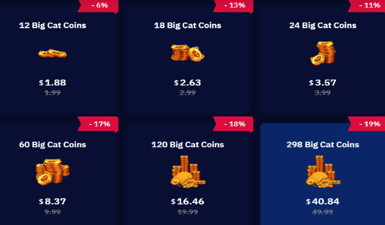
Ludo Club's in-app store sells Coins and Cash in standard bundle tiers, with prices localized by region through Google Play and the App Store. Players typically top up to enter Master and Tournament tables (which require Cash), to claim premium Piggy Bank tiers, or to grab limited-time event bundles that pair cosmetic dice with currency at a discount. The top-up process is tied to your in-game Player ID, which is visible in your profile screen — having that ID handy is essential for any external top-up service. Sales and bonus-Coin promotions cycle frequently, often during major festivals, and stacking a top-up with an active event multiplier can meaningfully amplify value. For players who prefer routing their recharges through a third-party top-up channel using their Player ID, our site offers Ludo Club top-up.
FAQ
Q: Is Ludo Club free to play? Yes. The full game is free with optional in-app purchases for Coins, Cash, and event bundles. A free-to-play player can access every mode except some Cash-locked Master tables.
Q: What's the difference between Coins and Cash? Coins are the soft currency earned through daily play and used for standard tables. Cash is the premium currency, primarily obtained via top-up, and required for high-tier Master and Tournament rooms plus certain exclusive bundles.
Q: Can I play Ludo Club offline? Yes — the computer (AI) opponent mode works fully offline. Online multiplayer, private rooms, and event tables require an internet connection, though the game is tuned to run smoothly even on 2G.
Q: Is Ludo Club the same as Ludo King? No. They are competing titles from different studios — Ludo King is by Gametion, Ludo Club is by Moonfrog Labs. The core ruleset is the same since both implement Ludo, but the event calendars, economies, dice cosmetics, and social features differ significantly.
Q: Are the dice rolls actually random? Yes. Ludo Club uses server-side random number generation. Cosmetic dice skins have no influence on roll outcomes — every die produces a uniform 1-in-6 distribution per face.
Q: How do I play with friends in another country? Use Private Rooms. Create a room from the main menu, share the invite code via WhatsApp, Facebook, or any messenger, and friends can join from anywhere in the world. Up to four players per room.
Q: What's the Piggy Bank and should I claim it? The Piggy Bank automatically accumulates a portion of your match winnings into a reserve. When it fills, you can claim the contents in bulk — sometimes free, sometimes behind a small unlock fee that returns far more than the fee. Always claim before extended breaks from the game.
Q: Can I transfer Coins or Cash between accounts? No. Currency balances are tied to your account and Player ID. You can send small gifts to friends in-game, but bulk transfer is not supported.
Q: What is my Player ID and where do I find it? Your Player ID is a unique identifier visible in your profile screen, usually displayed near your username and avatar. It's required for external top-up services and customer support requests.
Q: Do special dice make me roll sixes more often? No. Cosmetic dice are purely visual. Any perceived difference is confirmation bias — the RNG treats every dice skin identically.
Q: What happens if my connection drops mid-match? The game will attempt to reconnect for a short window. If you reconnect in time, the match resumes from your turn. If not, the system typically forfeits your seat to AI for the remainder, and you may lose your stake. Stable connections matter most at Cash tables.
Q: Which mode is best for beginners? Classic 2-player against a friend or AI is the gentlest learning environment. Once comfortable, Quick Mode is the most efficient for grinding rewards and learning capture timing.
Verdict
Ludo Club is the best executed online Ludo experience available for global players who want classic rules, fast matches, and a meaningful event-driven progression loop layered on top. It is ideal for the diaspora player who wants to keep a weekly board-game ritual with family across continents, for the casual mobile gamer who wants 5–10 minute decision-rich sessions without the commitment of a strategy or RPG title, and for the mid-core competitor who appreciates that a 5,000-year-old game still rewards positional thinking when you stack enough matches. The dual-currency economy is fair to free-to-play players who engage daily and clearly structured for top-up players who want to bypass grinding straight into Master tables.
It is not the right game for players who reject any element of randomness in competition — Ludo's dice variance is irreducible, and no amount of skill will overcome a cold streak in a single match. It's also not ideal for those allergic to bright, festival-themed UI and frequent event prompts — Moonfrog's design philosophy leans heavily into seasonal aesthetics and reward-stream notifications, which some minimalists find busy.
For everyone else — and especially for players in India, Pakistan, Bangladesh, the Gulf, Southeast Asia, and the global South Asian diaspora — Ludo Club is the digital Ludo board. Pair disciplined bankroll management with calendar-aware play, keep your Player ID handy for top-ups when Cash tables call, and the game rewards you with one of the most socially connected, culturally resonant casual experiences on mobile. Roll well.