

Lita: The Global LFG Super-App for Finding Teammates, Duos, and Pro Companions
Introduction & Quick Facts
Lita is a dedicated social gaming platform built around a single, focused problem: solo queue is broken, random teammates are unreliable, and most "find a group" tools are buried inside game clients that were never designed for cross-title social discovery. Operated by Battuta Technology Pte. Ltd., a Singapore-based studio, Lita has grown into one of the most widely used looking-for-group (LFG) and companion-hire apps in the world, with a particularly strong footprint across Southeast Asia, the Middle East, East Asia, and Latin America. It is not a game itself — it is the connective tissue between players, the lobby before the lobby, and the voice channel where ranked climbs are actually won.
The app combines three layers that rarely coexist in one place: free teammate matchmaking (filter by game, rank, role, region, language), real-time voice rooms and 1v1 duo calls, and a paid "companion" or "epal" marketplace where players hire skilled partners using Lita Coins, the platform's in-app currency. That hybrid model — free social discovery plus a monetized premium layer — is what differentiates Lita from generic Discord servers, in-game LFG menus, or older epal services. It supports a sprawling catalog of titles including Mobile Legends: Bang Bang, Valorant, PUBG Mobile, Free Fire, Call of Duty: Mobile, League of Legends: Wild Rift, Dota 2, Honor of Kings, Genshin Impact, Roblox, Minecraft, Among Us, Overwatch 2, and many more, across mobile, PC, and console ecosystems.
This guide covers what Lita actually does, how to use it effectively whether you are a free user or a paying client, how the Lita Coin economy works, how the companion marketplace is priced and structured, and how to avoid the common pitfalls (ghost orders, low-quality companions, refund disputes) that new users typically hit in their first week.
| Field | Details |
|---|---|
| Product | Lita |
| Publisher | Battuta Technology Pte. Ltd. |
| Developer | Battuta Technology Pte. Ltd. |
| Platform | iOS, Android |
| Region | Global |
| Genre | Social Gaming / LFG / Voice Chat / Companion Marketplace |
| Primary Currency | Lita Coins |
| Interface Languages | English, Arabic, Japanese, Korean, Simplified & Traditional Chinese, Indonesian, Thai, Vietnamese, Malay, Filipino, and more |
| Official Website | lita.games |
What is Lita?
At the simplest level, Lita is a mobile-first social network whose entire architecture is organized around games rather than around personal feeds. When you open the app, the home surface is not a timeline of posts — it is a wall of "orders" and live voice rooms, each tagged with a specific game, rank tier, role, and language. You can scroll Valorant Immortal duo seekers, Mobile Legends Mythic jungle mains, Genshin Impact co-op exploration partners, or PUBG Mobile squad fills, then jump into a voice room or send a direct invitation in seconds.
The audience splits into roughly three groups. The first is competitive players who want consistent ranked partners — people whose performance, communication, and schedule they can rely on, instead of rolling the dice on solo queue matchmaking. The second is casual or returning players who want company more than competition: voice rooms while grinding events, chill co-op partners for games like Genshin, Roblox, or Minecraft, or someone to teach them a new title. The third group is the companion and "pro" side of the marketplace — skilled players, streamers, and entertainers who list themselves as bookable epals, earning Lita Coins in exchange for fixed-duration sessions.
Why people care: ranked games are statistically harsher on solo players. In MOBAs and tactical shooters, a coordinated duo or trio measurably increases win rate, often by 5–15 percentage points at mid ranks. Lita's pitch is that the friction of finding that duo — across server boundaries, language barriers, and skill mismatches — should be near zero. Combined with voice rooms that work even when in-game voice is broken, throttled, or full of toxicity, it functions as both a discovery engine and an out-of-game communication backbone.
Lita is also explicitly cross-platform on the social side. A PC Valorant player can voice-chat through Lita on their phone while playing on their desktop. A Switch player on Splatoon or a PS5 player on Overwatch 2 — neither of which has great built-in voice — can use Lita as their squad comms layer. That platform-agnostic voice layer is one of the most underrated features.
Core Gameplay / Features
Lita is not "played" in the traditional sense, but it has clear feature surfaces that determine how useful it is to you. The following list covers the mechanics that matter most day to day.
- Game-tagged order wall. Post or browse "orders" — short listings declaring what you want to play, your rank, role, region, and how many teammates you need. Orders auto-expire, keeping the wall current.
- Smart matchmaking filters. Filter by game, rank bracket, server/region, role, gender preference, language, and whether the listing is free or paid. The filter stack is more granular than most in-game LFG tools.
- Voice rooms (multi-user). Persistent themed voice rooms holding anywhere from a handful to dozens of users, organized by game and topic — strategy talk, scrim lobbies, casual hangouts, or "study with me"-style background rooms.
- 1v1 duo calls. Private call channels for ranked partners that bypass in-game voice limitations, with stable low-latency audio routing.
- Companion / epal marketplace. Browse paid companions by game, rank, language, voice samples, ratings, and price-per-hour denominated in Lita Coins. Book fixed-duration sessions.
- Pro player tier (boosting / coaching style services). Higher-priced listings from verified high-rank players, often offering ranked carrying, coaching, or duo climbing.
- Lita Coins economy. A single in-app currency used to pay for companion sessions, gifts, voice room boosts, and premium cosmetic items. Topped up in fixed denominations.
- Gifting and virtual gifts. Send animated gifts in voice rooms; gifts convert into reputation/visibility for the recipient and double as a tipping mechanism for entertaining hosts.
- Profile cards with game stats. Display your linked games, in-game IDs, ranks, screenshots, voice intros, and tags ("Tryhard", "Chill", "Coach", "Night Owl") so the right people find you.
- Moments feed. A lightweight social feed for clips, screenshots, and short posts, scoped per game so a Valorant ace doesn't get buried under Minecraft builds.
- Multilingual UI and auto-translation. The interface ships in a dozen-plus languages, and chat translation helps cross-region duos (a Vietnamese jungler and a Filipino mid laner can actually communicate).
- Rating and review system. Every paid session ends with a two-way rating that gates companion ranking, search placement, and eligibility for higher tiers.
The order wall, in depth
The order wall is where most matching happens. A typical order looks like: "PUBG Mobile, Asia server, Crown to Ace, need 2 for squad TPP, English/Tagalog, 1 hour, free." Hosts can mark orders as free (pure LFG) or paid (the requester pays the joining companions in Lita Coins). The wall refreshes constantly, and well-written orders — clear rank, clear role, clear time commitment — fill within minutes during peak hours in major regions (roughly 19:00–24:00 local time across SEA, MENA, and East Asia).
The matchmaking advantage over in-game LFG is granularity. In-game systems usually match by rank and role; Lita additionally lets you filter by language, voice activity, micro presence, gender preference, and reputation score. For climbing players this matters enormously: 90% of "bad" duo experiences come from mismatched expectations on communication and tryhard level, not raw skill.
Voice rooms
Voice rooms are the social heart of the app. They function similarly to Clubhouse-style audio rooms but with gaming-specific hooks: anyone in the room can advertise an order, the host can pin a recruiting message, and entering a room can auto-prompt you to send a duo request to anyone speaking. Rooms are usually owned by a "host" who curates the vibe — competitive scrim rooms run tight, with quick mutes and queue order; casual rooms run loose, with games, music, and gifting streams.
Hosts earn through gifts. When listeners send virtual gifts (paid in Lita Coins), a share converts back to the host as platform earnings, which is the main reason charismatic hosts and popular streamers run rooms for hours. This creates a content layer on top of the LFG layer — there is always something to listen to even if you are not actively looking for a duo.
Companion marketplace
The marketplace is where Lita's monetization actually lives. Companions list themselves with a profile, voice sample, game tags, rank proof (screenshots), price per hour in Lita Coins, and availability. Buyers browse, pick, and place an order specifying duration and game. The companion accepts, you both enter a voice channel, and the booked time begins. Pricing varies wildly: a casual chat companion may charge a small fraction of what a verified Mythical Glory Mobile Legends carry charges per hour.
Crucially, the platform escrows the Coins. They are not released to the companion until the session completes successfully and the buyer either confirms completion or the dispute window closes. This protects against the most common failure mode of older epal platforms — companions taking money and ghosting.
Lita Coins economy
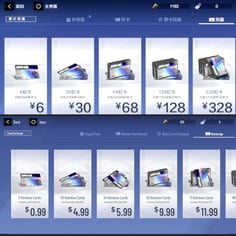
Lita Coins are the single currency for paid features. You acquire them through top-ups in fixed denominations (commonly 300, 600, 1000, 2000, 5000, and 10000 Coin packages), and spend them on companion bookings, gifts, voice room cosmetics, and premium profile features. Coins are not redeemable for cash on the buyer side; companions earn a separate balance that converts to platform payouts under their own rules.
| Coin Package | Typical Use Case |
|---|---|
| 300 | One short companion session, a few small gifts, or testing a new companion before committing |
| 600 | A standard 1-hour session with a mid-tier companion in most games |
| 1000 | An extended session, a coaching block, or a moderate gifting run in a voice room |
| 2000 | Multi-hour booking, higher-tier pro player session, or supporting a favorite host |
| 5000 | Weekly budget for active marketplace users; bulk gifting; long coaching plans |
| 10000 | Power-user / whale tier — heavy gifting, top-tier pro bookings, sustained patronage |
Profiles and reputation
Your profile is your résumé. It shows your linked games, rank screenshots, completion rate (for companions), average rating, response time, languages, and a voice intro. Reputation is sticky and slow to build — a new companion typically needs 20–50 completed sessions before serious volume starts coming in. On the buyer side, your rating also matters: companions can decline bookings from low-rated or new accounts, and persistently rude buyers get filtered out of premium listings.
Cross-game discovery
One of the underrated features is cross-game profile linking. A Mythic Mobile Legends player who also plays Wild Rift, PUBG Mobile, and Valorant can surface across all four wallboards. This is how Lita keeps users sticky beyond the lifecycle of any single game — when one title cools off, users naturally migrate within the same friend graph to the next.
Pro Tips & Strategy
The following tips are organized by experience level. They focus on extracting maximum value whether you are a free user trying to climb ranked, a buyer hiring companions, or a companion trying to grow income.
Beginner
- Fill out your profile completely before posting your first order. Empty profiles get ignored. Add a voice intro (even 5 seconds helps), link at least one game with a rank screenshot, and pick 3–5 personality tags. Orders from complete profiles fill several times faster.
- Specify rank AND role in your order title, not just the game. "MLBB duo needed" gets ignored; "MLBB Mythic V+ EXP lane main, need Mythic+ jungle, 1hr ranked, EN" gets responses in under a minute during peak.
- Test small first when hiring a companion. Book a 30-minute or 1-hour session before committing to long blocks. Voice chemistry and playstyle fit matter more than rank — and they are impossible to judge from a profile alone.
- Use voice rooms as warm-up. Spend 10 minutes listening in a room for your game before posting an order. You will often hear someone declaring they need a duo, and direct invites from a room context fill faster than cold orders.
- Set your region and language correctly in settings, not just per-order. A wrongly-set primary region floods you with mismatched suggestions and tanks your match quality system-wide.
- Top up the smallest denomination first. Buy the entry-tier Coin pack to learn the marketplace before committing larger amounts. The cost of one bad large purchase exceeds the cost of three small exploratory ones.
Intermediate
- Build a "favorites" bench of 3–5 companions per game. Once you find a companion whose playstyle and schedule match yours, favorite them. Repeat bookings get faster acceptance, often better effective rates, and dramatically better chemistry than fresh hires every time.
- Schedule around peak hours for your server. SEA peak is roughly 20:00–24:00 ICT; MENA peak is 21:00–02:00 local; East Asia peak is 21:00–01:00. Order fill rates and companion availability are 3–5x higher in peak windows.
- Read recent reviews, not just star average. A 4.9-star companion with three recent 3-star reviews mentioning lateness or AFK is a worse bet than a 4.6-star companion with consistent recent positive reviews.
- Use the dispute window properly. If a companion no-shows, disconnects early, or is clearly throwing, do not just rate 1 star — file the formal dispute. Coins are held in escrow precisely for this, and the platform refunds verified violations.
- For ranked climbs, pre-agree on draft and rotations in voice before queueing. Five minutes of strategy talk per session lifts win rate noticeably. Most duo failures are tactical miscommunication, not mechanical skill gaps.
- Mute your in-game voice when using Lita's voice channel. Running both creates echo, cross-talk, and latency. Lita's voice is usually cleaner anyway.
Advanced
- Stack companion bookings as a "training block." Book a coach for one hour, a duo partner for two, and a scrim group for one — all back to back. This compresses an entire ranked improvement week into a single evening and is what serious climbers actually do.
- For high-tier bookings, request a sample VOD or live spectate before committing. Reputable pros will provide it. If they refuse and have under 100 sessions logged, they are likely overstating rank.
- As a companion, optimize your first 30 sessions for rating, not earnings. Take cheap, easy bookings, deliver excellent service, and farm 5-star reviews. Once you cross the visibility threshold (typically 20–40 strong reviews), raise your rate and shift to longer bookings.
- As a host, run themed voice rooms on a consistent schedule. Regulars only form if your room is reliably live. "Mythic MLBB scrim lobby, Tue/Thu/Sat 21:00 ICT" outperforms ad-hoc rooms by an order of magnitude in recurring gifts.
- Use Coin top-up bonuses strategically. Larger denominations often carry bonus Coins or first-time-buyer multipliers. If you know you will spend 5000 Coins this month, one 5000 pack is meaningfully more efficient than five 1000 packs.
- Track your win rate with vs. without specific duos. After 20+ games together, you will have hard data on whether a given partnership actually helps you climb. Keep the ones that do; drop the ones that don't, regardless of vibes.
Editions, Tiers, and the Companion Economy
Lita does not have "editions" the way a paid game does, but the companion marketplace has clear tiers that buyers should understand before spending. Pricing varies by game, region, and time of day, but the tiering itself is consistent.
| Tier | Typical Profile | What You're Buying | Best For |
|---|---|---|---|
| Casual Companion | Low-to-mid rank, strong personality, good voice presence | Conversation, light co-op, fun company | Chill sessions, single-player co-op games, hangouts |
| Skilled Player | Upper-mid rank (e.g. MLBB Mythic, Valorant Diamond+) | Competent ranked partner, decent communication | Steady duo climbing without paying premium rates |
| Pro / Verified | Top rank with verified proof (Mythical Glory, Immortal, Radiant, Predator) | Strong carry potential, coaching, scrim partner | Pushing through hard rank walls, learning at high level |
| Coach | Pro-tier player with teaching skill | VOD review, mechanical drills, macro lessons | Players willing to improve slowly rather than be carried |
| Entertainer / Host | Voice room operator, often streamer-adjacent | Atmosphere, party energy, group play | Group bookings, birthdays, recurring social play |
Most active buyers settle into a mix: one or two Skilled Player favorites for daily ranked, occasional Pro bookings when stuck at a rank wall, and Casual/Entertainer bookings for weekend group nights. Spending purely at the Pro tier burns Coins fast and often produces worse long-term improvement than mixing in coaching.
Supported Games and Platform Coverage
Lita's coverage skews toward competitive mobile games where ranked play matters most, but it is broader than people assume. The matrix below summarizes the major categories.
| Category | Representative Titles | Why Lita Works Well Here |
|---|---|---|
| Mobile MOBA | Mobile Legends: Bang Bang, Wild Rift, Honor of Kings, Arena of Valor | Strict role/rank matching is critical; in-game LFG is weak |
| Mobile Battle Royale | PUBG Mobile, Free Fire, Call of Duty: Mobile | Squad fills are constant, voice quality matters in TPP/FPP |
| PC Tactical Shooter | Valorant, CS2 | Voice comms and pre-game strategy lift win rate hugely |
| PC MOBA | Dota 2, League of Legends | High-toxicity solo queue; reliable duos very valuable |
| Co-op / Social | Genshin Impact, Roblox, Minecraft, Among Us | Companionship value outweighs raw skill matching |
| Console / Cross-play | Overwatch 2, Fortnite, Apex Legends, Splatoon | Lita supplies the voice layer consoles lack natively |
The Lita app itself only runs on iOS and Android, but because its core function is out-of-game voice and discovery, it pairs with literally any game on any platform. PC and console players keep Lita running on their phone as a second-screen comms device — this is the standard setup for serious cross-platform duos.
Game Modes Deep Dive: How People Actually Use Lita
Ranked climbing mode
The dominant use case. A player at a rank wall — Mythic in MLBB, Diamond in Valorant, Crown in PUBGM — uses Lita to find a consistent duo or trio one or two ranks above them. They run 5–15 games per session, two to four sessions per week, until they break through. Common pattern: two free Lita teammates plus one paid Pro carry for the toughest hours of the climb. The Pro provides the floor; the free duos provide volume.
Coaching mode
Underused but extremely high-ROI for players who want to actually get better instead of being carried. Book a Pro-tier coach for 1–2 hours. First half is VOD review of your recent ranked games; second half is live coaching while you play. Three sessions over a month, combined with self-review, will move most stuck players up at least one rank tier.
Group / squad mode
For squad-based games (PUBGM, CODM, Free Fire, Apex), the typical pattern is to use Lita to assemble a four-stack of compatible skill and language. Voice room first to vet personalities, then move to a private call, then queue. Squads formed via this funnel tend to last weeks or months, not single sessions.
Casual co-op mode
Genshin Impact co-op exploration, Minecraft world building, Roblox sessions, Among Us lobbies. Skill matters little; vibe matters everything. Buyers in this mode usually hire Casual or Entertainer tier companions, often for longer blocks (2–4 hours) and often as recurring bookings with the same person.
Voice room mode
Pure listening / hanging out. The user is not actively looking for a duo — they are in a voice room while doing dailies, queuing solo, or just decompressing. This is the "ambient" use of Lita and accounts for a large share of total active hours.
Companion-side modes
For sellers, the modes split into: marketplace fulfillment (taking incoming orders), voice room hosting (earning through gifts), and direct booking from regulars. The most successful companions run all three, with hosting as the funnel that drives regulars who eventually book directly.
Top-Up & Recharge
Lita Coins are the gateway to every paid feature on the platform — companion bookings, virtual gifts, voice room boosts, premium profile features. Players normally top up directly in the app through the standard mobile store flow (Apple App Store on iOS, Google Play on Android), or through authorized third-party top-up services that often offer better rates or bonus Coins for the same denomination. Top-up denominations are fixed (commonly 300, 600, 1000, 2000, 5000, 10000 Coins), and larger packages frequently include bonus Coins or first-time-buyer multipliers, so consolidating spend into one larger pack rather than several small ones is usually more efficient. Whichever route you use, top-ups are tied to your Lita account ID, so confirm your ID before purchasing — once Coins land in the wrong account they are very difficult to recover. Our site offers fast, reliable Lita Coin top-up for players who want a smoother alternative to the default in-app billing path.
FAQ
Is Lita free to use? Yes. Browsing the order wall, posting free LFG orders, joining voice rooms, and using duo calls with self-found teammates are all free. You only spend Coins when you hire paid companions or buy gifts/cosmetics.
Do I need to pay companions to find teammates? No. The free LFG side of Lita is fully functional on its own. Many users — probably the majority — never hire a paid companion and still get strong value from the free wall and voice rooms.
How is Lita different from Discord? Discord is general-purpose chat with no built-in matchmaking, no companion marketplace, no rank/role filters, and no game-tagged discovery. Lita is purpose-built for finding the right teammate for the right game right now, with monetization and reputation systems on top. They complement each other; many serious players use both.
Are companion sessions safe to pay for? Coins are held in escrow until the session completes, and the rating/dispute system gives buyers leverage. As long as you book through the official flow (never pay outside the app) and use the dispute window when something genuinely goes wrong, the system is reasonably safe. Off-platform payments have zero protection — never do them.
Can I use Lita on PC or console? The Lita app itself is mobile-only (iOS and Android), but you can run it on your phone while playing on PC, PlayStation, Xbox, or Switch. This is in fact the standard setup for cross-platform duos who want better voice than the host platform offers.
Do Lita Coins expire? Coin policies can change, but in general purchased Coins persist on your account. Promotional or bonus Coins sometimes carry an expiry — check the in-app wallet for the specifics of any bonus balance.
Can I become a companion myself? Yes. Applications are open in most supported regions. You typically need rank proof for your declared games, a voice sample, and a complete profile. Expect a gradual ramp — your first 20–50 sessions determine your long-term ceiling, so optimize for rating early.
Is Lita available in my country? Lita is officially global and ships in a wide range of languages. Some specific payment methods or companion services may be region-restricted, but core LFG, voice rooms, and most marketplace features are available in the vast majority of countries.
Are ranks on profiles verified? Companions typically upload screenshots as rank proof, and verified Pro-tier listings go through additional checks. Free-user profiles are self-declared. For paid bookings, look for verification badges and recent rank screenshots, and don't be afraid to ask for a live profile share before committing to a long block.
Can I get banned for boosting? Lita itself permits hired-duo and pro-play services on its marketplace. However, the underlying game (Valorant, MLBB, etc.) may have its own rules against account sharing or boosting. Solo-account duo queueing with a hired pro is generally fine; handing over your login credentials for account boosting is a different matter and is against most games' terms of service — be aware of which side of that line you are on.
What happens if my companion doesn't show up? File a dispute through the in-app flow before the dispute window closes. Verified no-shows result in a full Coin refund. The companion's rating and standing also take a hit, which is why no-show rates on established companions are very low.
Does Lita work in regions where in-game voice is restricted or laggy? Often better than the in-game alternative, yes. Because Lita routes voice through its own infrastructure independent of the game server, it frequently has more stable comms than the in-game voice in regions where game-server voice quality is poor.
Verdict
Lita earns its spot on a serious player's home screen if you fall into any of these buckets: you play ranked in a competitive mobile or PC title and you are tired of solo-queue variance; you play co-op or social games and want reliable company instead of random matchmaking; you are willing to occasionally pay for a skilled duo or a coach to break through a rank wall; or you are a skilled player looking to monetize your rank and personality through the companion marketplace. For these users, Lita is genuinely one of the best tools on mobile right now — its order wall, voice infrastructure, multilingual reach, and escrowed marketplace are collectively hard to beat.
It is less useful if you exclusively play single-player games, if your main game has a thriving in-client party system you are already happy with, or if you find the social/marketplace layer overwhelming and just want to play. And as with any platform that mixes free social features with paid hiring, the failure mode is overspending — Coin packs add up fast if you hire Pro tier every night without thinking about it. Set a monthly Coin budget, anchor it to the win-rate or improvement gains you actually measure, and Lita becomes a genuinely accretive part of your gaming life rather than a leak. For everyone else, the free side alone — wall + voice rooms + duo calls — is worth the install. Visit lita.games or grab the app on iOS or Android and explore for an evening before deciding whether the paid layer is for you.