

Goddess of Victory: Nikke — The Complete Commander's Guide to Shift Up's Sci-Fi Shooter RPG
Introduction & Quick Facts
Goddess of Victory: Nikke is a third-person cover shooter wrapped around a deep gacha RPG core, developed by South Korean studio Shift Up and published globally by Level Infinite. Since its November 2022 launch, the game has carved out a distinct identity among mobile titles by blending arcade-style aim-and-fire combat with squad-building strategy, Live2D character animations, and a melancholic post-apocalyptic storyline that takes itself unusually seriously for a gacha. Players take on the role of a Commander operating from the underground Ark, deploying squads of Nikkes — bio-mechanical female soldiers — to reclaim the irradiated surface from the Raptures, a mechanical alien invasion force that drove humanity below ground decades earlier.
What separates Nikke from typical mobile RPGs is the moment-to-moment combat loop. Instead of auto-battlers or turn-based menus, players physically aim, peek from cover, manage reload timings, and chain Burst Skills across a five-Nikke squad in real time. Combine that with hundreds of collectible characters across rarities, factions, and elemental types — plus aggressive crossover events with franchises like Chainsaw Man, Nier: Automata, and Re:Zero — and the result is one of the more mechanically distinctive live-service titles on iOS and Android. A dedicated PC client launched in early 2023, allowing cross-progression on the same global account.
This guide unpacks every system a Commander needs to understand, from Burst rotations and elemental advantage to Outpost passive income, gear refinement, Tribe Tower climbs, and Union raid mechanics — alongside actionable tips for new and veteran players alike.
| Field | Detail |
|---|---|
| Title | Goddess of Victory: Nikke |
| Developer | Shift Up |
| Publisher | Level Infinite |
| Platform | iOS, Android, PC (dedicated client) |
| Region | Global |
| Genre | Mobile RPG Shooter / Gacha |
| Languages | English text; English, Japanese, Korean voice acting |
| Release | November 2022 (Global) |
| Monetization | Free-to-play with gacha and Gem top-ups |
| Official Website | nikke-en.com |
What is Goddess of Victory: Nikke?
Goddess of Victory: Nikke is a hybrid third-person shooter and collector RPG built specifically for touchscreens but fully playable on PC. The setup is straightforward: the surface of Earth has been overrun by Raptures, a hostile mechanical race of unknown origin. Humanity retreated to the Ark, an underground city governed by the Central Government and serviced by three rival manufacturers — Elysion, Missilis Industry, and Tetra Line — each producing Nikkes, humanoid soldiers built from the brains of deceased women fused into bio-mechanical bodies. As Commander, you lead Counters Squad and other units topside to fight Raptures, recover lost technology, and slowly uncover what really happened to the surface world.
Mechanically, each battle is a stage played in a fixed third-person perspective. Your five Nikkes are stationed behind dynamic cover that takes damage and breaks; you tap to lift them out of cover, aim with a central reticle, fire, reload, swap targets, and trigger skills. Each Nikke has a Basic skill, a Skill 1, a Skill 2, and a Burst Skill categorized as Burst I, II, or III. Burst Skills must be chained in I → II → III order within a short window to trigger Full Burst, a massive damage and buff window that defines the entire game's strategic depth. Comp building is therefore not just about who hits hardest — it's about whether your team can produce a clean Full Burst rotation every 20 seconds, every 15 seconds, or even every 10 seconds against certain bosses.
The audience for Nikke skews toward three overlapping groups. First are shooter fans who appreciate the Gears of War-inspired peek-and-shoot combat and the visceral feedback of headshots, weak-point destruction, and parts-breaking. Second are gacha collectors drawn to the extensive Live2D animation work, costume system, and crossover banners. Third are narrative players who came for the surprisingly grim sci-fi storyline, which leans into themes of corporate exploitation, identity, mortality, and what it means to be human when your body is manufactured. The game's tone shifts sharply between slapstick comedy in side stories and bleak horror in main story arcs — a tonal whiplash that has become part of its identity.
Core Gameplay & Features
- Cover-based third-person shooting with manual aiming, headshots, weak-point destruction, and reload management
- Five-Nikke squads across three roles: Attacker (DPS), Defender (tank/aggro), and Supporter (buffs/healing/debuffs)
- Burst Skill rotation system chaining Burst I → II → III to trigger Full Burst windows
- Five elemental types — Fire, Water, Wind, Electric, Iron — with rock-paper-scissors counter advantages
- Three manufacturers — Elysion, Missilis, Tetra — plus Pilgrim and Abnormal factions for Tribe Tower content
- Gacha Recruit system with standard, Wishlist, and limited-time banners; mileage tickets for soft pity
- Outpost hub generating passive Credits, Core Dust, and Battle Data while you're offline
- Multiple end-game modes: Interception, Anomaly Interception, Simulation Room, Tribe Tower, Special Interception, Solo Raid, Union Raid, Co-op
- Liberation system to unlock awakened forms of select SSR Nikkes via Pilgrim shards or duplicate-based progression
- Gear refinement and Overload mods at gear level Max for endgame stat optimization
- Live2D character animations in lobby, story, and Advise scenes, plus costume system with stat-bearing skins
- Recurring crossover events with major IPs delivering free SSR units, story chapters, and exclusive cosmetics
Combat depth in detail
Cover is destructible and finite. Each Nikke's HP and the integrity of her cover are separate resources — a Nikke can fall in seconds against a Rapture rocket barrage if you don't pull her into cover to reload while another tanks. Headshots deal substantially more damage than body shots, and many enemies have weak-point cores (red cores on chests, glowing parts on appendages) that interrupt skills or one-shot core HP. Weapon classes — Assault Rifle, Submachine Gun, Sniper Rifle, Rocket Launcher, Shotgun, Machine Gun — each have unique reload, accuracy, and burst-generation patterns. SRs typically generate Burst Gauge slowest per shot but most per damage; SMGs generate it fastest by raw shot count; MGs and ARs sit comfortably in the middle and tend to dominate sustained DPS roles.
Element matchups and team identity
The elemental wheel is asymmetric: Fire beats Wind, Wind beats Iron, Iron beats Electric, Electric beats Water, Water beats Fire. Advantage grants +10% damage dealt and reduced damage taken — modest individually, but compounding across five units. Higher-stage campaign and most boss content gates you behind specific element requirements, which is why most veteran Commanders maintain at least one full team per element, even if those teams are not their strongest overall.
Roles and how they actually work
Attackers carry damage. Defenders draw aggro through skills like Provoke and Taunt and sit on inflated HP pools. Supporters are the most varied class: some heal (Rapunzel, Mary, Helm in healing builds), some buff ATK (Liter, Dorothy, Tia, Naga), some debuff defense or strip shields, some accelerate Burst generation. The strongest meta teams almost always feature two Supporters, one Defender (or sometimes a second Supporter substituting), and two Attackers — but pure DPS comps with three Attackers see use in burst-window-friendly bosses.
Gacha and progression backbone
The Recruit system uses Recruit Vouchers and Gems. A standard 10-pull costs 30 Gems (Ordinary Recruit) or 300 Gems (Advanced/Special Recruit). There is no traditional pity that guarantees an SSR within X pulls, but every pull awards a Gold Mileage Ticket; once you accumulate 200 tickets on a current banner, you can directly exchange for the featured SSR. Wishlist functionality (unlocked after enough pulls) lets you narrow the SSR pool toward specific Nikkes, drastically improving targeted pulls for off-banner units.
Pro Tips & Strategy
Beginner (Levels 1–80)
Pick a starter Wishlist target and commit. When you unlock the Pilgrim Wishlist, prioritize one of the proven Pilgrim units (Red Hood, Snow White, Crown, or Modernia depending on availability). Pilgrims drop only from Wishlist banners — they cannot appear in standard pulls — so this is your single best early Gem investment.
Always run elemental advantage in Campaign. When a stage wall stalls you, swap your weakest non-advantage Nikke for an advantage-element option even if she's lower-invested. The +10% damage and -10% taken often clears the wall faster than another 5 levels of investment.
Synchro Device every level you can afford. The Synchro Device equalizes the level of your lowest four Nikkes to the level of your highest synced unit. Level your top five Nikkes (one of each role plus a flex), slot them into the Synchro, and your entire roster benefits — never level units outside this top five unless they're being slotted in.
Claim Outpost rewards twice per day minimum. Outpost capacity caps; if you don't collect, you lose generation. Set a habit of logging in morning and evening to claim Credits, Core Dust, and Battle Data.
Spend Daily Mission keys on Skill 1 and Skill 2 materials, not gear. Gear matters less than skill levels in early-to-mid game. A Skill 1/Skill 2 at level 7 on Liter outperforms most gear upgrades you could possibly make at the same stage.
Don't burn Gems on stamina refills early. Stamina (called "Mission Pass" energy in some menus) regenerates plenty fast for your current needs. Save Gems for banner pulls — early Commanders consistently regret stamina refresh spending.
Intermediate (Levels 80–200)
Build one Full Burst team per element before deepening any single team. Hard Campaign, Interception, and Tribe Tower all gate by element. A second functional team is worth far more than a sixth Attacker for your main team.
Learn the standard 1-1-3 Burst rotation. Most meta comps run two Burst I supporters (Liter + Dorothy/Tia), one Burst II flex, and one Burst III nuke (Modernia, Red Hood, Alice, Scarlet, Asuka, etc.). The fifth slot is typically a Burst-generation Supporter or a second Burst III for back-to-back rotations.
Prioritize Manufacturer Treasure Boxes daily. Three free pulls per day across Elysion, Missilis, and Tetra banners is 90+ free SSR-chance pulls per month. Skipping these is the single most common F2P mistake.
Equip Cubes correctly for each mode. Bastion Cube (extra ammo before reload) for SR units like Alice. Resilience Cube (reduced reload time) for Modernia or SMG carriers. Adjutant Cube for Burst Gauge speed in PvP and short fights. Reload Cube/Quantum Cube for utility teams. Cubes are mode-specific; build redundancy.
Use Special Recruit tickets only on rate-up banners. Special Recruit Vouchers cannot be used on collab or limited banners, so save them for Wishlist-active periods or specific rate-up SSRs you want.
Push Hard Campaign as far as possible weekly. Hard mode unlocks at 10-1 and gates equipment manufacturer drops — T9 gear and eventually T10 gear from upper Hard stages is your primary path to endgame stats.
Advanced (Levels 200+)
Overload gear is a long-term marathon, not a sprint. Roll for the four critical lines: ATK%, Elemental Damage, Charge Damage (for SRs), Charge Speed, Max Ammo, Hit Rate. Spend Custom Modules on rerolling existing lines rather than chasing perfect new pieces — perfect gear takes literal months of consistent Special Interception runs.
PvP (Special Arena and Champion Arena) runs separate meta. Top PvP teams revolve around Scarlet: Black Shadow, SBS-style first-Burst threats, fast Burst-Gauge generators (Privaty, Bunny variants, Nihilister, Red Hood in PvP), and counter picks. Build a dedicated PvP roster — don't expect PvE meta to win arena fights.
Skill 4 (Burst) goes to 7 first, then Skill 1 and Skill 2 to 7+. Burst skills have the highest impact ceiling for most DPS Nikkes. Push to level 7 across all three slots on your main DPS before chasing 10.
Save Crystals for collab limited banners with strong utility. Collab SSRs (e.g. Power, Makima, Quency: Escape Queen, 2B) often debut as meta-defining and never appear in standard pools. If you missed a collab, hope for a rerun rather than chasing dead Gems.
Co-op (Union Raid / Solo Raid) is a weekly checklist, not an afterthought. Top-percentile raid finishes award significantly more Gems and gear than casual play. Coordinate team comps with your Union and run multiple parts for cumulative ranking rewards.
Track manufacturer ratios per team. Some Cube and equipment bonuses interact with manufacturer count, and certain story modifiers reward single-manufacturer comps. Veteran Commanders maintain notes on each squad's manufacturer makeup for niche stage modifiers.
Characters & Roles
The Nikke roster spans hundreds of units across rarities (R, SR, SSR), three primary manufacturers, the Pilgrim faction, and special categories like Abnormal and Treasure. Below is a snapshot of historically meta-defining SSRs that Commanders consistently invest in — exact tier placement shifts patch to patch, but these names anchor most endgame teams.
| Nikke | Role / Burst | Class | Manufacturer | Notable Trait |
|---|---|---|---|---|
| Liter | Supporter / Burst I | SMG | Elysion | Universal Burst Gauge generator and ATK buffer; the baseline I-skill anchor |
| Dorothy | Supporter / Burst I | AR | Pilgrim | Damage-share debuff plus ATK buff; rotates with Liter |
| Tia & Naga | Supporter / Burst I | AR/SMG | Pilgrim | Paired buffer/healer kit enabling 1-2-2 rotations |
| Crown | Supporter / Burst II | MG | Pilgrim | Damage taken increase and CDR; defines modern team compositions |
| Helm | Supporter / Burst II | SR | Elysion | Reload-based ammo and elemental damage support |
| Red Hood | Attacker / Burst I or III | SMG | Pilgrim | Versatile burst-tier toggling; cleanses and high damage |
| Modernia | Attacker / Burst III | MG | Missilis | Sustained DPS via Full Auto stacks |
| Alice | Attacker / Burst III | SR | Elysion | Charge-speed sniper with Bastion Cube synergy |
| Scarlet | Attacker / Burst III | AR | Pilgrim | Pierce AR with high single-hit damage |
| Scarlet: Black Shadow | Attacker / Burst I | SG | Pilgrim | PvP first-strike threat and PvE burst window controller |
| Snow White | Attacker / Burst III | AR | Pilgrim | Charge AR burst nuke |
| Asuka Langley Shikinami | Attacker / Burst III | MG | Tetra | Anti-shield and consistent DPS (collab) |
| Privaty | Attacker / Burst II | AR | Missilis | Defense shred utility |
| Noise | Defender / Burst II | SMG | Tetra | Healing tank cornerstone |
| Noah | Defender / Burst II | SG | Elysion | Damage redirect and Indomitability |
This list is not exhaustive — Commanders running content as of any given patch should always consult current community tier lists before locking in major investments — but these units represent the kind of long-tail value that justifies pulling for them whenever they appear in Wishlist or rate-up banners.
Manufacturer identity
Elysion units skew toward survivability, healing, and balanced kits. Missilis emphasizes burst damage, mechanical creativity, and unusual skill interactions. Tetra Line leans into raw firepower, area damage, and elemental theming. Pilgrims are the rarest and typically strongest faction, locked behind Wishlist, with kits designed around late-game mechanics like damage taken multipliers, cleanse, and combat-state manipulation. Abnormal Nikkes are story-significant outliers (like Modernia or Red Hood in earlier classifications) with kits that don't fit neatly into manufacturer archetypes.
Game Modes Deep Dive
| Mode | Purpose | Key Reward |
|---|---|---|
| Campaign (Normal / Hard) | Story progression and stage gating | Gear, Credits, Outpost upgrades |
| Tribe Tower | Faction-specific climb (Elysion / Missilis / Tetra / Pilgrim / Abnormal) | Skill manuals, Cores, Gems |
| Interception (Daily / Special / Anomaly) | Boss raids on rotating timers | Tier 9 / Tier 10 gear, custom modules |
| Simulation Room (Overclock / Newtype) | Roguelike runs for skill mats | Skill books, Cores, Cubes |
| Lost Sector | Daily dungeon stages | Cube XP, Credits, gear |
| Union Raid | Guild-coordinated weekly boss | High-tier Gems, gear, ranking rewards |
| Solo Raid | Individual ranked boss fight | Gems and ranking rewards |
| Co-op Operation | Daily 3-player boss | Custom modules, materials |
| Special Arena / Champion Arena | PvP daily / seasonal | Arena tokens, exclusive cosmetics, Gems |
| Anomaly Interception | Element-specific weekly raid bosses | Top-tier gear and Anomaly cores |
Campaign and Hard Mode
The main story progresses through chapters split into ~20 stages each. Hard Mode mirrors Normal but with steeper level requirements and an attempt cap per stage (typically 3 per day), making consistent farming a daily commitment. Hard stages drop manufacturer-locked gear, the only reliable way to gear up specific Nikkes — Missilis SR gear only appears from Missilis Hard stages, for example. This dependency makes Hard Mode progression one of the longest-running grinds in the game and a primary motivation for keeping multiple element teams viable.
Tribe Tower
Five separate towers, one per manufacturer plus Pilgrim and Abnormal, each climbing in independent stages. Pilgrim Tower is notably the slowest because Pilgrims are rare; few Commanders can field five Pilgrims early, gating Pilgrim Tower progression by gacha luck. Tribe Tower rewards include high-tier skill books and the elusive Core Dust needed to ascend SSRs beyond level 200.
Interceptions
Special Interception rotates a boss weekly and is your primary source of Tier 9 manufacturer gear. Anomaly Interception, added later, runs weekly boss fights with element gating, dropping Anomaly cores and top-tier gear. Daily Interception is a lower-tier daily kill for routine material flow.
Union Raid and Solo Raid
Union Raid is biweekly, splitting a multi-boss fight across your Union (guild). Each player can damage each boss several times per cycle; coordinated Unions assign players to specific bosses based on element teams and rotate strategy notes. Solo Raid is a personal ranked fight against a single complex boss with multiple parts and breakable cores. Both modes reward generous Gems for high ranking and are the single biggest free Gem source for active F2P players.
Simulation Room
A roguelike mode where you select stage modifiers (Favor cards) between waves. Overclock difficulty is the standard farming tier; Newtype difficulty adds harder modifiers and better rewards. Skill books from Simulation Room are mandatory for raising skill levels past 4.
PvP
Special Arena is a daily defense-versus-attack format with passive token gains. Champion Arena is a seasonal bracketed tournament with significant Gem and cosmetic rewards. PvP runs entirely on Burst Gauge speed and first-Burst skill priority — the team that fires their Burst sequence first usually wins the round before the second team can respond.
Endgame & Progression Systems
Level cap and Core enhancement
Nikkes level up to a cap tied to your Commander level (currently around 200 / 240 / 360+ depending on patch tier). Beyond level 200, additional level gains require Cores, currency-gated ascensions, and duplicate-or-equivalent shards. Core Dust farmed from Tribe Towers, the Awaken Channel, and dispatch missions becomes the primary bottleneck for capping out top units.
Gear progression
Gear comes in T1–T10 tiers, with T9 dropping from Hard Mode and Interceptions, and T10 manufactured from T9 base items via Manufacturer Materials. Once gear reaches its level cap (currently 10), it becomes eligible for Overload, where existing stat lines can be rerolled and locked using Custom Modules. The Overload grind is effectively infinite; even max-invested Commanders continue rolling for better stat values years into the game.
Limit Break and Spare Body
Each SSR Nikke needs duplicates (or universal Spare Body items, when available) to raise Limit Break level, which raises her stat cap. Spare Bodies from events and shops let you push non-duplicate-friendly units (especially Pilgrims) past the level wall.
Liberation
Select Nikkes have a Liberation path that turns them into a "Liberated" stronger form via specific quests and shard accumulation. Liberation does not exist for every Nikke; it's reserved for narratively significant ones or older units being kept relevant through power creep.
Doll system
Treasure Nikkes (rare R-rarity units with story importance) can be upgraded via Dolls (companion items) into competitive endgame DPS in specific niches. The Doll system creates flex picks where investing in a Treasure unit can outperform an SSR in narrow boss fights, mostly because of the specific damage type Dolls grant.
Currency & Resource Guide
| Currency / Item | Primary Source | Primary Use |
|---|---|---|
| Gems | Top-ups, login, events, raids | Gacha pulls, stamina, shop |
| Recruit Voucher | Daily missions, login, shop | Ordinary 1-pull |
| Advanced Recruit Voucher | Events, shop, missions | Special 1-pull (SSR rates) |
| Gold Mileage Ticket | Every gacha pull | Direct SSR exchange at 200 (current banner) |
| Credits | Outpost, missions, dispatch | Level-up, gear crafting |
| Core Dust | Tribe Tower, dispatch | Nikke Core enhancement (high levels) |
| Battle Data | Outpost, missions | Nikke leveling material |
| Custom Module | Special Interception | Gear Overload rerolls |
| Manufacturer Materials | Hard Mode, Interception | T10 gear forging |
| Skill Manual / Books | Simulation Room, Tribe Tower | Skill level-ups past lvl 4 |
| Anomaly Cores | Anomaly Interception | Top-tier gear and weekly progression |
| Arena Tokens | Special / Champion Arena | Arena shop (Cores, cosmetics) |
| Crystals (collab) | Collab event banners | Collab limited pulls |
Gems are the universal currency and the resource most affected by top-ups. Roughly 300 Gems = one 10-pull on Advanced Recruit; 6,000 Gems = the cost of guaranteeing a banner SSR via 200 Mileage Tickets if pulling from zero (less if you accumulated tickets from previous banners on the same shop tab). Maintaining a Gem reserve of 30,000–60,000 before a major banner is standard endgame discipline.
Top-Up & Recharge
Goddess of Victory: Nikke uses Gems as its primary premium currency, purchased via in-app stores on iOS and Android, the dedicated PC client store, or through web-based top-up via UID linked to the global server. Standard packages range from small Gem bundles to monthly subscriptions like the Special Recruit Pass and Outpost Pass, both of which offer strong long-term value compared to one-off Gem purchases. Most veteran Commanders structure their spending around the two monthly passes plus targeted Gem packs when a meta-defining limited banner releases.
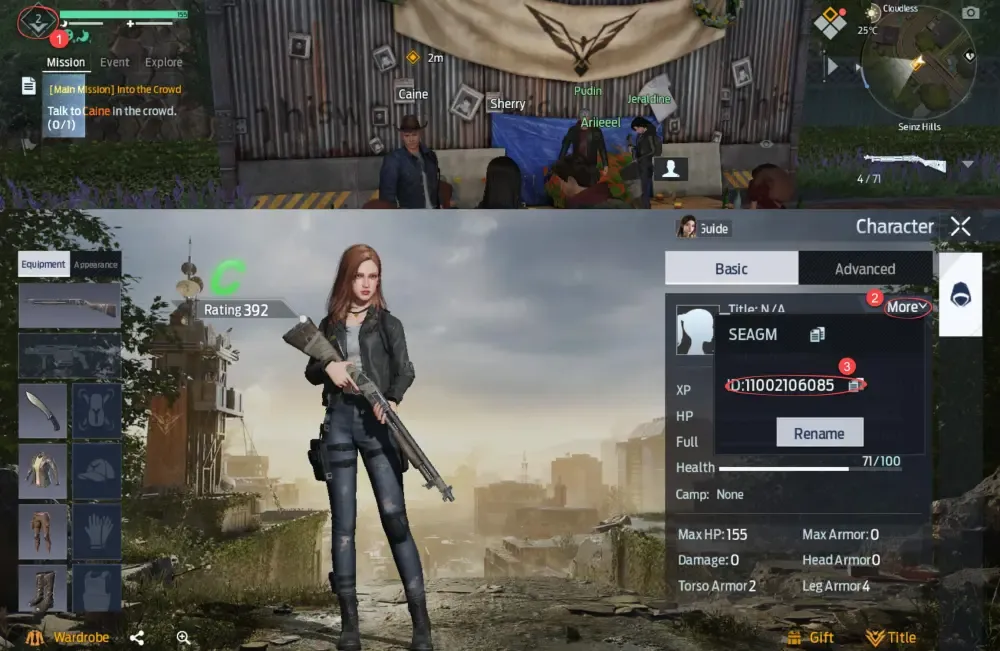
Web top-ups using your Nikke UID typically deliver Gems faster and in larger bundles than direct in-app purchases, which is why many global players prefer that route. Our site offers top-up / recharge for Goddess of Victory: Nikke directly to your account UID. You can also find additional Recruit Vouchers and Mileage tickets through events, login rewards, and the official Nikke website, which periodically distributes promotional codes through official social channels.
FAQ
Q: Is Goddess of Victory: Nikke free-to-play friendly? Yes, with caveats. F2P players can clear all PvE content with patience and Wishlist discipline, especially if they focus on building one team per element. PvP at the highest brackets and top-1% raid rankings effectively require some spending or extreme luck. Most meta-defining SSRs eventually return on rate-up banners, so missing a unit is rarely permanent.
Q: What's the best starter Wishlist pick? Conventionally a high-utility Pilgrim — Red Hood, Crown, Snow White, or Modernia depending on what's currently in the Wishlist pool — because Pilgrims only come from Wishlist banners. Liter is the single most universally useful Burst I support but is available on Elysion banners, so she's a Wishlist secondary rather than a primary target.
Q: Does Nikke have an auto-battle mode? Yes, Auto Mode is available for most content but disables manual aim and skill timing, drastically reducing efficiency. For farming completed Campaign stages it's fine; for new content, bosses, and tower climbs, manual play is strongly recommended.
Q: Can I play Nikke on PC? Yes. Shift Up released an official PC launcher with cross-progression, and the game is also playable on emulators. The PC client offers higher resolution, mouse-aim, and stable performance — most veteran Commanders use it as their main platform.
Q: How long do daily tasks take? A focused daily run takes 15–25 minutes covering Outpost claims, dispatch swap, three free Manufacturer pulls, Interception, Co-op, Lost Sector, Tribe Tower attempts, and Special Arena. Weekly tasks (Union Raid, Solo Raid, Anomaly Interception, Simulation Room caps) add 1–2 hours spread across the week.
Q: What's the pity system? There is no traditional banner pity. Every pull gives a Gold Mileage Ticket, and 200 tickets exchange for the featured SSR on the current banner. Tickets persist across banners within the same shop tab (Special, Wishlist, Collab) until the shop tab closes.
Q: How important is elemental advantage? Significant but not absolute. +10% damage and -10% taken adds up, and most Hard Mode and event stages require element-specific teams to clear comfortably. You will eventually want one capable team per element for endgame breadth.
Q: Are crossover Nikkes worth pulling for? Almost always yes, if you have the budget. Collab SSRs typically launch with meta-defining kits and often never return for years. Notable collab units have included Power and Makima from Chainsaw Man, 2B from Nier: Automata, and Re:Zero / other anime tie-ins.
Q: What's the difference between Special and Advanced Recruit? Special Recruit uses Special Recruit Vouchers or 300 Gems per single pull (3,000 Gems for 10) and pulls from rate-up banners with featured SSRs. Ordinary Recruit uses Gems at 1/10 the cost but with no rate-up. Always prioritize Special pulls on banners you care about.
Q: How does the costume system work? Costumes are cosmetic skins for Nikkes, some purchasable with Gems and others event-exclusive. Many costumes provide a minor permanent stat bonus once owned, regardless of whether equipped, so collecting costumes does provide light power progression alongside aesthetic value.
Q: Is the story actually worth reading? Yes — Nikke's main story is regarded as one of the strongest narratives in the gacha genre, particularly its mid-to-late chapters. The tone shifts heavily into existential sci-fi drama, with several chapters considered standout writing within the medium.
Q: Can I reroll efficiently? Rerolling is possible but slow due to a long tutorial. Most players skip rerolling, focus on Wishlist optimization, and use the generous launch Gem rewards to pull on their first preferred banner instead.
Verdict
Goddess of Victory: Nikke is one of the most mechanically distinctive live-service titles available on mobile and PC — a genuine third-person shooter wrapped around gacha collection, with production values (Live2D animation, voice acting, narrative writing) that significantly outperform most competitors. The game rewards engaged play: Commanders who learn Burst rotations, elemental matchups, gear refinement, and weekly raid coordination will find a deep, evolving system that has continued to expand for years post-launch.
It's an easy recommendation for players who enjoy gacha collection, anime aesthetics, mechanical shooter combat, and serious sci-fi storytelling — particularly those who appreciate that Nikke's narrative does not flinch from the implications of its premise. It's also strong for players who want a daily-friendly live-service game where 20–30 minutes of focused play meaningfully progresses their account.
It's not for players who dislike gacha monetization on principle, who prefer turn-based combat or strict tactics, who find suggestive character designs uncomfortable (Nikke leans heavily into fanservice), or who want a fully solo offline experience. Top-tier PvP and ranked raid play also require meaningful investment over time, either in pulls or in patient F2P planning.
For everyone else, Nikke remains a top-shelf entry in the modern gacha shooter space — and one of the rare titles where pulling the trigger, both literally and figuratively, genuinely matters. Whether you're climbing Tribe Tower for the first time or refining Overload gear in year three, the Ark always has another chapter waiting on the surface.