

Duet Night Abyss: The Complete Guide to Pan Studio's Dual-Protagonist Action RPG
Introduction & Quick Facts
Duet Night Abyss is a free-to-play fantasy action RPG developed by Pan Studio under Chinese publisher Hero Games, designed from the ground up as a cross-platform title spanning Android, iOS, and PC. It positions itself in a crowded post-Genshin landscape by doing something most of its competitors refuse to do: drop gacha randomness for character acquisition in favor of deterministic fragment farming. That single design choice, paired with weapon-swap action combat that fuses melee whipblades with sniper rifles and grenade launchers, has made it one of the most discussed action RPGs to emerge from the Chinese studio scene since Wuthering Waves and Infinity Nikki.
The world is a fantasy realm where arcane magic and mechanical engineering coexist under siege from demonic incursions. Two protagonists carry the narrative on parallel tracks — one exiled to the unforgiving North Border after a catastrophic betrayal, the other navigating courtly intrigue and political conspiracy in the heart of civilization. Their stories intertwine, diverge, and reconnect, giving the game its "Duet" framing and an unusually layered approach to storytelling for a live-service title. Combat is hack-and-slash with aerial cancels, ground slams, elemental reactions, and a sanity mechanic that punishes overaggressive play.
This guide covers what Duet Night Abyss actually is, how its systems work in practice, who it's built for, top-up basics, beginner-to-advanced strategy, character roles, currency types, and an in-depth FAQ. Everything below is structured for players evaluating the game and for active players looking to optimize.
| Field | Detail |
|---|---|
| Title | Duet Night Abyss |
| Publisher | Hero Games |
| Developer | Pan Studio |
| Platform | Android, iOS, PC (Windows) |
| Region | Global |
| Genre | Action RPG / Open-World Hack-and-Slash |
| Monetization | Free-to-play, no character gacha |
| Languages | English, Japanese, Korean, Chinese, Arabic |
| Official Website | herogames.com |
What is Duet Night Abyss?
Duet Night Abyss is best understood as an answer to a very specific frustration: the feeling of spending hundreds of dollars in a gacha game and still not pulling the character you wanted. Pan Studio's pitch is that characters are acquired through fragment farming — a deterministic loop where you grind specific zones, events, and quests to accumulate enough character shards to unlock the unit outright. There is no pull screen, no pity counter, no banner FOMO in the traditional sense. Premium currency exists, but it accelerates farming and unlocks cosmetic depth rather than gating roster access behind luck.
Mechanically, the game sits in the third-person action RPG bracket alongside Genshin Impact, Wuthering Waves, Honkai Star Rail (though Star Rail is turn-based), and Tower of Fantasy. The closest gameplay comparison is actually Wuthering Waves or Punishing: Gray Raven — fast, cancel-heavy melee with dodge-counters, aerial juggles, and weapon attribute interactions. The twist is the arsenal: characters can switch between cold weapons (whipblades, dual swords, greatswords) and firearms (crossbows, sniper rifles, hover guns, grenade launchers) within the same combat loop, opening genuinely hybrid loadouts that feel closer to Devil May Cry's stylish gunplay than typical anime ARPG fare.
The intended audience is action RPG veterans who want production-quality cinematics, a serious narrative, and combat depth without surrendering to gacha economics. It also targets PC players who want full keyboard-and-mouse parity rather than a phoned-in mobile port. People who specifically enjoy collecting characters via lucky pulls may find the deterministic loop slower in the short term — you can't whale your way to a maxed roster on day one — but it rewards consistent play over months.
The dual-protagonist framework also separates it from most peers. Where Genshin and Wuthering Waves use a silent or near-silent traveler, Duet Night Abyss commits to two named, voiced, fully-characterized leads whose chapters alternate. This produces a structural rhythm closer to a JRPG like Trails of Cold Steel than a typical open-world live service, and it means that side characters appear in both timelines with shifted context — a demon antagonist in one protagonist's arc may be a reluctant ally in the other.
Core Gameplay & Features
- Dual-protagonist narrative with alternating chapters, each protagonist having distinct weapon affinities, dialogue choices, and faction relationships
- Weapon-swap combat allowing real-time switching between melee and firearms within a single combo string
- No character gacha — all playable characters are obtainable through fragment farming, story progression, or events
- Sanity system that drains during prolonged combat and aggressive demon exposure, requiring active management
- Elemental attributes including fire, frost, lightning, void, and physical, with reaction chains layered on top
- Open-zone exploration across regions like Nocturnal Echoes, Mystic Mazes, and the North Border, each with unique enemy ecosystems
- Hack-and-slash combat depth featuring aerial juggles, ground slams, parry windows, perfect dodges, and weapon-specific finishers
- Cosmetic dye system for both weapons and outfits, plus modular accessories (headpieces, capes, waist ornaments)
- Cross-platform progression with shared accounts between Android, iOS, and PC, plus Steam co-op functionality
- Geniemon companion system — collectible creature allies that provide passive buffs and combat support
- Theater activities and persistent lore events that rotate seasonally
- Co-op multiplayer on Steam allowing party-based exploration and boss raids
Combat in Depth
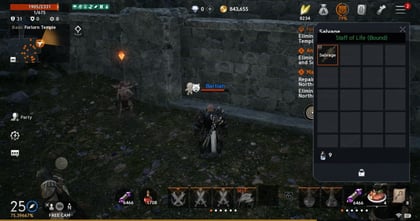
Combat is built around three core verbs: attack, dodge, and swap. Attack chains are weapon-specific, with light strings flowing into heavy finishers and aerial launchers. Dodge has a perfect-dodge window similar to Punishing: Gray Raven's "Matrix" mode — frame-perfect evades trigger a time-slow state that lets you reposition, swap weapons, or unload a charged shot. Swap is where the system distinguishes itself: hitting the swap input mid-combo doesn't reset your animation, it cancels into the secondary weapon's opener, allowing chains like whipblade launcher → mid-air sniper headshot → grenade launcher splash on landing.
Elemental attributes layer onto this by tagging enemies with status effects. Frost slows and amplifies physical damage. Fire applies a damage-over-time that can be detonated by lightning for an electrified-burn reaction. Void disables enemy armor and exposes weak points. Reactions are not as central as in Genshin Impact — they're additive boosts rather than the entire damage model — which means raw mechanical play matters more than team composition theorycraft.
The sanity meter is the wild card. Every character has a sanity pool that drains when fighting demons for extended periods, when entering corrupted zones, or when taking specific types of psychic damage. Low sanity reduces damage output, distorts the screen, and can eventually cause uncontrolled actions. Sanity is restored through specific consumables, safe-zone rest, or character-specific abilities. It functions as a soft timer encouraging tactical engagement over endless grind sessions in a single zone.
Exploration and Open Zones
The world is divided into thematic zones rather than one seamless overworld. Nocturnal Echoes is a moonlit forest region with ambient horror elements and stealth-focused enemy patrols. Mystic Mazes is a shifting dungeon network with rotating layouts and high-tier fragment drops. The North Border is the frozen exile region where one protagonist begins — harsh visibility, environmental damage, and survival mechanics layered on top of combat.
Each zone hosts collectibles, hidden bosses, lore tablets, and resource nodes specific to that biome. Atlasium ore, for example, drops primarily in Mystic Mazes, while Demon Wedges are exclusive to fallen-demon corpses in Nocturnal Echoes. This forces players to rotate zones rather than camping a single farming spot.
Pro Tips & Strategy
Beginner Tips
- Finish the prologue for both protagonists before branching. The prologue unlocks the dual-character swap system, free starter units, and the basic forging menu. Skipping ahead in one timeline leaves you under-equipped for the parallel chapter.
- Lock in your starter weapon path early. Each protagonist offers a choice between melee-focused or ranged-focused early progression. This affects your first three skill nodes and the side-quest rewards you'll see in chapter one. Melee paths are more forgiving for new ARPG players; ranged demands more positioning awareness.
- Don't burn premium currency (Lunar Crystals) on shop refreshes. New players are tempted to refresh the daily shop for rare materials. The conversion rate is poor versus monthly pass value. Save crystals for the first monthly pass and the standard fragment exchange.
- Equip Geniemon companions immediately. Many beginners ignore the Geniemon menu for hours. Even the starter Geniemon provides a 5–8% combat buff that compounds across every fight. They are the closest thing the game has to a free passive power-spike.
- Complete daily contracts before logging off. Daily contracts award Atlasium, sanity-restore consumables, and fragment tokens. Missing a day costs roughly 1% of weekly fragment progress for any character you're farming.
- Use the practice arena before story bosses. Story bosses have telegraphed move sets, and the practice arena lets you fight a damage-dummy version with full move recovery. Twenty minutes of practice saves several wipe attempts on harder difficulty tiers.
Intermediate Tips
- Plan fragment farming around the weekly reset. Most fragment drop zones are weekly-capped. Identify your priority character at the start of each week and front-load farming on Monday-Tuesday so you have buffer days for catch-up.
- Build at least one cold-weapon and one firearm character. Some boss mechanics (stagger gauges, distant weak points) heavily favor ranged. Others (close-quarters demons with shielded fronts) demand sustained melee pressure. A pure melee or pure ranged roster will hit walls at mid-tier content.
- Master the perfect-dodge → weapon-swap cancel. This is the single highest-skill-ceiling interaction in combat. A perfect dodge gives you a damage window; canceling it into your secondary weapon's opener doubles the burst potential of that window.
- Manage sanity actively, not reactively. Carry at least three sanity-restore consumables into any extended dungeon run. Sanity below 30% applies a hidden damage-taken penalty that turns survivable hits into kill blows.
- Refine elemental coverage across your squad. A common mid-game mistake is stacking three fire-attribute characters. Frost-immune demons (common in Nocturnal Echoes) will gut a mono-element team. Aim for at least three elemental types in your active squad of four.
- Use the dye and accessory system as a transmog. Outfit dyes don't change stats, but matched colors across squad members improve squad-cohesion buffs in some event modes. It's a minor optimization, but it's free once you've crafted dyes.
Advanced Tips
- Stack stagger windows for boss damage. Most named bosses have a stagger gauge separate from HP. Filling it triggers a downed state with a 200–300% damage multiplier window. Coordinate burst rotations so that the highest-damage character delivers the kill in this window rather than chipping HP during normal phases.
- Sniper-rifle headshots bypass partial armor. This is undocumented in-game. Headshots on humanoid enemies (cultists, rogue knights) deal full damage even when their body armor is intact, making sniper builds disproportionately effective in the North Border faction quests.
- Save Demon Wedges for tier-3 forging only. Tier-1 and tier-2 weapon forges look tempting but offer minimal stat gains. Tier-3 is where weapons gain affix slots that meaningfully change build identity. Hoard until you have at least 40 wedges.
- Exploit zone-respawn timers for resource runs. Resource nodes respawn on a 4-hour real-time cycle. A focused two-route loop through Mystic Mazes and Nocturnal Echoes every four hours during active play days nets roughly triple the passive farming income.
- Co-op for the Geniemon raid boss only. Most co-op content is solo-viable, but the weekly Geniemon raid scales rewards based on party size and contribution. Solo runs are inefficient even if completable.
- Track event currency exchange rates. Events award unique currencies redeemable for character fragments. The fragment-to-event-currency rate varies between events. Calculate before committing — some events offer 2× the standard rate for specific characters.
Characters & Roles
The roster is built around archetypes rather than rigid classes. Characters have a primary weapon affinity that defines their identity, but skill trees allow secondary specialization. Below is an overview of confirmed launch-window characters and their general role profiles.
| Character | Weapon Affinity | Element | Role | Difficulty |
|---|---|---|---|---|
| Berenica | Whipblade / Sniper Rifle | Frost | Hybrid DPS | Medium |
| Daphne | Dual Blades | Lightning | Melee Burst | Low |
| Fina | Crossbow / Grenade Launcher | Fire | Ranged AoE | Medium |
| Su Yi | Greatsword | Void | Stagger Specialist | High |
| Northern Protagonist | Whipblade (default) | Physical | Versatile DPS | Low |
| Capital Protagonist | Hover Gun (default) | Lightning | Mobile Ranged | Medium |
Berenica is widely regarded as one of the more balanced units — her whipblade-to-sniper rotation is the textbook example of weapon-swap combat. Daphne is the easiest entry-level DPS, with forgiving combo windows and built-in lifesteal on her third skill. Fina is the de facto crowd-clear character, with her grenade launcher dealing splash damage that wipes trash mobs in two or three shots. Su Yi is a high-skill stagger specialist whose greatsword charge attacks fill boss stagger gauges faster than any other character, but whose slow recovery animations punish careless play.
The two protagonists deserve special mention because they are not interchangeable. The Northern protagonist (often referred to by community shorthand based on her exile arc) excels in raw physical damage and survival mechanics tied to the North Border zone. The Capital protagonist emphasizes mobility and ranged precision, suited to the political-intrigue chapters that emphasize stealth and infiltration. Their skill trees can be reset for free during the early game, allowing experimentation.
Roles in Practice
A balanced squad of four typically includes one stagger specialist, one sustained DPS, one crowd-clear unit, and one flexible swing pick. Stagger characters break bosses; sustained DPS capitalize on the broken window; crowd-clear handles adds during boss phases; the flex slot covers elemental gaps. This is similar to MMO holy-trinity logic but compressed into a four-person action squad without dedicated healers — sustain comes from consumables, perfect dodges, and lifesteal affixes.
Game Modes Deep Dive
Duet Night Abyss layers several modes on top of its main campaign, each serving a different progression role.
Main Story Chapters alternate between the two protagonists and form the spine of progression. Completing chapters unlocks new zones, new character fragment sources, and major skill tree expansions. The pacing is slower than Genshin Impact's main quest but denser per chapter, with longer cinematics and more branching dialogue.
Side Tales like "Silence in the Strings" are standalone narrative arcs focused on specific characters. They unlock character-specific cosmetics, lore entries, and occasionally bonus fragments. They are optional but heavily recommended for any character you intend to invest in.
Theater Activities are rotating event scenarios — limited-time story missions with unique mechanics, often tied to seasonal events like Starlight Rondo or The Firmament Unbound. Rewards include event currency, exclusive cosmetics, and accelerated fragment drops.
Mystic Mazes are roguelite-style dungeons with shifting layouts. Each run offers buff selections after combat rooms, building a temporary loadout for the run. Higher difficulty tiers drop better forging materials and rare Geniemon eggs.
Nocturnal Echoes patrol missions are stealth-and-combat hybrid encounters with tracking, reconnaissance, and rescue objectives. They reward Demon Wedges and faction reputation rather than pure damage gains.
Co-op Raids on Steam allow up to four players to tackle elite world bosses and the weekly Geniemon raid. PC-only at launch, with mobile co-op rolling out in updates.
Endgame Tower content (often called the Abyssal Tower or similar in community parlance) is the rotating high-difficulty challenge mode where you climb floors with elemental and weapon restrictions to earn premium rewards. Each floor takes about five to ten minutes once mastered.
Currency & Resources
Understanding the economy is essential because the absence of character gacha shifts the spending logic entirely. Here's a breakdown of the main currencies and resources.
| Resource | Source | Primary Use | Premium? |
|---|---|---|---|
| Atlasium | Mystic Mazes, daily contracts | Weapon forging, base materials | No |
| Demon Wedges | Demon kills in Nocturnal Echoes | Tier-3 weapon affixes, accessories | No |
| Character Fragments | Specific zones, events, story | Unlocking and ascending characters | No |
| Lunar Crystals | Top-up, limited free sources | Shop refreshes, monthly pass, accelerators | Yes |
| Event Currency | Rotating events | Event-exclusive characters/cosmetics | No |
| Sanity Tonics | Crafting, daily contracts | Combat sanity restoration | No |
Lunar Crystals are the premium currency and the only resource that meaningfully accelerates progression through paid means. They are used for cosmetic purchases (dyes, outfits, accessories), shop refresh resets, the monthly value pass, and resource accelerators that compress multi-day farming windows. Critically, Lunar Crystals do not directly purchase characters — they can be exchanged for fragments at a fixed rate, but the rate is intentionally tuned so that pure spending is slower than dedicated free-to-play farming for any single character.
This is the core economic philosophy: spend money for breadth and convenience, not depth. A free-to-play player who focuses on one or two characters per patch will keep pace with a paying player who spreads investment across the full roster. A whale gets a wide bench faster; a free player gets the same meta-relevant power on their main picks.
Top-Up & Recharge
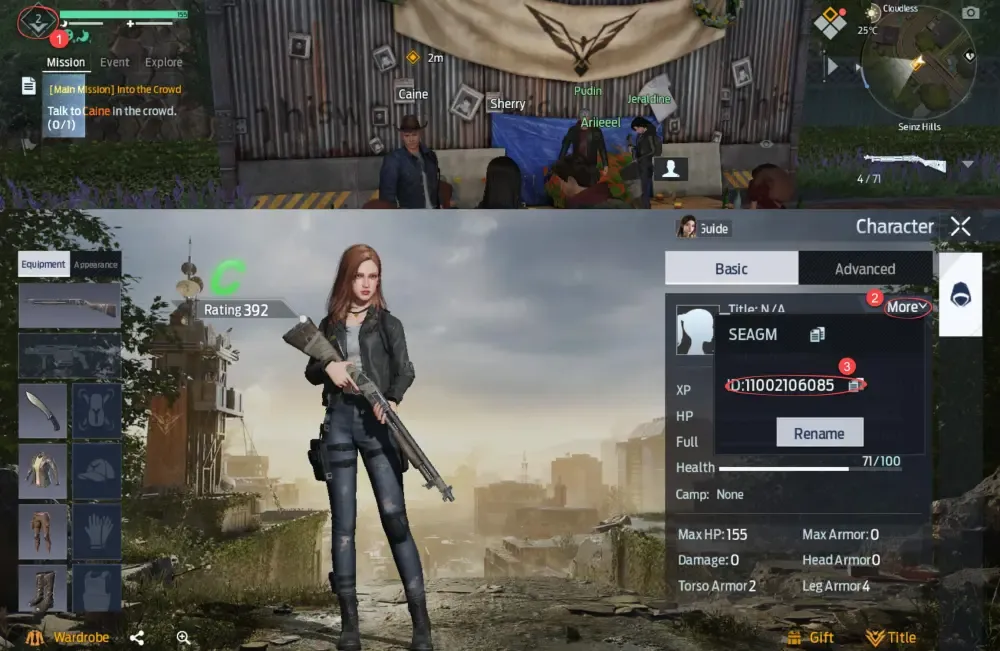
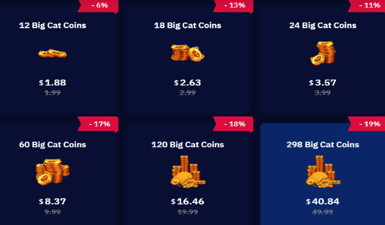
Duet Night Abyss is recharged through Lunar Crystals, purchased in fixed bundles ranging from small starter packs to large value tiers, along with the monthly pass (typically the highest crystal-per-dollar value for steady players) and seasonal battle passes that combine premium currency with exclusive cosmetics. In-game purchases can be made directly through the official client on PC or via mobile app store billing on Android and iOS. Players in regions with limited or expensive payment options often use third-party top-up services that credit Lunar Crystals to their account using their UID, bypassing store-specific markups and regional currency restrictions. Our site offers top-up and recharge for Duet Night Abyss using your in-game UID for fast crystal delivery. Always verify your UID and selected server before submitting any top-up to ensure crystals arrive on the correct account.
FAQ
Q: Is Duet Night Abyss really gacha-free? A: For characters, yes — every playable character is obtainable through fragment farming, story rewards, or event exchanges. There is no random pull mechanic for unit acquisition. Some cosmetic and weapon systems use exchange mechanics, but no character is gated behind RNG.
Q: What platforms does it support? A: Android, iOS, and PC (Windows). All platforms share cross-progression through your account. Steam co-op is a PC-specific feature at launch.
Q: Is it pay-to-win? A: Top-ups accelerate progression and broaden your roster faster, but the deterministic character system means free-to-play players can reach competitive power on chosen characters. PvP is not the primary focus, so "pay-to-win" pressure is significantly lower than in competitive gacha titles.
Q: How long is the main story? A: Launch-window content offers roughly 30–50 hours of main story across both protagonist timelines, plus substantial side content. Pan Studio has confirmed regular content patches with new chapters.
Q: Do I need to play both protagonists? A: Strongly recommended. Each protagonist's chapters reveal context that recontextualizes the other's storyline. Some endgame content also requires characters unlocked through both timelines.
Q: What languages are supported? A: English, Japanese, Korean, Chinese (Simplified and Traditional), and Arabic at launch, with full voice acting in most major language tracks. English voice work is included.
Q: How does the sanity system work in practice? A: Sanity drains during demon fights and corrupted-zone exposure. Below 30%, you take increased damage; below 10%, visual distortion and reduced control kick in. Restore with sanity tonics, safe-zone rest, or specific character skills.
Q: Is there PvP? A: The game is primarily PvE — story, exploration, dungeons, and co-op raids. PvP is not a core pillar, though some event modes may include leaderboard-based competitive elements.
Q: Can I play with friends? A: Yes. Steam co-op supports party play for exploration and raid content. Cross-platform co-op between PC and mobile is being rolled out in updates following launch.
Q: What makes combat different from Genshin or Wuthering Waves? A: The weapon-swap system. You can cancel melee combos into firearms mid-string, mixing whipblade strikes with sniper shots in a single combo. Elemental reactions exist but are less central than in Genshin — raw mechanical skill matters more.
Q: How much should a casual player budget per month? A: If you choose to spend, the monthly pass typically offers the best crystal-per-dollar ratio and is sufficient for accelerating one or two character builds per patch. Free play remains fully viable; spending is for convenience and breadth, not core access.
Q: Are there energy/stamina limits? A: Yes, there's a soft stamina system tied to certain reward-yielding activities (boss drops, premium resource nodes), which is standard for the genre. Exploration, story, and most combat are not stamina-gated. Stamina regenerates passively or can be refreshed with consumables.
Verdict
Duet Night Abyss is the action RPG for players who love the genre's combat depth and production values but have grown tired of paying for the privilege of rolling dice. The deterministic character system, the genuinely flexible weapon-swap combat, and the dual-protagonist narrative structure combine into something that feels distinct in a category that has trended toward homogeneity. Pan Studio's bet — that players will spend money for cosmetics, breadth, and convenience rather than fundamental access — is one of the more interesting monetization experiments in the live-service space, and it's backed by combat that holds up to scrutiny.
It's the right game for action RPG veterans, lapsed Genshin or Wuthering Waves players seeking a less predatory economy, mobile players who want PC-grade combat, and anyone who values story depth alongside mechanical complexity. It's the wrong game for players who specifically enjoy the dopamine loop of gacha pulls (the deterministic system feels slower in the short term), for those who want competitive PvP as a core pillar, or for players who avoid extended grinding on principle — fragment farming is fair, but it is still farming.
For everyone else, it represents one of the strongest action RPG launches of its cohort and a genuinely meaningful step forward for the genre's monetization conversation. Visit the publisher at herogames.com for official announcements, and when you're ready to optimize your Lunar Crystal budget, top up through a trusted UID-based service to maximize your in-game progression efficiency.