

Crystalfall: The Complete Guide to CRG Studio's Steampunk Action RPG
Introduction & Quick Facts
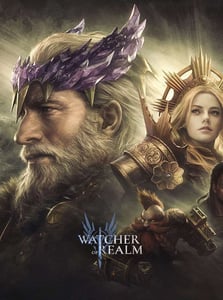
Crystalfall is a free-to-play online action RPG developed by CRG Studio, built exclusively for PC and aimed at players who crave the loot-driven obsession of the genre's heavy hitters but want a fresher coat of paint. Rather than reskinning the same medieval dark-fantasy template the ARPG space has leaned on for two decades, Crystalfall fuses post-apocalyptic devastation with a brass-and-aether steampunk aesthetic, then layers in MMO-style shared zones, a player-driven economy, and procedurally generated dungeons. The result is a title that reads less like a single-player loot grinder and more like a persistent online world wearing an ARPG's skin.
The project has been positioned as an Early Access launch on both Steam and the Epic Games Store, with broad localization (English, Japanese, Korean, Simplified and Traditional Chinese, Arabic, French, German, Spanish) signaling a global ambition from day one. Combat is top-down hack-and-slash, but the progression scaffolding leans into classlessness, randomized talent trees, deep affix-based itemization, and crest socketing — all the levers theorycrafters love to pull. For players who measure value in build diversity and gear chases rather than scripted campaigns, this is a game worth watching.
This guide is a comprehensive breakdown of what Crystalfall is, how its systems interlock, how to play it well from your first dungeon to your hundredth, and how the top-up economy fits into the experience. Whether you are a returning ARPG veteran from the Diablo, Path of Exile, Last Epoch or Lost Ark side of the genre, or a newcomer drawn in by the steampunk hook, the sections below cover everything you need.
| Field | Detail |
|---|---|
| Title | Crystalfall |
| Publisher | CRG Studio |
| Developer | CRG Studio |
| Platform | PC (Steam, Epic Games Store) |
| Region | Global |
| Genre | Online Action RPG (ARPG, hack-and-slash, loot-driven) |
| Business Model | Free-to-play with optional cosmetic / convenience purchases and Founder Packs |
| Languages | EN, JA, KO, ZH-CN, ZH-TW, AR, FR, DE, ES |
| Official Website | crgstudio.com |
What is Crystalfall?
Crystalfall is an online action RPG set in a fractured world that was once recognizable as our own — until a catastrophic asteroid impact split the planet, gouged out new geographies, and seeded the ruins with massive crystalline shards radiating raw, unstable power. Civilization survived in pockets, but the world that emerged is a steampunk dystopia stitched together with brass plating, riveted machinery, and aetheric energy harvested from those crystals. Ruling over the dungeon networks beneath the surface is a syndicate that exiles undesirables into the deeps as expendable labor. You play as one of those convicts. You are not a chosen hero. You are a problem the syndicate hopes the dungeons will solve — and the only way out is to descend deeper, get stronger, and bring back enough crystal to matter.
Mechanically, the game is a top-down hack-and-slash ARPG. You click, dodge, cast, and shoot through procedurally generated dungeons populated by mutated wildlife, corrupted survivors, and brass-geared mechanical sentries. Every dungeon run regenerates uniquely, meaning the layout, encounter density, modifier suite, and loot distribution shift each time you enter. Combat is fast, deliberately punishing at higher difficulty tiers, and built around stacking gear-driven synergies until your build either crushes content or runs into a wall it cannot solve. That moment — finding the wall and engineering a way past it — is the core experience.
What makes Crystalfall stand out from the rest of the loot-grinder pack is the way its systems converge:
- Classless progression. You pick a starting archetype (Knight, Rogue, Technomancer at launch) but every character can invest in strength, dexterity, and intelligence freely. A Knight who scales into intelligence and runs an aether-staff hybrid is a legitimate build, not a meme.
- Procedural talent trees. Branches, node placements, and rarity tiers vary, and players can reroll affixes, enhance node potency, and socket crests to shape passives toward a specific damage type or playstyle.
- Persistent online world. Shared zones, random encounters with other players, planned party co-op for dungeon clears, and a direct trading economy that lets one player's salvage become another's keystone item.
- Seasonal resets. Endgame is structured around recurring seasons that introduce new content, leaderboards, fresh tougher bosses, and lore drips, keeping the chase from going stale.
The game is built for three overlapping audiences. ARPG veterans get the build depth, itemization variety, and seasonal grind they expect. MMO players get a persistent world with social hooks, a real economy, and group play. Lore-curious players get a steampunk post-apocalypse with a slow-rolling narrative that unfolds across acts and seasons rather than dumping the whole story in one cutscene-heavy run. If you have ever stayed up too late chasing one more upgrade, this is engineered to scratch that itch.
Core Gameplay / Features
Crystalfall's systems map cleanly onto familiar ARPG conventions but introduce enough twists that you cannot autopilot from another game's habits. Below are the headline mechanics, followed by deeper breakdowns of the ones that matter most.
- Top-down hack-and-slash combat with mouse-driven movement, hotbar-bound active skills, and dodge/positioning emphasis at higher difficulties.
- Procedurally generated dungeons that re-roll layout, enemy composition, and modifiers each entry.
- Three launch archetypes — Knight (melee tank/bruiser), Rogue (ranged precision), Technomancer (aether caster) — gated by starting kit, not by long-term capability.
- Classless attribute system (Strength / Dexterity / Intelligence) enabling hybrid builds and respecs.
- Procedural talent trees with randomized node placement, affix rerolls, rarity upgrades, and crest sockets.
- Lootable skills — abilities can drop as items, slot into your kit, and themselves carry affixes that modify behavior.
- Deep itemization — base types, affix pools, implicit/explicit stats, salvage-and-craft loops, and tiered rarities.
- Shared-world MMO layer with public zones, random player encounters, and planned party-based dungeon co-op.
- Player-driven economy with direct trading; no auction-house homogenization at launch.
- Seasonal content cycles introducing new bosses, maps, modifiers, and challenges.
- Steampunk-post-apocalypse setting with mutant biology, brass machinery, and crystal-aether magic blended into both lore and visual design.
- Comprehensive localization across nine major languages from launch.
Combat & Difficulty Loop
Combat in Crystalfall is the standard isometric ARPG framework on the surface — left click to attack, right click for a primary skill, additional skills bound to a hotbar — but the moment-to-moment feel pushes more toward Path of Exile's density than Diablo IV's deliberate pacing. Mob packs are large, modifiers stack visibly (frozen ground, projectile barriers, aether storms), and elite enemies act as mini-bosses with rotation-style mechanics that punish stand-still play. Dodging matters. Positioning matters. Builds that ignore defensive layering will hit a hard ceiling fast.
Difficulty is layered through dungeon depth and modifier intensity. The deeper you push, the more affixes the dungeon rolls onto itself — increased monster damage, reduced player resistances, mutated boss variants, density spikes — and the better the loot scales in return. This is the "rift" loop the genre standardized, but Crystalfall ties depth to risk-versus-reward economy decisions: deeper runs cost more to attempt and yield more on success, so chaining runs becomes a real resource-management game.
Procedural Dungeons
Each dungeon entry generates a unique layout from a pool of tilesets matched to the dungeon's biome (collapsed manufactories, mutated overgrowth zones, crystal caves, syndicate strongholds). Enemy pools, environmental hazards, and event triggers are weighted by biome but shuffled within each run. Crucially, ground loot density is part of the procedural roll — some runs are designated as "rich" with elevated drop rates, others are sparse but contain guaranteed elite rooms. Learning to read a dungeon's early rooms and judge whether to push or extract is a real skill.
Classless Progression & Talent Trees
You start with one of three archetypes, but archetype only determines starting gear and initial skill access. Attribute points earned per level go wherever you want. Strength scales melee damage, armor effectiveness, and shield mechanics. Dexterity scales ranged damage, critical strike chance, and movement-related skills. Intelligence scales aether damage, skill cooldowns, and certain crafting potencies. Hybrid stat builds unlock hybrid skills and equipment requirements, and the talent tree's procedural branches mean two Knights at level 50 can play radically differently.
The talent tree is the most distinctive system in the game. Rather than a fixed grid, your tree generates with randomized branch shapes and node rarities. You can:
- Reroll affixes on individual nodes using crafting materials.
- Enhance rarity to upgrade a node's potency tier (Common → Magic → Rare → Epic → Legendary).
- Socket crests — special modifier items that bolt onto talent nodes to add unique effects (e.g., a crest that converts physical damage to aether on a node previously focused on raw melee scaling).
The depth here rewards theorycrafters and frustrates anyone hoping to copy a build off a wiki, because no two trees look identical.
Itemization
Items in Crystalfall follow the familiar tiered model — Common, Magic, Rare, Epic, Legendary, and (likely seasonal) Mythic uniques — but the affix pool is wide and the modifier interactions are where builds live or die. Salvaging breaks gear into base materials, rare reagents, and occasionally affix shards that can be transplanted into other gear. Upgrading raises an item's tier potency, while affix rerolling lets you cycle bad modifiers off without abandoning a strong base. Endgame gearing is less about finding a single god-roll drop and more about engineering one from many pieces — much closer to Path of Exile's crafting philosophy than Diablo's drop-and-pray approach.
Shared World & Economy
Crystalfall is not a strictly instanced ARPG. Hub cities, surface zones, and certain mid-tier dungeons exist as shared-world spaces where players cross paths, trade directly, and occasionally encounter dynamic events. Deeper dungeons remain instanced for performance and balance reasons, but they can be entered in parties. The economy is player-driven: there is no centralized auction house at launch, so trade happens via in-game listings, hub interactions, and community-organized channels. This deliberately keeps high-end gear valuable rather than driving prices to floor levels.
Seasonal Cadence
Seasons reset character progression on dedicated season realms while preserving a permanent non-season pool. New seasons introduce mechanics — a fresh dungeon type, a new boss tier, a unique modifier system layered over normal play — alongside cosmetics, leaderboards, and balance overhauls. The expected cadence is roughly quarterly, though Early Access timing may shift this. Seasons are where lore advances, with new acts, zones, and class additions planned across at least the first nine months of post-launch development.
Pro Tips & Strategy
These tips are organized by player progression. Skip ahead based on your current stage.
Beginner (Hours 1–20)
- Pick the archetype that matches your reflexes, not your fantasy. If you don't enjoy dodging and weaving, do not pick Rogue because foxes look cool. Knight is the most forgiving entry archetype thanks to shield mechanics and higher base armor.
- Don't overspecialize attributes too early. Until you have a sense of what skills you want to scale, keep secondary stats topped up enough to wear hybrid gear. A pure-strength Knight who finds an aether-conversion legendary at level 20 will regret being unable to equip it.
- Identify and equip every rare drop in your level range for at least the first 15 levels. Yes, even ugly ones. Early gear matters less than learning what affixes exist.
- Always salvage, never sell, for the first ten levels. Crafting materials are scarcer than gold at the start, and the conversion is worth it.
- Run shorter dungeons twice rather than one long push. Early progression scales faster off multiple boss kills than off one deep run.
- Open the talent tree screen every level-up. Even one missed node compounds. The procedural layout means you should plan two or three nodes ahead, not just spend immediately.
Intermediate (Hours 20–80)
- Start respeccing as soon as content stalls. Crystalfall allows attribute and talent respecs — they cost resources but are not punitive. If a boss tier is walling you, change your defensive layer (resistances, dodge, block) before changing your damage type.
- Learn to read affix tiers. A T3 "increased aether damage" affix is worth multiple T1 affixes of the same type. Don't get excited by long affix lists — read the numbers.
- Reroll one slot at a time. Spending all your crafting reagents on a single item is fine if it's your build's keystone. Spreading them across every yellow item in your bag is a beginner trap.
- Engage with crests early. Crests transform talent nodes more dramatically than node rarity upgrades do, and good crests retain value across builds. Hoard them.
- Use the shared world to your advantage. Hub trade for the missing affix on your weapon is almost always faster than farming for the drop. The economy works because players take this shortcut.
- Track your damage type. If you are running a build that converts to one damage type (e.g., physical-to-aether), every piece of gear that adds the wrong element is a wasted affix. Filter accordingly.
Advanced (Hours 80+)
- Push depth, not breadth, for currency efficiency. Higher-tier dungeons drop better-base items and more crafting reagents per minute than easier dungeons cleared faster. The math favors depth once you can survive it.
- Build a second character before season-end. Seasonal leaderboards reward category placements (fastest boss, deepest dungeon, highest single hit). A specialized alt can grab a leaderboard slot your main can't.
- Engineer items, don't pray for them. By late game, a planned base + targeted crafting yields better gear than chain-running for drops. The salvage-affix-shard loop is your friend.
- Crest socketing decisions are permanent until reroll. Plan them. Treat crest sockets as the final 10% of your build, applied only when you are confident in the rest.
- Time your trades around season pulses. Prices for season-mechanic items peak mid-season and crash near the end. Sell what's hot, buy what's cooling.
- Don't waste reagents on near-final items. The "one more reroll" trap is real. Set a budget before you start crafting an item and stop when you hit it.
Characters & Classes
The launch class roster is intentionally small but deep, with additional archetypes planned across post-launch content updates. Because the system is classless beneath the surface, each "class" is really a starting kit plus identity skin rather than a hard role lock.
| Archetype | Primary Attribute | Starting Weapons | Role Identity | Best Suited For |
|---|---|---|---|---|
| Knight (lion-human hybrid) | Strength | Sword & shield, two-handed blades | Frontline melee bruiser, shield-block tank, charge-based skill kit | Players who prefer in-your-face combat, high HP/armor pools, deliberate positioning |
| Rogue (fox-mutant) | Dexterity | Pistols, rifles, crossbows | Ranged precision DPS, crit-stacking, mobility-skill kit | Players who like dodge-cancel gameplay, high APM, glass-cannon risk profiles |
| Technomancer | Intelligence | Aether staves, conduits | Caster, area-of-effect damage, summon/turret hybrid options | Players who enjoy zone control, build-craft complexity, slower but devastating damage windows |
Knight
The Knight is the durability anchor of the launch roster. Mechanically, the kit revolves around shield-block timing, melee cleave, and gap-closing charges. Strength scaling boosts melee damage, armor effectiveness, and shield-related skills. The Knight's procedural talent tree tends to surface defensive nodes early, which lowers the skill floor for new players. Advanced Knight builds branch into hybrid intelligence to access aether-infused weapon enchants, turning the lion-knight into a paladin-style bruiser with sustain.
Rogue
The Rogue is the highest-skill-ceiling launch class. Ranged precision, critical-strike scaling, and movement-skill chaining define the kit. Dexterity stacking pushes critical chance and critical multiplier into devastating territory, but defensive layers are thin, so positioning and dodge mastery are non-negotiable. Late-game Rogue builds frequently incorporate aether-imbued ammunition through hybrid intelligence investment, converting ballistic damage to elemental and bypassing armor-based mitigation entirely.
Technomancer
The Technomancer is the build-crafter's paradise. Aether staves channel intelligence-scaled damage into area-of-effect detonations, lingering hazards, and (depending on tree investment) summoned mechanical constructs that act as both DPS and threat-absorption. The class is the most resource-management-heavy in the early game, with mana-equivalent aether pools that drain quickly under sustained casting. Mastering the Technomancer means learning when to channel and when to weave basic attacks for aether regeneration. Hybrid strength investment unlocks a "battlemage" style that pairs melee weapons with aether-staff procs.
Hybrid Builds
The classless backbone means none of the above identities are walls. Common community-tested hybrids include:
- Aether Knight — Strength/Intelligence Knight with aether weapon conversion and self-heal procs.
- Trickshot Technomancer — Dexterity/Intelligence Technomancer favoring fast staff projectiles and crit scaling.
- Bladestorm Rogue — Dexterity/Strength Rogue who abandons firearms for dual blades, leveraging crit-melee scaling.
Endgame & Progression Systems
Endgame in Crystalfall is built around layered loops: dungeon depth, seasonal leaderboards, gear engineering, and economic participation. Each loop feeds the others.
Dungeon Tiers
After the main story acts conclude, dungeons unlock tiered modifier scaling. Each tier adds modifier intensity, monster levels, and reward weight. Pushing a new tier the first time is the per-tier "first clear" milestone, while sustained farming happens one or two tiers below your max push for efficiency.
Boss Progression
Endgame bosses follow a roughly three-tier structure: standard tier bosses (act bosses with seasonal variants), elite tier (limited-attempt encounters with guaranteed legendary drops), and pinnacle tier (season-capstone encounters with unique drops and leaderboard placement). The pinnacle fight typically demands a fully built character and a build that can clear both burst and sustain damage checks.
Crafting Economy
Crafting reagents come from salvaging, dungeon clears, vendor caches, and rare drops. The reagent economy is intentionally tiered so that low-tier crafts are accessible to everyone and high-tier crafts require either deep play or trade. This keeps the player economy active — high-tier crafters need raw mats, low-tier farmers need high-tier products.
Seasonal Realms
Seasons run on dedicated realms with fresh character progression. Non-season permanent characters exist for players who prefer continuity, but the vast majority of new content debuts on the seasonal realm first. At season end, seasonal characters and their inventories migrate to the permanent pool. This is standard ARPG-genre design and works well here because seasonal mechanics often layer on top of base systems rather than replacing them.
Top-Up & Recharge
Crystalfall is free-to-play, with monetization built around optional Founder Packs (tiered Starter through Gold), cosmetic items, convenience options, and a premium currency commonly referenced as Shards that accelerates crafting, skill enhancement, and inventory management. Standard top-up flows through the in-client store on Steam or Epic Games Store, which charges via the platform wallet or the publisher's direct payment portal on the official site at crgstudio.com. Founder Packs typically include cosmetic bundles, premium currency, inventory tabs, and (in higher tiers) early-access perks during the Early Access window.
For players who want to bypass platform fees, regional pricing gaps, or simply prefer a faster way to load currency without going through a storefront wallet, our site provides direct top-up / recharge service for Crystalfall. Standard verification details and an in-game ID are typically all that's required.
FAQ
Is Crystalfall really free-to-play? Yes. The base game is free on both Steam and Epic Games Store. Monetization is built around optional Founder Packs, cosmetics, and convenience purchases such as the premium Shards currency. No core gameplay content is paywalled.
Is the game pay-to-win? The publisher's stated design intent is to keep purchases focused on cosmetics and convenience rather than direct power. Premium currency can accelerate crafting and skill investment, but the items, talent nodes, and gear themselves still need to be earned, dropped, or traded for. Players who pay save time, not power ceilings.
Can I play solo, or is multiplayer required? You can play solo from start to endgame. Multiplayer is optional. Shared-world zones exist, but the bulk of dungeon content is fully completable alone, and party play is opt-in for those who want it.
How does the trading economy work? Crystalfall uses direct player-to-player trading rather than a centralized auction house at launch. Trades happen in hub zones and through in-game listings. This keeps high-end gear valuable but means price discovery is slower than in auction-house-driven games.
What happens to my character at season end? Seasonal characters and their stash content migrate to the permanent non-season pool when the season concludes. You don't lose progress; you just no longer compete on the active leaderboard, and you can roll a fresh seasonal character to chase the next season's mechanics.
Will my low-level Knight be locked out of high-level gear types? No. The classless attribute system means your Knight can spec into intelligence or dexterity over time to equip and benefit from gear normally associated with other archetypes. Respecs cost resources but are not blocked.
Are there controller and ultrawide options on PC? Crystalfall is designed for keyboard and mouse on PC. Controller support and resolution scaling depend on the build version at the time you play; Early Access patches frequently expand these options.
How long is a typical dungeon run? Short runs land around 5–10 minutes for standard tiers; deep endgame pushes can exceed 30 minutes when modifier-heavy. Most efficient farmers favor the 8–15 minute sweet spot.
Is there PvP? PvP is not the focus of the launch design. The shared-world model and economy emphasize cooperative or neutral interaction. Future updates may introduce structured PvP modes, but Crystalfall is fundamentally a PvE game.
Will my Early Access progress carry over to full launch? ARPGs in this design tradition typically preserve Early Access progression into full launch, with seasonal realm wipes being the standard reset mechanism rather than full-account resets. Always check official announcements before each season transition.
Which language localizations are supported? At launch: English, Japanese, Korean, Simplified Chinese, Traditional Chinese, Arabic, French, German, and Spanish. Voice-over coverage varies by language; full subtitle localization is standard.
Where do I find official information and patch notes? The publisher's site at crgstudio.com, the official Discord, Steam community hub, and Epic Games product page are the primary information channels. Patch notes typically arrive on storefront pages first.
Verdict
Crystalfall is built for the player who measures a game's value in build spreadsheets, hours per gear upgrade, and the satisfaction of cracking a boss tier that walled you for a week. The classless attribute system, procedural talent trees, and crest socketing give the build-craft crowd a sandbox deep enough to sustain hundreds of hours, while the shared-world and economy layers add MMO texture that pure instanced ARPGs lack. The steampunk-post-apocalypse setting is more than a coat of paint — mutant biology, brass machinery, and aether crystal scarcity are wired into both the lore and the mechanical identity of every class and item type. For ARPG veterans burned out on medieval-fantasy reskins, this is a genuine breath of air.
It is not the right game for everyone. If you want a tightly scripted, story-driven single-player experience with a beginning, middle, and end, Crystalfall's seasonal-reset loop and emergent build sandbox will feel directionless. If you bounce off itemization depth and want every drop to be obviously useful, you will be overwhelmed by affix complexity. And if you dislike the inherent rhythm of ARPGs — clear, loot, optimize, repeat, push harder — no amount of steampunk flavor will save the experience for you.
For the right player, though, Crystalfall lands squarely in the conversation alongside the genre's heavyweights, with a distinct enough identity to be more than a clone and a free-to-play model that lowers the entry barrier to zero. Download it, roll a Knight or a Rogue or a Technomancer, fall into your first dungeon, and see whether the loop hooks you. If it does, the next several hundred hours plan themselves.