Dragon Nest M Classic Cash does not offer meaningful regional arbitrage once banking surcharges, conversion markups, and app store restrictions are factored in, meaning true savings come from volume scaling and target-matching rather than regional store switching. While Google Play's developer framework establishes Tier 3 emerging markets at 20% to 40% of Tier 1 prices, international storefront changes enforce a strict 90-day cooldown, demand physical residency alongside a local payment method, and forfeit existing store credit. Combined with foreign transaction fees of 1% to 3% and Dynamic Currency Conversion penalties between 5% to 10%, theoretical currency gaps across Southeast Asian markets quickly disappear.
How Pack Sizes Change Unit Costs
Cash serves as the primary currency in Dragon Nest M Classic, spent on cosmetic outfits, mounts, enhancement materials, and the seasonal DN Pass. Instead of risking store flags by chasing regional gaps, evaluating the baseline pack conversion rate shows clear built-in bonus currency tiers.
On VGTopup, denominations range from small top-ups to bulk bundles. Larger packs provide substantial bonus cash, shifting the Dragon Nest M Classic Cash cost per diamond and bonus yields as total spending increases.
| Pack Tier | Cash (Base + Bonus) | Listed Price | Visual Reference |
|---|
| 626 Cash | 600 + 26 Bonus | USD 0.63 |  |
| 3,130 Cash | 3000 + 130 Bonus | USD 3.22 |  |
| 6,366 Cash | 6000 + 366 Bonus | USD 6.57 |  |
| 12,800 Cash | 12000 + 800 Bonus | USD 13.14 |  |
| 19,500 Cash | 18000 + 1500 Bonus | USD 19.71 |  |
| 32,900 Cash | 30000 + 2900 Bonus | USD 32.99 |  |
| 66,000 Cash | 60000 + 6000 Bonus | USD 66.36 |  |
| 132,000 Cash | 120000 + 12000 Bonus | USD 131.64 |  |
| 198,000 Cash | 180000 + 18000 Bonus | USD 196.39 |  |
| 264,000 Cash | 240000 + 24000 Bonus | USD 259.06 |  |
| 330,000 Cash | 300000 + 30000 Bonus | USD 319.55 |  |
Source: Pricing and bonus breakdowns verified on VGTopup. Direct UID delivery; payment processing fees and applicable taxes calculate at checkout.
Examining unit rates on standard USD listings shows steady scaling. That represents a measurable increase in raw currency efficiency, but jumping to high denominations without a specific spending plan often backfires.

The SEA Currency Price Difference: Myth vs Reality
Many players search for a Dragon Nest M Classic SEA currency price difference across regional currencies such as the Thai Baht (THB), Philippine Peso (PHP), Malaysian Ringgit (MYR), or Indonesian Rupiah (IDR). Third-party catalogs like Codashop PH and Codashop SG list identical bonus tier amounts for their packages, but direct store overviews frequently omit final checkout prices and regional gateway taxes.
Direct price comparisons also run into persistent confusion across the community: Dragon Nest Classic SEA on PC operates using Cherry Credits (CC) and EYE Cash, whereas Dragon Nest M Classic is an independent mobile title with its own direct Cash catalog. Conflating PC distributor rates with mobile microtransactions leads to false assumptions about localized discounts.
When assessing third-party aggregators such as SEAGM, Eneba, Gamejus, GPDS Game Shop, and Joytify, listings rarely show universal regional markdowns for mobile users. Instead, prices reflect pegged exchange conversions combined with regional distribution fees.
Google Play supports developer pricing across more than 70 local currencies. Platform documentation sets clear benchmark recommendations across different economic markets, but applying these benchmarks to live mobile games is not automatic.
| Market Tier | Target Regions | Google Play Pricing Framework | Publisher Discretion |
|---|
| Tier 2 | Mid-income markets | 40% to 60% of Tier 1 pricing | Publisher selects parity or pegged USD. |
| Tier 3 | India, Indonesia, Philippines, Vietnam | 20% to 40% of Tier 1 pricing | Publisher selects parity or pegged USD. |
Source: Google Play developer pricing frameworks documented via Regional Price Calculator.
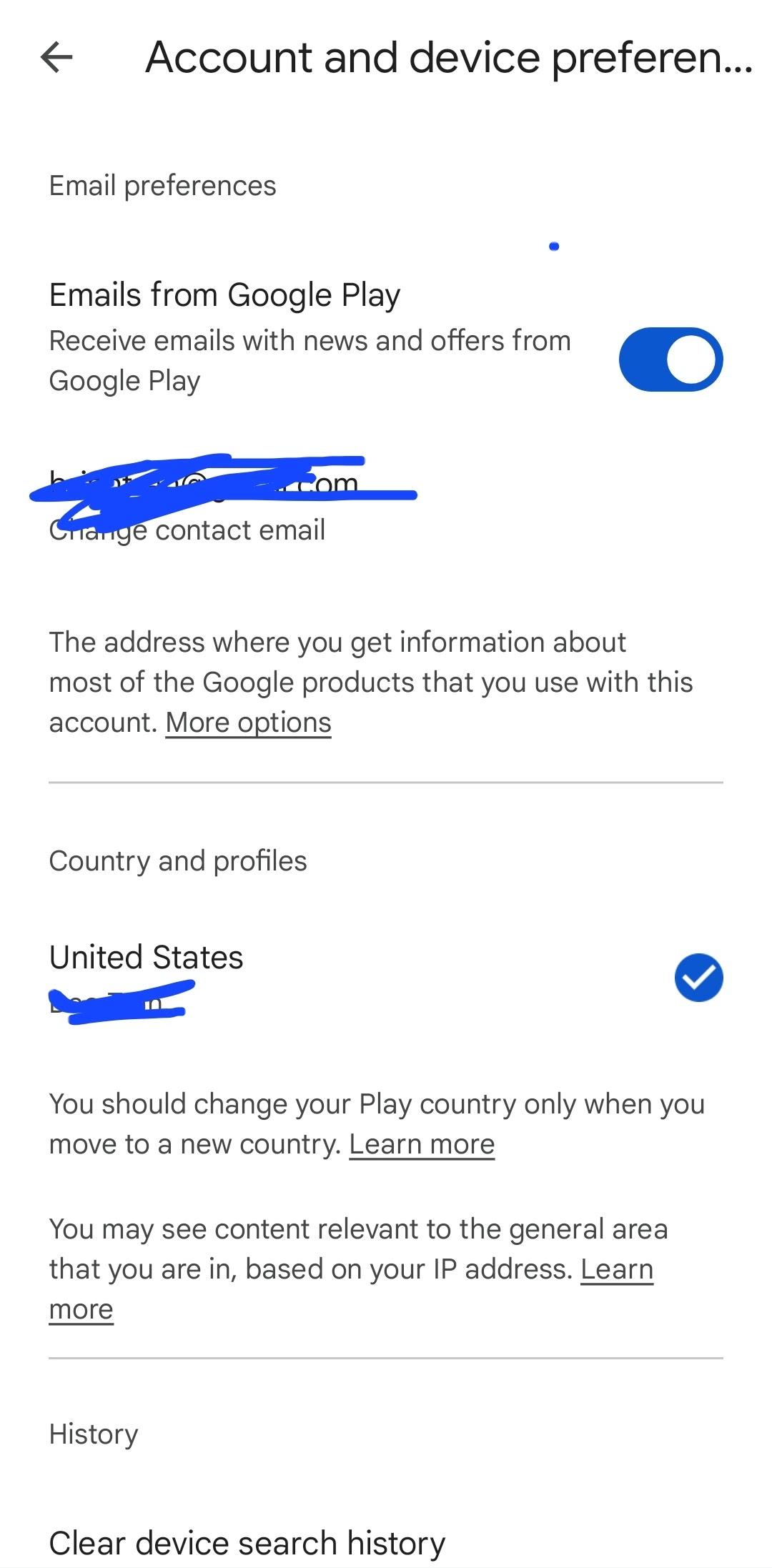
Even if a mobile publisher implements localized regional pricing, accessing those storefronts from abroad triggers strict system barriers. According to Google Play Support, the system prevents arbitrary storefront switching through several technical controls:
- Geographic Presence: You must physically reside within the target country to switch regions.
- Local Payment Methods: Purchases require a valid payment method issued directly inside the target territory.
- 90-Day Cooldown: Accounts are restricted from switching store countries more than once every 90 days.
- Profile Delays: Approved storefront adjustments can take up to 48 hours to propagate across your account profile.
- Family Group Restrictions: Users belonging to a Google Family group cannot change their regional store setting.
- Balance Forfeiture: Existing Google Play balances cannot transfer across different country profiles.
Attempting to bypass these policies creates severe operational risk, including frozen balances or lost store access.
Banking Markups and Foreign Transaction Fees
Even when nominal currency exchange rates appear advantageous on paper, cross-border banking fees quickly consume the margin. Credit card networks and financial institutions charge handling markups whenever transactions clear outside your domestic territory.
| Cost Component | Typical Surcharge Rate | Functional Impact on Top-Up Total |
|---|---|---|---|
| Network Assessment Fee | ~1% | Charged directly by Visa or Mastercard for cross-border processing. |
| Bank Issuer Fee | 0% to 2% | Added by the card issuer on non-domestic currency settlements. |
| Total Foreign Transaction Fee | 1% to 3% | Baseline surcharge applied to overseas store checkouts. |
| Dynamic Currency Conversion (DCC) | 5% to 10% | Processor spread applied when merchant converts to your home currency. |
Source: Cross-border fee data referenced from Aspire and Google Play Help.
According to Aspire, standard foreign transaction fees range from 1% to 3%. Worse, when payment terminals offer to charge your domestic currency via Dynamic Currency Conversion (DCC), merchant processors add spreads between 5% and 10%. A theoretical 6% price advantage in another currency instantly turns into a net loss once overseas banking friction applies.
Target-Matching vs Bulk Denominations
Because regional store hopping introduces platform locks and payment overhead, the most reliable way to optimize your spending is target-matching.
Practical currency efficiency is defined by usable unlocks divided by total money spent. As noted by GPDS Game Shop, purchasing the largest available pack does not guarantee the best deal if it leaves significant unused currency stranded on your account.
A clear example is the seasonal DN Pass. Unlocking the premium DN Pass track requires 9,900 Cash, which grants access across 50+ reward milestones during an update cycle. The 12,800 Cash tier (12000 + 800 Bonus) priced at USD 13.14 on VGTopup's Dragon Nest M Classic catalog covers that 9,900 requirement cleanly with minimal leftover currency.
Match your purchase to immediate in-game targets: grab the smallest denomination that completes your cosmetic set, mount unlock, or pass milestone, and rely on transparent direct checkouts to avoid currency conversion traps.






Comments