

Undawn Global: The Complete Survival, Crafting & Top-Up Guide
Introduction & Quick Facts
Undawn Global is the worldwide release of LightSpeed Studios' ambitious free-to-play open-world survival RPG, published internationally by Level Infinite. Set four years after a catastrophic outbreak transforms most of humanity into infected, the game blends large-scale survival, base-building, vehicle combat, faction warfare, and cooperative raids inside a single Unreal Engine 4 world that scales seamlessly across mobile and PC. It launched globally in June 2023 and remains one of the most feature-dense cross-platform survival games on the market, sitting somewhere between State of Decay, Life After, DayZ, and a traditional MMO.
What separates Undawn from typical zombie shooters is the depth of its life-sim layer. You aren't just shooting; you're managing hunger, hydration, vigor, mood, body temperature, illness, and injury while fortifying a homestead, recruiting NPC companions, joining a Camp (guild), and choosing sides in a multi-faction territorial war. The economy is layered — RC (the premium currency), Survival Coins, Ravens supply packs, Growth Funds, Survival Pass tiers, and limited-time bundle stores all feed into a long-term progression curve that rewards both grinders and topped-up players.
This guide covers everything you actually need: mechanics that matter, traps to avoid, what each currency really does, how to budget your top-ups, faction strategy, base layouts, weapon meta logic, and a hardened FAQ. Everything below is written for the Global server build — feature parity with the Chinese release will differ in some places.
| Field | Detail |
|---|---|
| Title | Undawn (Global) |
| Publisher | Level Infinite |
| Developer | LightSpeed Studios (Tencent Games) |
| Platform | iOS, Android, PC (Steam + standalone client) |
| Region | Global (unified worldwide servers, multiple data centers) |
| Genre | Open-World Survival RPG / Shooter / Base-Building |
| Engine | Unreal Engine 4 |
| Launch | June 15, 2023 |
| Monetization | Free-to-play with in-app purchases |
| Cross-Save / Cross-Play | Yes (account-bound across mobile and PC) |
| Official Website | levelinfinite.com |
What is Undawn Global?
Undawn Global is a persistent open-world survival RPG built around a single principle: the apocalypse is a place you live in, not just a battlefield you visit. The game world spans wildly different biomes — temperate plains around the starter town of Sandbridge, the industrial decay of Mt. Trumpet's mines, swamp regions infested with mutated wildlife, dense urban ruins, deserts, and snowfields, all stitched together with roadways made for vehicle combat. Within those biomes you scavenge, hunt, fish, farm, mine, log, craft, build, fight infected, fight other players in PvP zones, raid bunkers, and grind out faction reputation.
The target audience is wide. Casual survival fans get a forgiving onboarding flow with quest-driven progression, a slow but steady gear curve, and gorgeous mobile-friendly visuals. Hardcore PvE players get challenging raid content like Sky Stones, region bosses, and weekly tiered dungeons. PvPers get organized contested zones, Camp wars, faction territory captures, and ranked arenas. Builders and decorators get a sandbox with over a thousand placeable parts, snap-to-grid construction, and shared Camp builds. Social players get squads, marriage, neighbors, and an entire vendor/economy layer where you can sell crafted goods.
The reason Undawn earned attention at launch — and the reason it still has a loyal global community — is its unusual combination of breadth and fidelity. Few survival games run a real Unreal Engine 4 build on a phone with full guild-versus-guild siege content, a 50+ vehicle catalogue, drone combat, deployable turrets, a dynamic weather system that actually affects your stats, and a crafting tree that goes from sharpening a stone knife to assembling a heavy machine gun. You can play it for fifteen minutes a day for daily rewards, or sink ten hours into a single Camp raid weekend. The publisher Level Infinite treats it as a flagship title, with regular content seasons that add new regions, new weapons, new vehicles, and new endgame mechanics.
Core Gameplay & Features
Undawn is best understood as five overlapping loops stacked on top of each other: a survival loop (stats and environment), an exploration/scavenge loop (world map and resources), a combat loop (PvE and PvP), a crafting/building loop (workbenches and homesteads), and a social/economy loop (Camps, factions, trading). The features below are the ones that actually drive day-to-day decisions.
- Survival stat management. Hunger, hydration, vigor (stamina pool), mood, and body temperature must be maintained. Letting any of them tank inflicts real penalties: reduced damage, reduced sprint, lower carry weight, and eventually HP drain. Mood is the sneaky one — it gates buffs you'd otherwise get from cooked meals and from sleeping in a quality bed.
- Dynamic weather and biomes. Rain soaks clothing and accelerates cold damage. Blizzards in snow biomes can kill an unprepared player faster than zombies. Heatwaves in deserts dehydrate you. Each biome has region-specific gear (insulated jackets, cooling vests, gas masks for toxic zones).
- Scavenging and looting. Every house, warehouse, gas station, factory, military base, and police station has loot tables tiered by region difficulty. High-tier areas drop blueprint fragments, weapon parts, and rare crafting mats. Carry weight is real — overloading drains vigor fast.
- Crafting and workbenches. Workbenches in your base are tier-locked: basic crafting table, advanced bench, weapons workbench, armor workbench, medicine bench, chemistry station, cooking stove, vehicle assembly. Each unlocks at a homestead level, and upgrading them takes both materials and quest progress.
- Homestead base-building. Your homestead is a private plot you can decorate freely. You unlock more area as your Homestead Level rises. Walls, foundations, roofs, fences, doors, windows, electricity (generators and wiring), water pumps, farming plots, animal pens, and decorative furniture stack into a real functioning home.
- Camps (guilds) and Camp territories. Joining a Camp gives you access to the shared Camp HQ, communal workbenches, group buffs, weekly Camp missions, and Camp-versus-Camp territorial battles. High-level Camps own resource nodes that print materials and currency daily.
- Faction system. Four major factions — Clowns, Eagles, Night Owls, and Reivers — fight for control over contested regions. Aligning with one grants exclusive gear, faction-only weapons, and reputation rewards, but locks you out of others.
- Companion NPCs and Raven Squad. Recruitable AI partners join you in missions. The signature Raven Squad storyline includes named characters with branching dialogue and personal questlines that give permanent buffs.
- Vehicles and vehicle combat. Cars, motorcycles, off-road jeeps, armored trucks, dirt bikes, and even helicopters can be assembled from blueprints. Vehicles take fuel, take damage, can be upgraded with armor plates and mounted weapons, and matter enormously in PvP territory pushes.
- Gunplay and gear builds. Real ballistics-influenced shooting with assault rifles, SMGs, shotguns, snipers, DMRs, pistols, bows, and melee tiers. Each gun accepts multiple attachments (sight, magazine, grip, muzzle, stock) and benefits from gear "Combat Power" scores that gate endgame content.
- Drones, turrets, and tactical tools. Deploy auto-turrets to defend bases, recon drones to scout, decoy bombs to distract infected hordes, traps for raids, and stims/medkits to heal.
- Co-op raids and PvE endgame. Daily and weekly instanced content — bunker raids, Sky Stone events, faction operations, and seasonal bosses — drop the best crafting materials and blueprints.
- PvP modes. Open-world contested zones, scheduled Camp wars, arena ranked matches, and event-driven PvP brawls.
- Persistent seasons. Each season delivers a Survival Pass (Free + Premium tracks), themed events, new region or weapon drops, and a story chapter.
Survival depth that actually matters
Undawn punishes neglect more than most mobile survival games. If you sprint through a blizzard in summer clothing for 90 seconds without insulation, you'll start taking HP damage. If you fight through a dungeon without eating, your vigor drains so fast you can't dodge or sprint when the boss phase starts. Cooked food gives flat buffs (e.g., a stir-fried meat dish might give +HP regen, +carry weight, +cold resistance for 30 minutes), and stacking food buffs before raids is meta, not optional.
Crafting depth and blueprint economy
Almost every meaningful item is gated behind a blueprint plus a tier of workbench. Blueprints drop from regional looting, faction quartermasters, raid bosses, and event shops. Some are shardable — you collect 10 fragments to assemble one usable blueprint. The smart play is to identify your two weapon families (e.g., an AR for general PvE and a DMR for ranged PvP) and funnel every modifiable part into those, instead of spreading thin.
Homestead as both home and economy node
Your homestead generates passive income via the Profit Box system (daily collection cap), grows food in plots that feed cooking, holds animals for renewable meat/leather/eggs, and stores everything you own in tier-upgradable storage containers. A high-tier homestead is the difference between scrabbling for materials and printing them.
Camps and the social meta
Joining an active Camp is the single biggest accelerator in the game. Camp shops sell rare materials. Camp facilities (advanced workbenches) let you craft endgame gear before your personal homestead has them. Camp daily checks-ins generate Camp Coins for guild-exclusive store items. And the Camp's territorial standing dictates how much weekly material reward you collect. Solo players will progress; Camp players will progress 3x faster.
Pro Tips & Strategy
Beginner (Days 1–7)
- Finish the main story quest line as fast as possible. It unlocks systems (homestead upgrades, second workbench, vehicle assembly, Camp join, faction selection) that gate everything else. Do not detour into PvP zones until the main path explicitly opens them.
- Claim every daily and weekly reward, every day. Survival Pass XP, Daily Tasks, Weekly Tasks, login rewards, beginner 7-day login, and beginner growth fund all hand out free RC, materials, and gear. Missing any of these in your first two weeks costs you days of progression.
- Pick one primary weapon family and stick with it. Splitting attachment investment across an AR, a sniper, and an SMG in your first week is the most common mistake. Pick one, kit it to combat power threshold, then expand.
- Always carry: water, two cooked meals, bandages, painkillers, a stim, repair kits, and a melee backup. This loadout costs nothing and prevents 90% of dumb deaths.
- Upgrade storage and crafting tables before you upgrade decorations. Pretty homestead is the reward; functional homestead is the engine.
- Build a small, defensible base before a big one. A 4x4 foundation with one door, walls, and a small roof is enough for the first homestead levels. Sprawl later when materials are abundant.
Intermediate (Days 7–30)
- Join an active Camp by day 5–7. Look for Camps that are doing weekly Camp missions and have at least one territory. Dead Camps actively slow you down by eating your "in a Camp" cooldown without giving rewards.
- Choose your faction deliberately. Faction picks are sticky — switching has costs and cooldowns. Read the gear and buff sets each faction offers and pick the one that aligns with your weapon family and playstyle (e.g., heavy PvP players often favor Reivers or Eagles for combat-leaning kits).
- Cook food in bulk during downtime. Set up a cooking station with stockpiled meat and grain, and queue 30+ portions at once. Cooked food never spoils as fast as raw.
- Run weekly raids on reset day. Loot tables refresh, blueprint shards drop most consistently from weekly bosses, and Camp members are most likely to be online to fill groups.
- Treat vigor like mana, not stamina. Don't sprint in town. Save vigor for combat dodges and forced-march escapes from infected swarms or PKers.
- Repair before durability drops below 50%. Repair cost scales nonlinearly the lower durability falls; topping off mid-50s is far cheaper than letting gear go red.
- Stack consumable buffs before contested content. Cooked food + medicine + faction buff + Camp buff is a real multiplier. PvP encounters frequently come down to whether the other side bothered to buff.
Advanced (Day 30+)
- Plan your Survival Pass around its highest-tier rewards. Identify the tier(s) that include weapon skins, Combat Power-relevant attachments, or RC bundles, and grind Pass XP to specifically hit those tiers before season-end.
- Min-max attachments per situation. Keep two saved presets of your main weapon — one tuned for close-range CQB (red dot, suppressor, vertical grip, extended mag) and one for medium range (4x, compensator, angled grip). Swap based on the content.
- Run vehicle convoys for high-tier scavenging. A small Camp convoy with one armored truck and two bikes can clear high-tier loot zones safer and faster than solo runs, and vehicles let you actually carry the loot home.
- Time your top-ups to value events. Double-RC promos, anniversary bundles, and seasonal first-purchase resets give materially more per dollar. Don't burn purchases mid-season on flat-rate packs.
- Track Combat Power thresholds, not gear score vanity. Many endgame raids gate at specific Combat Power values. Crossing a threshold gives more practical benefit than nudging gear score 50 points within the same tier.
Characters, Factions & Roles
Undawn's narrative is anchored by named NPCs — particularly the Raven Squad, the team you join early in the story — and four playable factions that define mid-to-late-game allegiance. Faction picks aren't cosmetic: they unlock exclusive armor sets, faction-only weapons, faction-specific quartermaster shops, and dedicated PvP territories.
| Faction | Identity | Vibe / Best Suited For |
|---|---|---|
| Eagles | Disciplined ex-military remnant focused on order | Players who want structured PvE + organized PvP |
| Clowns | Anarchic raiders, theatrical and aggressive | Aggressive PvPers, chaotic open-world hunters |
| Night Owls | Tech-savvy, intel and electronics specialists | Players who like drones, gadgets, and information warfare |
| Reivers | Heavy combat, brute-force territory takers | Frontline PvP brawlers and Camp war specialists |
Companions and squadmates layer onto faction identity. Story characters in the Raven Squad and adjacent groups have personal quest chains that grant permanent passive bonuses when completed (e.g., increased loot find in a region, increased resistance against a hazard type, or a small Combat Power boost). Prioritize companion missions whose passive rewards align with the content you play most.
Game Modes Deep Dive
Undawn isn't one game; it's at least six modes layered into one client. Understanding which mode is best for what you want is the difference between feeling lost and feeling efficient.
Open World (Sandbridge & beyond)
The default playspace. PvE by default. Scavenge, complete quests, hunt, fish, and roam. This is where main story missions and most side quests live, and where you gather the bulk of routine materials.
Contested Zones
Specific regions are marked PvP-enabled. They contain the highest-tier loot, scheduled events, and resource nodes. Enter with a squad and intent — solo trips frequently end with another squad farming your corpse.
Bunker Raids and Sky Stones
Instanced PvE dungeons of escalating difficulty. Sky Stones in particular are the bread-and-butter weekly content for blueprint shards and high-tier mats. Difficulty scales, and the hardest tiers require coordinated squads.
Camp Territory Wars
Scheduled large-scale PvP between Camps. Camps that own territories defend them; challenger Camps attack on schedule windows. Rewards include weekly resource flow and Camp prestige. Joining an active Camp specifically for these is one of the most fun parts of endgame.
Arena PvP
Smaller-scale ranked PvP, usually team-based, with seasonal ladders and exclusive cosmetic rewards. Less material reward, more bragging rights and skin payoff.
Seasonal Events
Holiday events, anniversary events, crossover events, and limited-time game modes (e.g., wave-defense events, treasure hunts). These typically offer the best per-hour reward rates of the entire season for the time they run.
| Mode | Primary Reward | Group Size | Ideal Frequency |
|---|---|---|---|
| Open World | XP, basic materials, quests | Solo or duo | Daily |
| Contested Zones | Rare materials, PvP gear | Squad (3–5) | 2–3x weekly |
| Bunker / Sky Stones | Blueprint shards, endgame mats | Squad (3–5) | Weekly reset |
| Camp Territory Wars | Camp coin, prestige, RC bundles | Full Camp | Scheduled windows |
| Arena PvP | Ranked rewards, skins | 3v3 / squad | Daily for placement |
| Seasonal Events | Limited cosmetics, event currency | Varies | Until event ends |
Currencies, Packs & Economy
Undawn's economy has several parallel currencies and reward streams. Understanding what each one actually unlocks will save you from misallocating either time or money.
| Currency / Item | What It Is | Best Spent On |
|---|---|---|
| RC (Premium Currency) | Top-up currency, the "real money" tier | First-purchase doublers, Survival Pass Premium, limited bundles |
| Survival Coins | Earned in-game general currency | Routine vendor materials, basic crafting items |
| Camp Coins | Earned via Camp activities | Camp shop exclusives, rare mats |
| Faction Reputation | Earned via faction quests | Faction-exclusive gear and weapons |
| Survival Pass XP | Earned via tasks | Climbing Pass tiers for cumulative rewards |
| Ravens Packs | Bundle of supplies | Material acceleration, gear catch-up |
| Growth Funds | Limited-purchase progression bundles | Long-term value for committed players |
| Blueprint Shards | Earned, can't be bought directly | Assembled into specific weapon/gear blueprints |
Why RC matters more than it looks
RC isn't just "buy cosmetics." It gates Survival Pass Premium (which roughly doubles seasonal rewards), limited weapon skin bundles, accelerated growth funds, and emergency revival/repair when you're in a clutch raid. Spending RC efficiently means concentrating it on multipliers (Pass Premium, growth funds, first-purchase doublers) rather than on flat one-time material bundles.
Growth funds explained
Growth funds are limited-purchase packages that pay out their full value over weeks, not instantly. They're easily the highest-RC-per-reward option for a player committed to a season. If you only top up once, a growth fund usually outperforms an equivalent-RC instant bundle by a wide margin.
Survival Pass tiers
The Free Pass track gives meaningful but limited rewards. The Premium Pass unlocks parallel rewards including RC refunds, premium materials, and frequently a season-exclusive cosmetic or skin set. Players who play daily will almost always net-positive RC by upgrading the Pass and completing it.
Endgame Progression & Long-Term Goals
After the main story, progression shifts from quest-driven to systems-driven. The major endgame loops are: maxing Combat Power, completing all blueprint sets for your weapon families, leveling your homestead and Camp facilities, climbing arena rank, and contesting territory.
Combat Power is the headline number. It's an aggregate of gear, weapon, attachment, and skill investments. Endgame raids gate by CP, and PvP matchmaking weighs it. Crossing the next CP threshold for endgame content matters more than absolute number. Once you've hit the threshold for current content, slow your investment and conserve materials for the next season's gear tier.
Blueprint completion is the longest-tail goal. Some weapon and vehicle blueprints take weeks of focused farming to fully assemble. Pick blueprints that align with your faction and your weapon family — completing one fully is much stronger than 60%-completing five.
Homestead and Camp facility maxing is the most overlooked grind. A maxed homestead with full advanced workbenches lets you craft endgame items independently. A maxed Camp facility set gives a flat group-wide buff. Both compound your per-day output for the rest of the game.
Seasonal resets keep endgame fresh. New seasons introduce new weapon tiers, new regions, sometimes new vehicles or factions, and refresh the cosmetic Pass. Players who treat each season as a 60–90 day project tend to enjoy it more than players who try to "finish" the game.
Top-Up & Recharge
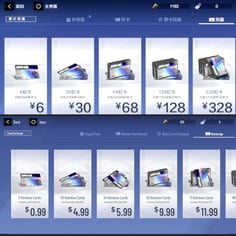
Players who want to accelerate progression top up RC, which is then spent on Survival Pass Premium, growth funds, Ravens packs, limited bundles, and seasonal cosmetic stores. Standard ways to top up include in-app purchase on iOS and Android via the App Store and Google Play, in-client purchase on the PC client, and Steam wallet purchases for the Steam build — pricing and exact bundle availability vary by storefront and by region. Many global players also use third-party top-up portals that deliver RC directly to the account via player ID, which often offers better promotional pricing than first-party stores during events. For convenience, our site offers Undawn Global top-up / recharge delivered straight to your in-game account. If you're planning to spend, time purchases around seasonal events, anniversary windows, or first-purchase doublers — those single moments routinely deliver 30–100% more value per top-up than a flat mid-season purchase.
FAQ
Q: Is Undawn Global free to play? A: Yes. The full game — story, open world, raids, PvP, factions, and Camp content — is free. RC purchases accelerate progression and unlock cosmetics but aren't required to enjoy the core game.
Q: Does Undawn Global support cross-play and cross-save? A: Yes. Your account is tied to your login, and progression carries across iOS, Android, and PC. You can start a session on mobile and continue from PC on the same character.
Q: How big is the install? A: It's a large install for a mobile title — expect several gigabytes initially with additional downloads for region content. PC installs are bigger. Reserve adequate storage before installing.
Q: How important is joining a Camp? A: Very important after the early story. A Camp grants access to advanced communal facilities, weekly group content, and shared territorial rewards. Solo play is viable but markedly slower past the mid-game.
Q: Can I change factions later? A: Faction switching exists but is restricted by cooldowns and may have costs. Choose your faction deliberately — it influences gear, weapons, and contested-zone alignment for the long term.
Q: What's the difference between Survival Coins and RC? A: Survival Coins are earned in-game and used for routine vendor and crafting expenses. RC is the premium currency obtained primarily via top-up and used for Survival Pass Premium, limited bundles, and growth funds.
Q: Is PvP forced? A: No. Most of the open world is PvE by default. PvP is concentrated in contested zones, Camp wars, and ranked arena modes that you opt into. You can play the entire main story without meaningful forced PvP.
Q: What's the best weapon to start with? A: An assault rifle is the most flexible primary for new players — versatile range, manageable recoil, and the most attachment options. Pair it with a shotgun or SMG for indoor encounters.
Q: Are there bots in PvP? A: Some lower-tier and event modes mix in AI opponents for matchmaking smoothness. High-tier ranked and Camp Territory Wars are predominantly real players.
Q: How often does new content release? A: Content cadence is roughly seasonal, with regular intermediate patches adding events, balance changes, and limited bundles. Major content drops bring new regions, weapons, or vehicles.
Q: Will I fall behind if I take a break? A: For a few weeks, no — seasonal resets give returning players a built-in catch-up via new Pass tracks and quest lines. For multiple seasons, expect a gear-tier gap that takes time to close.
Q: Can I trade with other players? A: There are auction/trade mechanisms for certain items and a Camp-internal economy for sharing materials. Some categories of gear are bind-on-pickup and can't be traded.
Verdict
Undawn Global is the rare survival game that delivers genuine depth on every platform it touches. If you want a living world with stat-based survival, real base-building, faction politics, drivable vehicles, and a co-op endgame that scales from solo runs to Camp-versus-Camp territorial wars, it's one of the most complete packages available — and the cross-platform progression means you don't have to pick a device.
It is not a fit for players who want a tight 20-minute battle royale, a purely competitive shooter, or a game with no time investment curve. The depth that rewards committed players is the same depth that overwhelms drop-in casuals; the first week is dense, and joining a Camp matters.
For players who do click with the genre, the long-term value is excellent. Strategic top-ups during seasonal value windows, a chosen faction that fits your playstyle, a focused weapon build, and an active Camp will push your progression far faster than raw playtime alone. Plan your spend, plan your build, and treat each season as a project — Undawn rewards that mindset more than almost any other mobile-and-PC survival hybrid currently running.