

Sword of Justice: The Complete Wuxia MMORPG Guide for Global Players
Introduction & Quick Facts
Sword of Justice is NetEase Games' ambitious global wuxia MMORPG, a sprawling open-world adaptation of Wen Ruian's celebrated novel The Four Great Constables: Sword of Justice. Set against the bustling Song Dynasty backdrop of ancient China, the game weaves a "Pulsing Martial World" inspired by the legendary scroll painting Along the River During the Qingming Festival — a living tapestry of misty peaks, hidden grottoes, riverside markets, and imperial courts. It is one of the few modern MMORPGs designed from the ground up for true cross-platform play across Android, iOS, and PC with a shared progression account.
Unlike traditional class-locked MMOs, Sword of Justice champions a freeform martial arts framework: any character can mix hundreds of skills, allowing tanks to heal, healers to deal devastating burst damage, and every player to forge a personal fighting identity. The game leans into wuxia culture not as decoration but as the spine of its identity — chivalry, lineage feuds, sect intrigue, and the romance of the jianghu underworld are baked into questlines, factions, and even the way combat flows.
This guide is the definitive English-language overview for new and returning players: what the game is, how its systems interlock, how to climb efficiently, where to spend Ornate Jade wisely, and how to top up safely. Whether you are a wuxia veteran from Justice Online and Moonlight Blade, a curious MMORPG fan, or a mobile player seeking PC depth, the sections below will get you up to speed.
| Field | Details |
|---|---|
| Title | Sword of Justice |
| Publisher | NetEase Games |
| Developer | NetEase Games (internal MMORPG studio) |
| Platform | Android, iOS, PC |
| Region | Global |
| Language | English, Arabic, Japanese, Korean, Simplified & Traditional Chinese |
| Genre | Open-World Wuxia MMORPG |
| Premium Currency | Ornate Jade |
| Monetization | Cosmetics, Battle Pass, Convenience (no pay-to-win) |
| Official Website | www.neteasegames.com |
What is Sword of Justice?
Sword of Justice is a wuxia open-world MMORPG that adapts one of China's most beloved martial arts literary franchises into a fully realized online world. The source material — Wen Ruian's Four Great Constables — is a cornerstone of modern wuxia fiction, comparable in cultural weight to Louis Cha's (Jin Yong) works in Chinese-speaking regions. NetEase Games has used this foundation to build a title that is simultaneously faithful to genre tropes (sects, internal energy, dueling codes, righteous outlaws) and modernized for global MMORPG audiences who expect seamless mobile-PC play, accessible onboarding, and fair monetization.
The game is built around the concept of The Pulsing Martial World — a sandbox where the environment itself is a character. Instead of static zones, regions teem with over a hundred life professions: archery contests in plaza squares, street performers reciting opera, calligraphers selling scrolls, fishermen hauling nets at dawn, alchemists brewing pills in mountain huts, and imperial court trials where players act as constables interrogating suspects. This "living world" approach borrows from NetEase's heritage with Justice Online and Yiren Lizhuan, but extends it with AI-influenced NPC behaviors that change reactions based on your reputation, gear, and faction.
Combat sits at the center of the experience. Rather than picking a rigid class like Warrior or Mage, players choose a starting martial school (a thematic kit, like Sword, Saber, Spear, Internal Palm, Bow, or Polearm) and then freely weave in techniques learned from other schools. Skills are unlocked through exploration — finding hidden manuals in caves, defeating wandering masters, completing lineage quests — turning the world itself into a build system. The result is an MMORPG that rewards curiosity as much as grinding.
Who is this game for? Wuxia enthusiasts hungry for an authentic Eastern fantasy world, MMORPG veterans tired of pay-to-win Asian imports, solo-friendly players who want raid-style content via NPC companions, and crossplay fans who want one account to work on the train (mobile) and on the home rig (PC). It is less ideal for players who prefer twitchy action-only experiences with no social or progression depth, or for those who dislike the slower rhythm of MMORPG questing and gathering.
Core Gameplay & Features
Sword of Justice's feature set is dense, and understanding the interaction between systems is the difference between casual enjoyment and long-term mastery. Below are the pillars new players should focus on first.
- Freeform Martial Arts System — Hundreds of skills mixable across schools; no rigid class identity. Builds evolve as you collect manuals.
- Open World "Pulsing Martial World" — Seamless terrain inspired by Song Dynasty China; mountains, rivers, cities, caves, hidden valleys.
- Over 100 Life Professions — Fishing, cooking, alchemy, smithing, archaeology, calligraphy, fortune-telling, music, tea ceremony and more.
- 12-Player Raids (Mirror Sky Pavilion and others) — Mechanics-heavy endgame encounters demanding tank/heal/DPS coordination.
- NPC Companion System — Solo players can clear group dungeons with AI allies that mimic real role play.
- Cross-Platform Crossplay — One account works on Android, iOS, and PC simultaneously with shared inventory and progression.
- Guild Wars & Sect Warfare — Large-scale PvP for territorial control, leaderboard prestige, and sect-exclusive resources.
- "Paths Converge" Fairness System — Casual and hardcore players receive equivalent core power rewards; only cosmetics and prestige diverge.
- AI-Driven Dynamic NPCs — Quest givers and adversaries adapt based on player faction reputation, gear, and prior choices.
- Seasonal Content Cycles — New raids, battle passes, world events, and limited cosmetic lines roughly each season.
- Cinematic Skill Animations — Each technique features distinct visual flourishes (sword winds, qi flares, ink-wash effects).
- Wardrobe & Appearance Customization — Deep character creation; outfits, hairstyles, mounts, weapon skins, and instrument cosmetics.
The Martial Arts Framework In Depth
The most distinguishing feature is how skills work. When you create a character, you pick a primary school — say, Tai Chi Internal Palm — which determines your initial 4-5 active skills, passive stance, and recommended stat priorities (Internal Force, Defense, Recovery). However, within the first ten hours you will already unlock a Second School Slot, letting you slot skills from a completely different discipline. By mid-game, players juggle three school slots and craft hybrid builds: a Sword/Internal-Palm duelist focused on PvP burst, a Saber/Bow ranger built for kiting raid bosses, or a Spear/Polearm frontliner who taunts and self-heals.
Critically, skills have stance synergies. Using an Internal Palm skill while in Sword stance triggers different animations and bonus effects than using it in a defensive stance. Mastering when to swap stances mid-combo is the high-skill ceiling of Sword of Justice's combat, and is what separates leaderboard PvPers from casual duelists.
Exploration as Progression
In most MMORPGs, exploration is decorative. In Sword of Justice, it is the progression system. Walking through a misty bamboo grove may reveal a hermit who teaches a forgotten saber technique only if you bring him three rare wine vintages. A waterfall might hide an underwater cavern with a manual fragment. A Qingming Festival vendor might trigger a multi-step questline that ends in a unique mount. Players who ignore exploration in favor of pure questline grinding will hit power ceilings far earlier than those who roam.
Combat Roles & Flexibility
Even without rigid classes, parties still benefit from clear role coverage in dungeons and raids:
| Role | Common School Bases | Key Responsibility |
|---|---|---|
| Main Tank | Polearm, Spear, Heavy Saber | Aggro management, mechanic soaking, positioning |
| Off-Tank / Bruiser | Saber, Internal Palm | Add control, mini-boss splits, taunt rotations |
| Burst DPS | Sword, Dual Blade | High single-target damage, executes |
| Sustained DPS | Bow, Throwing Weapons | Ranged consistency, mechanic safety |
| AoE DPS | Fan, Flute, Spell-Sword | Trash clear, raid-wide cleave windows |
| Main Healer | Medicinal Palm, Qin (Zither) | Group sustain, dispels |
| Support / Buffer | Music, Tea Master, Calligrapher | Buff uptime, crowd control, debuff cleansing |
The beauty of the freeform system is that one player can fill multiple roles across a week of content by simply re-slotting skills and reforging gear stat priorities — no need to level alts.
Raids & Group Content
Endgame revolves around 12-player raids. Mirror Sky Pavilion is the flagship encounter, a vertically stacked pagoda where each floor has its own boss, mechanic theme, and environmental hazard. Other raids rotate seasonally, ranging from 6-player heroic dungeons to massive 40-player guild siege events. Loot is tiered: weekly lockouts grant guaranteed core progression items (gear pieces, mat caches) under the Paths Converge system, while bonus rolls and rare drops favor active raiders.
Crossplay & Account Sync
One NetEase account ties together your Android, iOS, and PC progress. Inventory, currency, friends list, mail, and character cosmetics sync in real time. You can quest on mobile during a commute, then resume the same dungeon run from your desktop. Input differences are handled cleanly: PC supports keyboard and mouse with action-camera mode, mobile uses virtual joystick with skill-wheel UI, and controller support works across all three platforms.
Pro Tips & Strategy
Beginner Tips (Levels 1–30)
- Don't rush the main quest. The first 20 levels of side content teach the world's economic loops (gathering, crafting, profession unlocks). Skipping them leaves you weak in mid-game crafting.
- Pick a school you enjoy visually, not "meta." All schools are viable. The freeform system means you'll multiclass anyway by level 25.
- Always carry food and pills. Buffs from cooked dishes and brewed pills stack with skill effects and are mandatory in dungeons by level 20.
- Join a guild before level 25. Guild buffs, shared crafting stations, and weekly chest contributions multiply your progression speed.
- Talk to every named NPC twice. Many lineage questlines only trigger on a second dialogue after a reputation threshold.
- Spend daily energy on profession dailies first. Combat XP is plentiful; profession XP gates the best gear recipes.
Intermediate Tips (Levels 30–60)
- Build two loadouts: PvE and PvP. Save them in the Stance Manager. Switching mid-zone is free.
- Refine gear, don't replace it constantly. Reforging existing gear with mats is cheaper and more potent than chasing every drop.
- Run heroic dungeons in premade groups, not random queues. Random queues waste consumables on undergeared parties.
- Use NPC companions intelligently. Solo dungeons let you choose companion archetypes — pair yourself as DPS with a tank + healer NPC for safest clears.
- Track world boss spawn timers. Most world bosses follow predictable 4-6 hour windows; community-tracked spreadsheets exist in major guilds.
- Save Ornate Jade for the seasonal battle pass and limited wardrobe drops — not for daily convenience boosts.
Advanced Tips (Endgame)
- Optimize stance-swap rotations. The top damage rotations involve weaving 2-3 stances per combat opener; practice on training dummies.
- Master the dispel meta in raids. Mirror Sky Pavilion's floor 7+ bosses require chained dispels; assign roles before pulling.
- Maintain at least two crafting professions at endgame cap — one combat (smithing or alchemy) and one utility (cooking or tailoring) for self-sufficiency.
- Use the Paths Converge system to your advantage — once weekly core caps are hit, swap to exploration or PvP for prestige rewards instead of grinding more PvE.
- In Guild Wars, prioritize crowd control over raw DPS. Sword of Justice's PvP rewards lockdown chains more than burst.
- Watch the AI-NPC reputation board. High reputation with certain factions unlocks endgame manuals locked behind reputation gates — these are some of the best skills in the game.
Characters, Factions & Schools
Sword of Justice draws characters directly from the Four Great Constables mythos and expands the cast significantly. Below are the most prominent figures and factions players encounter.
The Four Great Constables
- Cold-Blood (Leng Xueyi / Lěng Xuè) — The silent swordsman, embodiment of icy precision. Players following Cold-Blood's lineage gain access to high-burst sword techniques and bleed effects.
- Iron-Hands (Tie Youxia) — The grappler and unarmed master; his manuals favor tanks and bruisers with high defense scaling.
- Chaser (Zhui Ming) — The fastest of the four, master of light-step and pursuit techniques. His lineage produces evasive duelists.
- Heartless (Wuqing) — Wheelchair-bound genius, master of hidden weapons and internal energy. His manuals are coveted by ranged DPS and support builds.
Major Factions
- The Six and Half Hall (Liu Fu Ban Tang) — The constables' organization; the player's default lawful faction.
- The Imperial Court — A complicated ally; offers prestige quests but conflicts with several jianghu sects.
- Wandering Sects (multiple) — Wudang, Shaolin-inspired temples, Tang Sect (poison and hidden weapons), Emei (medicinal arts), and Beggar's Clan.
- Outlaw Brotherhoods — Rebel factions offering grey-morality questlines and unique outlaw-only manuals.
Faction reputation is dynamic: gaining favor with outlaws can cost you imperial standing, locking specific quests behind your alignment. Many veteran players run two characters specifically to experience both moral paths.
Game Modes Deep Dive
Sword of Justice offers a rich variety of content modes, each catering to different play preferences and time investments.
| Mode | Group Size | Time Per Run | Best For |
|---|---|---|---|
| Main Story Quests | Solo | 20–60 min/chapter | Lore, baseline progression |
| Heroic Dungeons | 5 players | 20–40 min | Gear farming, weekly caps |
| Mirror Sky Pavilion Raid | 12 players | 60–120 min | Endgame BiS gear, prestige |
| World Bosses | Open / 20+ | 5–15 min | Materials, rare manuals |
| Guild Siege | 40v40 | 30–60 min | Faction prestige, territory perks |
| Arena Duels | 1v1, 3v3 | 5–10 min | PvP rating, exclusive cosmetics |
| Profession Events | Solo/Open | Variable | Profession XP, cosmetics |
| Seasonal World Events | Open | Multi-day | Battle pass XP, limited items |
| NPC Companion Dungeons | Solo + AI | 15–30 min | Solo progression, learning fights |
| Archaeology Expeditions | Solo/Duo | 30–60 min | Lost manuals, rare cosmetics |
Solo-Friendly Design
A major design pillar is that solo players are not second-class citizens. The NPC Companion System lets you fill missing roles with AI characters tuned to mimic real player behavior — tanks taunt, healers prioritize tank health, DPS focus the right targets, and supports apply dispels. This means a player without a guild or schedule for group play can still progress through 90% of the content, including the majority of dungeons. Only the largest raids and guild siege modes require human coordination.
PvP Ecosystem
PvP exists on multiple layers. Casual open-world PvP zones allow consensual dueling and bounty hunting. Ranked Arena offers 1v1 and 3v3 ladders with seasonal rewards. Guild Siege is the headline PvP mode, where guilds compete for control of strategic locations granting passive resource bonuses, exclusive merchant access, and bragging rights on server leaderboards. The Paths Converge system ensures that PvP-focused players can earn power-equivalent rewards to PvE raiders, removing the typical MMORPG problem where one playstyle locks you out of progression.
Editions, Currency & Progression Economy
Understanding the in-game economy is essential to spending efficiently. Sword of Justice uses a multi-currency system layered on top of Ornate Jade, the premium currency.
| Currency | Source | Primary Use |
|---|---|---|
| Ornate Jade | Top-up / Premium | Cosmetics, battle pass, convenience |
| Silver Taels | Quests, vendors, loot | Crafting, repairs, basic vendors |
| Gold Ingots | Dungeons, raids, events | Mid-tier upgrades, gear refinement |
| Reputation Tokens | Faction quests | Faction-exclusive manuals, mounts |
| Honor Points | PvP modes | PvP cosmetics, ranked rewards |
| Guild Contribution | Guild activities | Guild shop, sect tech upgrades |
| Profession Marks | Life professions | Recipes, profession-only cosmetics |
| Seasonal Tokens | Battle pass / events | Limited seasonal items |
Ornate Jade — What It's For
Ornate Jade is the premium currency used for cosmetic unlocks, battle pass tiers, wardrobe outfits, mount skins, weapon appearances, name change services, character re-customization, and accelerated crafting timers. Critically, it does not buy raw combat power. There is no "pay X Jade for stat boost" mechanic in core gear. This aligns with NetEase Games' stated commitment to fairness — a stance you can verify on the publisher's portal at neteasegames.com. Convenience purchases (inventory expansions, fast travel passes, profession boosters) exist but never bottleneck progression.
Battle Pass Structure
Each season runs roughly 8-10 weeks. The free track offers materials, silver, and a basic cosmetic. The premium track (unlocked with Ornate Jade) layers on exclusive outfits, mount skins, weapon appearances, Ornate Jade rebates, and a seasonal title. Most players who care about cosmetics find the premium pass to be the single best Ornate Jade investment in the game.
Progression Phases
- Early Game (Lv 1–30): Story-driven; complete the main quest and unlock professions.
- Mid Game (Lv 30–60): Multiclass into a second school, join a serious guild, begin heroic dungeons.
- Late Game (Lv 60–cap): Mirror Sky Pavilion progression, Guild Siege participation, rare manual hunting.
- Endgame (post-cap): Seasonal rotations, leaderboard chasing, full BiS optimization, prestige cosmetics.
Top-Up & Recharge
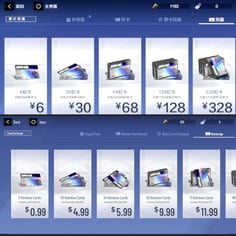
Players top up Ornate Jade through the in-game store on whichever platform they primarily use — the iOS App Store via Apple ID balance, Google Play on Android, or the PC client's built-in payment portal linked to a NetEase account. Because progression syncs across all three platforms, Ornate Jade purchased on any one device is instantly available on the others. Many global players also use third-party top-up portals to access regional pricing, payment methods (local wallets, cards, vouchers) not supported by Apple or Google, or simply to avoid storefront fees that reduce effective Jade-per-dollar.
When choosing where to recharge, prioritize portals that deliver directly to your bound NetEase ID, confirm Ornate Jade quantities clearly, and provide customer service in your language. Bonus Jade promotions are typical on first-time purchases and during seasonal events, so timing larger top-ups around the start of a new battle pass is usually the best value.
Our site offers fast and reliable Sword of Justice top-up and recharge for Ornate Jade across all supported regions.
FAQ
Q: Is Sword of Justice pay-to-win? A: No. Ornate Jade purchases focus on cosmetics, the battle pass, and quality-of-life conveniences. Combat power gear is earned through gameplay, and the Paths Converge system ensures casual players reach the same core power ceiling as whales.
Q: Can I play solo or do I need a guild? A: You can play 90% of content solo thanks to the NPC Companion System. Only 12-player raids and large-scale Guild Siege require human teammates. Joining a guild still accelerates progression significantly through shared buffs and crafting.
Q: Does my progress carry across Android, iOS, and PC? A: Yes. One NetEase account syncs character, inventory, Ornate Jade, and progression in real time across all three platforms. You can switch devices mid-session.
Q: What language support is available? A: The global release supports English, Arabic, Japanese, Korean, Simplified Chinese, and Traditional Chinese, with localized voice acting available for major regions.
Q: How do I unlock skills from other schools? A: Exploration and lineage quests are the main paths. Wandering masters teach techniques in exchange for materials or quests, hidden manuals appear in caves and ruins, and faction reputation unlocks restricted manuals at vendors.
Q: What is the best school for beginners? A: Sword (balanced DPS) and Internal Palm (sustain hybrid) are the most forgiving starts. Spear and Polearm are excellent for players who enjoy tanking. All schools are endgame-viable.
Q: How often does new content arrive? A: Seasonal cycles of roughly 8-10 weeks introduce a new battle pass, world event, and typically a new raid or major dungeon. Smaller patches between seasons add cosmetics and quality-of-life updates.
Q: Is there controller support on PC? A: Yes. Sword of Justice supports controllers on all three platforms, and the UI auto-adapts to your active input device.
Q: Can I change my character's appearance or school later? A: Yes. Appearance can be re-customized with an Ornate Jade service. Schools are not "locked" — since the system is freeform, you can re-slot to a different primary school without rerolling, though you may need to grind new skill manuals for the new combat identity.
Q: How does crossplay matchmaking work for PvP? A: Crossplay PvP is enabled by default but mobile players can opt into mobile-only queues for ranked Arena to ensure input parity. Open-world PvP and Guild Siege always use full crossplay.
Q: Is the game free-to-play? A: Yes, Sword of Justice is free to download and play on all three platforms. Monetization is entirely optional through Ornate Jade.
Q: Where can I find official news and updates? A: The publisher hub at neteasegames.com is the primary official source for announcements, patch notes, and event schedules.
Verdict
Sword of Justice is one of the most ambitious wuxia MMORPGs ever released for a global audience, and the strongest argument NetEase Games has made for the genre on mobile and PC simultaneously. Its freeform martial arts framework rewards experimentation in a way that rigid class systems never can. Its open world is genuinely worth exploring rather than just traversing. Its fairness model — Paths Converge plus a no-pay-to-win monetization stance — is rare in Asian MMORPG releases and makes it sustainable for players who refuse to spend on power.
You should play Sword of Justice if you love wuxia atmosphere, deep MMORPG progression, social systems with both solo-friendly and group-rich content, and you want one character to follow you from phone to desktop without compromise. You should also enjoy it if you are a returning MMO fan who has been burned by pay-to-win imports — this is the rare title where spending nothing keeps you fully competitive.
You should probably skip it if you dislike MMORPG pacing, prefer pure action games with no progression grind, or have no interest in Eastern fantasy themes. It is also not the right title for players who refuse to engage with social systems at all — while solo content is robust, the best of Sword of Justice (Mirror Sky Pavilion raids, Guild Siege, sect rivalries) shines brightest with other people.
For everyone else — wuxia fans, MMORPG veterans, crossplay enthusiasts — Sword of Justice is a landmark release that will likely define NetEase Games' global MMORPG strategy for years to come. Grab your blade, pick a school, step into the Pulsing Martial World, and let the jianghu decide what kind of hero you become.