

Once Human: The Complete Guide to Starry Studio's Post-Apocalyptic Survival Sandbox
Introduction & Quick Facts
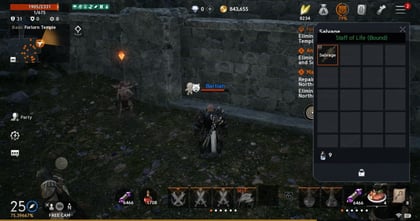
Once Human is a free-to-play, third-person open-world survival game developed by Starry Studio, a subsidiary of NetEase. Set on an Earth corrupted by an alien substance called Stardust, the game blends shooter-style PvE and PvP combat with deep base-building, monster taming, and a cosmic-horror narrative. Players take the role of Meta-Humans — survivors mutated by Stardust who are immune to its worst effects — and venture into contaminated zones to scavenge, fight twisted Deviated entities, and rebuild a fragmented world.
Unlike traditional survival titles where wipes feel punishing, Once Human is structured around timed Scenarios — themed server lifecycles lasting several weeks that conclude with character and account-bound rewards being carried into the next run. The result is a survival sandbox that rewards seasonal commitment without trapping players in eternal grinds. Since its July 2024 PC launch, it has expanded to iOS and Android with full cross-progression, and the 2025 introduction of custom private servers has opened the door for community-run leagues and roleplay worlds.
This guide condenses everything you need to know about Once Human — what it is, how it plays, advanced strategy, the in-game economy, and how recharge works through reputable channels.
| Field | Detail |
|---|---|
| Title | Once Human |
| Publisher | Starry Studio (NetEase) |
| Developer | Starry Studio |
| Platform | PC (Steam), iOS, Android |
| Region | Global |
| Genre | Open-World Survival, Third-Person Shooter, Base-Building |
| Business Model | Free-to-Play with cosmetic Battle Pass and premium currency (Crystgin / Starchrom shop) |
| Languages | English, Chinese (Simplified/Traditional), Japanese, Korean, Arabic |
| Official Website | www.oncehuman.game |
What is Once Human?
Once Human is best described as a hybrid between a hardcore survival sim (Rust, Ark) and a looter-shooter (The Division, Remnant), wrapped in a Lovecraftian post-apocalyptic skin reminiscent of SCP Foundation lore. The premise: a meteor strike unleashed Stardust, a sentient pollutant that warps biology, geometry, and reality itself. Most of humanity was twisted into Deviants — grotesque monsters ranging from headless executioners to flesh-tank hybrids fused with construction equipment. The few who adapted became Meta-Humans, who can absorb Stardust energy to power weapons, abilities, and the genetic skill tree that defines builds.
The game targets two overlapping audiences. The first is the survival-crafting crowd that loves laying down a foundation, hammering up walls, decorating a homestead, and watching it grow into a fortified compound. The second is the cooperative shooter audience that wants meaningful PvE bosses, dungeon-style instances, raid-tier mechanics, and a build-craft theorycraft loop driven by weapon mods, gear sets, and skill synergies. Once Human serves both, and the genius of its design is that the two loops feed each other — resources gathered while exploring feed the base, and the base produces consumables, ammo, and crafting outputs that enable harder content.
For players who care about narrative, Once Human delivers an atmosphere far stronger than its peers. Wandering into a Silo and finding journal logs about failed experiments, witnessing rifts where physics breaks down, or encountering the iconic "Pile of Smiling Corpses" — a tower of human bodies welded together that drags itself forward — creates moments rare in the survival genre. The world is unsettling rather than zombie-cliché, and its weirdness is a deliberate selling point.
For players who care about monetization fairness, Once Human is notably non-pay-to-win in core combat. Weapons, armor, blueprints, and meaningful gear cannot be bought with real money. The shop sells cosmetics, the Season Pass, furniture sets, weapon skins, and quality-of-life conveniences such as extra mail slots or quicker storage. This positioning has made it one of the more well-regarded free-to-play survival titles on the market.
Core Gameplay / Features
Once Human's mechanical depth is broader than most newcomers expect. Here are the systems that matter most:
- Stardust-Powered Combat: Third-person shooter combat with handguns, SMGs, ARs, shotguns, snipers, LMGs, bows, and crossbows, each accepting calibration mods and elemental status effects (Burn, Shrapnel, Bounce, Frost Vortex, Power Surge, Unstable Bomber).
- Memetics Skill Tree: A modular ability system unlocked via Mementos and Cipher Codes from missions and exploration. Memetic specializations (Crafting, Combat, Logistics, Construction) let you slot perks like Deviation Acceleration, Stronghold Buffs, or boosted scavenge yields.
- Deviants: Capturable mini-monsters used for base utility (cooking, electricity generation, mood boosting, water purification) or combat support (drone-like attackers, healers, debuffers). Each Deviant has a Sanity stat that drops if mistreated, mirroring a Tamagotchi-style upkeep loop.
- Base Building: Grid-snapped construction with foundations, walls, ramps, roofs, defensive turrets, generators, crafting stations, and an extensive furniture catalog. Bases generate Territory Score, which gates access to advanced recipes and certain quests.
- Scenarios: Timed server lifecycles (usually 6 weeks per phase) such as Manibus (default), Way of Winter (icy biome expansion), Evolution's Call, Visions of Spring, Lunar Oracle, and Prismverse's Clash. Each Scenario has unique modifiers, bosses, and end-of-season rewards.
- Eternaland: A persistent personal pocket dimension where players store high-value loot, Deviants, and decorative bases across Scenarios. Items must be converted to Sproutlets using dust to be deposited.
- Strongholds & Silos: Strongholds are open-world fortified PvE zones with multi-stage objectives and rift anchors yielding endgame loot. Silos are instanced dungeons scaled by difficulty (Easy through Hard / Elite Prime) for repeatable grinding.
- Monolith Bosses: Open-world world bosses, including Treant, Forsaken Giant, The Ravenous Hunter, and Gulping Goliath. Defeating them on Hard mode drops the only sources of certain blueprints.
- PvP Zones & PvP Scenarios: Optional PvP servers and dedicated PvP Scenarios like Prismverse's Clash include base raiding, territorial control, and faction warfare. PvE servers exist for players who prefer a non-hostile experience.
- Sanity, Hunger, Thirst: Survival meters that all affect performance. Sanity drains in rift zones and from horror events, eventually causing visual distortions and HP penalties if ignored.
- Cross-Platform Play: Full cross-progression between Steam PC, iOS, and Android. A controller-friendly mobile UI keeps parity with PC.
- Custom Servers: Rentable private worlds (introduced 2025) with adjustable rules — loot rates, decay timers, raid hours, PvP toggles — enabling small communities and clans to host their own persistent worlds.
Deviants in Depth
Deviants are the system most likely to hook newcomers. They are captured by completing rift events or specific quests, then assigned to either combat slots (carried in your hotbar) or base slots (placed in special containment modules). Combat Deviants include Festering Gel (sticky AoE puddle), Wonder's Whimsy (random buff cube), Polar Claw (frost vortex pet), Magnetic Hill (gravity well), and Shrapnel Blast (proximity explosion). Base Deviants include Butter & Sweet (a sentient stick of butter that cooks meals while raising mood), Lonewolf (electrical generator that hates being near other Deviants), Security Chief (auto-aiming turret guardian), and Dr. Endless (a literal floating brain that produces medical supplies). Mistreating a Deviant — placing them next to incompatible neighbors, leaving them without entertainment, or skipping their hunger needs — drops their Sanity to zero, at which point they "go feral" and either escape or actively damage your base. Mastering Deviant placement is one of the early skill-checks that separates casual from invested players.
The Weapon System
Weapons in Once Human are defined by three layers: the weapon model itself (fixed base stats and rarity), the calibration mods (slot-in attachments that grant percent buffs), and the gear set bonuses worn on your armor that pair with specific damage types. A Doomsayer-set Bingo AR build, for instance, stacks Bounce damage and Crit chance; a Shelterer-set Predator LMG build emphasizes burn-tick stacking; a Lone Wolf snipe build runs The Last Valor for headshot one-shots on Elites. Weapon mods drop from Silos, Securement Silos, Monolith bosses, and weekly purifications. Min-maxing a build typically requires running the same Silo difficulty repeatedly to roll a desired mod combination.
Base Building & Territory
Bases live inside Territory plots — large rectangular zones you claim by placing a Foundation. Territory size and decoration count contribute to a Territory Score; hitting score thresholds unlocks higher-tier crafting recipes (you literally cannot craft a Coal Generator without enough Territory Score). This forces players to actually build properly furnished, structurally sound bases instead of one-room boxes. Bases also need power management — solar panels for daytime, coal/oil generators for night, and battery banks to bridge gaps — and water systems if you want indoor sinks, plumbing, and certain crafting stations. A high-end base looks more like a livable home than a survival shed, and the game rewards that aesthetic effort with real mechanical benefits.
Scenarios & Phases
Each Scenario unfolds in roughly six phases, with new map regions, recipes, and boss tiers unlocking weekly. The first phase teaches basics; phases two through four expand the Memetics tree and add elite content; phases five and six unlock endgame Hard-mode Silos and Monolith encounters. At the end of the cycle, characters return to a hub, transfer specific account-bound items into Eternaland, and start fresh in a new Scenario. This rhythm prevents power creep stagnation and ensures returning players always have a clear entry point.
Pro Tips & Strategy
Beginner (Phase 1, First Week)
- Pick a Memetic specialization early and commit. Spreading Mementos across all four trees produces a weak build. Pick Combat or Crafting first; you can respec later but the early-game ramp is steepest if you scatter points.
- Always loot every cardboard box, fridge, and toolbox in towns. Logistics-tier loot like Acid, Copper Ingots, and Tungsten Bars come from these mundane containers, not from monster drops.
- Place your first base near a roadside fast-travel point with water access and proximity to a low-level Securement Silo. Real estate matters — moving a base later costs significant Energy Links.
- Capture Butter & Sweet ASAP for free meals at your base. Place it next to a stove (not on it) and keep a Soothing Tea or Stuffed Toy nearby to keep its mood positive.
- Don't sleep on bows. The starter bow with crit mods will outperform most pistols at low Tier, and arrows are infinitely craftable from scrap wood.
- Always complete the weekly Purification Activity (the public-event boss tied to each Scenario phase). It awards Mod Crates that are nearly impossible to farm efficiently elsewhere.
Intermediate (Phases 2–4)
- Lock in a damage type before you craft endgame mods. Switching from Bounce to Burn mid-progression wastes Stellar Planula and Energy Links. The most beginner-friendly endgame builds are Bounce/Power Surge (Bingo AR) and Shrapnel (KAM/Predator).
- Run Securement Silo Phi at Hard difficulty for weapon mods, Theta for armor mods. Each silo specializes — memorize the loot table instead of farming randomly.
- Form a Hive (clan) for Strongholds. Stronghold runs are designed for 4–6 players and significantly increase blueprint drop rates with full parties.
- Use Cradle's storage upgrades as your first big Energy Link investment. Storage is the bottleneck of mid-game; without expanded chests you'll waste hours managing inventory.
- Don't ignore the Memetics "Acquisition" sub-tree. Perks like Logistics Heaven and Loot Splitter dramatically increase scavenging yields, paying for themselves within days.
- Cook gourmet meals, not basic food. A Roast Berry Salad gives 60+ minutes of crit and stamina buffs versus 10 minutes from grilled meat. Cooking is one of the biggest underused power multipliers.
Advanced (Phases 5–6 & Endgame)
- Plan for the Scenario Reset. Convert any high-value gear and decorations to Sproutlets before the cycle ends. Anything left in your base storage is destroyed when the season closes.
- Min-max gear set bonuses by mixing. Wearing 4-piece Doomsayer + 2-piece Sanguine Surge gives a stronger crit-Bounce setup than full 6-piece Doomsayer in most damage profiles.
- Stockpile Stardust Source. It's the final-tier currency for top-tier mod rerolls. Save runs of Monolith Hard for the week before a build pivot.
- In PvP Scenarios, build vertical rather than horizontal. Tall, narrow bases with internal kill-funnels survive raids much better than sprawling layouts. Place generators in interior sealed rooms with redundant doors.
- Don't waste Cortex (the respec currency) on cosmetic build changes. Save it for Scenario phase transitions when new memetics unlock and meta shifts occur.
- Master the Deviant rotation in Strongholds. Festering Gel + Polar Claw + Wonder's Whimsy in a single rotation can solo-clear mid-tier Strongholds if timed with weapon ultimates.
Editions, Currencies & In-Game Economy
Once Human is fully free-to-play with no entry price on any platform. All monetization runs through the in-game shop. Understanding the currency layers is essential before spending:
| Currency | Source | Primary Use |
|---|---|---|
| Crystgin | Real-money top-up | Battle Pass, exclusive cosmetics, weapon/vehicle skins, furniture sets, premium quality-of-life items |
| Starchrom | Gameplay (missions, weekly caps, events) | Wish Machine spins for weapon and outfit blueprints |
| Mitsuko's Mark | Event activities | Limited-time blueprints and seasonal cosmetics |
| Energy Links | Daily play, scrapping, vendor sales | Crafting blueprints, base upgrades, weapon assembly |
| Stellar Planula | Hard-mode bosses, Silos | Weapon mod tuning, calibration rerolls |
| Mod Boxes | Silos, Strongholds | Random weapon/armor mods |
| Eternaland Crystals | Sproutlet conversion | Eternaland decoration and pocket-dimension upgrades |
The Battle Pass (called the "Season Pass") rotates with each Scenario phase or major season. It includes both free and premium tracks, with the premium track delivering exclusive outfits, weapon skins, building parts, and Starchrom bonuses. Crystgin can also be spent directly on individual cosmetics in the shop, on furniture bundles, and on time-limited rotating banners that feature specific weapon-skin sets.
It's worth emphasizing again: nothing in the cash shop alters weapon damage, armor stats, or progression speed in a meaningful pay-to-win way. The most "advantageous" purchases are storage expansions and mail capacity — useful, but far from game-breaking.
Scenarios at a Glance
| Scenario | Theme | Length per Phase | Notable Mechanics |
|---|---|---|---|
| Manibus | Default Stardust outbreak storyline | 6 weeks | Baseline Deviants, standard tech tree, beginner-friendly |
| The Way of Winter | Icy northern biome expansion | 6 weeks | Cold management, Frostbite mechanic, Snowfield bosses |
| Evolution's Call | Mutation-focused, biological horror | 6 weeks | Mutated wildlife, enhanced Deviant evolution paths |
| Visions of Spring | Cherry-blossom seasonal variant | 6 weeks | Renewal events, flower-themed cosmetics |
| Lunar Oracle | Mystic / occult Scenario | 6 weeks | Ritual mechanics, lunar phase buffs |
| Prismverse's Clash | Hardcore PvP-focused | 6 weeks | Open base raiding, territorial faction warfare |
Choosing the right Scenario matters. Newcomers should start with Manibus or Visions of Spring for the gentlest learning curve. PvP-curious players should commit fully to Prismverse rather than dipping into it casually — base raids are unforgiving. Veterans seeking maximum loot density usually rotate into Evolution's Call or Way of Winter for their stronger endgame mod pools.
Top-Up & Recharge
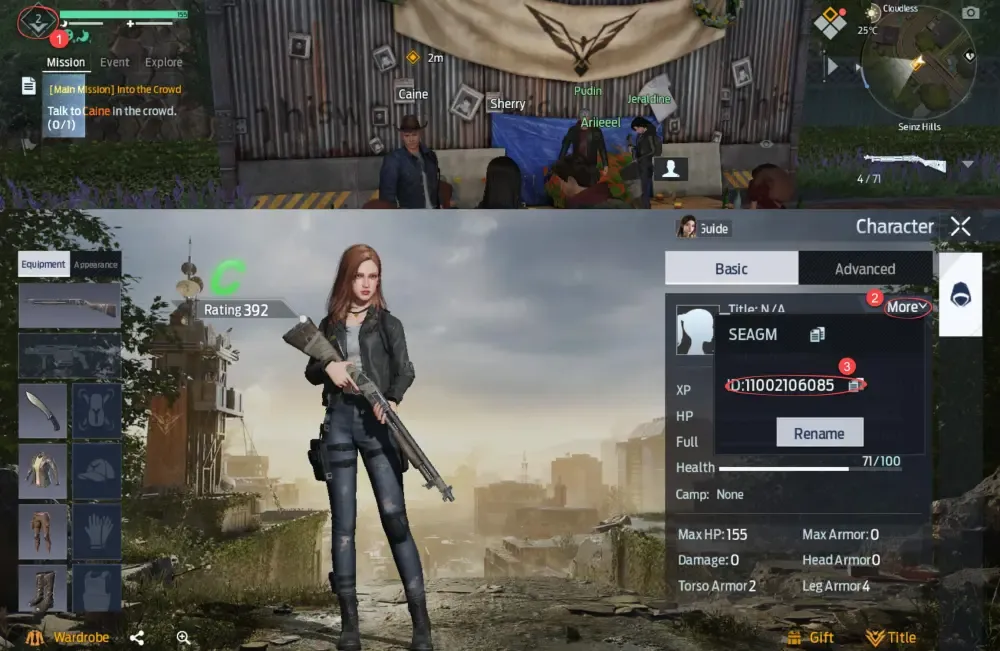
Once Human's premium currency, Crystgin, is purchased through official channels: the in-game store on PC (via Steam Wallet or direct billing), the App Store (iOS in-app purchase), and Google Play (Android in-app purchase). Some regions also support direct top-up via the official website using a player UID. Standard Crystgin packs range from small starter bundles to large value packs, with first-time-purchase bonuses doubling the initial yield on each pack tier. For players who prefer faster, region-flexible recharge without platform fees, our site offers Once Human top-up using your in-game UID. Always verify your UID before submitting a recharge order, and keep receipts in case of customer-service disputes — these are standard precautions for any mobile or hybrid free-to-play game.
FAQ
Q: Is Once Human really free-to-play? Yes. There is no purchase cost on Steam, iOS, or Android. The game monetizes entirely through cosmetic Battle Passes, outfit skins, weapon skins, furniture, and convenience items. Core weapons, armor, and gear cannot be bought with real money.
Q: Is Once Human pay-to-win? No, not in any meaningful combat or progression sense. Real-money purchases do not boost weapon damage or character power. The closest "advantage" purchases are extra storage and mail slots, which save time but do not change combat outcomes.
Q: Does Once Human support cross-progression? Yes. A single account links across PC (Steam), iOS, and Android. You can start a Scenario on PC and continue it from your phone the same day. Cross-play between PC and mobile is enabled by default in most Scenarios.
Q: How long is a Scenario? A full Scenario typically runs about six weeks of phase-gated content, after which characters return to a hub, transfer eligible items to Eternaland, and roll into a new Scenario. Exact phase pacing varies slightly per Scenario.
Q: Will my base be deleted when a Scenario ends? Yes — the world resets at Scenario end. However, you keep your account-level progress, blueprints unlocked, and items deposited into Eternaland (your persistent pocket dimension), so you can re-establish quickly in the next Scenario.
Q: What are Deviants? Deviants are capturable creatures used either as combat companions (deployed like grenades or pets) or as base utilities (cooking, power, defense, mood). They have a Sanity stat that requires care, similar to virtual pets, and feature unique personalities and visual designs.
Q: Can I play solo, or is this a clan-only game? You can absolutely play solo through the entire campaign and most endgame content. Silos and Strongholds are easier in groups, but solo players can clear them at lower difficulty. Joining a Hive (clan) only becomes important for Hard-mode Strongholds and PvP Scenarios.
Q: What's the difference between Steam, iOS, and Android versions? Content is identical; controls and visual fidelity differ. PC offers the highest graphics settings and mouse-and-keyboard precision. Mobile is well-optimized but understandably lower-fidelity, with touch and controller support. Cross-progression is seamless across all three.
Q: How do I get more storage early game? Build extra wooden chests immediately, then upgrade to metal storage chests once you can craft them. Spend early Energy Links on the Cradle's storage expansion. Avoid hoarding low-tier scrap once you've ranked up — scrap it for Energy Links instead.
Q: Are there any official redeem codes? Starry Studio occasionally distributes promotional codes for events, anniversaries, and content creator partnerships. They're announced through the official social channels rather than embedded in-game permanently, so check official communications for current active codes.
Q: What is Eternaland and why does it matter? Eternaland is your personal island pocket-dimension that persists across Scenario resets. You can store gear, Deviants, and decorations there as Sproutlets. It's how long-term progression survives the timed-Scenario format — without it, every six weeks would feel like total starting over.
Q: How do I top up Crystgin safely? Use official in-app purchase channels (Steam Wallet, App Store, Google Play) or reputable third-party top-up sites that require only your in-game UID and never your account password. Never share your login credentials with anyone offering top-up services — legitimate UID-based recharge never needs your password.
Verdict
Once Human is one of the most ambitious free-to-play survival games on the market and arguably the most polished entry in the "survival shooter with weird horror" niche. It rewards players who enjoy the full survival loop — exploring, scavenging, building, decorating, theory-crafting weapon builds, and engaging with cooperative endgame content — and treats them fairly with non-predatory monetization focused on cosmetics. The Deviant system gives it a hook no other survival game can claim, and the Scenario rotation solves the "stale server" problem that plagues most competitors.
It's a strong recommendation for players who liked Rust's base-building but hated its hostility, or who enjoyed The Division's looter-shooter loop but wanted a deeper crafting layer. The horror tone, polished gunplay, and surprisingly strong mobile port mean it's accessible to a broad audience.
It's a weaker recommendation for players who want a strictly competitive PvP esport experience (the PvP is good but not the focus), who prefer permanent persistent worlds without timed resets (the Scenario format is core to the design), or who dislike survival upkeep mechanics like hunger, thirst, and sanity. Players in those camps should look elsewhere.
For everyone else — drop into Manibus, build your first shack, capture your first Deviant, and see why Once Human has carved out a loyal, growing playerbase across PC and mobile. The official site at oncehuman.game is the best place to keep up with new Scenarios, patch notes, and seasonal events as they roll out.