

League of Legends: Wild Rift: The Complete Mobile MOBA Guide for Champions, Builds, Ranked Climbs, and Wild Cores Top-Up
Introduction & Quick Facts
League of Legends: Wild Rift is Riot Games' purpose-built mobile and console adaptation of the world's most-played PC MOBA. Rather than porting the desktop client, Riot rebuilt the game from the ground up in Unreal Engine, redesigning champion kits, items, the map, and the control scheme for touch input and shorter sessions. The result is a 5v5 lane-pushing experience that keeps the strategic identity of League of Legends — laning phase, jungle camps, objectives like Dragon and Baron Nashor, teamfights around the Nexus — while compressing each match into a brisk 15-to-20-minute window that fits commutes, lunch breaks, and grinding sessions on the couch.
The game launched globally in late 2020 and 2021, and it has steadily expanded its champion roster, its ranked tier ladder, and its cosmetic catalog through a regular patch cadence. Wild Rift is free to download and free to play; the only currency you can purchase with real money is Wild Cores, which fund skins, the Wild Pass battle pass, emotes, baubles, and other cosmetic personalization. Every champion is unlockable through play via Blue Essence, keeping competitive integrity intact.
This guide breaks down everything a player needs — what Wild Rift actually is, how its core systems function, how to climb ranked, how to spend Wild Cores efficiently, and how to top up safely. Whether you are a returning PC veteran adjusting to mobile spell-casting or a brand-new player drawn in by a cinematic like Arcane, the sections below condense the practical knowledge you need.
| Field | Detail |
|---|---|
| Title | League of Legends: Wild Rift |
| Publisher | Riot Games |
| Developer | Riot Games |
| Platform | iOS, Android (with controller support on select devices) |
| Region | Global (regional servers across NA, EU, LATAM, BR, SEA, OCE, JP, KR, Vietnam, Middle East) |
| Genre | 5v5 MOBA (Multiplayer Online Battle Arena) |
| Launch Year | 2020 (regional rollout), 2021 (global) |
| Monetization | Free-to-play, Wild Cores premium currency |
| Languages | English, Spanish, Portuguese, French, German, Italian, Russian, Turkish, Arabic, Japanese, Korean, Chinese, Vietnamese, Thai, Indonesian and more |
| Official Website | wildrift.leagueoflegends.com |
What is League of Legends: Wild Rift?
Wild Rift is a competitive team-based strategy game where two squads of five players each pick a champion from a roster of well over one hundred, then battle across a three-lane map separated by a jungle. Each side defends a base anchored by a Nexus; the first team to destroy the enemy Nexus wins. Minions spawn periodically and march down each lane, feeding gold and experience to whichever champions secure the last hit. Towers protect lanes, neutral monsters live in the jungle, and powerful objectives like the elemental Dragons, Rift Herald, and Baron Nashor reshape map control over the course of a match.
It is best understood as League of Legends redesigned for mobile rather than ported. The map is slightly smaller. Turrets fall faster. Items have been streamlined and rebalanced. Champion abilities have been rebuilt to feel responsive under a touchscreen — many skill shots can be cast with a quick tap-and-flick gesture, while targeted spells require only a tap. Match length is roughly half that of the PC game, which fundamentally changes pacing: there is less time to scale, every objective matters, and snowballs are harder to reverse.
The audience splits into three overlapping camps. First are PC League veterans who want a familiar competitive outlet on the go. Second are mobile MOBA natives coming from titles like Mobile Legends, Honor of Kings, or Arena of Valor who want Riot's champion design and polish. Third are anime, esports, and music-video fans pulled in by Riot's broader universe — Arcane, K/DA, True Damage, Heartsteel, the various cinematic trailers, and the cross-media storytelling around Runeterra. For all three, the appeal is the same: deep mechanical skill expression on a portable device, with matches short enough to play in a queue at the coffee shop.
People care because Wild Rift consistently delivers what mobile MOBAs often promise but rarely achieve — true strategic depth, fluid touch controls that respect mechanical skill, and a champion roster with distinct identities rather than reskinned archetypes. Add Riot's polish on visual effects, voice work, splash art, and event storytelling, and the result is a free-to-play game that earns its install time.
Core Gameplay & Features
- 5v5 Summoner's Rift battles with three lanes, a contested jungle, and the classic Nexus win condition.
- 15–20 minute matches, dramatically faster than PC League, with accelerated leveling and item curves.
- Over 100 unique champions spanning assassins, fighters, tanks, mages, marksmen, and supports, each with passive and four active abilities.
- Dual-stick touch controls with a movement joystick on the left and ability buttons on the right, including quick-cast, drag-to-aim skill shots, and target locking.
- Jungle objectives: six elemental Drakes (Infernal, Mountain, Ocean, Cloud, Hextech, Chemtech) plus Elder Dragon and Baron Nashor.
- Rune system and Summoner Spells that let you fine-tune each champion for matchup, role, and playstyle.
- Item Shop with smart recommendations, mythic-equivalent core items, boots with upgradable enchants, and situational counters.
- Ranked ladder from Iron through Challenger with positional matchmaking and a Marks system that protects against single-loss demotion.
- Multiple modes: standard Summoner's Rift PvP, ARAM on Howling Abyss, Co-op vs. AI, plus rotating brawls and limited-time modes.
- Wild Pass battle pass with free and premium tracks rewarding XP, Blue Essence, skin chests, and Poro Coins each patch.
- Cosmetic depth — skins, chromas, emotes, baubles, recall animations, ward skins, and accessories.
- Cross-progression between iOS and Android through your Riot Account, with controller support on select devices.
The Map and Objectives
Summoner's Rift in Wild Rift mirrors the PC version's structure but trims the geometry. Top lane is the long, isolated bruiser duel. Mid lane is the shortest lane, typically a mage or assassin focused on roaming. Bottom lane hosts the marksman and support duo. The jungle wraps around the lanes, populated by camps that grant gold, XP, and buffs. The Blue Buff restores mana and accelerates ability cooldowns; the Red Buff slows enemies and burns them on auto-attacks. Scuttle Crabs spawn in the river and grant vision plus a movement-speed shrine.
Dragons spawn in the bottom river. Killing them grants permanent team-wide stacking bonuses tied to the element of that dragon — Infernal grants attack damage and ability power, Ocean grants health regen, Mountain grants armor and magic resist, Cloud grants ability haste, Hextech grants attack speed and ability haste, Chemtech grants tenacity and healing-while-low-HP. After four Drake stacks, an Elder Dragon spawns, granting a powerful execute-damage buff and additional elemental power. Rift Herald spawns top-side and can be summoned to charge enemy turrets. Baron Nashor replaces Herald later, empowering nearby minions and amplifying siege potential. Map control around these objectives is what separates winning teams from losing ones.
The Champion Kit Structure
Every champion has a passive plus three basic abilities and one ultimate. Basic abilities scale by leveling them in lane, and ultimates unlock at level 5 (vs. level 6 on PC), keeping fights spiky and aggressive from earlier in the game. Champions are categorized by role and damage type. Marksmen like Jinx, Caitlyn, and Vayne deal sustained physical ranged damage. Mages like Lux, Ahri, and Orianna burst with ability power. Assassins like Zed, Akali, and Katarina dive backlines. Tanks like Malphite, Amumu, and Leona absorb damage and initiate. Fighters like Darius, Jax, and Camille trade blows in extended duels. Supports like Thresh, Lulu, and Nami enable carries through crowd control, shielding, or healing.
Items, Boots, and Enchantments
The item shop offers six inventory slots. One is reserved for boots, which can be upgraded with an Enchant — Stasis (invulnerability), Quicksilver (cleanse), Protobelt (dash and damage), Locket (team shield), Shadows (movement speed for ganking), Glorious (kill-credit movement), Gargoyle (huge shield), Redeeming (heal and damage allies in target zone), and more. The remaining five slots fill out with core items, a defensive item, and situational counters like Mortal Reminder against healing, Quicksilver Sash against hard CC, or Hexdrinker against burst mages. Mastering item paths and adapting builds per matchup is one of the highest-leverage skills in the game.
Runes and Summoner Spells
Each champion equips one Keystone Rune plus three smaller domination/resolve/inspiration runes. Keystones include Conqueror for extended fighters, Electrocute for burst assassins, Fleet Footwork for marksmen needing sustain, Aery for poke mages and supports, Grasp of the Undying for tanks, and Lethal Tempo for attack-speed scalers. Summoner Spells include Flash (the universal save/engage tool), Ignite (kill pressure), Heal (team save), Smite (jungle-mandatory), Exhaust (anti-carry), Barrier (self-shield), Ghost (sustained movement), and Teleport (now repurposed differently from PC). Picking the right rune page and spells per matchup is small but decisive.
Pro Tips & Strategy
Beginner Tips (your first 30 matches)
- Lock in two champions per role you plan to play. Mastering two Mid mages is far more valuable than dabbling in ten. You learn matchups, power spikes, and combos faster, and your win rate climbs.
- Always last-hit minions for gold. Auto-attacking the wave wastes farm — the gold only triggers when you deal the killing blow. Practice the timing in Co-op vs. AI before queuing PvP.
- Buy a Control Ward every back. They cost almost nothing and they disable enemy wards, hide your jungler, and secure objective vision. The single highest-ROI purchase per gold in the game.
- Respect the level 5 ultimate spike. Both you and your opponent unlock ultimates at level 5. Track their XP and either disengage before they hit it or aggress before you hit it if your kit needs the ult more.
- Don't fight in unwarded brush. If you can't see a quadrant of the map, assume the enemy jungler is there. Hugging your turret while down on resources is not cowardice — it's correct play.
- Learn one defensive item per role. Knowing when to rush Plated Steelcaps vs. Mercury's Treads, when to slot Quicksilver Sash, and when to build Zhonya's-equivalent enchants will save you hundreds of LP.
Intermediate Tips (climbing Gold through Diamond)
- Master wave management, not just last-hitting. Freezing the wave near your tower starves the enemy laner. Slow-pushing builds a huge minion wave to crash into the enemy turret right before you recall. Fast-pushing shoves the wave so you can roam mid or invade. Each tool fits a different game state.
- Track the enemy jungler from minute one. Watch which side buff they start. Most pathing follows red-side or blue-side full clears. If you see them top at 2:30, mid and bot can play aggressive for the next 60 seconds.
- Time every objective spawn. Dragon and Baron timers should live in your head. Set a mental clock five seconds after the kill — Drake respawns in 5 minutes after dying, Baron after 5, Elder after 6. Pre-rotate 30 seconds before spawn with vision already placed.
- Ping more than you type. Wild Rift's smart-ping wheel is fast. Use "On My Way" when rotating, "Missing" when a laner backs, "Enemy Returning" when you see them. Typing during a fight loses fights.
- Build situationally, not by rote. If the enemy team is four-AD with no shields, building Magic Resist is throwing gold. If they have two healers, Mortal Reminder or Chempunk Chainsword is mandatory on at least one carry.
- Position by threat range, not by champion. When a Malphite has Flash up, his effective range is roughly his dash plus Flash plus knockup. Stand outside that bubble. Same logic applies to Amumu Bandage Toss, Ashe Arrow, and Blitzcrank Hook.
Advanced Tips (Diamond, Master, Challenger)
- Trade cooldowns, not HP. A 70%-HP enemy with no abilities is more vulnerable than a 95%-HP enemy with everything up. Bait the long-cooldown abilities, then re-engage when they're empty.
- Force fights at item spikes, not arbitrarily. Most champions have a clear two-item or three-item power spike. Sett with Sunfire-Aegis + Black Cleaver is a different unit than Sett with just Sunfire. Hit your spike, then make it the team's problem.
- Treat vision as a resource you actively spend. Place wards before you need them — 30 seconds before Drake, in the enemy jungle on the side you're rotating to, and at choke points before a siege. Reactive warding is too late.
- Drop a teamfight role per fight. Decide before engaging: are you the engage, the peel, the dive, or the cleanup? Three engages and zero peels loses fights even with five fed champions.
- Use the Fog of War aggressively when ahead. When you have a lead, denying information is more valuable than fighting. Camp brushes, sit in fog near objectives, and force the enemy to commit blindly.
- Review your losses, not your wins. Every loss has 2–3 decision points where the game tipped. Replays exist for a reason — watch the minute before you died and find the avoidable mistake.
Characters & Roles
Wild Rift's roster covers every classic League archetype, and Riot continues to port and rebuild champions from the PC client. Below is a snapshot of widely played, beginner-to-intermediate friendly champions in each role and the trait that defines their identity.
| Champion | Primary Role | Damage Type | Key Trait |
|---|---|---|---|
| Garen | Baron Lane | AD Fighter | Tanky, simple kit, true-damage execute ult |
| Darius | Baron Lane | AD Fighter | Bleed stacks, snowball duelist, reset ult |
| Malphite | Baron Lane / Mid | AP/Tank | Game-winning AoE knockup ultimate |
| Lee Sin | Jungle | AD Fighter | High-skill mobility, Insec kick plays |
| Master Yi | Jungle | AD Assassin | Late-game scaling, reset cleanup |
| Amumu | Jungle | AP Tank | AoE engage ult, easy ganks |
| Ahri | Mid Lane | AP Mage | Mobile mid, charm pick potential |
| Lux | Mid / Support | AP Mage | Long-range poke, root-into-burst combo |
| Zed | Mid Lane | AD Assassin | Shadow play, single-target deletion |
| Jinx | Dragon Lane | AD Marksman | Hyper-carry, rocket switch range, reset ult |
| Caitlyn | Dragon Lane | AD Marksman | Longest auto range, trap zoning |
| Vayne | Dragon Lane | AD Marksman | True damage, late-game 1v9 potential |
| Thresh | Support | AP Tank | Hook engage, lantern saves, flay peel |
| Lulu | Support | AP Enchanter | Polymorph CC, ult shield for carry |
| Nami | Support | AP Enchanter | Bubble CC, heal sustain, wave speed-up |
| Leona | Support | AP Tank | Stun chains, hard engage, point-and-click |
Beyond these staples, Wild Rift includes high-skill expression picks like Yasuo, Yone, Akali, Riven, Camille, Irelia, Fiora, Lee Sin, and Katarina, plus utility-heavy enchanters like Janna, Soraka, and Yuumi, and burst mages like Veigar, Annie, Ziggs, and Brand. New champion releases tend to cluster around major patches and tie into thematic events such as Spirit Blossom, Pulsefire, Star Guardian, and Arcane.
Game Modes Deep Dive
Wild Rift's mode lineup is intentionally focused. Rather than scattering the player base across a dozen queues, Riot keeps the core small and rotates limited-time experiences.
| Mode | Players | Map | Match Length | Best For |
|---|---|---|---|---|
| Normal (Draft / Blind) | 5v5 | Summoner's Rift | 15–20 min | Learning matchups, warming up |
| Ranked | 5v5 | Summoner's Rift | 15–25 min | Climbing the ladder Iron → Challenger |
| ARAM | 5v5 | Howling Abyss | 10–15 min | Random champions, single lane chaos |
| Co-op vs. AI | 5v5 vs. bots | Summoner's Rift | 10–15 min | New player practice, mission farming |
| Custom / Practice Tool | 1–10 | Any | Variable | Combo practice, scrims |
| Rotating Brawls | 5v5 | Varies | Varies | Limited-time modes (URF, One For All) |
Ranked Specifically
The ranked ladder uses tiers Iron, Bronze, Silver, Gold, Platinum, Emerald, Diamond, Master, Grandmaster, and Challenger. Each tier (except the apex tiers) has four divisions. Climbing earns Victory Points and Marks; winning while you have Marks promotes you. Losing at zero VP costs a Mark instead of immediately demoting, which softens streak variance. Ranked Fortitude rewards consistent good play with bonus VP. Each new ranked season includes a placement reset, exclusive seasonal rewards (icons, emotes, ward skins, and an end-of-season Glorious skin for Gold+), and tweaked promotion rules.
ARAM
All Random, All Mid drops you on the single-lane Howling Abyss with a random champion. You cannot recall until you die, you cannot return to base to shop, and snowballs spawn periodically to grant temporary buffs. ARAM is ideal for grinding XP toward your Account Level, sampling champions you don't own (through random allocation), and clearing daily missions without committing to a 20-minute strategic match.
Wild Cores, Blue Essence, and the Economy
Wild Rift operates on a dual-currency model that keeps the gameplay-impacting layer free while monetizing pure cosmetics.
| Currency | Earned How | Spent On | Purchasable? |
|---|---|---|---|
| Blue Essence | Match wins, Account Level-ups, missions, Wild Pass | Champions, runes (none — runes are free), Champion Capsules | No, earned only |
| Wild Cores | Purchased with real money via top-up | Skins, chromas, Wild Pass premium track, emotes, baubles, recall animations, accessories | Yes, real money |
| Poro Coins | Wild Pass tracks, events | Event shop items, exclusive skins, icons | No, event-locked |
| Marks | Won by winning at full VP | Ranked promotions | No, ranked-only |
Every champion is unlockable with Blue Essence. New champions are released into a "spotlight" rotation at a higher BE cost for a short window, then drop to standard pricing. The opportunity-cost question every player faces is whether to grind 5,500–7,500 BE per champion or convert Wild Cores at the offered exchange when a specific pick is urgent for ranked. For most players, BE-farming the staples and using Wild Cores strictly on skins and the Wild Pass is the optimal split.
The Wild Pass
Every patch ships with a new Wild Pass — a battle pass with a free track and a premium track. The premium track unlocks with Wild Cores and grants a guaranteed skin (typically a 990 Wild Cores tier or higher), Poro Coins, Blue Essence, icons, emotes, and chromas. Account leveling and quest completion drive Wild Pass XP. For players who log in daily, the Wild Pass premium track is the single best Wild Cores spend per dollar — the skin alone often offsets the pass cost, with all other rewards on top.
Skin Tiers
Skins range from budget-tier cosmetic swaps (Deep Terror, Bilgewater, Hextech) to mid-tier reworks with new VFX (Star Guardian, PROJECT, Pulsefire) to top-tier Legendary skins with full voice-over and unique abilities visuals, and the rare Ultimate-class skins that include multiple forms. Chromas are color variants of a base skin and are far cheaper than buying a new skin outright.
Top-Up & Recharge
Wild Cores are the only purchasable currency in Wild Rift, and they are typically topped up directly inside the game's store via your platform's billing (Apple App Store or Google Play), or through a third-party recharge service that delivers Wild Cores to your Riot Account by ID. In-game packages usually scale from small starter bundles (a few hundred Wild Cores) up to large value packs (thousands of Wild Cores with bonus first-purchase rewards on each tier). The first-purchase bonus on each pack tier is one of the best efficiency boosts in the game — buying every tier once before re-buying any tier maximizes your Wild Cores per dollar. Region selection matters: pricing and pack composition can vary by server, and Wild Cores are bound to the region you purchased them on. Our site offers fast and reliable Wild Cores top-up for League of Legends: Wild Rift across supported regions. For more information about the game itself, packages, and official events, visit the publisher at wildrift.leagueoflegends.com.
Progression, Account Level, and Long-Term Goals
Wild Rift rewards you on multiple tracks simultaneously. Each match grants Account XP (toward your overall level and Blue Essence rewards), Wild Pass XP (toward this patch's pass tiers), Champion Mastery progress on the champion you played, and ranked VP if it was a ranked match. The systems overlap intentionally — a single 18-minute ranked win can level you up, push two Wild Pass tiers, hit Mastery 5 on your main, and grant a Mark toward your next promotion.
Champion Mastery
Every champion has a Mastery track from level 1 to level 10 (and higher Mastery emblems for true one-tricks). Mastery is earned by getting S-rank performance grades — Riot's algorithm scores your KDA, CS per minute, vision score, objective participation, and damage dealt versus the rest of the lobby for that champion. Higher Mastery levels unlock recall flair, score banners, and exclusive emotes. For competitive players, hitting Mastery 7+ on your top three champions is a strong signal that you've actually mastered their kit rather than just played them a lot.
Glorious Skins and Seasonal Rewards
Reaching Gold tier or above in a given ranked season awards a seasonal Glorious skin — a unique chromatic skin variant that cannot be purchased and exists only as a competitive trophy. Higher tiers (Emerald, Diamond, and apex) include additional flair like ward skins, summoner icons, and emotes. Master+ players also receive an animated loading screen border. These rewards reset each season, giving long-term players a reason to re-engage every few months.
Pro Tips & Strategy: Deep Dives
Wave Management Beyond the Basics
Wave management is the single most undervalued mechanical skill below Diamond. Three states matter: freezing, slow-pushing, and fast-pushing. Freezing holds the wave just outside your tower range, requires you to tank exactly enough enemy minions so the wave doesn't push to you, and starves the enemy laner of XP and gold when they're forced to walk far up. Slow-pushing lets the wave build with you last-hitting under minimal pressure, creating a huge wave that crashes the enemy turret right when you back; this is how you generate a free back without losing tempo. Fast-pushing is when you blast the wave with all abilities to crash it under enemy tower, freeing you to roam mid, contest Scuttle, or invade the enemy jungle. Choosing the right state requires reading the jungler's position and your own back timing.
Vision and Pathing
Vision wins games. Each player has two Stealth Wards on cooldown plus access to a Control Ward (only one active per player at a time). The single most common mistake in low-ELO play is wasting both Stealth Wards on lane brushes that the laner already controls with auto-attack range. Save at least one Stealth Ward for objective windows. As a general rule: when an objective is 60–90 seconds from spawning, the team contesting it should already have 3+ wards in the relevant pit and entrance brushes. Reactive warding after a fight starts is throwing away gold and a charge.
Trading in Lane
Effective lane trades follow a simple rhythm. Walk up only when (a) the wave state allows it without losing CS, (b) your spike (level, ability point, or item) is higher than theirs, and (c) you have an escape if their jungler shows. Trading without all three is gambling. Auto-attack windups, dash patterns, and ability cooldowns all matter. A Riven who used her Q triple-dash has roughly 6 seconds before she has the same mobility again — that window is when you commit, not before.
Teamfighting Formations
Most lost teamfights are positioning losses, not mechanical losses. The classic 1-3-1 or 2-3 formation places your tank in front, your bruisers and mages in the middle, and your marksman and enchanter support behind. The frontliner's job is to be the frontline — not to dive past it. The backline's job is sustained damage, not playmaking. Assassins should flank from fog of war and target the squishiest enemy with the longest distance from their nearest peeler. Disciplined formation play wins more fights at every tier than any mechanical outplay.
Counter-Building Examples
- Against heavy healing (Soraka, Yuumi, Aatrox, Dr. Mundo): one team member should build Mortal Reminder, Chempunk Chainsword, or Morellonomicon. 40–60% reduced healing turns those comps from oppressive to manageable.
- Against heavy AP burst (Annie + Veigar): two MR items distributed across your frontline plus a Hexdrinker on your carry. Mercury's Treads on every champion who walks into spell range.
- Against heavy AD assassins (Zed, Talon): Plated Steelcaps, Randuin's Omen, and Stasis enchant on a key squishy. The Stasis on Zed's R cast cancels the deletion play entirely.
- Against engage-heavy CC chains (Malphite + Amumu + Yasuo): Quicksilver Sash or Mercurial Scimitar lets your carry break out of one chain link. Mercury's Treads plus tenacity items soften the rest.
Editions, Pricing, and Value
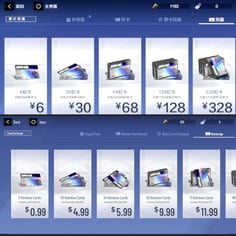
Wild Rift does not sell editions or paid expansions — the entire game is free to download and free to play, and progression cosmetics are sold à la carte. Wild Cores top-up packages typically scale roughly as follows, with the exact local pricing depending on your region's storefront and currency:
| Tier | Approximate Wild Cores | Typical Use |
|---|---|---|
| Starter | ~325 WC | Small icon, emote, or cheap chroma |
| Standard | ~1,090 WC | One mid-tier skin (990 WC range) |
| Mid | ~2,250 WC | Wild Pass premium + a chroma |
| Large | ~5,750 WC | Legendary skin (~1,325 WC) plus extras |
| Top | ~12,000 WC | Multiple premium skins, full pass, accessories |
First-purchase bonuses on each tier roughly double the Wild Cores received on initial purchase, which is why staggering purchases across tiers is more efficient than always buying the same pack. Exact pack contents and bonus percentages can shift with promotions and regional events, so always double-check what each tier currently gives before topping up.
Patches, Events, and Live Content
Wild Rift follows a patch cadence of roughly one major update every few weeks, each tied to a thematic event. A typical patch ships: 1–2 new champions or champion reworks, balance changes to dozens of existing champions, item rebalances, new skins (often tied to the event), a fresh Wild Pass, and a limited-time event mission track granting Poro Coins to spend in the event shop.
Recurring event lines include Spirit Blossom (Japanese folklore aesthetic, Kindred / Yone / Ahri skins), Pulsefire (futuristic cyberpunk), Star Guardian (magical-girl theme), Arcane (tied to the Netflix show, featuring Vi, Jinx, Caitlyn, Jayce, Ekko, Heimerdinger skins), Heartsteel and K/DA (in-universe music groups), Lunar Revel (Lunar New Year), Sentinels of Light vs. Ruination (lore-driven crossover), and Worlds-themed events tied to the LoL competitive season.
Players who log in across the full duration of an event can typically earn at least one event-exclusive skin or chroma from the free missions, plus a stack of Poro Coins toward the event shop's higher-tier exclusive cosmetics. Missing an event window means missing those exclusives — Riot rarely re-releases event-locked items.
FAQ
Q: Is Wild Rift the same as League of Legends on PC? No. Wild Rift is a separate game built specifically for mobile and console. It shares champions, lore, and the core 5v5 Summoner's Rift concept, but the map, items, abilities, and match length have all been rebuilt. Accounts and purchases do not carry over between the two.
Q: Is Wild Rift truly free-to-play? Yes. Every champion is unlockable with Blue Essence earned through play. Wild Cores, the premium currency, only purchase cosmetics — skins, the Wild Pass, emotes, chromas, baubles, and accessories. Nothing you buy with real money gives you a gameplay advantage.
Q: How long does it take to unlock all champions? At a casual pace (a few games per day), unlocking a strong roster of 15–20 champions takes a few weeks. Unlocking the entire roster takes months of consistent play. Completing the daily and weekly missions is the fastest free path; the Wild Pass also grants regular Blue Essence.
Q: Does Wild Rift have cross-platform play? Yes, across iOS and Android, and on supported console versions where available. Your Riot Account carries your progression, champions, skins, and rank across devices in the same region.
Q: Can I change my server or region? Region selection happens at account creation and is generally locked thereafter. Some platforms allow region transfers via support requests, but this is not a routine feature. Choose carefully at signup — your friends and rank live in that region.
Q: How do ranked seasons work? Each season lasts roughly 3–4 months. At season start, your previous rank is reset and you're placed slightly below your peak based on your prior performance. Climb through tiers and divisions by winning matches and earning Marks. Season-end rewards (Glorious skins, icons, ward skins) are based on your peak tier.
Q: What's the best champion for a complete beginner? For Baron lane, Garen. For jungle, Master Yi or Amumu. For mid, Lux or Annie. For dragon lane, Caitlyn or Jinx. For support, Nami or Lulu. These champions all have intuitive kits, forgiving cooldowns, and clear win conditions.
Q: Is the Wild Pass worth buying? For active players, yes. The premium track typically returns more in skins, Blue Essence, Poro Coins, and chromas than the cost of the pass itself. For someone who logs in only occasionally, the pass is less efficient because most of the value sits in the later tiers that require sustained play.
Q: How do I report toxic players? After a match, use the in-game report function and select the relevant category — verbal abuse, intentional feeding, AFK, hate speech, etc. Riot's behavior system processes reports through honor scores, chat restrictions, queue bans, and permanent bans for repeat offenders. The Honor system also rewards positive players with bonus rewards over time.
Q: Does Wild Rift work on low-end phones? Yes, within reason. The game supports a wide range of devices and includes graphics presets from Low to Ultra. Newer flagships can run at 120 FPS where supported. Older Android devices may need the lowest preset to maintain a stable 60 FPS, especially in teamfights.
Q: Can I top up Wild Cores without using the in-game store? Yes. Third-party reputable top-up services deliver Wild Cores to your Riot Account by ID, often at competitive rates and with faster bonus structures than the in-app purchase flow. Always verify the service supports your region before purchasing.
Q: What happens if I leave a ranked match? Leaving or going AFK in ranked triggers low-priority queue penalties, longer queue waits, and potential ranked restrictions for repeat offenses. If you genuinely disconnected, reconnect as fast as possible — Wild Rift retains your slot for a generous reconnection window before applying the harshest penalties.
Verdict
League of Legends: Wild Rift is the most polished, mechanically rich MOBA available on mobile. It earns that position not through marketing but through the fundamentals — distinct champion design, responsive touch controls that respect skill expression, intelligent map design that compresses without simplifying, and a free-to-play economy that locks zero gameplay behind a paywall. If you came from PC League looking for a portable outlet, Wild Rift is the closest thing to home you'll find. If you came from another mobile MOBA, you'll quickly notice how much more individual outplay potential exists per champion. If you came from Arcane or a cinematic trailer, you'll find a game whose visual identity, voice work, and event storytelling deliver on what those trailers promise.
It is not the right game for players who dislike competitive PvP, who get frustrated by losses outside their direct control (this is a 5v5 team game, and teammates matter), or who want a single-player narrative experience. Wild Rift is built around the assumption that you enjoy 15-to-20-minute strategic puzzles with imperfect information and shared accountability. If that core loop appeals to you — and especially if you enjoy the long-term progression of mastering a champion, climbing a ladder, and seasonally chasing exclusive rewards — Wild Rift will reward hundreds or thousands of hours.
Topping up Wild Cores makes sense when you've already decided which skins, passes, or champions you actively want. Spending blindly on the largest pack before you know your favorite role or main champion wastes value. Play 20–30 matches, identify your two-or-three-champion core, then top up to grab the Wild Pass and the skins you'll actually use. That disciplined approach — paired with the strategic depth the game already offers for free — is how Wild Rift becomes a long-term home rather than a passing install. For Wild Cores top-up, account-bound delivery, and current event packages, our service is ready when you are.