
Delta Force: The Complete PC Guide to Warfare, Operations, and Black Hawk Down
Introduction & Quick Facts
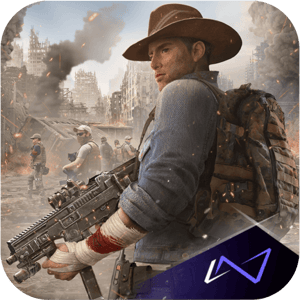
Delta Force is TiMi Studio Group's modern reboot of the iconic tactical shooter franchise, reimagined as a free-to-play, multi-mode military FPS built for the PC era. Rather than chasing a single niche, it deliberately fuses three distinct experiences under one client: large-scale 64-player Warfare (in the spirit of Battlefield), high-stakes PvPvE extraction Operations (clearly inspired by Escape from Tarkov), and a story-driven cooperative Black Hawk Down campaign retelling the 1993 Battle of Mogadishu. The result is one of the most ambitious shooter packages released in recent years — and one of the few free titles that genuinely competes with premium military FPS franchises on production value.
The game runs on Unreal Engine, supports keyboard-and-mouse and controller, and features destructible terrain, a deep operator-with-gadgets class system, drivable vehicles ranging from ATVs to Black Hawks and main battle tanks, and a layered economy of currencies, market trading, and seasonal battle passes. It is global, available in English alongside other major languages, and runs on widely accessible hardware specs, which is a major reason it scaled to tens of millions of registered players within months of its global PC launch.
This guide breaks down everything a player needs to understand Delta Force in depth: the modes, the operators, the economy, the meta, and the most effective ways to recharge and progress without wasting money or time.
| Field | Detail |
|---|---|
| Title | Delta Force |
| Developer | TiMi Studio Group |
| Publisher | TiMi Studio Group (Tencent Games) |
| Platform | PC (Windows); mobile and console versions in rollout |
| Region | Global |
| Genre | Tactical Military Shooter (Warfare + Extraction + Co-op Campaign) |
| Business Model | Free-to-Play with cosmetic and battle pass monetization |
| Primary Language | English (multi-language support) |
| Official Website | playdeltaforce.com |
What is Delta Force?
Delta Force is best described as three shooters in one launcher, unified by a single progression system, operator roster, weapon platform, and currency economy. Each mode targets a different player psychology, and the developers have intentionally avoided forcing one mode's design language onto another.
Warfare is the spectacle mode. It pits 32-versus-32 squads on large maps with vehicles, capture points, base-building elements, and destructible environments. Sessions last 20–30 minutes, deaths are forgiving (you respawn quickly on squad leaders or beacons), and the emphasis is on combined-arms teamwork. If you grew up on Battlefield 3, Battlefield 4, or Bad Company 2, Warfare will feel immediately familiar — but with named operators carrying class-defining gadgets rather than generic medic/engineer/recon kits.
Operations is the high-tension extraction mode. You and up to two squadmates infiltrate a contested map populated by AI militias, environmental hazards, and other player squads, loot gear and high-value items like Collectibles and Mandelbricks, and attempt to extract alive through one of several timed exfil points. Die, and you lose everything you brought in and everything you found — exactly the loop that made Tarkov a phenomenon, but with a friendlier on-ramp, faster matches (typically 25–45 minutes), and rotating maps including Zero Dam, Layali Grove, Space City, and Brakkesh.
Black Hawk Down is the cooperative campaign mode that launched alongside the global PC version. Up to four players retell the 1993 Mogadishu raid across a sequence of mission chapters — defending crash sites, escorting Rangers, navigating Bakara Market — with difficulty scaling and a stronger emphasis on scripted set-pieces. It is the most "premium single-player-style" mode in the game, even though it is delivered free.
The audience is broad on purpose. Warfare players come for the chaos. Operations players come for the dread. Campaign players come for the nostalgia. And every cosmetic, every operator, and most weapon attachments are shared across all three modes, meaning progression in one feeds the others. That cross-mode utility is the real reason Delta Force has caught fire: it solves the "I'm tired of this mode but I don't want to install a different game" problem that plagues most live-service shooters.
You can read TiMi's official positioning and patch communications on playdeltaforce.com, which acts as the central hub for season notes, operator releases, and event schedules.
Core Gameplay & Features
Below are the systems that define moment-to-moment play in Delta Force. Master these and you understand 80% of the game's depth.
- Operator-based class system with named heroes, each tied to a class (Assault, Engineer, Support, Recon) and a unique gadget plus passive.
- 64-player Warfare with massive maps, capture-point objectives, attacker/defender variants, and persistent vehicle deployment.
- Tarkov-style Operations with three difficulty tiers — Normal, Confidential, and Top Secret — featuring scaling loot quality and PMC AI lethality.
- Persistent inventory and stash in Operations, separate from Warfare, with weight limits, secure containers, and insurance mechanics.
- Deep weapon attachment system with 5–8 attachment slots per gun, real ballistic modeling for bullet drop and penetration, and ammo-type selection (FMJ vs AP) in Operations.
- Destructible environments including walls, scaffolding, and certain structural elements that change sightlines mid-fight.
- Vehicle ecosystem spanning ATVs, light tactical vehicles, IFVs, MBTs, and Black Hawk helicopters with seat-specific roles (pilot, gunner, rappel).
- Cross-mode progression where match XP, weapon mastery, and battle pass tiers all advance from any mode.
- Black Hawk Down co-op campaign with chapter-based missions, scripted events, and unique cosmetic rewards.
- Layered currency economy including Delta Coins (premium), Mandel Coins, Delta Tickets, Tekniq Alloys, and in-Operations Havoc Dollars and Korean Won (yes, two in-raid currencies).
- Seasonal battle pass with free and premium tracks, operator unlocks, weapon blueprints, and Mandelbrick supply tickets.
- Player-driven marketplace in Operations for buying and selling loot, attachments, and ammo, with price discovery determined by player supply.
Gunplay and Recoil
Delta Force uses a recoil model that sits between Call of Duty's snap-to-target ease and Tarkov's punishing realism. Each weapon has a horizontal sway pattern that's learnable through repetition, vertical kick that is countered with mouse pull-down, and meaningful first-shot accuracy penalties when ADS-ing for the first time after sprinting. Compensators reduce horizontal sway, muzzle brakes reduce vertical kick, and heavier barrels improve effective range at the cost of ADS speed. Mastering a single primary platform (the AKS-74, M4A1, M250, or M7 are common starters) and learning its precise recoil pattern is the single biggest skill jump available to new players.
The Operator System
Every operator has three things: a class, a gadget, and a passive trait. Classes determine which heavy weapons (LMGs, sniper rifles, etc.) can be equipped, but every operator can use the standard primary pool. The gadget is the real identity — Stinger's smart drone scouts and pings enemies, Vyron's directional shield blocks bullets, Uluru's healing tool revives downed teammates, and so on. The passive trait is a subtle but match-defining bonus, like Hackclaw's faster movement or D-Wolf's faster reload while moving. Smart squads stack complementary operators rather than picking favorites.
Operations Risk-Reward Loop
Each Operations raid starts with a loadout decision. You can bring no gear and scavenge entirely from the map (a "naked run"), bring mid-tier gear and play opportunistically, or bring purple/gold-tier gear and play to win. The map is seeded with AI patrols, fixed loot spawns (safes, weapon crates, medical cabinets), and rare high-value spawns like Collectibles that sell for huge sums on the marketplace. The extraction phase is where most deaths happen: timers are visible to all players, exfil points are limited, and other squads often camp them. Knowing when to push for a second loot loop versus when to bail with what you have is the defining skill of Operations.
Warfare Map Design
Warfare maps are designed around 5–7 capture points laid out in a roughly linear or hub-and-spoke pattern. Vehicles spawn at each team's home base on a cooldown. Black Hawks ferry full squads to contested points, while tanks anchor defensive holds. The destructible environment makes long sightlines temporary: a defender's sniper window can be RPG'd open or wall-breached, forcing constant repositioning. Squad leaders can deploy spawn beacons, making positioning at the start of a push critical — a single beacon behind enemy lines can swing a match.
The Currency Stack
Delta Force runs on more interconnected currencies than most shooters because each mode has its own internal economy that bridges into the wider account economy. Delta Coins are the real-money premium currency. Mandel Coins are spent on Mandelbricks (cosmetic packs). Delta Tickets come from selling duplicate Mandelbrick rewards and can be exchanged for specific skins. Tekniq Alloys are earned from Warfare wins and the seasonal pass, used at the Tekniq Auction House to bid on rare Operations gear. Havoc Dollars and Korean Won are in-Operations regional currencies for vendor trades. The table below clarifies how each works.
| Currency | Source | Primary Use |
|---|---|---|
| Delta Coins | Real-money top-up | Battle pass, Mandel Coins, premium bundles |
| Mandel Coins | Converted 1:1 from Delta Coins | Buying Mandelbrick supply packs |
| Delta Tickets | Selling duplicate Mandelbrick skins, events | Direct redemption of specific skins from gallery |
| Tekniq Alloys | Warfare matches, season rewards | Tekniq Auction House bids for Operations gear |
| Havoc Dollars | Operations loot, AI drops | In-raid vendor trades, ammo purchases |
| Korean Won | Operations loot in select maps | Specific vendor barters and high-tier ammo |
Mandelbricks and Cosmetic Pity
The Mandelbrick system is the gacha layer of Delta Force. Each pull from a Mandelbrick supply track has a chance to deliver a premium operator skin, weapon skin, charm, or duplicate token. Tracks have a guaranteed-pity threshold, meaning sustained pulling will eventually yield the headline skin even on bad luck. Duplicates convert to Delta Tickets, which can then be spent in a separate "redeem any skin" gallery — a meaningful secondary path for whales and disciplined free players alike.
Pro Tips & Strategy
Beginner Tips (First 10 Hours)
- Start in Warfare, not Operations. Warfare teaches you the maps, weapons, recoil patterns, and operator gadgets without the punishment of permadeath gear loss. Spend at least 8–10 hours here before touching Operations.
- Lock onto one primary weapon early. Pick one of the M4A1, AKS-74, M250, or AS Val and grind its weapon mastery to unlock attachments and reduce its recoil signature. Hopping between guns is the most common reason new players plateau.
- Always run with a squad. Solo queue in Delta Force is brutally punishing in both modes. Even silent teammates increase your survival rate dramatically because of revives, spawn beacons, and shared vision.
- Use the firing range every session. The training range lets you test attachment combinations and recoil control on dummies of various armor tiers. Five minutes here can equal an hour of in-match learning.
- Complete the daily and weekly missions. They are the highest XP-per-minute activity in the game and they bank battle pass progress without requiring you to play well.
Intermediate Tips (Building a Real Account)
- Learn one operator per class before unlocking more. Master one Assault, one Engineer, one Support, and one Recon. Surface knowledge of every operator is far worse than deep knowledge of four.
- In Operations, scale your gear to your skill, not the map. New extraction players over-gear themselves out of fear and lose hundreds of thousands in loot to a single bad rotation. Run mid-tier kits until your extract rate exceeds 50%.
- Inventory management is half of Operations. Learn the per-slot value of common loot. Ammo, batteries, medkits, and certain components have outsized profit-to-weight ratios. Leave the bulk furniture and low-tier scrap for desperate scavs.
- Use the marketplace as a barometer, not just a store. Item prices reveal the current meta — if a specific ammo type is spiking in price, an FOTM weapon is dominating, and you should consider counters.
- Pre-aim corners. Both Warfare and Operations reward holding your crosshair at head height on the exact line a defender will appear. The TTK is short enough that whoever fires first usually wins, and pre-aiming is the cheapest way to fire first.
- In Warfare, capture is a math problem. Three players cap a point 50% faster than one. Solo-flipping a point usually wastes 90 seconds for the same result a squad can produce in 20. Always rally on points unless you are scouting or flanking with intent.
- Save vehicles for objective plays. A Black Hawk is most valuable as a squad-insertion tool on contested objectives, not as a kill-farming aerial gunship. The latter ends with a Stinger missile and a long walk back.
Advanced Tips (High-Tier Play)
- Track exfil timers in Operations like a clock. Top players mentally log when each exfil opened, when it closes, and which routes other squads are likely to take. The final five minutes of a raid are the deadliest, and route-prediction wins fights before they happen.
- Bring high-pen ammo, not high-damage ammo. Damage numbers in the menu are misleading. In Operations, armor penetration determines whether you can kill an armored target at all. Always check the pen-vs-tier chart for each ammo type before bringing it into a raid.
- Pre-stage your stash before each season. Sell off items you won't realistically use, lock in cheap ammo and meds before patch-day price spikes, and consolidate cash for the first 72 hours of a wipe when prices are at their best.
- In Warfare, weaponize destructibility. Most defenders set up in predictable second-story windows. RPG, tank shell, or breaching charge those walls before pushing — a destroyed sightline is a free rotation.
- Stack operator passives within your squad. Two operators with movement-speed passives and one with healing passive equals a rush squad. Two snipers with recon passives and a Vyron shield equals a hold-and-pick squad. Identity-driven squad comps consistently beat random class mixes.
- Manage your real-money spending around event windows. Battle passes, anniversary events, and Mandelbrick rotations all have predictable cadence. Saving Delta Coins for high-value seasonal bundles yields 30–50% more cosmetic value than impulse buys.
Characters & Operator Roles
Delta Force's operators are the closest the game comes to a hero shooter layer. Below is a curated snapshot of the most impactful operators currently in the roster across the four core classes. Names and exact passives are updated by TiMi season-to-season, so treat this as a structural overview rather than patch-specific data.
| Operator | Class | Gadget | Best Use Case |
|---|---|---|---|
| Stinger | Recon | Smart targeting drone | Scouting capture points, marking snipers |
| Vyron | Assault | Directional ballistic shield | Pushing chokepoints in Warfare |
| D-Wolf | Assault | Tactical sprint pulse | Aggressive squad entry, flanking |
| Hackclaw | Assault | Stealth dash | Solo flanks, fast objective flips |
| Uluru | Support | Healing field tool | Anchoring objectives, reviving |
| Shepherd | Support | Resupply station | Long defensive holds, vehicle support |
| Toxik | Engineer | Smoke and chemical grenades | Area denial, blocking sightlines |
| Luna | Recon | Arrow recon shot | Long-range marking, anti-vehicle scouting |
Class Identity Deep Dive
Assault operators carry the standard rifle pool and excel at mid-range engagements. They are the workhorses of both modes and the recommended starting class for new players. Engineer operators get access to anti-vehicle launchers and explosives, making them mandatory on Warfare maps with tanks and Black Hawks dominating the skyline. Support operators bring LMGs, ammo crates, and healing tools — they trade individual mobility for squad sustain and are the most under-appreciated role in pubs. Recon operators carry sniper rifles, recon drones, and stealth tools. They are the highest skill-floor class because mediocre Recon play actively hurts the squad, while excellent Recon play can solo-decide rounds by spotting and culling the enemy backline.
Game Modes Deep Dive
| Mode | Players | Match Length | Lose Gear on Death? | Best For |
|---|---|---|---|---|
| Warfare | 64 (32v32) | 20–30 min | No | Vehicle combat, large-scale teamwork, fast XP |
| Operations - Normal | Up to 24 PvPvE | 25–40 min | Yes (insurance available) | Learning extraction mechanics |
| Operations - Confidential | Up to 24 PvPvE | 30–45 min | Yes | Mid-tier loot runs, marketplace farming |
| Operations - Top Secret | Up to 24 PvPvE | 30–45 min | Yes | High-value Collectibles, endgame loot |
| Black Hawk Down (Co-op) | 1–4 | 30–60 min per chapter | No | Story content, cosmetic rewards, PvE training |
Warfare in Depth
Warfare matches typically open with a vehicle rush from each base toward the central objective. Whoever wins the opening engagement gains map control, which translates into more spawn options, more vehicle uptime, and a snowballing tickets advantage. Smart teams contest the opening fight with one full squad while a second squad flanks the enemy backline objective. Mid-game stabilizes around two or three contested points, and the late game is decided by ticket bleed — if you control more than half the map, the enemy team's reinforcement counter ticks down even between fights. Key Warfare maps include Knife Edge, Ascension, Threshold, Trainwreck, and Cracked, each with distinct vehicle availability and objective geometry.
Operations in Depth
Operations is the deeper of the two PvP modes, and the one with the steepest learning curve. Each map has unique loot density and exfil geometry. Zero Dam is the entry-level map with two layouts (Day and Night) and is the recommended starting map. Layali Grove is the mid-tier urban map with extreme verticality and complex building interiors. Space City is dense industrial terrain with multiple keyed rooms hiding rare loot. Brakkesh is the largest and most punishing map, frequently the home of top-tier Collectibles and the heaviest PvP traffic. Each map has its own meta loot routes that experienced players cycle through in a predictable order — learning these routes is the fastest way to ramp up your raid profitability.
The insurance system is a forgiveness mechanic unique to Operations. You can pay an upfront fee to insure your kit before a raid; if you die and the enemy doesn't loot your specific items, those items return to your stash after a delay. Insurance is almost always worth running on mid- to high-tier gear because the recovery rate is high enough to break even over time.
Black Hawk Down Campaign
The Black Hawk Down mode launched as a tentpole feature alongside the global PC release. It is split into chapters covering key beats of the 1993 Mogadishu raid: the initial Rangers insertion, the convoy roll-out, the helicopter crash at Super Six-One, the foot mobile rescue, and the night-long defensive stand at the crash site. The mode plays as a four-player cooperative shooter with scripted AI enemies, dynamic weather, and unique reward tracks for cosmetics. Difficulty scales meaningfully — higher difficulties remove HUD elements, increase enemy aggression, and unlock the best campaign-exclusive rewards.
Endgame & Progression
Endgame in Delta Force is layered across three vectors: account-level mastery, seasonal progression, and Operations stash-building.
Account-level mastery is the slowest curve. Each operator has a mastery track that unlocks unique cosmetics, voice lines, and small stat boosts when fully completed. Each weapon platform has a mastery track that unlocks attachments, blueprints, and prestige skins. Completing operator and weapon mastery for an entire class is genuinely a multi-hundred-hour investment.
Seasonal progression resets every 8–12 weeks and centers on the battle pass. The pass has a free track (operator unlocks, basic cosmetics, Mandelbrick tickets, Tekniq Alloys) and a premium track purchased with Delta Coins (premium skins, weapon blueprints, accelerated unlocks, and exclusive operators for that season). A complete premium pass typically returns more value than its purchase cost if you actually finish it, making it the single highest-ROI top-up decision in the game.
Operations stash-building is the most engaging endgame loop. Top extraction players measure their progression in stash value (millions of Havoc Dollars), Collectible completion (rare items that unlock vendor reputation), and Tekniq Auction House wins. The auction house operates on a 24- to 72-hour bidding cycle where high-tier weapons and armor are made available in limited quantities, and players bid Tekniq Alloys earned from Warfare. This creates a remarkable cross-mode loop: Warfare grinding directly funds Operations endgame gear acquisition.
Top-Up & Recharge
Delta Coins are the only premium currency in Delta Force, and they're purchased with real money through the in-game shop or via third-party top-up services. The standard top-up flow is straightforward: select a Delta Coin package, complete payment, and the coins land in your account within minutes. Delta Coins can be converted 1:1 into Mandel Coins for cosmetic packs, used directly to buy the premium battle pass, or spent on bundle offers that frequently provide 30–50% more value than equivalent direct coin purchases. The most cost-efficient spending order for almost all players is: battle pass first, then any active limited-time bundle, then Mandelbricks last. We provide fast and secure Delta Force top-up for Delta Coins on this site. For official news and patch notes, the publisher maintains updates on playdeltaforce.com.
FAQ
Is Delta Force free to play? Yes. The base game, all modes including Warfare, Operations, and Black Hawk Down, and all functional content are free. Monetization is limited to cosmetics, the battle pass, and convenience items.
Is Delta Force pay-to-win? No, with one mild caveat. Weapons, attachments, and operators are unlockable through gameplay. The premium battle pass accelerates progression but doesn't give exclusive power. In Operations, however, players with more time or money can stockpile better gear, which is a soft pay-for-progression element common to all extraction shooters.
What are the PC system requirements? Delta Force is built to run on widely accessible hardware. Mid-range systems from the last five years generally handle the game at 60 FPS on medium-to-high settings. Higher-end systems can push 144+ FPS at high settings, which matters for competitive Warfare and Operations play.
Is there cross-progression with mobile? TiMi has been rolling out cross-platform progression in stages. PC and mobile share account systems for the core game, though some platform-specific cosmetics and inputs are restricted. Check the official site for current cross-progression status, as it has expanded over time.
How does the Mandelbrick gacha pity work? Each Mandelbrick supply track has a defined pity threshold beyond which a guaranteed headline reward is awarded. Duplicate pulls convert to Delta Tickets, which can be spent in the redemption gallery for any specific skin you want. This makes long-term Mandelbrick pulling more deterministic than typical gacha systems.
Can I play Operations solo? Yes, you can queue Operations solo or in pairs. Solo play is significantly harder due to no revives and reduced firepower, but it's also more loot-efficient per player because you don't split rewards. Most top extraction players have a strong solo game and a strong squad game.
Which mode gives the most XP? Warfare typically gives the most raw account XP per hour because matches are shorter and more action-dense. Operations gives the most economic progression (loot value, Tekniq Alloys, marketplace experience). Black Hawk Down gives the best cosmetic-per-hour rate for its mission rewards.
Is the Black Hawk Down campaign worth playing? Yes, especially for players who appreciate scripted military shooter campaigns. It's also one of the easiest ways to earn high-quality cosmetics and weapon blueprints without engaging with PvP.
How often does Delta Force receive updates? TiMi runs a seasonal model with major content drops roughly every 8–12 weeks, plus mid-season patches with balance changes, bug fixes, and limited-time events. New operators, maps, and weapons are typically gated to season launches.
Do I need to spend money to be competitive? No. The free track of the battle pass, daily and weekly missions, and Warfare ticket grinding provide enough resources to unlock the meta operators and weapons over time. Spending accelerates cosmetics and progression but does not unlock exclusive power.
What's the difference between Operations Normal, Confidential, and Top Secret? Difficulty tier. Higher tiers feature deadlier AI, more rare loot spawns, stricter gear requirements, and higher-value Collectibles. Top Secret raids are the highest-stakes content in the game.
Is there anti-cheat? Yes. Delta Force runs a kernel-level anti-cheat solution typical of competitive PC shooters. Cheating reports are processed, and bans are issued regularly, though no anti-cheat system is perfect. Cheating has been a community concern at various points and TiMi has issued multiple ban waves in response.
Verdict
Delta Force is the rare free-to-play shooter that genuinely delivers premium content across multiple distinct modes. If you want a chaotic 64-player vehicle battlefield, it has one. If you want a tense extraction shooter with marketplace economics and gear fear, it has one. If you want a story-driven co-op campaign with real production values, it has one. And every hour you play in any of those modes feeds a shared progression system that respects your time across the entire package.
You should play Delta Force if you enjoy military shooters, you've ever loved Battlefield or Tarkov, you have a squad to play with, and you want a free game that respects your time. You should think twice if you are a strict solo player allergic to PvP, you dislike live-service progression loops, or your hardware is genuinely below modern minimum specs.
For most PC shooter fans, Delta Force is one of the easiest free-game recommendations of the current era — and given that the entry cost is zero, the only real question is which mode you'll fall in love with first.