Master high-stakes 4-player board control with our 2026 Yalla Ludo best strategy guide, detailing token spacing, safe zones, and exact reroll math.
Winning consistently in 4-player rooms is about positioning, risk control, and forcing opponents into bad trades—not high rolls. Casual players auto-roll and sprint a single pawn forward, leaving their backfield completely open. Against disciplined opponents, that habit empties coin reserves fast.
Yalla Group released the title in 2018, and version 1.4.9.2 (late April 2026, 897.35 MB) demands strict positional discipline. Surviving 50k and 500k gold tables means treating the board as a tactical grid.
The Core Board Geometry and Movement Math
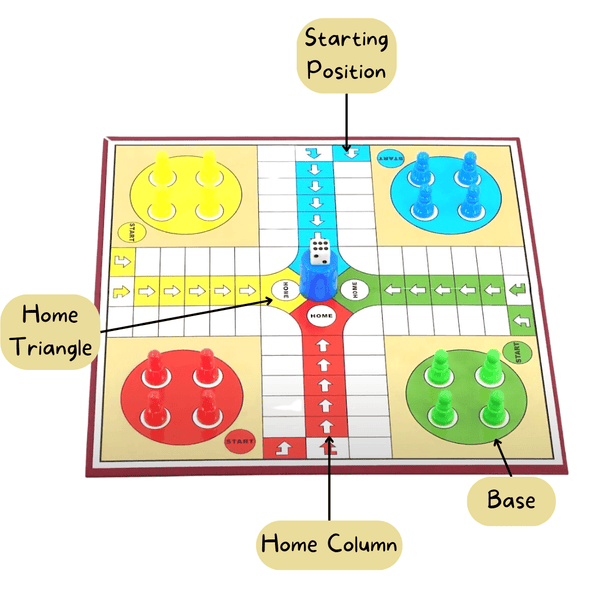
The standard circuit uses 52 shared perimeter squares alongside four 5-square colored home columns leading into the center triangle. Threat distance dictates every advance or hold.
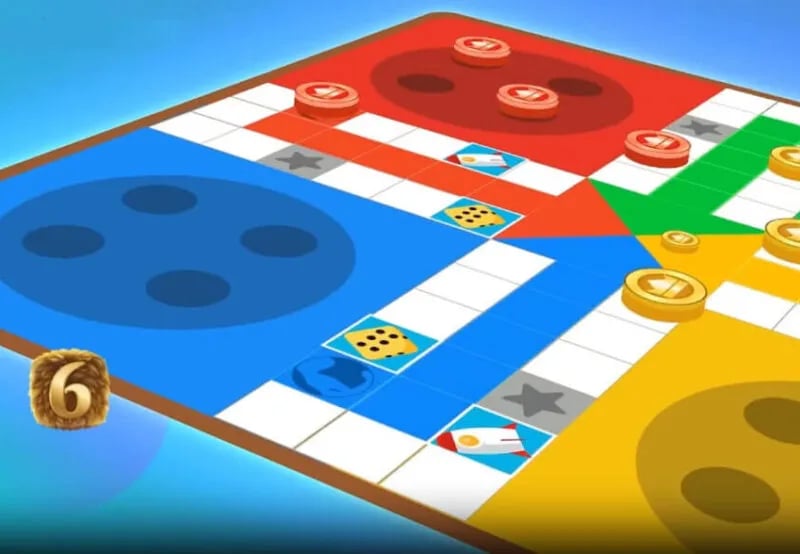
Across the 52 shared squares, only eight offer immunity: four colored starting bases marked with directional arrows, and four squares marked with shields or stars. Different colored tokens can stack on these eight tiles without triggering captures.
| Board Metric | Track Value | Tactical Impact |
|---|
| Shared Outer Track | 52 Squares | The contested combat zone where all captures occur |
| Home Column | 5 Colored Squares | Capture-immune entry lane requiring exact dice values |
| Safe Zones | 8 Dedicated Tiles | 4 arrow start points + 4 star/shield tiles; 0 capture risk |
| Turn Clock | 15 Seconds | Fast decision window before auto-play takes control |
| Disqualification Limit | 3 Missed Turns | Match forfeit or loss of equity from bot automation |
| Home Arrival Reward | 1 Bonus Roll | Grants an extra throw upon landing a token directly in the center |
The board structure leaves roughly 84% of outer track squares vulnerable to capture, meaning safe zone control dictates match tempo.
Safe zones function as staging posts, not retreats. With 44 of the 52 shared squares carrying cut risk, you cannot afford to count tiles square-by-square under a 15-second timer. Read distances at a glance. Letting the clock expire three times triggers automated moves or a match forfeit, wrecking your layout.
Surviving the Track with the Rule of 7 and Token Clustering
Never race a single token. Sprinting one pawn 30 squares ahead leaves you with zero board presence when an opponent cuts it two steps outside your home column. Recovering from that tempo loss is nearly impossible against experienced players.
The Rule of 7 is your defensive foundation. Because a standard die tops out at 6, keeping a pawn seven squares ahead prevents single-roll captures. To reach you, a chaser must roll a six followed by an exact secondary roll—a two-roll combination sitting at roughly 2.7% probability (1/36). At six squares away, you face a 16.6% chance of an immediate hit. That single tile difference decides matches.
Why Staggered Token Spacing Wins Matches
Spread all four pawns onto the active track early. Doing so delivers three direct advantages:
- Eliminates dead rolls: When four pieces occupy different quadrants, low rolls (1, 2, or 3) that cannot help a lead pawn advance a trailing defender or step into a nearby safe zone.
- Creates interception webs: If an opponent cuts past your forward pawn, your trailing pieces sit within striking distance on their tail.
- Maintains board pressure: Forcing opposing players to watch their rear prevents them from freely chasing your lead runners.
Unlike classic Parchís, Yalla Ludo does not feature physical blockades. Stacking two friendly pawns on an open tile does not stop opponents from passing. Worse, if an opponent lands on that square, they capture both pawns at once. Never double-stack pieces outside of official shield or arrow tiles.
Variant Matchups: Classic, Master, and Magic Rule Sets
Five distinct Ludo variants run inside the app: Classic, Master, Quick, Arrow, and Magic (alongside Domino and Jackaroo). Each shifts optimal token pacing.
| Game Mode | Core Objective | Capture Value | Primary Strategic Threat |
|---|
| Classic | Move all 4 pawns home | Standard reset | Pure attrition and late-circuit cuts |
| Master | Restricted home entry rules | High positional leverage | Stalling outside home columns |
| Quick | Clear 2 pawns home to win | Game-winning swing | Hyper-aggressive early cuts |
| Arrow | Land on arrow paths for speed boosts | Moderate track acceleration | Opponent chain jumps across quadrants |
| Magic | Use power cards and skills | Variable tactical disruption | Coordinate swaps and shield immunity |
Different modes reward distinct playstyles; Quick mode favors high-risk chasing while Classic demands patient cluster spacing.
Classic mode rewards patience across all four pawns. Never gamble on an open sprint when an intermediate safe zone is open. Master mode increases the pressure near the finish: home track entry requires strict conditions, turning any stall outside the entrance into an easy target.
Quick mode flips this entirely. You need only two pawns home to win. Coordinated four-pawn clusters take too long; you will lose before reaching the third quadrant. Instead, push two pieces: designate one as an aggressive hunter to contest the track, while the second sprints straight for the center.
Diamond Rerolls: Spending Logic and Round Breakdowns
Dice rerolls consume diamonds, not coins. Once your die stops, a 3-second window opens to tap the reroll prompt before the game locks in your roll. Rerolls start at 2 diamonds and scale upward with every consecutive roll in that round, capped at 11 rerolls. Rerolling on impulse because you rolled a 2 instead of a 6 burns balances fast.
| Diamond Tier | Approximate Market Value | Reroll Capacity (Round 1 Costs) | Strategic Utility |
|---|
| 830 Diamonds | $1.87 – $2.13 | 415 Single Rerolls | Ideal for low-stake coin room protection |
| 2,320 Diamonds | $4.68 – $5.62 | 1,160 Single Rerolls | Competitive 50k gold table cushion |
| 5,150 Diamonds | $9.37 – $10.90 | 2,575 Single Rerolls | High-stakes Master and Magic league play |
| 13,580 Diamonds | $23.43 – $27.25 | 6,790 Single Rerolls | Heavy tournament volume reserve |
| 27,640 Diamonds | $46.74 – $54.50 | 13,820 Single Rerolls | Long-term team and clan war staking |
| 55,800 Diamonds | $93.70 – $109.00 | 27,900 Single Rerolls | High-roller table dominance package |
Managing your diamond consumption ensures you have safety margins during critical cut-or-be-cut turns.
Trigger the reroll prompt under two conditions only:
- Direct cut prevention: Your lead pawn sits within single-die range (1 to 6 squares) of an opponent, and your current roll fails to reach a safe zone or the 7-square threshold.
- Decisive cut execution: An opponent's high-value pawn is within reach, and a second roll gives you an immediate capture that flips board control.
Active players secure between 1,500 and 2,000 diamond equivalents daily by clearing login streaks, clan challenges, tent tasks, and seasonal missions without spending cash. Chasing frivolous sixes burns that allowance, leaving you defenseless during critical endgame turns. When your balance runs low before an organized clan tournament, stock up on Yalla Ludo diamonds to maintain an active safety net for clutch rerolls.

Turn Execution Priority: A Five-Step Decision Hierarchy
Never guess a move under a ticking clock. Use this five-step priority order on every throw to avoid giving away board equity.
- Check for an immediate high-value cut: If any legal move lands your pawn directly on an opponent outside a safe zone, check the surrounding board state. If capturing leaves your pawn stranded in front of another hostile piece, calculate whether the trade is worth the tempo swing. If it is clean, take the cut instantly to knock the enemy back to base.
- Move into an available safe zone: If no cut exists, check whether your roll lands an active token on one of the eight safe zones (arrows or shields) to remove cut risk.
- Deploy new pawns out of base: Rolling a six unlocks a pawn from base. Unless you have an active pawn about to make an urgent escape or complete a winning run, deploy a new piece. Deploy first, then resolve your bonus throw.
- Extend leads using the Rule of 7: If no pawns can enter safe zones, move the piece closest to an opponent's striking range to push the distance past seven squares.
- Advance the safest trailing pawn: If lead pawns are safe, spend low rolls advancing your rearguard to contest the middle board on upcoming rounds.
Watch the consecutive sixes penalty. Two consecutive sixes grant bonus throws, but a third consecutive six revokes the roll and forfeits your turn. If you roll two sixes, never plan your moves expecting a third.
The home stretch demands exact rolls. Tokens along the 5-square colored home column cannot be captured, but entering the center triangle requires an exact value. A pawn sitting three squares away cannot use a 4 or 5. Landing directly in the center triangle awards one bonus throw—use it to advance a trailing pawn immediately.
Magic Mode Powers: Shield Timing and Position Swapping
Magic mode breaks standard track probability with active power cards. Treating it like Classic mode leads to fast coin losses.
The primary threat is the coordinate swap, which trades the positions of any two active pawns. Sprinting a solitary runner across the 52-square track only to park it outside your home column makes you an easy target. An opponent in their opening quadrant can swap their trailing pawn for your lead runner, instantly pocketing 45 squares of movement while dropping you into hostile territory.
Counter this by advancing pawns in pairs and timing movement shields. Shields grant temporary cut immunity and block incoming hostile cards. Conversely, hold your own swap cards until an opponent reaches square 45 or beyond, then steal their track progress right before they reach their home column.
Running card modes at high stakes requires consistent resources. When high-tier cards appear in the rotation, having Yalla Ludo recharge packages ready ensures you never forfeit tactical options to an empty inventory.
Technical hiccups can cost you a match before dice even roll. Yalla Ludo routes accounts through an 8- to 10-digit numerical Player ID located in your user profile screen. Official vouchers require only this ID alongside a 16-digit PIN on the recharge portal; passwords are never required. Entering the PIN applies gold and diamonds immediately.
Performance matters directly on version 1.4.9.2 (897.35 MB, Android 5.0+). Frame drops or latency can consume the 15-second turn window before your input registers, triggering bot automation that shatters token spacing. Clear your app cache, close background apps, and confirm network ping before entering competitive rooms.
To maintain diamond reserves for tournament rerolls without third-party account handoffs, you can top up your Yalla Ludo account using only your 8 to 10-digit Player ID.
Frequently Asked Questions
What is the Rule of 7 in competitive 4-player Yalla Ludo?
The Rule of 7 requires maintaining at least a seven-square lead between your pawn and any hostile piece chasing behind you. Because a standard single die rolls a maximum of 6, an opponent cannot cut you on a single turn and must roll an exact multi-roll combination to reach your tile.
How does the dice reroll mechanic work during high-stakes matches?
You have an exact 3-second window after a roll to trigger a reroll using diamonds. The first reroll of a round costs 2 diamonds, with the cost scaling upward on consecutive attempts up to a hard cap of 11 rerolls per round.
Why should I spread all four pawns instead of rushing one pawn home?
Spreading all four pawns ensures that you always have legal, useful moves regardless of whether you roll high or low numbers. A solitary runner leaves you vulnerable to wasted rolls, quadrant ambushes, and zero defensive board presence.
What happens if a player rolls three consecutive sixes in Yalla Ludo?
Rolling three sixes in a row results in an automatic forfeiture of your turn. The third roll is revoked immediately, your pawns cannot move, and turn priority passes to the next player on the board.
How many safe zones exist on the standard Yalla Ludo board?
There are exactly eight safe zones on the perimeter track. These are comprised of the four colored starting squares marked with arrows and the four squares marked with shields or stars, where pawns cannot be cut.
Can opponents block paths by stacking pawns in Yalla Ludo?
No, Yalla Ludo does not use physical barricade mechanics. Stacking two friendly pawns on an open square does not prevent enemies from walking past, and if an enemy lands on that square outside a safe zone, both of your pawns are captured.
How do active players earn diamonds without direct spending?
Active players generate between 1,500 and 2,000 diamond equivalents daily by clearing login rewards, completing cumulative tent tasks, participating in clan challenges, and finishing seasonal quests.
What happens if I miss my turn timer during a match?
Each turn carries an approximate 15-second countdown clock. If you fail to act before the timer runs out, the game either passes the turn or auto-rolls for you, and missing three consecutive turns results in match disqualification.
Tactical Verdict: Winning High-Stakes Rooms
Stop relying on luck to win your Yalla Ludo matches. The players who dominate high-stakes rooms consistently do not roll more sixes than you; they manage board geometry, preserve their diamond reserves for critical defensive rerolls, and maintain the Rule of 7 across all four tokens. Avoid the trap of solitary pawn sprints, control the eight outer safe zones, and let your opponents make impatient mistakes while you methodically march your cluster home.










Comments