Master Sunset City with our CarX Street beginner guide. Pick the right starter car, beat club rating caps, and avoid costly early tuning mistakes today.
Sunset City gives you a brief taste of high-end machinery during the prologue, then strips your garage bare. You hit the asphalt with empty pockets and a three-way choice for your starter ride.
Burning starting cash on the wrong parts or buying a car that fails club requirements stalls progression before the second boss. To clear early events without going broke, prioritize chassis balance over raw horsepower, pick the right Class 1 (C1) platforms, and respect club rating limits.
Choosing Your Starter Car: DTS, HC6, or NX5
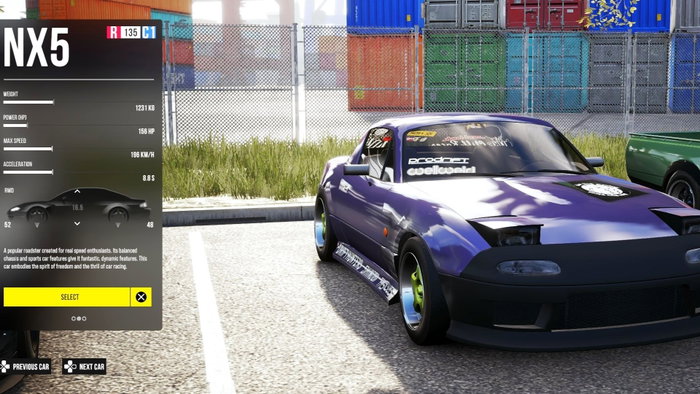
The showroom offers three base vehicles once the intro ends: the DTS (1973 Datsun 620 pickup), HC6 (1994 Honda Civic), and NX5 (Mazda MX-5 Miata). Your pick dictates your initial income rate.
The DTS delivers the strongest mechanical baseline. As a rear-wheel-drive pickup, it brings the highest stock power output, dependable top speed, and natural drift transitions. Its only real drawback is aesthetic: aftermarket body mods are sparse. If driving efficiency matters most, buy the truck.
The front-wheel-drive HC6 sits on the other end of handling dynamics. It grips hard and tracks cleanly through street sprints, simplifying open-world checkpoint runs. Drift trials are another story. FWD physics fight angle, forcing heavy handbrake use to initiate slides that scrub speed through long sweepers.
The NX5 offers the deepest exterior customization of the group, but stock performance lags behind. Acceleration is sluggish, and the chassis bleeds velocity the moment you pitch it sideways.
Compare the three baseline builds directly:
| Starter Vehicle | Real-World Inspiration | Drivetrain | Primary Strength | Main Limitation |
|---|
| DTS | 1973 Datsun 620 | RWD | Top speed & drift balance | Minimal cosmetic options |
| HC6 | 1994 Honda Civic | FWD | Open-world sprint grip | Struggles in drift trials |
| NX5 | Mazda MX-5 Miata | RWD | Deep body kit customization | Sluggish stock acceleration |
Grab the DTS to knock out early drift events without extra parts, or take the HC6 if you prefer stable front-wheel grip for sprint lines.
Escaping C1: The Best First Car Purchases
Stock starters hit a wall once specialized club rules kick in. Rather than blowing your bank balance on the priciest showroom listings, target platforms that maximize performance per credit spent.
At profile level 4, the Nissan 180SX-inspired S18 unlocks in the dealership. It stands out as the most reliable early rear-wheel-drive purchase, pairing predictable drift angles with acceleration just 0.2 seconds off the quickest AWD options in C1. It transitions between grip sprints and drift trials with minimal setup changes.
For tighter budgets, the M36 (1996 BMW M3) is a solid alternative. It costs noticeably less to prep for competition, giving cash-strapped garages a single chassis that enters both grip and drift clubs without demanding two separate builds.
Two other C1 options look tempting but require caution:
- SFR (Subaru Forester): The SFR is the sole all-wheel-drive platform in C1. Some community guides label it RWD, but its genuine AWD layout delivers intense launch traction and sprint acceleration. Drift trials, however, are a non-starter; breaking grip and linking drift sectors in the SFR is an exercise in frustration.
- G86 (Toyota GT86): The G86 has extensive upgrade headroom in higher classes, but its steep entry price and lethargic stock acceleration—trailing the S18 by a full second—make it an inefficient early purchase.
Evaluate these C1 profiles before spending your savings:
| Vehicle | Class Role | Price Bracket | Standout Trait | Handling Focus |
|---|
| S18 (Nissan 180SX) | Premier All-Rounder | Mid-Range (Level 4) | Accel 0.2s off AWD top | Dual Drift & Sprint |
| M36 (1996 BMW M3) | Budget Hybrid | Low Cost | Cheap entry point | Versatile Street/Slide |
| SFR (Subaru Forester) | Sprint Dominator | High C1 | Sole C1 AWD launch grip | Pure Grip / No Drift |
| G86 (Toyota GT86) | Late-Game Project | Most Expensive C1 | High upgrade ceiling | Slow stock acceleration |
Save for the S18 at level 4, or pick up the M36 if you need an immediate budget platform to enter new clubs.
Street clubs gate your progression across Sunset City. Every event, member battle, and boss race requires your chassis to match three criteria: vehicle class, drivetrain layout, and a hard performance rating cap.
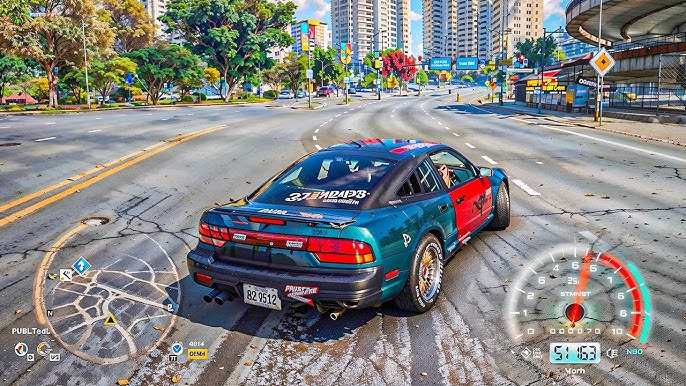
Club disciplines split cleanly. Speedline Syndicate and Speed Hunters focus on sprint and circuit grip racing through technical city grids. Drift United, Drift Devils, and Drift Promotion demand dedicated drift setups that sustain slip angles through designated clipping zones.
Update 1.13 expanded this system with Gymkhana mode, adding 7 obstacle courses, leaderboard competitions, 58 turbofan rim styles, and three cars: the VPR, M34, and HNG. The update introduced the Spitfire and Hyper Sonic clubs, imposing sharper handling demands on drivers pushing past base-game content.
Entry limits and boss targets across early clubs:
| Club Name | Discipline | Core Requirement | Boss Challenge Focus |
|---|
| Speedline Syndicate | Grip / Sprint | Strict C1 Rating Cap | Street sprint line efficiency |
| Drift United | Drift Trial | RWD Preferred / Angle Rating | Target score clipping zones |
| Speed Hunters | Grip / Circuit | C1–C2 Transition Limits | High-speed technical corners |
| Drift Devils | Drift Trial | Power-to-Weight Balance | Chained transition sections |
| Spitfire (Update 1.13) | Gymkhana / Hybrid | Course Obstacle Agility | Rapid slalom & tight rotations |
Watch your performance rating closely. Exceeding a club's ceiling locks you out of its races until you swap back to weaker components.
What to Upgrade First: Building Corner Speed Over Raw Power
Installing turbos and engine blocks on an untuned chassis is an easy trap. Unchecked horsepower creates wheelspin, induces understeer, and bloats your rating score without cutting down lap times.
When managing early finances, you can streamline your fleet budget with an affordable CarX Street top-up to cover garage space and performance parts without running out of credits mid-build.
Upgrade components in this order:
- Tyres: Rubber sets your mechanical traction limit. Street and sport compounds widen lateral grip, trim wheelspin off the start line, and put power directly into the road.
- Brakes: Better pads and discs shorten stopping distances, letting you carry speed deeper into corner entries before braking.
- Suspension & Geometry: Adjustable coilovers grant control over camber, toe, and ride height—critical settings for keeping tyres planted over uneven city roads.
- Transmission & Gearing: Tuning final drive ratios keeps the engine inside its torque curve out of slow corners.
- Engine & Power: After the chassis handles predictably and stops on command, bolt on engine power to increase corner exit speed.
Prioritizing power over handling burns credits and pushes your car into tougher rating brackets before the chassis can compete.
Suspension and Handling Tuning to Avoid Street Bumps
Pavement seams, tall curbs, gutter drops, and sudden crests litter Sunset City. A setup tuned purely for smooth, flat asphalt will upset the chassis and spin you into the barriers.

Resist slamming the suspension to the floor. Stance looks sharp in photo mode, but zero travel prevents springs and dampers from soaking up road bumps. Clip a curb or dip without travel, and the chassis skitters across the asphalt, breaking grip instantly. Leave sufficient clearance so the suspension absorbs impacts.
Focus on two critical chassis settings:
- Anti-Roll Bars (ARB): When the front end pushes through corners (understeer), soften the front ARB or stiffen the rear bar. This dynamic shift transfers load to help the rear rotate into turns.
- Brake Bias: Shift brake balance slightly forward for grip sprint events. Front bias stabilizes the car under hard deceleration and stops the rear axle from stepping out in heavy braking zones.
A compliant suspension lets you get on the throttle earlier, beating higher-powered rivals who are busy fighting curb deflections.
Cash and Gold Economy: Early-Game Farming Blueprint
Solid bankroll management keeps your racing program moving. CarX Street runs on two currencies: standard Cash for everyday parts and maintenance, and premium Gold (Street Coins) for engine swaps and elite components.
Build starting capital through these reliable avenues:
- Delivery Quests: Run delivery jobs between club races. Vehicle and cargo drop-offs cost nothing to enter, have no rating requirements, and pay out reliable cash while helping you learn the street grid.
- The Elite Race Rule: Keep your completed club builds. Once you beat a club boss, that vehicle unlocks repeatable elite races on cooldown timers. These events pay both Cash and Gold. Selling or over-tuning the winning car past the club cap deletes this recurring income.
Spend premium funds strictly where they count. If picking up a cheap CarX Street top up to expand garage space, avoid wasting Gold on paint or entry-level parts. Cash covers standard upgrades; reserve Gold for late-game transmissions and high-tier engine swaps.
Deliveries fund daily garage costs, while completed club cars generate passive long-term returns.
Step-by-Step Play Blueprint: Your First Week in Sunset City
Follow this sequence to build a competitive garage without stalling your bank balance:
- Select the DTS Pickup: Grab the DTS starter keys for the best baseline power and drift dynamics without spending early cash on power parts.
- Run Delivery Jobs and Sprints: Complete open-world deliveries and introductory races to learn the map and bank roughly 20,000 credits.
- Fit Tyres and Brakes First: Bolt sport tyres and entry pads onto the DTS while keeping the engine stock so rating numbers stay under early club caps.
- Reach Profile Level 4: Run district sprints and delivery runs until hitting level 4, which unlocks the showroom S18.
- Purchase the S18: Pick up the S18 as your primary race build. If early repair costs leave you short, a safe CarX Street currency recharge covers the purchase without having to liquidate your DTS.
- Assign Garage Roles: Leave the DTS dialed for Drift United entry caps, and tune the S18 for Speedline Syndicate grip racing with balanced springs and front brake bias.
- Defeat Club Bosses and Farm Elite Races: Clear the first two club leaders. Keep both cars parked within their rating ceilings to farm recurring elite race payouts on cooldown.
This path secures steady earnings and prevents you from hitting an upgrade wall.
FAQ
Which starter car should I pick first in CarX Street?
Choose the DTS pickup for the strongest stock power, higher top speed, and natural drift handling. Pick the HC6 if you prefer front-wheel-drive stability for street sprints, or choose the NX5 only if cosmetic styling outweighs performance.
Why am I locked out of club races after upgrading my car?
Your recent parts upgrades pushed the vehicle past the club's performance rating cap or class limit. Head into the garage tuning menu and refit lower-tier parts until your rating drops back below the club threshold.
Should I sell my old club car once I defeat the boss?
No. Keeping an eligible car parked in a beaten club unlocks repeatable elite races that reward Cash and Gold on regular cooldown timers. Selling the car shuts down that revenue stream.
What is the best upgrade order for beginners?
Upgrade tyres and brakes first to establish cornering grip and control stopping distances. Tune suspension geometry and transmission ratios next, saving engine power mods until the chassis can handle corner exits cleanly.
What is the best C1 car to buy once I have saved up cash?
The S18, unlocked at profile level 4, offers the best blend of sprint speed and drift responsiveness. For a cheaper option, choose the M36, or pick the AWD SFR if you focus purely on sprint launch grip.
How should I spend Gold or Street Coins early on?
Save premium Gold for late-game engine swaps and elite components on permanent chassis builds. Avoid spending Gold on cosmetic paint, body kits, or basic parts that can be bought with regular cash.
Sunset City Verdict: Building a Sustainable Garage
Discipline beats raw horsepower in CarX Street. Sunset City drains bank accounts when drivers chase cosmetic kits or buy top-end showroom models prematurely. Pick the DTS to handle early drift trials cleanly, tune tyres and suspension before touching the engine block, and keep completed club cars parked to farm recurring elite rewards. Respect club caps, dial in suspension travel for bumpy city asphalt, and your garage will consistently outrun the competition.










Comments