The 100-pack stings worse than any bulk bundle
The fattest markup hides on the pack nobody thinks twice about. Not the bulk bundle. The little 100-diamond thumb-tap you fire off before a stream. That one runs $3.21 on iOS against $1.88-$1.94 through third-party Likee ID top-ups, a 41-71% premium baked straight into the in-app price, according to BitTopup News (2026). Cross-checked against SEAGM, Eneba and Joytify, the same small pack hovered around $1.88-$2.09 as of May 2026.
First time I lined my usual iOS pack up next to a Likee ID listing, the 100-pack was the one that made me wince. You'd figure volume earns the deepest cut. Nope. In percentage terms the smallest pack wears the heaviest markup, since the commission compounds against Apple's fixed price points and there's no volume relief to soften the blow.
That's the casual gifter's slow leak. Two dollars in-app before a live stream feels like nothing, except small third-party packs save roughly 25-40% versus repeat in-app buys, per EnjoyGM (2026). Do that twice a week for a year and it's the habit bleeding you dry; the pack is almost beside the point.
Buy in bulk and the dollars dwarf the percentage
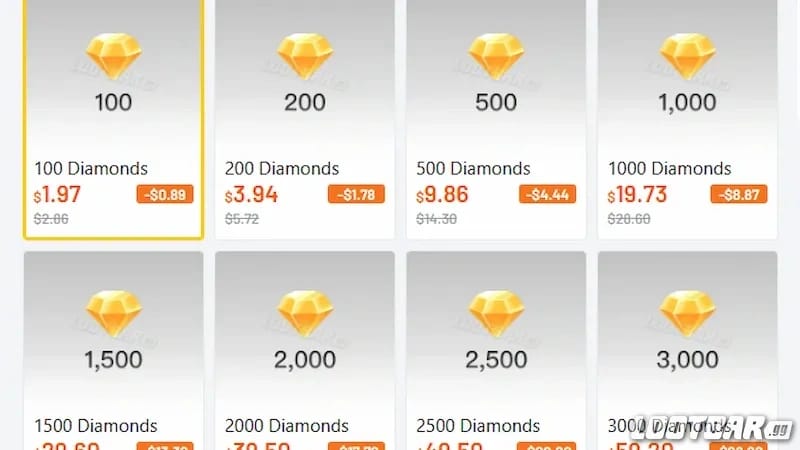
Climb to the top of the pack ladder and the logic flips on you. The percentage discount actually shrinks while the cash you save goes through the roof. A 5,000-diamond pack costs $160.80 on iOS against $93-$98.67 third-party, a 38-42% saving. Smaller cut than the little pack's premium, sure. But that's over $60 sliced off a single purchase.
Per-diamond is the only honest ruler. In-app diamonds land around $0.0322 apiece versus $0.0133-$0.0192 through third-party ID top-ups, going by Gamermarkt's numbers and the same pricing breakdown. Put it in the unit people actually type into search: 1,000 Likee Diamonds run roughly $32 bought in-app against about $13-$19 topped up via your Likee ID, and the 5,000 bundle drags the effective rate down near $0.0133-$0.0141 a diamond.
| Channel |
100 Diamonds |
5,000 Diamonds |
Per diamond (approx) |
| iOS in-app |
$3.21 |
$160.80 |
$0.0322 |
| Third-party (Likee ID) |
$1.88-$2.09 |
$93-$98.67 |
$0.0133-$0.0192 |
Source: BitTopup News (2026); third-party ranges per SEAGM, Eneba, Joytify and Gamermarkt listings, May 2026.
One thing reframes the whole 40-65% claim: it lives or dies on your baseline. Measure against a platform's own list price instead of the App Store and the markdown deflates fast. The same tracker's listed-versus-sale spread comes in at a flat 25% across its 10,000, 50,000 and 200,000-diamond tiers, with those listings pegging bulk over in-app at 25-40%+. The headline only stretches to its ceiling when you're holding it against an iOS receipt that's already carrying the full commission.
And the fee dodge isn't the only lever pulling. Payment-rail efficiencies and squeezed reseller margins drag the price below the app-store cut on their own, by that same breakdown. For a heavy live gifter chasing the lowest number, one 5,000-pack beats grinding through fifty separate 100-diamond taps, on price and on patience both.
Same diamonds, different passport
Regional pricing is where "discount" stops being the right word and "arbitrage" takes over. It's also where the risk sneaks in. Over on the parent Bigo ecosystem, a 210-diamond pack runs roughly $1.20-$1.40 in Pakistan, Indonesia and India against about $3.14-$3.99 in the US, per EnjoyGM's Bigo pricing guide. Likee's gifting currency follows the same script: base costs sit lower across INR, PKR and IDR markets on local purchasing power and exchange rates, by that same tracking.
A chunk of that 40-65% gap was never a markdown at all. It's the regional base price doing the work before any seller discount lands on top. Top up inside your own region and that's clean, legitimate savings. Chase a foreign tier your account isn't tied to and it curdles into a non-delivery trap, because region-locked top-ups simply won't credit. Indian and Pakistani users genuinely pay less here. A US gifter trying to spoof his way into that band mostly buys himself a failed transaction and a refund headache.
When the price is the bait, the password test settles it
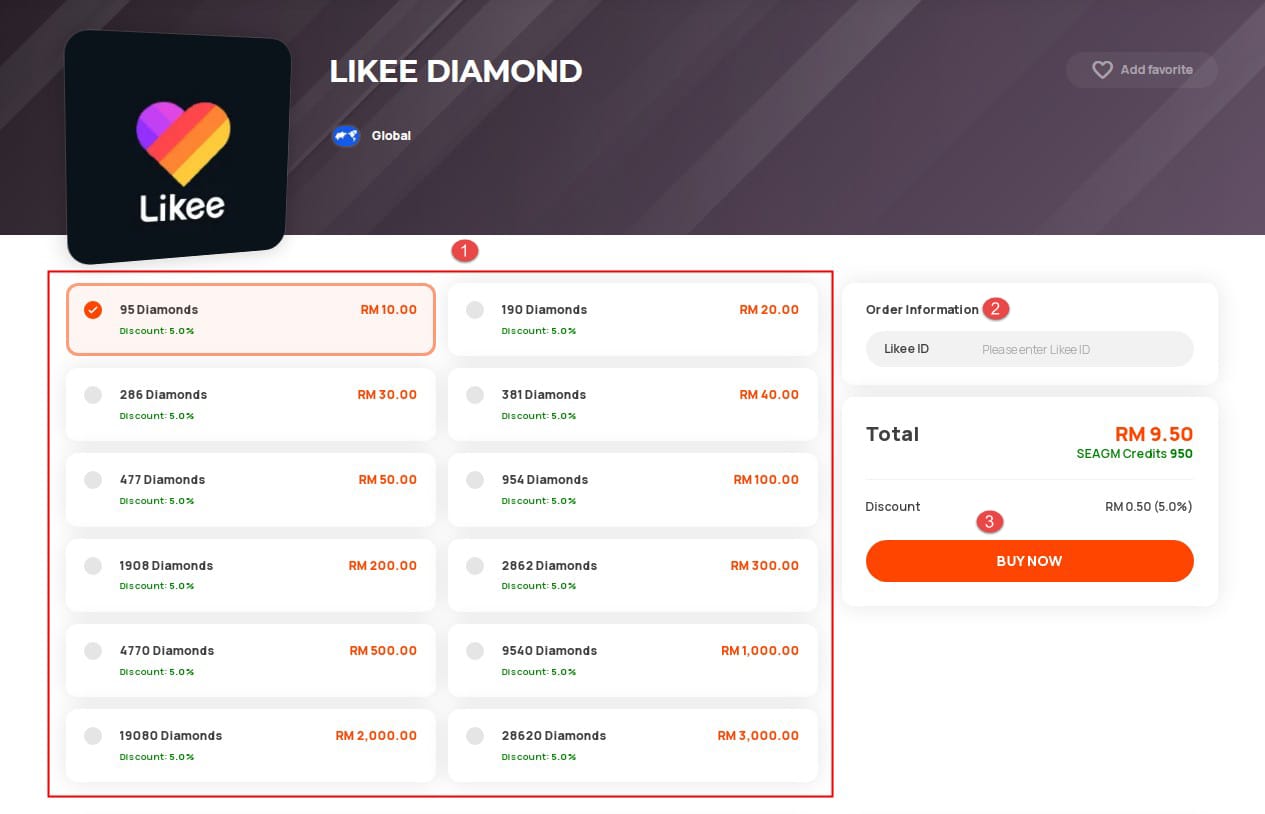
The best filter I've got has nothing to do with price. Take any sketchy listing and run it through one question: does it want your Likee ID alone, or does it want your password? A legit top-up needs your numeric Likee UID and nothing more. A password request disqualifies it on the spot. Price and safety ride separate tracks, so a 40% deal that wants your login is worse than a 60% one that only wants your UID.
Clone sites are the other half of the trap. They mimic the real platforms, price themselves just past believable, then either ghost you or drag you into a chargeback mess. Which is why I treat anything in that above-65% territory as a flag rather than a find. The cost structure behind diamonds rarely supports it once you've accounted for the fee dodge and a real regional tier. When a number can't be explained by those two forces, it's usually busy explaining a scam.
One quiet money-pit sits underneath all of it: Diamonds and Beans aren't the same currency. Diamonds are what you buy and spend on gifts. Beans are what creators earn and cash out. Load the wrong one and you've funded a balance you can't gift from, and no discount on earth claws that back.
What to buy at each spend level
The right move honestly changes with how you gift, so here's the cheat sheet I'd hand a friend.
| Spend profile |
Best buy |
Realistic safe saving |
Main thing to check |
| Casual gifter (small, occasional) |
One mid third-party ID top-up instead of repeat 100-packs |
~25-40% |
Password prompts — walk if you see one |
| Regular supporter (steady monthly) |
Mid-tier ID top-up, your own region |
~25-40% |
Region matches your account |
| Heavy live gifter (bulk) |
5,000+ / six-figure bundles |
38-42%, up to 25-40%+ at top tiers |
Seller reputation — big orders, real money |
Source: BitTopup News, EnjoyGM (2026).
The thread running through all three rows: casual gifters lose the most to inertia, not to bad deals. They default to in-app out of pure habit, which is exactly where the small packs hide their steepest markup. Heavy spenders clean up on absolute dollars, but they should lose sleep over seller reputation instead, since one bulk order moves real money. Everyone, top to bottom, should buy in their own region and treat the password prompt as the one line they never cross.
Whatever channel you settle on, price the pack against your own in-app receipt first. That's the only baseline that reveals the true gap. Full disclosure: this piece runs on VGTopup, which is itself a Likee ID top-up platform, so weigh its prices exactly the way you'd weigh anyone else's. If you'd sooner skip the hunting, you can buy Likee Diamonds coins online with upfront pricing and a UID-only flow, then hold it line-for-line against whatever your phone quotes before you commit.
Frequently Asked Questions
Will Likee ban my account for topping up through a third party?
A clean, ID-only top-up inside your own region doesn't trip account flags. The bans that actually land trace back to chargeback fraud or spoofing a market your account isn't registered in. The discount itself was never the trigger; the payment dispute or the region mismatch is. Keep the payment honest, stay in your own tier, and you're on solid ground.
What's actually the cheapest way to buy Likee Diamonds in 2026?
Stack the two structural savings instead of chasing promo codes: buy a bulk tier inside your own regional pricing band. Both levers are baked in and permanent, while promo codes barely move the needle and vanish as fast as they appear. A six-figure bundle bought in a low-cost region is about as cheap as it gets before you wander into scam-bait country.
How do I tell a real discount from a clone site?
Two checks settle it. First, the listing asks for your numeric Likee ID and nothing that smells like a password. Second, the discount makes sense once you add up fee bypass plus a genuine regional tier. A 35-45% gap on a UID-only checkout is ordinary. A 70% "deal" that needs a login is bait in a discount's clothing.
Is the top-up instant, and what if it doesn't arrive?
On reputable ID-based platforms it usually lands within minutes of payment, running the standard select-pack, enter-UID, pay flow that SEAGM, LDShop and similar trackers all document. Hang onto your order confirmation and transaction reference until the diamonds actually show in-app. That's your leverage if something stalls, and it's why region-correct, UID-only orders stay easy to trace.
Diamonds or Beans — which one do I buy to send gifts?
Diamonds. They're the spending currency you load up and fire off during live streams. Beans sit on the payout side, what creators rack up from gifts and convert to cash, so a viewer never needs to top them up. Fund Beans by mistake and you're left holding a balance you can't gift from, and no discount undoes that.






Comments